第6章インフラストラクチャーの抽象化層:オペレーティングシステム
credit: modification of “Windows Blue Screen on room full of computers,” by Grj23/Wikimedia.com, CC0 · CC0 · Source出典
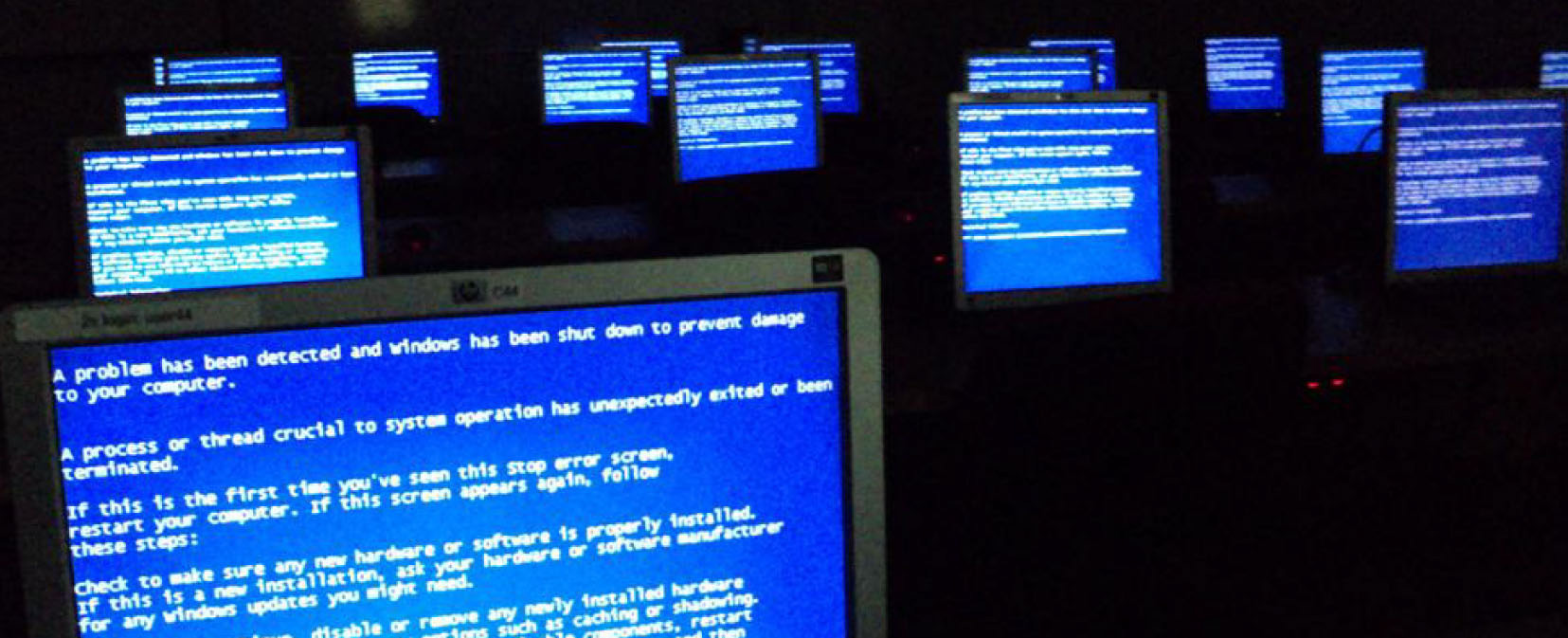
Figure 6.1 Operating systems operate on many computers and devices, which means that when they need an update (due to an error or virus), all those systems need the same fix. (credit: modification of “Windows Blue Screen on room full of computers,” by Grj23/Wikimedia.com, CC0)
図6.1 OSは、多数のコンピューターや機器で動作する。そのため、エラーやウイルスによって更新が必要になると、それらすべてのシステムに同じ修正が必要になる。(クレジット:Grj23/Wikimedia.com「Windows Blue Screen on room full of computers」を改変、CC0)
Introductionはじめに
TechWorks is a start-up company that is 100% committed to leveraging innovative technologies as part of its repeatable business model and as a business growth facilitator. TechWorks has been suffering for many months from the limitations of its operating system, especially the system’s lack of security, which allows access to unauthorized and unauthenticated users. This problem reflects poorly on the company’s reputation. To address the security limitations, one of the company’s project managers decides to implement a new mode of protection that supports all of the operating systems the company’s users use, including iOS, Windows, Linux, macOS, and Android. A data scientist working for the company proposes two solutions. The first solution involves integrating an authorization method called two-factor authentication, which you’ll learn more about later in the chapter. This method adds another level of security by asking users for their cell phone number so that it can send a one-time code to verify their identity every time they try to log in using their username and password. The second solution involves adding a table that defines individual user privileges such as read (R), write (W), and execute (E). This solution regulates access by leveraging features that were already part of TechWorks’s operating system. One of the core features of an operating system is to manage and regulate access to the program components that are running on various machines. This is particularly important today as the program components that power modern solutions (e.g., advanced robotics, autonomous cars, and drones) are typically distributed across many different machines that communicate with each other to perform various functions. To ensure the security of such systems, a single sign-on capability is typically required to facilitate access to all the components involved.
英語のヒント
TechWorksは、繰り返し適用できる事業モデルの一部として、また事業成長の促進手段として、革新的な技術の活用に100%取り組むスタートアップ企業である。同社は何か月もの間、OSの制約に悩まされてきた。特にセキュリティーが不十分で、権限を持たず、認証もされていない利用者がアクセスできてしまう。この問題は、会社の評判を損なっている。セキュリティー上の制約に対処するため、プロジェクトマネージャーの一人は、新たな保護方式の実装を決めた。iOS、Windows、Linux、macOS、Androidなど、社内の利用者が使うすべてのOSに対応する方式である。会社のデータサイエンティストは、二つの解決策を提案する。第一の解決策は、この章の後半で詳しく学ぶ二要素認証という、権限確認の方法を組み込むことである。利用者に携帯電話番号を登録してもらい、ユーザー名とパスワードでログインしようとするたびに、一度限りのコードを送って本人確認を行う。この方法で、セキュリティーをもう一段強化する。第二の解決策は、読み取り(R)、書き込み(W)、実行(E)など、個々の利用者の権限を定義する表を追加することだ。この方法は、TechWorksのOSがもともと備えていた機能を活用して、アクセスを制御する。OSの中心的な機能の一つは、さまざまな機械上で動作するプログラム構成要素へのアクセスを、管理・制御することである。今日のシステム、たとえば高度なロボット、自動運転車、ドローンを動かすプログラム構成要素は、通常、多数の異なる機械に分散し、互いに通信して各種機能を実行するため、この役割は特に重要だ。このようなシステムのセキュリティーを確保するには、関係するすべての構成要素へアクセスしやすくする、シングルサインオン機能が通常必要になる。