第3章近世アフリカと広域世界Early Modern Africa and the Wider World
3.3 The Swahili Coast3.3 スワヒリ海岸
Learning Objectives学習の目標
By the end of this section, you will be able to:
この節を学ぶと、次のことができるようになる。
Explain how geography and climate contributed to the growth of trade along the Swahili coast
地理と気候がスワヒリ海岸沿いの交易の成長にどう寄与したかを説明する。
Identify the major commodities traded along the Swahili coast
スワヒリ海岸沿いで取引された主要な商品を挙げる。
Analyze the role of the slave trade in city-states along the Swahili coast
スワヒリ海岸の都市国家で奴隷交易が果たした役割を分析する。
Describe the significance of Kilwa and Zanzibar to Indian Ocean trade
インド洋交易におけるキルワとザンジバルの重要性を説明する。
Not all of Africa’s trade traversed the Sahara. The east coast of Africa was home to wealthy city-states that engaged in oceanic trade with the Arabian Peninsula, India, and places farther east. Just as the cities of Songhai linked sub-Saharan Africa to North Africa and the Mediterranean by means of trade, the African ports on the Indian Ocean connected Africa to South and East Asia. These city-states were important hubs in the trade between East and West and made some of the world’s most desirable products available to people on three continents.
英語のヒント
アフリカの交易がすべてサハラ砂漠を越えたわけではない。東岸には豊かな都市国家があり、アラビア半島、インド、さらに東の地域と海上交易を行っていた。ソンガイの都市がサハラ以南のアフリカを、交易によって北アフリカと地中海へ結びつけたように、インド洋に面するアフリカの港は、アフリカを南アジアと東アジアへつないだ。これらの都市国家は東西交易の重要な拠点であり、世界でも特に求められた産物の一部を、三つの大陸の人々が手に入れられるようにした。
The Rise of the Swahili City-Statesスワヒリ都市国家の興隆
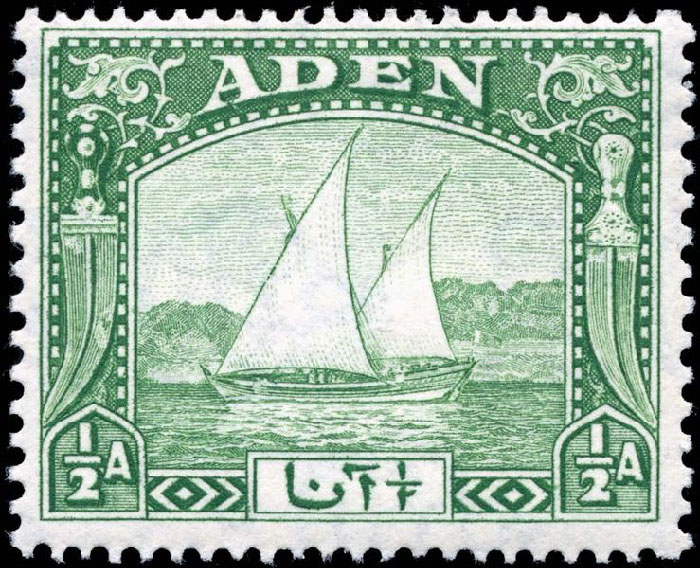
Starting in the seventh century, settlements on the coast of East Africa began to participate in Indian Ocean trade. Geographically, the area was well suited for oceanic trade. In the summer, the prevailing winds blew sailing ships northeast toward the coast of India, and winter winds blew them in the opposite direction. A seasonal trade thus developed, and trading ports grew. The standard ship of the region, called a dhow, was a vessel made of coconut-wood planks sewn together with coconut fiber. It bore a triangular-shaped lateen sail, which was perfectly designed to enable ships to sail both with and into the wind (Figure 3.14). However, dhows were unable to ride the rougher waves near the southern tip of the African continent, and this limitation, together with the fact that the monsoon winds grew weaker the farther south they went, kept trading ports from extending the full length of the African coast.
英語のヒント
7世紀から、東アフリカ沿岸の集落はインド洋交易に参加し始めた。この地域は地理的に海上交易に適していた。夏には卓越風が帆船を北東のインド沿岸へ運び、冬の風は反対向きに吹いた。そのため季節に応じた交易が発展し、交易港が成長した。この地域で普通に使われた船はダウと呼ばれ、ココヤシ材の板をココヤシの繊維で縫い合わせて作られた。船には三角形のラテン帆があり、風を背に受けても、風に向かっても航行できるよう、よく工夫されていた(図3.14)。しかしダウ船ではアフリカ大陸南端付近の荒い波を越えられなかった。この限界と、南へ行くほど季節風が弱くなることが、交易港がアフリカの海岸全体へ広がるのを妨げた。
Lateen Sails.ラテン帆
(credit: “Aden half-anna stamp of 1937” by Unknown/Stan Shebs/Wikimedia Commons, Public Domain) · Public Domain
Figure 3.14 An early twentieth-century postage stamp from Aden, a city of the Arabian Peninsula, shows a dhow with lateen sails. Ships of this type carried the trade of the Swahili coast. (credit: “Aden half-anna stamp of 1937” by Unknown/Stan Shebs/Wikimedia Commons, Public Domain)
図3.14 アラビア半島の都市アデンで20世紀初めに発行された切手に、ラテン帆を持つダウ船が描かれている。この種の船がスワヒリ海岸の交易を担った。(出典:作者不詳/Stan Shebs/Wikimedia Commons「Aden half-anna stamp of 1937」、パブリックドメイン)
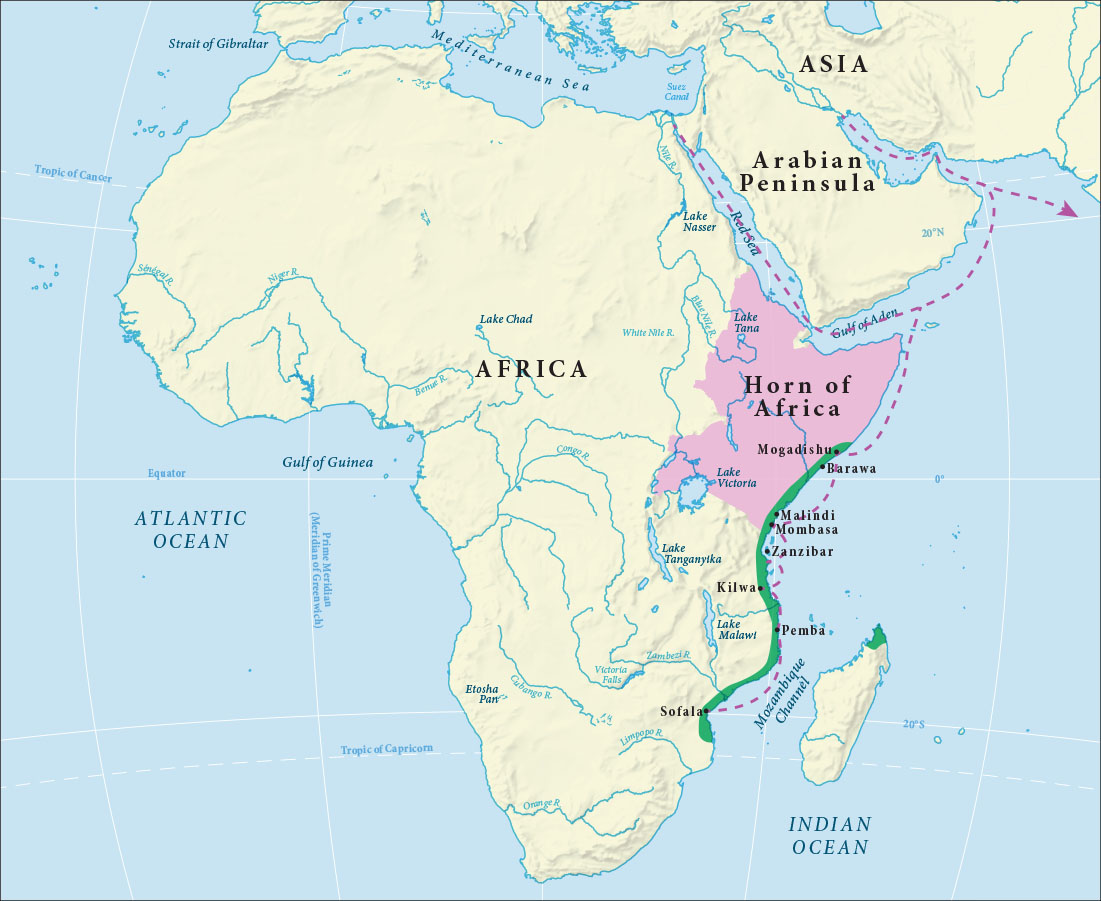
In the eighth century, Arab Muslim merchants began to settle permanently in the region and often intermarried with the African Bantu peoples who lived in the area. Marrying Bantu women enabled Arab merchants to sink roots in African coastal communities, and their wives’ families helped them both establish commercial contacts and transact trade while they were away. In the twelfth century, large numbers of Persians settled on the East African coast as well. Their city-states, inhabited primarily by merchants and artisans, grew in size until a number of large port cities extended southward along the coast from what is now Somalia: Mogadishu, Barawa, Mombasa, Malindi, Pemba, Zanzibar, Kilwa, Sofala, and others (Figure 3.15). Some of the cities were built on islands, which made it easier for them to engage in maritime trade. The people of the coast came to speak Swahili, which combined the grammar of African Bantu languages with a Bantu and Arabic vocabulary. This common language enabled people from a wide variety of ethnic groups to trade with one another.
英語のヒント
8世紀、ムスリムのアラブ商人がこの地域に定住し始め、地元に住むアフリカのバントゥー系の人々と結婚することも多かった。バントゥーの女性との結婚によって、商人はアフリカ沿岸の共同体に根を下ろせた。妻の親族は取引相手との関係づくりを助け、商人が留守の間には商取引も行った。12世紀には、多数のペルシア人も東アフリカ沿岸へ定住した。おもに商人と職人が住む都市国家は成長し、現在のソマリアから海岸沿いに南へ、モガディシュ、バラワ、モンバサ、マリンディ、ペンバ、ザンジバル、キルワ、ソファラなど、多くの大きな港湾都市が並ぶようになった(図3.15)。一部の都市は島に築かれ、海上交易を行いやすかった。沿岸の人々は、アフリカのバントゥー諸語の文法と、バントゥー語およびアラビア語由来の語彙を組み合わせたスワヒリ語を話すようになった。この共通語によって、多様な民族集団の人々が互いに取引できた。
City-States of the Indian Ocean Trade.インド洋交易の都市国家
(attribution: Copyright Rice University, OpenStax, under CC BY 4.0 license) · CC BY 4.0
Figure 3.15 The coastal region immediately south of the Horn of Africa was home to a number of city-states that prospered in the Indian Ocean trade before the arrival of the Portuguese in the late fifteenth century. (attribution: Copyright Rice University, OpenStax, under CC BY 4.0 license)
図3.15 アフリカの角のすぐ南の沿岸には、多くの都市国家が存在し、15世紀末のポルトガル人の到来以前からインド洋交易で繁栄していた。(出典:Rice University、OpenStax。著作権者の許諾条件はCC BY 4.0)
The Bantu people who lived along the coast of East Africa converted to Islam over the course of a few centuries. Sharing a religion made it easier for them to interact with the Arab and Persian merchants and sailors who inhabited cities on the coast of East Africa, as well as with Muslim merchants in North Africa, on the Arabian Peninsula, and in India. Mosques and religious schools were built. The first mosques were built in the ninth century. The version of Islam practiced by the people of the Swahili coast, however, made concessions to the pre-Islamic practices of several of the area’s African societies. In this syncretic version of Islam, ancestor veneration continued, for example, as did the use of magical rituals to drive away spirits believed to cause illness. Women also retained a higher status than they did in other Muslim societies, such as Persia.
英語のヒント
東アフリカ沿岸のバントゥー系住民は、数世紀をかけてイスラームへ改宗した。宗教を共有することで、沿岸都市に住むアラブやペルシアの商人・船乗りと交流しやすくなり、北アフリカ、アラビア半島、インドのムスリム商人ともつながりやすくなった。モスクと宗教学校が建てられ、最初のモスクは9世紀に建設された。ただしスワヒリ海岸の人々が実践したイスラームは、この地域のアフリカ社会のいくつかが持つ、イスラーム以前の慣行を受け入れた。この混交的なイスラームでは、たとえば祖先崇拝が続き、病気を起こすと信じられた霊を追い払う呪術的儀礼も残った。女性も、ペルシアなどのほかのムスリム社会より高い地位を保った。
A large variety of products were traded in the cities of the Swahili coast: gold, iron, copper, salt, valuable hardwoods such as ebony and sandalwood, ivory, tortoise shells for making decorative objects like combs, and animal hides. These goods were brought overland across trade routes from the African interior and then were either purchased by the cities’ inhabitants for their own use or resold elsewhere in Africa or in Arabia, Persia, and India. From these places, the goods might travel even farther to Southeast Asia or China. Artisans in the cities crafted pottery and wove cloth that became part of the trade too and were sold in Africa or overseas. The goods of Asia also flowed into these cities, and the elites of the Swahili coast adorned themselves with glass beads from India, dressed in Chinese silks, and ate from Chinese porcelain. Some merchants embedded pieces of porcelain in the walls of their homes for decoration.
英語のヒント
スワヒリ海岸の都市では、金、鉄、銅、塩、黒檀や白檀のような高価な硬木、象牙、櫛などの装飾品を作るための亀の甲羅、動物の皮など、多彩な産物が取引された。これらはアフリカ内陸から交易路を陸路で運ばれ、都市の住民が自分たちのために買うか、アフリカのほかの地域、アラビア、ペルシア、インドで売り直された。さらに、そこから東南アジアや中国へ届くこともあった。都市の職人は陶器を作り、布を織り、それらも交易に加わってアフリカ内外で売られた。アジアの産物も都市へ流れ込み、沿岸の有力者たちはインドのガラス玉で身を飾り、中国の絹をまとい、中国の磁器で食事をした。自宅の壁に磁器の破片を埋め込み、装飾とする商人もいた。