第3章近世アフリカと広域世界Early Modern Africa and the Wider World
3.1 The Roots of African Trade3.1 アフリカ交易の起源
Learning Objectives学習の目標
By the end of this section, you will be able to:
この節を学ぶと、次のことができるようになる。
Identify the main trade routes across the Sahara in the sixteenth century
16世紀にサハラ砂漠を横断した主要な交易路を特定する。
Analyze the ways in which Islam facilitated the development of trans-Saharan trade
イスラームがサハラ交易の発展をどのように促進したかを分析する。
Identify the factors that contributed to the decline of the Mali Empire
マリ帝国の衰退に寄与した要因を特定する。
Beginning in ancient times, trans-Saharan trade routes united many markets and products, linking the commodities, buyers, and sellers of North and West Africa, the Middle East, and Europe. Trade networks spanned thousands of miles of sea and land and connected the distant trading centers and cities at their far ends. In the Sahara, such cosmopolitan settlements as Awdaghost, Sijilmasa, and Djenné, all part of the Mali Empire, linked desert trade routes. These trading centers made possible not only the widespread distribution of raw materials and finished products necessary for commerce to thrive but also the diffusion of cultural influences, including religion, to other civilizations.
英語のヒント
古代から、サハラを横断する交易路は多くの市場と産物を結びつけ、北アフリカ、西アフリカ、中東、ヨーロッパの商品、買い手、売り手をつないだ。交易網は数千マイルにわたる海と陸に広がり、その両端にある遠方の交易拠点や都市を結んだ。サハラでは、いずれもマリ帝国の一部であったアウダゴスト、シジルマサ、ジェンネなど、さまざまな土地の人が集まる都市が、砂漠の交易路をつないだ。これらの交易拠点は、商業の繁栄に必要な原料や完成品を広く流通させるだけでなく、宗教を含む文化的な影響を他の文明へと広めることも可能にした。
Saharan Trade Routesサハラの交易路
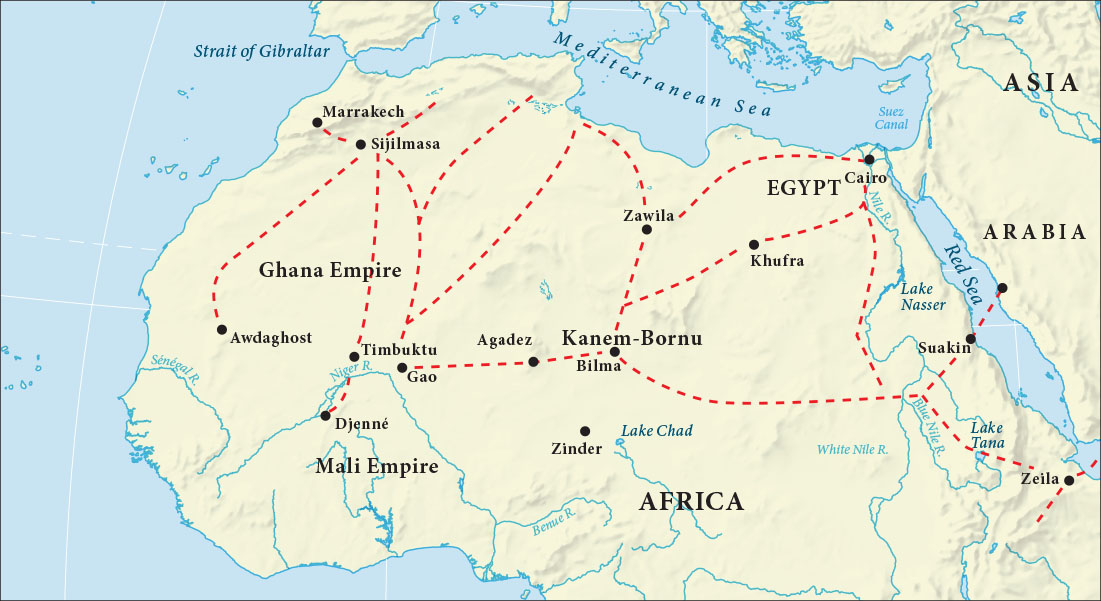
Camel caravans from North Africa began trekking across the Sahara Desert in antiquity (the period Before the Common Era, or BCE). The trade reached a peak during the ninth to the fifteenth centuries of the Common Era (CE), when lines of thousands of camels traveled a web-like network of trade routes that spanned the whole of North and West Africa. They moved a variety of goods, including copper, salt, ivory, enslaved people, textiles, and gold, northward from sub-Saharan West Africa to the Mediterranean coast, eastward to the Horn of Africa and Egypt, and southward into the Sahel, the semiarid region between the Sahara Desert and the Sudanian savanna to the south (Figure 3.4).
英語のヒント
北アフリカからのラクダの隊商は、古代、すなわち紀元前に、サハラ砂漠を横断し始めた。この交易は西暦9~15世紀に最盛期を迎え、何千頭ものラクダが列をなし、北アフリカと西アフリカの全域に広がる網のような交易路を行き来した。隊商は、銅、塩、象牙、奴隷化された人々、織物、金などのさまざまな商品を運んだ。西アフリカのサハラ以南から北の地中海岸へ、東の「アフリカの角」やエジプトへ、そして南のサヘルへと向かった。サヘルとは、サハラ砂漠と、その南にあるスーダンのサバンナとの間に広がる半乾燥地域である(図3.4)。
Trans-Saharan Trade Routes.サハラ交易路
(attribution: Copyright Rice University, OpenStax, under CC BY 4.0 license) · CC BY 4.0
Figure 3.4 The trans-Saharan trade routes of the ninth to fifteenth centuries (red dotted lines) stretched like a web across the vast expanse of North Africa. (attribution: Copyright Rice University, OpenStax, under CC BY 4.0 license)
図3.4 9~15世紀のサハラ交易路(赤い点線)は、広大な北アフリカに網のように広がっていた。(出典:Rice University、OpenStax。著作権者の許諾条件はCC BY 4.0)
Long before the trans-Saharan trade route’s golden age, commerce in the Sahara was relatively localized and consisted of the exchange of agricultural products like rice, sorghum, and millet for the products of new technologies such as iron goods or rare commodities such as salt. These early inter- and intraregional exchanges were made possible by pack animals like mules, horses, and donkeys, but trade was limited because these animals were biologically ill-suited for the extremes of the Saharan environment. When the Romans conquered North Africa in the second century BCE, they introduced the camel, which was already a beast of burden in Egypt. Capable of lasting days without water and having feet and eyelashes adapted for travel in sandy environments, camels enabled the people of North Africa to carry on regular long-distance trade across the Sahara for the first time beginning in the eighth century CE. The camel saddle, invented by the Tuareg people of North Africa, enabled camels to be ridden, which furthered their usefulness to trans-Saharan trade. The introduction of the date palm also helped make systematic long-distance trade possible. The fruit of the date palm is high in sugar, a natural preservative, and when dried it provided a high-calorie, easily transportable food supply to fortify traders on long journeys.
英語のヒント
サハラ交易路が黄金時代を迎えるはるか以前、サハラの商業は比較的狭い地域に限られ、米、ソルガム、雑穀などの農産物を、鉄製品のような新技術による製品や、塩のような希少な商品と交換するものだった。こうした初期の地域間・地域内の交換は、ラバ、馬、ロバなどの荷役動物によって可能になったが、これらの動物は生物学的にサハラの極端な環境に適しておらず、交易には限界があった。ローマ人は紀元前2世紀に北アフリカを征服した際、すでにエジプトで荷役に使われていたラクダを導入した。ラクダは何日も水なしで耐えられ、足やまつ毛も砂地の移動に適していた。そのため北アフリカの人々は、西暦8世紀以降、初めてサハラを横断する長距離交易を定期的に行えるようになった。北アフリカのトゥアレグ人が発明したラクダ用の鞍によって、人がラクダに乗ることも可能になり、サハラ交易での有用性はさらに高まった。ナツメヤシの導入も、組織的な長距離交易を可能にする助けとなった。その実には天然の保存料となる糖分が多く含まれる。乾燥させれば高カロリーで運びやすい食料となり、長旅をする商人の体力を支えた。
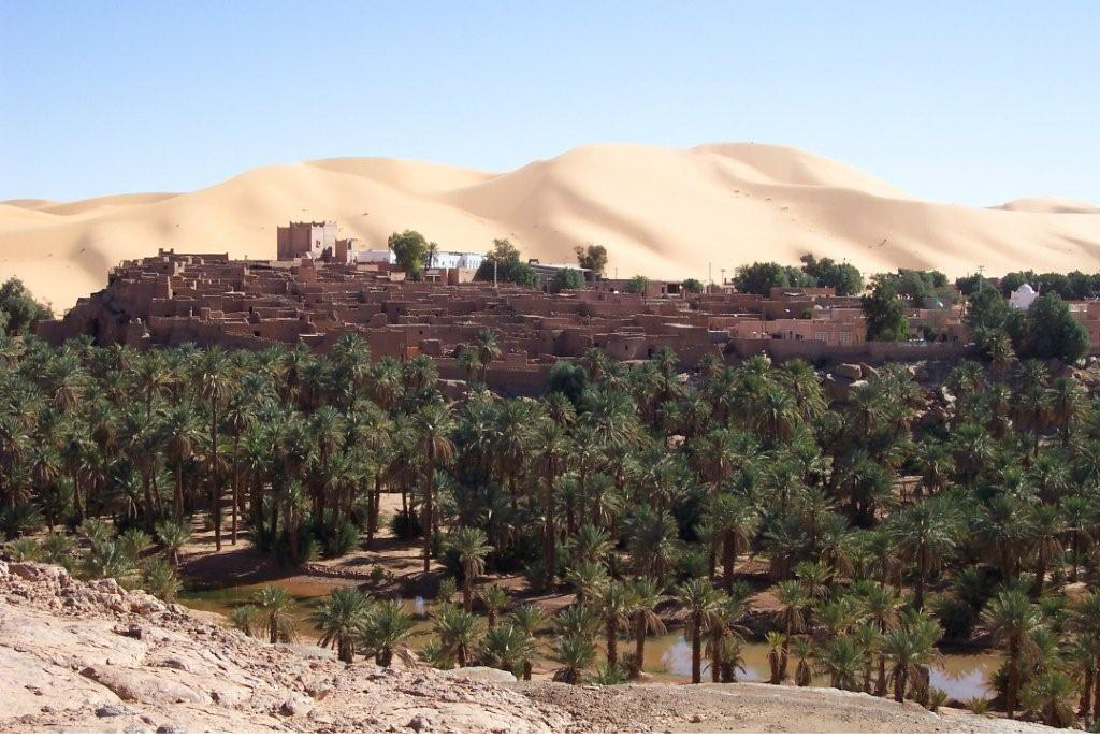
Trans-Saharan trade was also critically dependent on highly paid nomadic North African Berber (Amazigh) There is a growing awareness about the use of the term Berber to describe indigenous North Africans, many of whom self-identify as Amazigh, or Imazighen (plural). With this understanding, although we have introduced the term Berber as the most commonly used name in English, we have generally preferred to use the term Amazigh in this text. intermediaries and the string of oasis towns that connected distant parts of the network in an otherwise unforgiving landscape (Figure 3.5). Oasis towns provided traveling merchants with places to rest, water their animals, and acquire provisions for the next leg of their journey. They served the same function as the caravanserais, inns for travelers that existed throughout the Islamic world, including along the Silk Roads in Asia, in the Middle East, and in Egypt and Morocco. The Imazighen’s skills as caravan leaders and go-betweens facilitated the movement of everything from gold ingots to ostrich feathers across thousands of square miles of desert. Yet Amazigh traders were responsible for much more than the movement of goods and commodities. They were also devout believers in Islam who spread Islamic culture, law, custom, and tradition and helped to fuse a network of local and regional trade routes into a truly continent-spanning enterprise.
英語のヒント
サハラ交易はまた、高い報酬を受ける北アフリカの遊牧民ベルベル人(アマジグ人)の仲介者と、過酷な地形の中で遠く離れた交易網をつなぐ、連続したオアシス都市に決定的に依存していた(図3.5)。オアシス都市は、旅する商人が休み、動物に水を飲ませ、次の行程に向けた食料を調達する場所となった。それらは、アジアのシルクロード、中東、エジプト、モロッコなど、イスラーム世界に広く存在した旅人の宿、キャラバンサライと同じ役割を果たした。アマジグ人が持つ隊商の指導者や仲介者としての技能は、金塊からダチョウの羽まで、あらゆる品が数千平方マイルもの砂漠を移動することを容易にした。しかしアマジグ商人の役割は、品物や商品を運ぶことにとどまらなかった。彼らはまた敬虔なムスリムでもあり、イスラームの文化、法、慣習、伝統を広め、地域内・地域間の交易路の網を、本当に大陸全体にまたがる事業へと融合させる助けとなった。〔原注〕北アフリカの先住民を指す「ベルベル」という名称の使い方について、認識が高まりつつある。本人たちの多くはアマジグ、複数形ではイマジゲンと自称する。そのことを踏まえ、本書では英語で最も一般的な名称としてベルベルを紹介するものの、原則としてアマジグという呼称を優先している。
A Saharan Oasis.サハラのオアシス
(credit: “Mountains of sand loom over the oasis village of Taghit in the Sahara” by The Central Intelligence Agency: The World Factbook/Wikimedia Commons, Public Domain) · Public Domain
Figure 3.5 This photo shows the Saharan oasis city of Taghit, ringed by sand hills in modern-day Algeria. (credit: “Mountains of sand loom over the oasis village of Taghit in the Sahara” by The Central Intelligence Agency: The World Factbook/Wikimedia Commons, Public Domain)
図3.5 現在のアルジェリアにある、砂丘に囲まれたサハラのオアシス都市タギト。(出典:The Central Intelligence Agency: The World Factbook/Wikimedia Commons「Mountains of sand loom over the oasis village of Taghit in the Sahara」、パブリックドメイン)
A principal commodity exchanged during this early stage of trade was salt, which acted as a sort of currency. Not only is salt necessary to human and animal life, but it also helps to preserve foods, an important concern of people in an age before refrigeration technology existed. Communities on the edges of the desert acted as intermediaries in this trade, trading salt to forest tribes to the south that had access to goldfields. Only over time were other highly valuable trading goods introduced, such as gold and copper, which were then passed across the desert from tropical West Africa to the far reaches of the North African coast and beyond.
英語のヒント
この初期の交易で交換された主要な商品の一つは塩であり、一種の通貨として機能した。塩は人間や動物の生存に必要なだけでなく、食料の保存にも役立つ。冷蔵技術のなかった時代には、食料の保存は重要な関心事だった。砂漠の縁にある共同体は交易の仲介者となり、南に住む、金の産地を利用できる森林地域の集団に塩を売った。金や銅など、ほかの非常に価値の高い交易品が加わったのは時代が下ってからで、それらは熱帯の西アフリカから砂漠を越え、はるか北アフリカの海岸、さらにその先へ運ばれた。
Trade across the Sahara gradually intensified between the fifth and seventh centuries CE, and in the eighth and ninth centuries, a series of main links became established. These developments were made possible primarily as the result of two important changes. First, the Ghana Empire of West Africa emerged as the earliest large-scale political entity in the region, and second, the Islamic conquest of North Africa led to the rise of Muslim states and a general cultural unification of the region. Combined, these developments brought people with shared interests and similar characteristics together in conditions that enabled them to consolidate and expand their economic interests, particularly as demand increased for gold from the Sudan.
英語のヒント
サハラを横断する交易は、西暦5~7世紀に徐々に活発化し、8~9世紀には一連の主要な連絡路が確立した。これを可能にしたのは、おもに二つの重要な変化であった。第一に、西アフリカのガーナ帝国が、この地域で最初の大規模な政治的まとまりとして出現した。第二に、イスラーム勢力による北アフリカ征服によって、ムスリムの国家が生まれ、地域の文化が広く統合された。これらが組み合わさり、共通の利害や似た特徴を持つ人々が、経済的な利益を固め、拡大できる条件のもとに集まった。とりわけスーダンの金への需要が高まるなかで、こうした動きが進んだ。
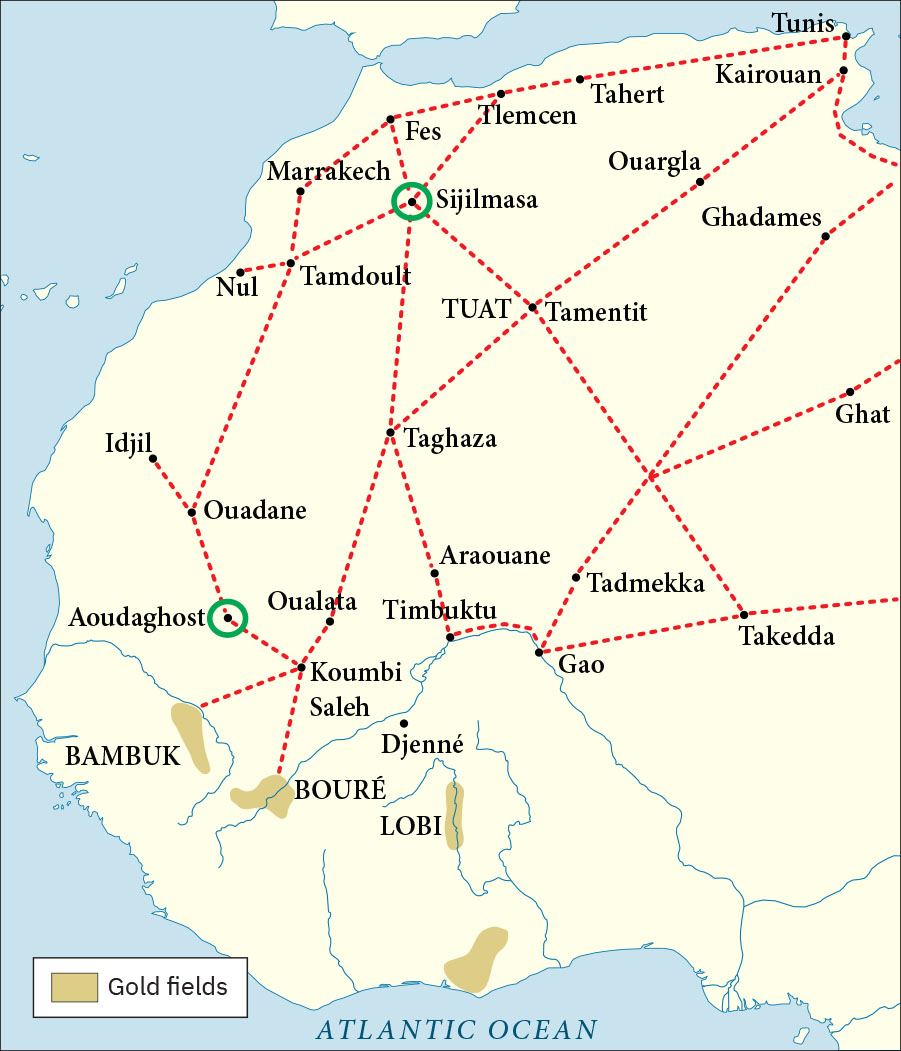
As trade grew, Arab merchants in Morocco and in Islamic states in North Africa began to buy sub-Saharan gold. By the eleventh century, the gold trade was so successful that it was influencing commerce and society in the Mediterranean (Figure 3.6). For the first time, West African gold was used to mint European coins. This growth in the market for gold spurred the expansion of new links in the trans-Saharan trade route and resulted in the opening of a major trade artery between the towns of Sijilmasa, north of the Sahara, and Awdaghost to the south.
英語のヒント
交易が拡大するにつれて、モロッコや北アフリカのイスラーム諸国のアラブ商人は、サハラ以南の金を買うようになった。11世紀までに金交易は大いに栄え、地中海地域の商業と社会にまで影響を与えるほどになった(図3.6)。西アフリカの金が、初めてヨーロッパの貨幣の鋳造に使われた。金市場の拡大は、サハラ交易路の新たな連絡路の拡張を促し、サハラ以北のシジルマサと、その南のアウダゴストとの間に、重要な交易幹線が開かれる結果となった。
West African Trade Routes.西アフリカの交易路
(attribution: Copyright Rice University, OpenStax, under CC BY 4.0 license) · CC BY 4.0
Figure 3.6 The network of medieval trade routes in West Africa (red dotted lines) as mapped in the 1960s by French historian Raymond Mauny. Although they were not connected directly, Sijilmasa in present-day Morocco and Awdaghost in Mauritania were indirectly linked by routes that united other trading cities in the surrounding region. (attribution: Copyright Rice University, OpenStax, under CC BY 4.0 license)
図3.6 フランスの歴史家レイモン・モーニが1960年代に地図化した、中世の西アフリカの交易路網(赤い点線)。現在のモロッコにあるシジルマサと、モーリタニアのアウダゴストは直接には結ばれていなかったが、周辺地域のほかの交易都市を結ぶ道を通じ、間接的につながっていた。(出典:Rice University、OpenStax。著作権者の許諾条件はCC BY 4.0)
One of the greatest early Sudanic empires, the powerful states that emerged in the region of West Africa south of the Sahara Desert, was Mali. Mali brought together the key components that had contributed to the earlier expansion of trans-Saharan trade. On the one hand, its rulers were Muslim, and the fact that they shared the same religion with many trans-Saharan traders strengthened the ties between these groups. On the other hand, these rulers exerted direct control over the goldfields at Bure. The vitally important trade centers of Timbuktu and Gao were part of the empire, as were the trading centers of Awdaghost, Oualata (Walata), and Tadmekka. Although both gold and salt remained the principal commodities of exchange, other commodities such as textiles, enslaved people, ivory, precious stones, and shea butter (a vegetable fat from the shea tree nut) were also regular exports.
英語のヒント
サハラ砂漠の南、西アフリカに出現した強大な国家群である初期スーダン諸帝国の中でも、特に大きなものの一つがマリだった。マリは、それ以前のサハラ交易の拡大に寄与した主要な要素をまとめ上げた。一つには、支配者がムスリムで、多くのサハラ商人と同じ宗教を共有していたため、両者の結びつきが強まった。もう一つには、支配者たちがブーレの金産地を直接支配した。きわめて重要な交易拠点トンブクトゥとガオは帝国の一部であり、アウダゴスト、ワラタ、タドメッカも同様だった。金と塩は引き続き主要な交易品だったが、織物、奴隷化された人々、象牙、宝石、シアバター(シアの木の実から採れる植物性脂肪)なども常に輸出されていた。
During the ninth to fifteenth centuries, caravans routinely plied the sands of the Sahara, moving goods from distant West Africa to Egypt and centers of trade in North Africa, and from there onward, either across the Mediterranean to southern Europe or overland by way of the Sinai Peninsula to the region of the Levant in the Near East (modern Syria, Jordan, Lebanon, and Israel). From there, West African commodities could arrive at one of the land-based western terminals of the Silk Roads in such trade centers as the coastal city of Tyre in Lebanon, and farther inland, at Aleppo in Syria. Africa at this time was a key player in the vast commercial enterprise that laid the foundation for the first global economies.
英語のヒント
9~15世紀、隊商はサハラの砂地を日常的に往来し、遠方の西アフリカからエジプトや北アフリカの交易拠点へ商品を運んだ。そこから先は、地中海を渡って南ヨーロッパへ行くか、シナイ半島経由で陸路を進み、近東のレヴァント地方、すなわち現在のシリア、ヨルダン、レバノン、イスラエルへと向かった。さらに、西アフリカの商品は、レバノン沿岸のティルスや、より内陸にあるシリアのアレッポなどの交易都市にある、シルクロード陸路の西の終点の一つへ届くこともあった。当時のアフリカは、最初の世界規模の経済の基礎を築いた巨大な商業活動において、重要な担い手だった。