第2章初期の人類Early Humans
Neolithic Peoples新石器時代の人々
By around nine thousand years ago, groups in a few different areas around the world were not only practicing agriculture but also beginning to establish large and complex permanent settlements. A number of these Neolithic settlements emerged in Europe, the Near East, China, Pakistan, and beyond. One of the largest to be excavated today is in southeastern Turkey, at a site known as Çatalhöyük (pronounced cha-tal-HOY-ook). Evidence indicates this site was occupied for about twelve hundred years, roughly between 7200 and 6000 BCE. It covers more than thirty acres, and at its height it may have been home to as many as six thousand people.
英語のヒント
約9000年前までには、世界のいくつかの地域で、人々は農耕だけでなく、大きく複雑な恒久的集落も築き始めていた。ヨーロッパ、近東、中国、パキスタンなどに、多くの新石器時代の集落が現れた。今日発掘されている最大級の集落の一つは、トルコ南東部のチャタル・ヒュユクと呼ばれる遺跡である。英語での発音は、およそ「チャタルホユック」。証拠によれば、およそ紀元前7200~6000年の約1200年間、人々が暮らした。面積は30エーカーを超え、最盛期には最大6000人ほどが住んでいた可能性がある。
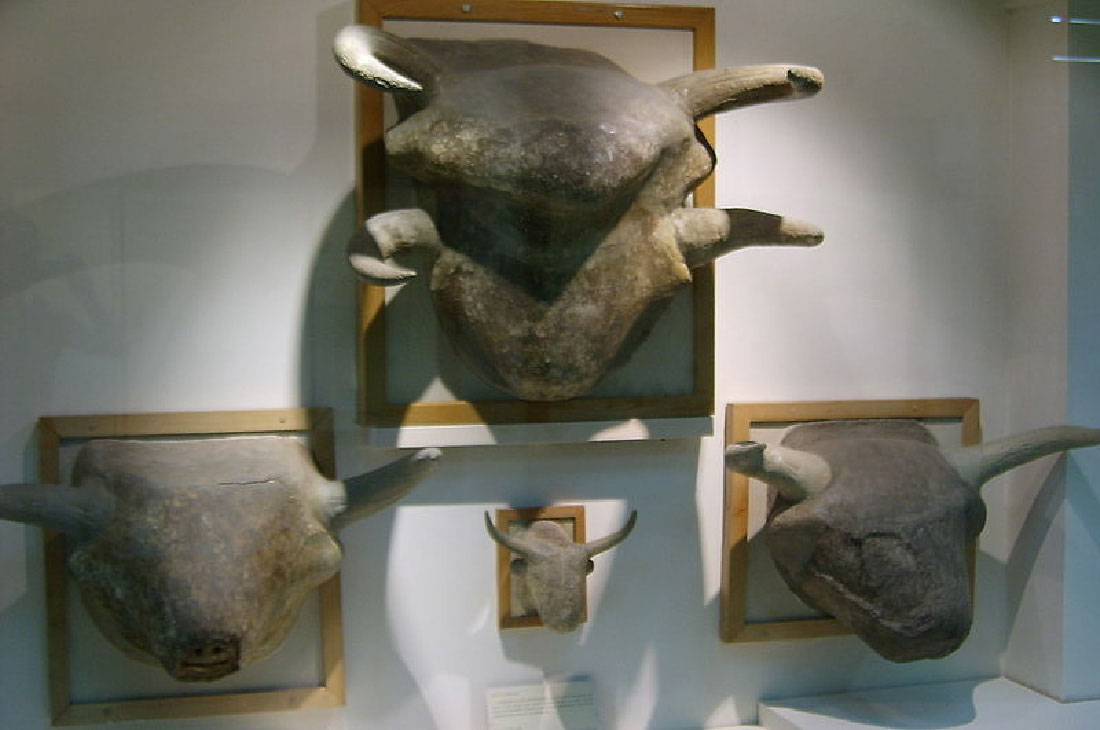
Houses at Çatalhöyük were made with mud brick and were clustered together without roads or passages between them. This design required that residents enter their homes from the roof, but it provided them with protection from the outside world. Thanks to extensive excavation at the site, we can tell that the people who built and lived in Çatalhöyük included farmers, hunters, and skilled craftspeople with complex religious ideas. Their rooms include many examples of art, such as depictions of hunts and various kinds of animals, and even what may be representations of their myths, such as a woman giving birth to a bull. Cattle imagery abounds in Çatalhöyük, including bull heads with large horns and bull horns protruding from furniture, suggesting that the people who lived there venerated the animal (Figure 2.22).
英語のヒント
チャタル・ヒュユクの家は日干しれんがで作られ、間に道路や通路を置かず、密集していた。そのため住民は屋根から家へ入る必要があったが、この構造は外からの侵入を防いだ。大規模な発掘によって、建設者や住民には農民、狩人、熟練した職人が含まれ、複雑な宗教観を持っていたことが分かる。部屋には、狩りやさまざまな動物を描いた多くの美術があり、雄牛を産む女性など、神話を表すのかもしれない像さえある。大きな角の付いた牛の頭や、家具から突き出す牛の角など、牛のイメージがいたる所に見られる。これは、住民が牛を崇敬していた可能性を示している(図2.22)。
Neolithic Interior at Çatalhöyük.チャタル・ヒュユクの新石器時代の室内。
(credit: “Bull heads from Catal Hüyük in Angora Museum” by Stipich Béla/Wikimedia Commons, CC BY 2.5) · CC BY 2.5
Figure 2.22 In this reconstruction of a Neolithic Age Çatalhöyük interior, several bull heads adorn the walls. (credit: “Bull heads from Catal Hüyük in Angora Museum” by Stipich Béla/Wikimedia Commons, CC BY 2.5)
図2.22 新石器時代のチャタル・ヒュユクの室内を再現した展示。いくつもの牛の頭が壁を飾る。(出典:Stipich Béla/Wikimedia Commons「Bull heads from Catal Hüyük in Angora Museum」、CC BY 2.5)
The people of Çatalhöyük lived a life that was neither fully agricultural nor hunter-gatherer. Instead, they combined the two strategies. They had domesticated animals like cattle; grew a variety of domesticated plants like wheat, lentils, and barley; and may even have used some form of irrigation system to increase agricultural production. Yet they also relied on hunting wild animals for meat and gathering wild edible plants like walnuts, various types of berries, pears, and crab apples. It seems clear that their wealth was derived from trade in agricultural products, woven items, clay vessels, and especially obsidian, a naturally occurring volcanic glass. Because it can be chipped to create a razor-sharp edge, obsidian would have been a highly valued trade item for people in need of effective tools for butchering and other chores. The obsidian of Çatalhöyük was obtained from a nearby volcano and traded to people as far away as Syria and Cyprus.
英語のヒント
チャタル・ヒュユクの人々は、完全な農耕生活でも、完全な狩猟採集生活でもなく、両方を組み合わせていた。ウシなどを家畜化し、コムギ、レンズマメ、オオムギなどの作物を育て、農業生産を増やすために何らかの灌漑設備さえ使っていた可能性がある。その一方で、野生動物を狩って肉を得、クルミ、ベリー類、ナシ、野生のリンゴなども採集した。彼らの富は、農産物、織物、土器、とりわけ自然にできる火山ガラスである黒曜石の交易から生まれたと考えられる。黒曜石は、欠き割るとかみそりのように鋭い縁ができるため、解体などの仕事に使う効果的な道具を必要とする人々にとって、価値の高い交易品だっただろう。近くの火山から得られ、遠くシリアやキプロスの人々にまで取引された。
Far to the south of Çatalhöyük, in the Jordan River valley east of Jerusalem, was an even older Neolithic city, Jericho. Archaeologists estimate that Jericho was occupied as early as 8300 BCE. Its construction was very different from that of Çatalhöyük. Rather than being composed of homes with adjoining walls for protection, Jericho was protected by a large ditch and a thick stone wall that encircled the settlement. Within the settlement there was also a large stone tower, the purpose of which remains unclear. Nearby were similar Neolithic settlements at Ain Ghazal and Nahal Hemar. And far to the north on the Euphrates River was Abu Hureyra.
英語のヒント
チャタル・ヒュユクのはるか南、エルサレムの東のヨルダン川流域には、さらに古い新石器時代の都市、イェリコがあった。考古学者は、早くも紀元前8300年に人々が暮らしていたと推定する。その構造はチャタル・ヒュユクと大きく異なった。家々が壁を接して守りを固めるのではなく、イェリコは集落を囲む大きな溝と厚い石壁に守られていた。集落内には大きな石の塔もあったが、目的はまだはっきりしない。近くにはアイン・ガザルやナハル・ヘマルという同様の新石器時代の集落があり、はるか北のユーフラテス川沿いにはアブ・フレイラがあった。
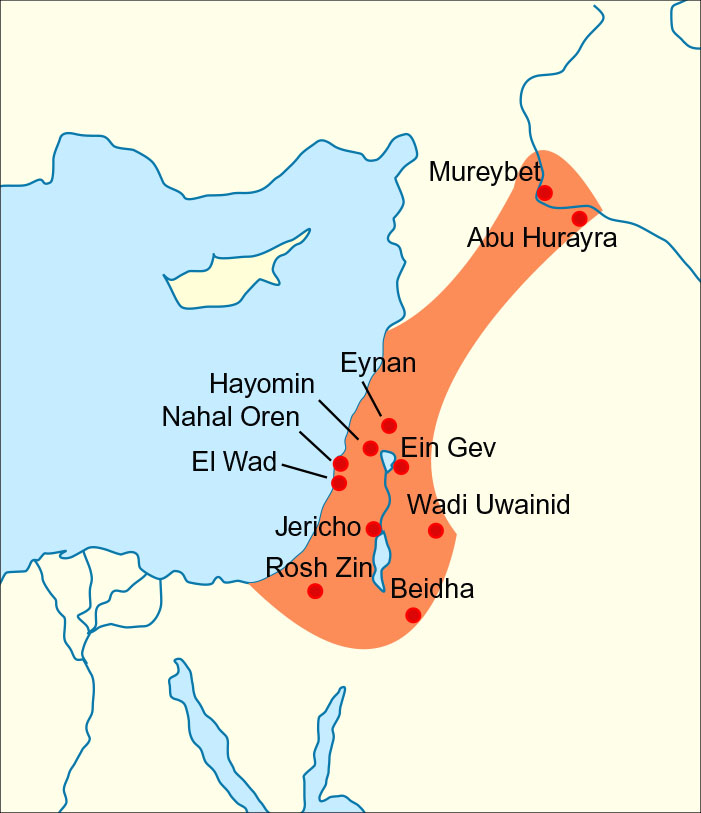
Archaeologists have determined that all these sites and others were part of a culture often described as Natufian (Figure 2.23). The founding of most of them predates agriculture, and while their environments are very dry today, many thousands of years ago they were rich in wild edible plants and animals. It was likely the wealth of these resources that allowed the Natufian groups to settle there, only later adopting agriculture and building Neolithic settlements.
英語のヒント
考古学者は、これらをはじめとする遺跡が、一般にナトゥーフ文化と呼ばれる文化の一部だったと判断している(図2.23)。多くの成立は農耕より古く、現在の環境は非常に乾燥しているものの、何千年も前には野生の食用植物や動物に恵まれていた。おそらく、この豊かな資源がナトゥーフの集団の定住を可能にし、その後に農耕を取り入れ、新石器時代の集落を築いたのである。
Sites of Natufian Settlements.ナトゥーフ文化の集落の位置。
(credit: modification of work “Extensión de la cultura Natufiense” by “Crates”/Wikimedia Commons, CC BY 3.0) · CC BY 3.0
Figure 2.23 Approximately twelve thousand years ago, the area where Natufian culture spread was far wetter and filled with much more abundant wildlife than today. (credit: modification of work “Extensión de la cultura Natufiense” by “Crates”/Wikimedia Commons, CC BY 3.0)
図2.23 約1万2000年前、ナトゥーフ文化が広がった地域は、現在よりはるかに湿潤で、野生生物もずっと豊富だった。(出典:「Crates」/Wikimedia Commons「Extensión de la cultura Natufiense」を改変、CC BY 3.0)
The earliest evidence of agriculture in South Asia has been found at the Neolithic settlement of Mehrgarh, situated in modern Pakistan to the north and west of the Indus River. As early as 7000 BCE, the people of this community were farming barley and raising goats and sheep. A few thousand years later they began domesticating cotton. Barley cultivation techniques may have been brought to the area from the Near East, though they also may have been developed independently. The structures of the settlement itself were made of dried mud bricks, with homes designed in a rectangular shape and divided into four parts. The people of Mehrgarh included skilled artisans capable of using sea shells, sandstone, and the rich blue lapis lazuli. Many of these materials came from great distances away, indicating that the settlement engaged in some type of long-distance trade, as did other Neolithic settlements.
英語のヒント
南アジア最古の農耕の証拠は、現在のパキスタン、インダス川の北西にある新石器時代の集落メヘルガルで見つかった。早くも紀元前7000年、この共同体の人々はオオムギを栽培し、ヤギとヒツジを飼っていた。その数千年後にはワタの栽培化を始めた。オオムギ栽培の技術は近東から来た可能性があるが、独自に発達した可能性もある。集落の建物は日干しれんがで作られ、家は長方形で、内部が四つに分けられていた。住民には貝殻、砂岩、深い青色のラピスラズリを加工できる熟練した職人がいた。これらの材料の多くは遠方から運ばれており、ほかの新石器時代の集落と同じく、何らかの長距離交易を行っていたことを示している。
The earliest Neolithic settlements in China, from around 8000 BCE, were located along two of its major rivers, the Yellow and the Yangtze. Along the Yellow River, people mainly cultivated millet, while on the Yangtze it was rice. These were areas with an abundance of water, access to fertile grasslands, and a variety of edible plants and animals for gathering and hunting, and Neolithic settlements proliferated. The people domesticated pigs and dogs and supplemented their diets of rice and millet by hunting, fishing, and gathering wild plants. They also made cord from hemp and pottery from clay.
英語のヒント
中国で最初期の新石器時代の集落は、紀元前8000年頃から、二大河川の黄河と長江の流域にあった。黄河では主にキビ類、長江ではイネが栽培された。水が豊富で、肥沃な草原を利用でき、採集や狩猟の対象となる動植物も多かったため、新石器時代の集落が数多く生まれた。人々はブタとイヌを家畜化し、米や雑穀の食事を、狩猟、漁労、野生植物の採集で補った。また、麻からひも、粘土から土器を作った。
Two of the early sites discovered there are Pengtoushan and Bashidang, both located in the Yangtze River valley in modern Hunan province. They may have been settled as early as 7500 BCE and preserve evidence of some of the earliest cultivation of wild rice. Homes were made by either digging partially into the ground or building on earth platforms with a central post to hold up the roof. A large ditch surrounds Bashidang, which may have served to channel water from the settlement and into the river. This surrounding-ditch design has been found at other locations and gradually developed into a type of moat around the settlements.
英語のヒント
そこで発見された初期の遺跡に、彭頭山と八十垱がある。どちらも現在の湖南省、長江流域に位置する。早くも紀元前7500年に定住が始まった可能性があり、野生イネの最初期の栽培の証拠が残る。住居は、地面を一部掘り下げるか、土の台地に建て、中央の柱で屋根を支える形だった。八十垱は大きな溝に囲まれ、おそらく集落の水を川へ流す役割があった。このような周囲の溝はほかの場所でも見つかり、徐々に集落を囲む堀のような形へ発達した。
In other areas around the world, the shift to agriculture happened in similar fashion. Sites with permanent settlement, the practice of agriculture, the use of pottery, and other characteristics associated with particular Neolithic cultures have been discovered in a great number of places. The earliest known agricultural settlements in the Americas have been found in northeastern Mexico, where as early as 6500 BCE people were cultivating plants like pepper and squash. In the Andes Mountains region of South America, Neolithic settlements growing potatoes and manioc began to emerge as early as 3000 BCE. The cultivation of taro in New Guinea may have begun as early as 7000 BCE. Along the Danube River valley in Europe, Neolithic settlements began to emerge around 6000 BCE, likely having adopted cereal farming from the Near East. And in central Africa, farming of white Guinea yams began around 5000 BCE, later including crops like millet and sorghum.
英語のヒント
世界のほかの地域でも、農耕への転換は似た形で起こった。定住、農耕、土器の使用など、特定の新石器文化の特徴を備えた遺跡は、非常に多くの場所で見つかっている。アメリカ大陸で知られている最古の農耕集落はメキシコ北東部にあり、早くも紀元前6500年にはトウガラシやカボチャなどが栽培されていた。南アメリカのアンデス山脈地域では、紀元前3000年には、ジャガイモやマニオクを育てる新石器時代の集落が現れ始めた。ニューギニアでは、早ければ紀元前7000年にタロイモの栽培が始まった可能性がある。ヨーロッパのドナウ川流域では、おそらく近東から穀物栽培を取り入れ、紀元前6000年頃に新石器時代の集落が現れ始めた。中央アフリカでは紀元前5000年頃、ホワイト・ギニア・ヤムの栽培が始まり、後にはキビ類やソルガムも加わった。