第2章初期の人類Early Humans
Diverse Paleolithic Peoples多様な旧石器時代の人々
Our window into Paleolithic life is small and opaque. Scholars have thus had to rely mostly on observing hunter-gatherer societies that exist today and extrapolating from their experiences. Relatively few such populations still survive, and they are found in only a few places around the world where producing food simply isn’t practicable or desirable. These include the Kalahari Desert of southern Africa, the forests of equatorial Africa, the far Arctic, Tanzania, parts of western Australia, and a few other places.
英語のヒント
旧石器時代の生活をのぞく窓は、小さく、曇っている。そのため研究者は主に、現在の狩猟採集社会を観察し、その経験から過去を推定することに頼らざるを得なかった。そうした集団は今では比較的少なく、食料生産が実行しにくい、あるいは望ましくない、世界の限られた場所に見られる。南部アフリカのカラハリ砂漠、赤道アフリカの森林、北極圏、タンザニア、西オーストラリアの一部などがその例である。
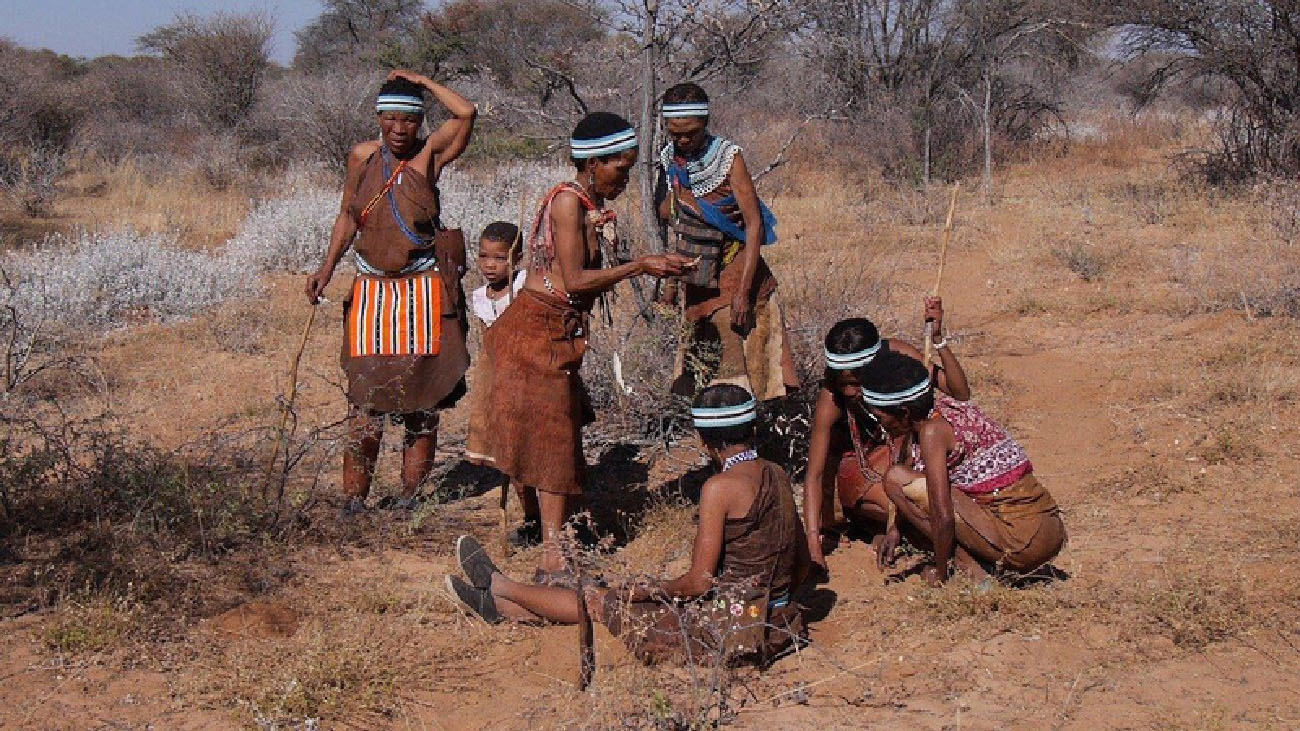
The San people of the Kalahari Desert in southern Africa have often been studied (Figure 2.17). They live today in parts of Botswana, Namibia, and Angola, and those who still practice a traditional lifestyle do so in groups of up to sixty people that include members of several related families. The San survive by foraging on wild vegetables, nuts, fruit, and insects. They also rely on hunting wild game like antelope with throwing sticks, spears, and small bows that shoot poison-dipped arrows. Their groups are largely leaderless, though in certain instances respected hunters or older men might wield some authority.
英語のヒント
南部アフリカのカラハリ砂漠に暮らすサンは、よく研究されてきた(図2.17)。現在はボツワナ、ナミビア、アンゴラの一部に住む。今も伝統的な暮らしを営む人々は、親族関係にある複数の家族を含む、最大60人ほどの集団で暮らしている。野生の野菜、木の実、果物、昆虫を採集するほか、投げ棒、槍、毒を塗った矢を放つ小型の弓で、レイヨウなどの野生動物を狩る。集団にはおおむね指導者がいないが、場合によっては、尊敬される狩人や年長の男性が一定の権威を持つこともある。
The San People of Africa.アフリカのサン。
(credit: “Tribu d’indigènes” by “hbieser”/Wikimedia Commons, CC0 1.0) · CC0 1.0
Figure 2.17 Some of the San people who live in the Kalahari Desert of southern Africa still follow a hunter-gatherer lifestyle today, living in relatively small and generally egalitarian family groups. (credit: “Tribu d’indigènes” by “hbieser”/Wikimedia Commons, CC0 1.0)
図2.17 南部アフリカのカラハリ砂漠に住むサンの一部は、今日も比較的小さく、おおむね平等主義的な家族集団で、狩猟採集生活を続けている。(出典:「hbieser」/Wikimedia Commons「Tribu d’indigènes」、CC0 1.0)
Despite this egalitarianism, the San do maintain some important divisions of labor based on sex. For example, men are expected to create fires for cooking and warmth, which they do by rubbing sticks together to create heat and adding a bit of dry grass so that it ignites. Men are also the primary hunters for the group, though women sometimes participate. Women’s responsibilities include gathering, as well as building traditional shelters from tree branches covered in long grass. These shelters are light and can be built quickly to allow the group to move regularly when necessary. Water is a constant concern in the very arid Kalahari environment, and the San can live on relatively little of it. They collect it from certain plants and special watering holes, frequently using hollowed-out ostrich eggs to collect and store it for later use.
英語のヒント
この平等主義にもかかわらず、サンには性別による重要な分業がいくつかある。たとえば、調理や暖を取るための火を起こすのは男性の役割とされる。棒をこすり合わせて熱を生じさせ、少量の乾いた草を加えて燃え上がらせるのである。男性は集団の主な狩人でもあるが、女性が加わることもある。女性の役割には、採集のほか、木の枝を長い草で覆った伝統的な住まい作りも含まれる。軽く、すばやく作れるため、必要に応じて集団が繰り返し移動することができる。非常に乾燥したカラハリでは、水は常に心配の種である。サンは比較的少量の水で生活できる。特定の植物や水場から水を集め、中身を抜いたダチョウの卵を使って、後で使うために採取・保存することが多い。
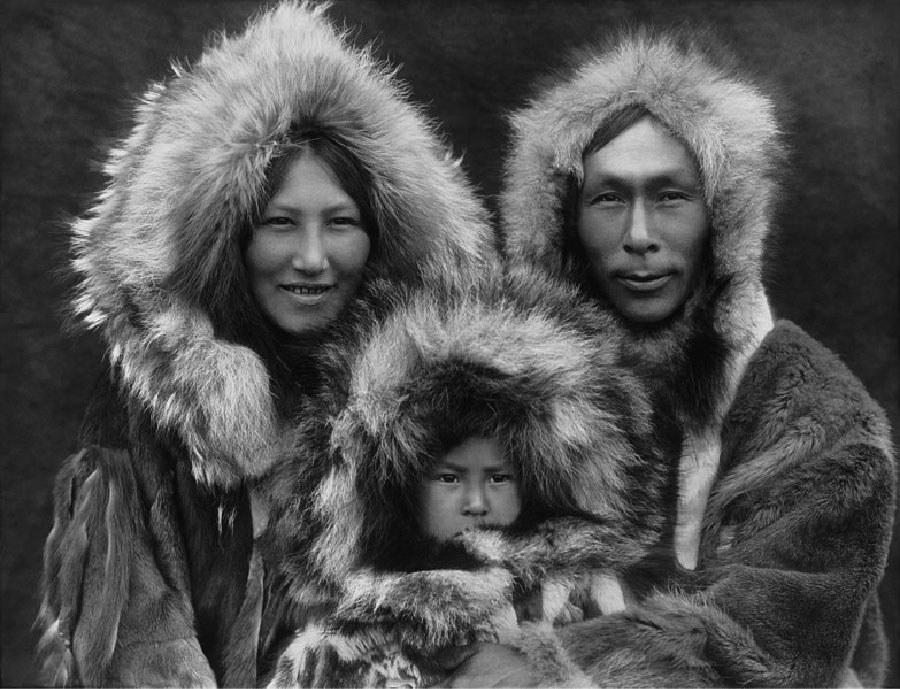
In the Arctic region of northern Alaska, Canada, and Greenland, where conditions are very different from those in the Kalahari, the Inuit people practice a form of hunter-gatherer lifestyle suitable to that environment. Like other hunter-gatherer groups, they live in relatively small bands made of multiple families and are generally much more egalitarian than settled societies that depend on agriculture. There are few plants to gather but an abundance of birds and animals to hunt and fish, including caribou, walrus, bowhead whale, seal, polar bear, muskox, and fox. In addition to providing meat and fuel, these animals have hides the Inuit use to make ocean-going vessels and thick clothing to protect them from the harsh cold (Figure 2.18). The plants that can be gathered in some warmer regions include grasses, roots, and seaweed.
英語のヒント
アラスカ北部、カナダ、グリーンランドの北極圏では、カラハリとは大きく異なる環境に適した狩猟採集生活を、イヌイットが営んでいる。ほかの狩猟採集集団と同じく、複数の家族からなる比較的小さな集団で暮らし、一般に農耕に依存する定住社会よりもずっと平等主義的である。採集できる植物は少ないが、魚や、狩りの対象となる鳥・動物は豊富だ。カリブー、セイウチ、ホッキョククジラ、アザラシ、ホッキョクグマ、ジャコウウシ、キツネなどがいる。これらの動物は肉や燃料だけでなく、外洋を航行する舟や厳しい寒さを防ぐ厚い衣服の材料となる皮も提供する(図2.18)。比較的暖かい地域で採集できる植物には、草、根、海藻がある。
The Inuit People of Alaska.アラスカのイヌイット。
(credit: “Inupiat Family from Noatak, Alaska, 1929” by Edward S. Curtis in The North American Indian/Wikimedia Commons, Public Domain) · Public Domain
Figure 2.18 Making carefully constructed fur clothing allows modern Inuit people to survive the cold conditions of their environment. This photograph of an Inuit family was made in 1929 and has been digitally restored. (credit: “Inupiat Family from Noatak, Alaska, 1929” by Edward S. Curtis in The North American Indian/Wikimedia Commons, Public Domain)
図2.18 丁寧に作った毛皮の衣服によって、現代のイヌイットは寒冷な環境で生きることができる。この家族写真は1929年に撮影され、デジタル修復されている。(出典:Edward S. Curtis『The North American Indian』所収「Inupiat Family from Noatak, Alaska, 1929」/Wikimedia Commons、パブリックドメイン)
As is common among hunter-gatherer groups, men tend to do the hunting and fishing while women care for the children, maintain the home, and process the food that is hunted or gathered. The relatively limited supply of plants in relation to animals has exerted a strong influence on Inuit society. Since by far the largest part of the diet is produced by hunting and fishing, the emphasis on these male-dominated activities is strong. Hunting and fishing are also very dangerous occupations in which death and serious injury are common. The result is that women have traditionally outnumbered men in Inuit bands. In the past this ratio has led to higher rates of polygamy and even infanticide. The accumulation of numerous wives by some men has also sparked jealousy and violent rivalries among kin.
英語のヒント
狩猟採集集団によく見られるように、男性が狩りや漁を行い、女性が子どもの世話、家の維持、狩りや採集で得た食料の処理を担う傾向がある。動物に比べて植物の供給が限られることは、イヌイット社会に強い影響を与えてきた。食料の圧倒的に大きな部分を狩猟と漁業がもたらすため、男性が中心となるこれらの活動が重視される。狩猟と漁業はまた、死や重傷が珍しくない危険な仕事でもある。その結果、イヌイットの集団では伝統的に女性の数が男性を上回ってきた。過去には、この比率が一夫多妻の増加や、さらには嬰児殺しにもつながった。一部の男性が多くの妻を持つことは、親族間の嫉妬や暴力的な争いも引き起こした。
Both the San and the Inuit have had considerable exposure to the settled agricultural societies around them, and modern technology has influenced the way they live. For example, the Inuit today often use firearms to hunt in ways they could not have done several centuries ago. But one hunter-gatherer society that has still had only limited exposure to agricultural societies is the Awá people of the Brazilian rainforest. The known behaviors of the Awá thus provide scholars a picture of hunter-gatherer societies that may be closer to that of our distant ancestors.
英語のヒント
サンもイヌイットも、周囲の定住農耕社会とかなり接触してきており、現代技術もその生活に影響を与えている。たとえば、今日のイヌイットは銃をよく使い、数世紀前にはできなかった方法で狩りをする。これに対し、ブラジルの熱帯雨林に暮らすアワは、農耕社会との接触が今も限られる狩猟採集社会の一つである。そのため、知られているアワの行動は、私たちの遠い祖先により近いかもしれない狩猟採集社会の姿を、研究者に示している。
Unlike the San and the Inuit, who live in environments where many resources are scarce, the Awá inhabit a very plentiful and lush environment. There are relatively few of them, only about three hundred and fifty, and their semi-nomadic hunter-gatherer lifestyle is not a vestige of ancient practices. Rather, it is believed that as recently as the nineteenth century CE they abandoned previously settled communities and moved deep into the Amazon River basin to live as they currently do. Despite their relatively late adoption of this lifestyle, the Awá display many of the societal characteristics common among other hunter-gatherer groups. They are highly egalitarian. They own relatively few material objects. They live in small groups of up to thirty. And they survive by hunting animals and gathering edible plants from the surrounding environment. A traditional and highly valued gathered plant is the fruit of the babassu palm. In addition to relying on this oily and protein-rich fruit, Awá groups also survive on the abundant fish in the wet rainforest and hunt numerous other animals using bows and arrows.
英語のヒント
多くの資源が乏しい環境に暮らすサンやイヌイットと異なり、アワは非常に豊かで緑の多い環境に住んでいる。人口は比較的少なく、約350人にすぎない。そして半移動的な狩猟採集生活は、古代の慣習の名残ではない。むしろ、つい19世紀に、それまでの定住共同体を離れ、現在のように暮らすため、アマゾン川流域の奥へ移ったと考えられている。この生活様式を取り入れた時期は比較的遅いが、アワにはほかの狩猟採集集団と共通する社会的特徴が多い。非常に平等主義的で、持ち物は比較的少なく、最大30人ほどの小集団で暮らす。そして周囲の環境で動物を狩り、食用植物を集めて生活する。伝統的に採集され、特に重視される植物が、ババスヤシの実である。油脂とタンパク質に富むこの実に加え、湿潤な熱帯雨林に豊富な魚や、弓矢で狩る多くの動物にも頼っている。
The different environments in which the world’s remaining hunter-gatherers live have inspired very different understandings of the supernatural. The Inuit have a rich mythology that includes stories of fantastic hunts and incredible creatures that inhabit the world. The northern lights, a natural celestial display common in very high latitudes, is seen as a feature of the supernatural that can be both comforting and terrifying.
英語のヒント
世界に残る狩猟採集民が暮らす環境の違いは、超自然についての非常に異なる理解を生み出してきた。イヌイットには、驚くべき狩りや、世界に住む不思議な生き物の物語を含む、豊かな神話がある。高緯度でよく見られる自然の天体現象であるオーロラは、慰めにも恐怖にもなり得る超自然的なものの現れと見なされる。
Many San religious beliefs revolve around a sometimes helpful and sometimes foolish being called Kaggen. Kaggen can take the form of numerous animals, including certain insects. The San also practice numerous types of rituals for important life events, such as a young boy’s first kill and marriage. They recognize certain members of their group as shamans with a special connection to the supernatural world.
英語のヒント
サンの宗教的信仰の多くは、カッゲンと呼ばれる、ときには助けとなり、ときには愚かな存在を中心とする。カッゲンは、ある種の昆虫を含む多くの動物の姿を取ることができる。サンはまた、少年が初めて獲物を仕留めるときや結婚など、人生の重要な出来事にさまざまな儀礼を行う。集団の中の特定の人々を、超自然の世界と特別につながるシャーマンとして認めている。
The Awá perform unique religious ceremonies during special times, such as evenings with a full moon. They also practice rituals that take them to a spirit world where they can request special intervention on Earth.
英語のヒント
アワは、満月の夜などの特別な時に、独自の宗教儀礼を行う。また、霊の世界へ行き、地上に特別な働きかけをしてもらうよう求める儀礼も行う。