第2章初期の人類Early Humans
Life in the Paleolithic Age旧石器時代の生活
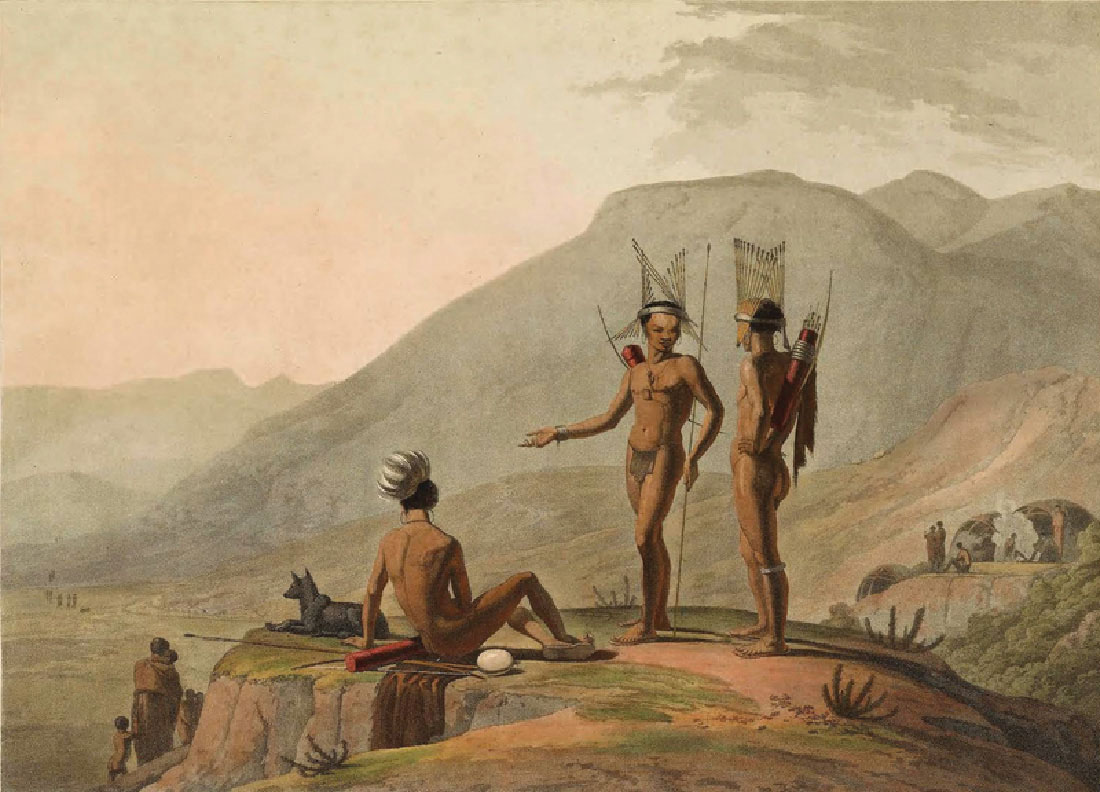
Until as recently as twelve thousand years ago, human populations around the world remained very small and relied on subsistence hunting and gathering for survival. A typical group of early humans could be as small as fifteen people and perhaps as large as only forty (Figure 2.16). These groups were further subdivided into family units. Their small size should not be surprising, since they had only the naturally occurring resources around them to depend upon. But it also contributed to the development of close relationships between members of the group, an advantage in a world where cooperation could mean the difference between life and death. Groups much larger than forty or so would have struggled to live on the scarce resources of an area and found cooperation difficult to achieve. Any groups that became too large would by necessity have split up and found other areas and other resources.
英語のヒント
つい1万2000年前まで、世界各地の人類の人口はごく少なく、生活を維持するための狩猟採集に依存していた。初期の人類の典型的な集団は、小さければ15人、大きくてもおそらく40人ほどだった(図2.16)。その中は、さらに家族単位に分かれていた。頼れるのは周囲に自然に存在する資源だけだったのだから、集団が小さいのも不思議ではない。しかし、その小ささは仲間どうしの親密な関係の発達にもつながった。協力の有無が生死を分けかねない世界では、それは利点だった。40人ほどを大きく超える集団は、ある地域の乏しい資源だけで暮らすことが難しく、協力も実現しにくかっただろう。大きくなりすぎた集団は、必要に迫られて分かれ、別の場所と資源を見つけたはずである。
Early Hunter-Gatherers.初期の狩猟採集民。
(credit: “Bushmen Hottentots armed for an expedition” by Samuel Daniell in African Scenery and Animals/Wikimedia Commons, Public Domain) · Public Domain
Figure 2.16 This 1804 sketch of a hunter-gatherer people known as the San was made by Samuel Daniell of England, during his appointment as artist for a British expedition traveling throughout southern Africa. For hunter-gatherers such as the San and our early ancestors, living in small groups of no more than about forty was necessary to survive, given scarce resources. (credit: “Bushmen Hottentots armed for an expedition” by Samuel Daniell in African Scenery and Animals/Wikimedia Commons, Public Domain)
図2.16 1804年、イギリスのサミュエル・ダニエルが、南部アフリカを旅するイギリス探検隊の画家として描いた、サンと呼ばれる狩猟採集民の素描。サンや初期の祖先のような狩猟採集民にとって、資源が乏しいなかで生き延びるには、40人ほどを超えない小集団での生活が必要だった。(出典:Samuel Daniell『African Scenery and Animals』所収「Bushmen Hottentots armed for an expedition」/Wikimedia Commons、パブリックドメイン)
Diets for humans in this period consisted of nuts, fruits, berries, wild grains and honey, fish, birds, shellfish, insects, and other animals. What people ate depended heavily on the environments in which they lived. Those in lush, warm environments had access to a variety of edible plants and animals. In more frigid and icier environments, they depended more on animals and fish. Fishing strategies likely included the use of spears but also nets and even hooks made of bone. Land animals eaten for food were either scavenged from remains left behind by other predators or hunted by humans themselves. Most hunting likely focused on smaller animals.
英語のヒント
この時代の人類は、木の実、果物、ベリー類、野生穀物、蜂蜜、魚、鳥、貝、昆虫、そのほかの動物を食べていた。何を食べるかは、暮らす環境に大きく左右された。暖かく植物の豊かな土地では、さまざまな食用植物と動物を得られた。いっそう寒く氷の多い地域では、動物や魚への依存が大きかった。漁にはおそらく槍だけでなく、網や、骨製の釣り針も使われた。陸上動物の肉は、ほかの捕食者の食べ残しを拾うか、自分たちで狩ることで得た。狩猟の多くは、小型動物を対象にしていたと考えられる。
But large-game hunts did occur. Archaeological remains and cave paintings indicate that humans hunted deer, horses, gazelle, bison, and even very large animals like woolly mammoths. We know from archaeological work done in the Americas that as early as twelve thousand years ago, modern humans occasionally drove bison herds over cliffs to their deaths in order to process their meat and hides. Similar methods were likely used in other places to hunt various species of herding animals around this time or even earlier. Hunting woolly mammoths tens of thousands of years ago would have required a lot of group cooperation and the use of sophisticated tools like spears. It would also have been very dangerous, and scholars debate how common it really was. But killing a mammoth would have been highly desirable; a typical animal weighed around six tons, and harvesting it would provide a good supply of meat, hide, and bone for a small group.
英語のヒント
しかし、大型獣の狩りも行われた。遺物や洞窟壁画は、シカ、馬、ガゼル、バイソン、さらにはケナガマンモスのような非常に大きな動物も狩っていたことを示す。アメリカ大陸の考古学的調査からは、早くも1万2000年前に、現代人がときおりバイソンの群れを崖から追い落として殺し、肉や皮を処理していたことが分かっている。同じ頃、あるいはもっと早い時期に、ほかの場所でも、群れで暮らすさまざまな動物を狩るため、似た方法が使われた可能性がある。数万年前にケナガマンモスを狩るには、集団の大きな協力と、槍のような精巧な道具が必要だっただろう。非常に危険でもあったはずで、実際にどれほど一般的だったかは研究者の間で議論されている。それでも、一頭を仕留める価値は非常に高かっただろう。典型的なマンモスは約6トンあり、小集団に多くの肉、皮、骨をもたらしたからである。
For shelter, early humans commonly used both built structures and naturally occurring refuges like caves. Archaeologists around the world have unearthed evidence suggesting that some populations occupied a single cave for tens of thousands of years. The Panga ya Saidi cave in Kenya, for example, may have been home to humans for as long as seventy-eight thousand years. When caves weren’t available or when populations needed to be more mobile, humans designed their own shelters using wood, bone, animal skins, and other items gathered from the surrounding area. Evidence of shelters constructed of mammoth bones and covered with animal hides has been uncovered in several locations in Eastern Europe, including Ukraine, Poland, and the Czech Republic. These encampments may have been used as long as twenty-five thousand years ago.
英語のヒント
初期の人類は、作った構造物も、洞窟などの自然の避難場所も、住まいとしてよく利用した。世界各地の考古学者は、一部の集団が一つの洞窟を何万年も使っていたことを示す証拠を発見している。たとえばケニアのパンガ・ヤ・サイディ洞窟には、人類が7万8000年もの間住んでいた可能性がある。洞窟がなかったり、より頻繁に移動する必要があったりする場合、人々は周囲で集めた木、骨、獣皮などで住まいを作った。ウクライナ、ポーランド、チェコを含む東ヨーロッパの複数の場所では、マンモスの骨を組み、獣皮で覆った住居の証拠が見つかっている。こうした宿営地は、2万5000年前にすでに使われていたのかもしれない。
There are strong indications that modern humans living even tens of thousands of years ago had developed some form of spirituality, perhaps even a kind of religion. As they are today, spirituality and belief in the supernatural were a way of making sense of the world. Natural occurrences like sunsets, earthquakes, comets, lightning, volcanoes, and many events for which we have ready scientific answers may have held supernatural significance for our Paleolithic ancestors. If modern practices are any guide, Paleolithic humans likely had religious traditions similar to animism—the idea that a degree of spirituality exists not only in people but also in plants, inanimate objects, and even natural phenomena like fires. The detailed cave paintings of bison, deer, and other animals left behind by these distant ancestors may be some of the few surviving traces of their ideas about the supernatural. It is even possible they recognized some members as religious figures. Such shaman men and women would have provided some connection between this world and another less understood world beyond.
英語のヒント
数万年前の現代人も、何らかの霊的な観念を、場合によっては一種の宗教さえ発達させていたことを強く示す証拠がある。今日と同じように、霊的な観念や超自然への信仰は、世界を理解する方法だった。夕日、地震、彗星、雷、火山など、今なら科学的にすぐ説明できる多くの現象が、旧石器時代の祖先には超自然的な意味を持ったのかもしれない。現代の実践を手がかりにできるなら、旧石器時代の人々にもアニミズムに似た宗教的伝統があったと考えられる。これは、人間だけでなく、植物、無生物、火のような自然現象にも、ある種の霊性が存在するという考えである。遠い祖先が残したバイソンやシカなどの精緻な洞窟壁画は、超自然についての観念を伝える、数少ない痕跡なのかもしれない。集団内の特定の人を宗教的な人物として認めていた可能性さえある。そのような男女のシャーマンは、この世界と、よく理解できないその向こうの世界を、何らかの形でつないだのだろう。
We do know that modern humans and even Neanderthals buried their dead, and they frequently placed common household items in the grave when they did. A few rare burial sites found in eastern and southern Europe and dating back thirty thousand years were particularly ornate. Some included ivory spears and discs, along with bodies carefully covered in red ochre and beads made of both mammoth ivory and fox teeth. But most burials discovered so far were fairly simple. While it’s tempting to draw conclusions about a belief in the afterlife from such finds, it’s impossible to know for sure what significance these burials had for the people who performed them.
英語のヒント
現代人だけでなくネアンデルタール人も死者を埋葬し、その際には日常の品を墓に入れることが多かったのは確かである。東ヨーロッパと南ヨーロッパで見つかった、3万年前にさかのぼる少数の珍しい墓は、特に華やかだった。象牙の槍や円盤が入り、遺体には赤いオーカーや、マンモスの牙とキツネの歯で作ったビーズが丁寧に施されていたものもある。しかし、これまでに見つかった埋葬の大半は、かなり単純だった。こうした発見から死後の世界への信仰を読み取りたくなるが、埋葬した人々にとってどのような意味があったのか、確かなことは分からない。
By studying archaeology and observing modern hunter-gatherers, many have concluded that ancient hunter-gatherer societies were very egalitarian. The small size of the groups, the lack of wealth, and the nomadic lifestyle were likely the reasons. But it is difficult to know exactly how egalitarian early human societies were. There was clearly some degree of differentiation within them. Just like today, within even a small group there would have been varying degrees of physical ability, intelligence, charisma, and other traits. Group members would surely have recognized these differences and used them to their advantage.
英語のヒント
考古学と現代の狩猟採集民の観察から、多くの研究者は、古代の狩猟採集社会は非常に平等主義的だったと結論している。集団の小ささ、富の乏しさ、移動する生活様式が、おそらくその理由だった。しかし、初期の人類社会がどの程度平等だったかを正確に知るのは難しい。内部には明らかにある程度の違いがあった。今日と同じく、小集団の中でも、身体能力、知性、カリスマ性などの特徴には差があったはずである。人々は当然そうした違いを認識し、それを集団の利点として活用しただろう。
Older interpretations of social organization suggested that men did most of the hunting while women did the cooking or stayed home to nurse children. More recently, some have suggested that Paleolithic men and women both made a number of contributions to society. Meat, likely hunted mostly by men, would have been highly prized, but plants and other foods gathered mostly by women may have contributed as many if not more valued calories to the group. It is also likely that if men were away hunting, then by necessity women would have taken care of everything else. This meant protecting homes from attack, repairing shelters, and making tools.
英語のヒント
以前の社会組織の解釈では、男性が狩りの大半を担い、女性は調理をしたり、家にとどまって子どもに乳を与えたりしたと考えられていた。近年では、旧石器時代の男性も女性も、社会にさまざまな貢献をしていたとする見方がある。主に男性が狩ったと考えられる肉は高く評価されただろう。しかし、主に女性が集めた植物などの食料も、集団にとって、肉を上回らないまでも同じくらい価値あるカロリーを供給していた可能性がある。また、男性が狩りで不在なら、女性は必然的に、そのほかのすべてを引き受けた可能性が高い。つまり、住まいを攻撃から守り、修理し、道具を作ることなどである。