第7章認識論Epistemology
Epistemic Injustice認識的不正義
If standpoint epistemology is correct in concluding that valuable perspectives are often excluded from social and scientific discourse, then this is an instance of epistemic injustice. Epistemic injustice is injustice related to epistemology. Epistemic injustices include the exclusion and silencing of perspectives, systematic misrepresentation of group or individual views, unfair conferring of expert status, and unjustified distrust of certain perspectives. British philosopher Miranda Fricker (b. 1966), who coined the term epistemic injustice, divides epistemic injustice into two categories: testimonial injustice and hermeneutical injustice (Fricker 2007). Testimonial injustice occurs when the opinions of individuals or groups are unfairly ignored or treated as untrustworthy. Hermeneutical injustice occurs when a society’s language and concepts cannot adequately capture the experience of people living within that society, which thereby limits understanding of their experiences.
英語のヒント
価値ある観点が社会や科学の議論からしばしば排除される、という立場の認識論の結論が正しいなら、これは認識的不正義の一例である。認識的不正義とは、認識論に関わる不正義である。そこには、観点の排除や沈黙の強制、集団や個人の見解の体系的な歪曲、専門家の地位の不公正な付与、特定の観点への正当な理由のない不信などが含まれる。「認識的不正義」という語を作ったイギリスの哲学者ミランダ・フリッカー(1966年生まれ)は、これを証言的不正義と解釈的不正義の2種類に分ける(Fricker 2007)。証言的不正義は、個人や集団の意見が不当に無視されたり、信用できないものとして扱われたりするときに生じる。解釈的不正義は、社会の言語や概念が、そこで暮らす人々の経験を十分に捉えられず、そのために経験の理解が制限されるときに生じる。
Testimonial Injustice証言的不正義
Silencing and distrust of someone’s word often occurs by virtue of that individual’s membership in a marginalized group. Women, people of color, people with disabilities, low-income individuals, and religious minorities are all examples of marginalized groups. Take as an example a criminal trial. If the jury takes the testimony of a witness less seriously because of their perceived class status or membership in a particular group, this is an example of epistemic injustice, specifically testimonial injustice. Philosophers who focus on testimonial injustice utilize research to show how the voices of individuals and groups are unfairly ignored and discounted compared to others. For example, many studies over the past few decades have illustrated that reports of pain by Black patients are taken less seriously by medical professionals than similar pain reports by White patients. An outcome of this is that Black patients are given less pain medicine and pain management than White patients, even in cases where the patients had the same injury or surgery (Smedley, Stith, and Nelson 2003; Cintron and Morrison 2006). This is clearly a case of testimonial injustice: Black patients receive less care because their testimony (reporting pain) is not taken as seriously as the testimony of their White counterparts.
英語のヒント
誰かの発言を封じたり、信用しなかったりすることは、その人が周縁化された集団に属するという理由で、しばしば起こる。女性、有色人種、障害のある人、低所得の人、宗教的少数者は、いずれも周縁化された集団の例である。刑事裁判を例に考えよう。陪審が、証人の階層的地位をどう見なすか、または証人が特定の集団に属することを理由に、証言を真剣に受け止めないなら、それは認識的不正義、とりわけ証言的不正義の一例である。証言的不正義を研究する哲学者は、研究成果を用いて、個人や集団の声が、他者に比べて不当に無視され、軽く扱われる仕方を示す。例えば、過去数十年の多くの研究は、黒人患者による痛みの訴えが、同じような白人患者の訴えよりも、医療専門職に真剣に受け止められないことを示してきた。その結果、同じけがや手術を経験した場合でさえ、黒人患者は白人患者より、痛み止めの投与や痛みの管理を少なくしか受けられない(Smedley, Stith, and Nelson 2003; Cintron and Morrison 2006)。これは明らかに証言的不正義の事例である。黒人患者の証言、すなわち痛みの訴えが、白人患者の証言ほど真剣に扱われないために、黒人患者が受けるケアは少なくなるのである。
But testimonial injustice also occurs when someone’s opinions are systematically misrepresented. To misrepresent a view is to interpret that view in a way that does not align with the original intended meaning. As an example, consider the Black Lives Matter movement and a popular response to it. Black Lives Matter was formed in response to police brutality and racially motivated violence against Black people. The idea was to affirm the value of Black lives. However, a popular response to the movement was the phrase “All lives matter.” This response implies that the message of Black Lives Matter is really that only Black lives matter, which is an unfair and inaccurate representation of the view.
英語のヒント
しかし、証言的不正義は、誰かの意見が体系的に歪められるときにも生じる。見解を歪めるとは、その見解を、本来意図された意味に合わない仕方で解釈することである。例えば、Black Lives Matter運動と、それに対する広く見られた反応を考えよう。Black Lives Matterは、黒人に対する警察の暴力と、人種を動機とする暴力に応答して形成された。その考えは、黒人の命の価値を肯定することにあった。しかし、この運動への広く見られた反応は、All lives matter「すべての命が大切だ」という言葉だった。この反応は、Black Lives Matterのメッセージが、実は「黒人の命だけが大切だ」というものだと含意する。しかし、それは、その見解を不公正かつ不正確に表したものである。
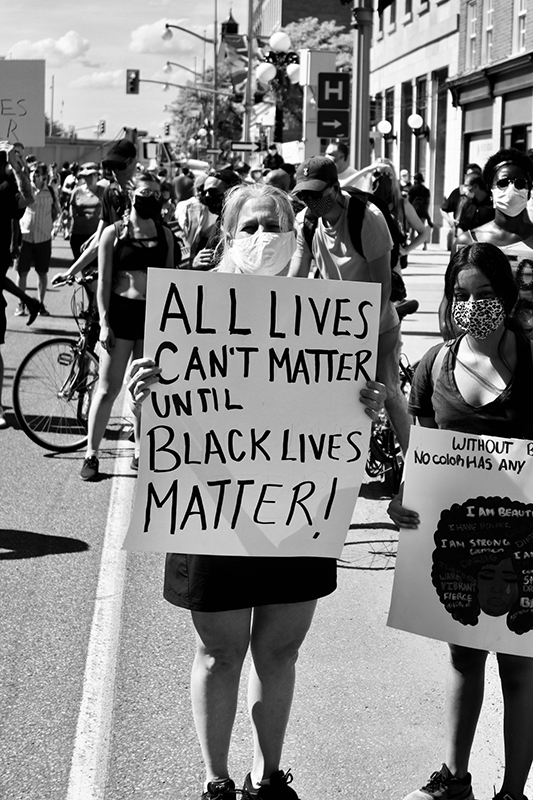
Figure 7.12 Interpreting the phrase “Black lives matter” to mean “only Black lives matter” is an instance of testimonial injustice. (credit: “Black Lives Matter” by Taymaz Valley/Flickr, CC BY 2.0)
図7.12 Black lives matter「黒人の命は大切だ」を、「黒人の命だけが大切だ」と解釈することは、証言的不正義の一例である。 (credit: “Black Lives Matter” by Taymaz Valley/Flickr, CC BY 2.0)
Hermeneutical Injustice解釈的不正義
Hermeneutical injustice occurs when language and concepts cannot adequately capture an individual’s experience, resulting in a lack of understanding of that individual’s experience by both the individual and those around them. The classic example of hermeneutical injustice focuses on sexual harassment. Before the concept and phrase sexual harassment was introduced and understood by society, women had a difficult time describing certain experiences in the workplace. Women experienced unwanted attention and focus, exclusion, comments concerning their bodies and looks, and different treatment based on negative assumptions about their gender. Many women were fired for not going along with such treatment. But there was no word for their experience, so many women could not understand or explain their discomfort. Furthermore, accounts of their distressing experience ran the risk of not being taken seriously by others. The phrase sexual harassment was coined to fill a gap in the concepts used to explain and describe experience. Perhaps you have had the experience of being introduced to a word or concept that suddenly illuminated a part of your experience in a way that greatly increased your understanding of yourself and your ability to explain yourself to others.
英語のヒント
解釈的不正義は、言語や概念が個人の経験を十分に捉えられず、本人も周囲の人々も、その経験を理解できなくなるときに生じる。典型例は、セクシュアル・ハラスメントに関するものである。「セクシュアル・ハラスメント」という概念と言葉が導入され、社会に理解される以前、女性たちは職場でのある種の経験を、うまく説明できずにいた。望まない注意や関心を向けられたり、排除されたり、身体や外見について言われたり、女性という性別への否定的な思い込みに基づいて、異なる扱いを受けたりしていた。多くの女性は、そのような扱いに従わなかったために解雇された。しかし、自らの経験を表す言葉がなかったため、多くの女性は、その不快感を理解したり説明したりできなかった。さらに、そのつらい経験を語っても、他者に真剣に受け止められないおそれがあった。「セクシュアル・ハラスメント」という言葉は、経験を説明し記述する概念の空白を埋めるために作られた。あなたにも、ある語や概念を知ったことで、自分の経験の一部が突然よく見えるようになり、自分への理解と、他者に自分を説明する力が、大きく増した経験があるかもしれない。
Summaryまとめ
Applied epistemology uses the concepts, methods, and theories particular to epistemology and applies them to current social issues and practices. An important area of applied epistemology is social epistemology, which focuses on the social facets of knowledge and justification and how groups form beliefs. Testimony refers to how we gain knowledge from and share knowledge with others. Social epistemology studies how to evaluate our beliefs when they conflict with the testimony of others. Social epistemology also illuminates how injustice can arise in epistemological endeavors in a social world. Testimonial injustice occurs when the opinions of individuals are systematically discounted or ignored unfairly. Hermeneutical injustice occurs when a society’s language and concepts cannot adequately capture the experience of all its members.
応用認識論は、認識論に特有の概念、方法、理論を用い、現在の社会的課題や実践に適用する。その重要な分野である社会認識論は、知識と正当化の社会的側面、そして集団が信念を形成する仕方に焦点を当てる。証言は、他者から知識を得たり、他者と知識を分かち合ったりする仕方を指す。社会認識論は、自分の信念が他者の証言と衝突するとき、その信念をどう評価すればよいかを研究する。また、社会的世界における認識の営みの中で、不正義がどう生じうるかも明らかにする。証言的不正義は、個人の意見が体系的に、かつ不当に軽く扱われたり無視されたりするときに生じる。解釈的不正義は、社会の言語や概念が、すべての構成員の経験を十分に捉えられないときに生じる。
Review Questions復習問題
Define applied epistemology.
応用認識論を定義しよう。
Why are knowledge and justification a social matter?
知識と正当化が社会的な事柄であるのは、なぜか。
Define testimonial injustice and offer an example of it.
証言的不正義を定義し、その例を挙げよう。
Suggested Readings参考となる文献
Kidd, Ian James, José Medina, and Gaile Pohlhaus Jr., eds. 2017. The Routledge Handbook of Epistemic Injustice. New York: Routledge.
Kidd, Ian James・José Medina・Gaile Pohlhaus Jr.編. 2017. The Routledge Handbook of Epistemic Injustice. New York: Routledge.
Greco, John, ed. 2008. The Oxford Handbook of Skepticism. New York: Oxford University Press.
Greco, John編. 2008. The Oxford Handbook of Skepticism. New York: Oxford University Press.
Russell, Bertrand. (1912) 1959. The Problems of Philosophy. New York: Oxford University Press.
Russell, Bertrand. (1912) 1959. The Problems of Philosophy. New York: Oxford University Press.
Truncellito, David A. n.d. “Epistemology.” Internet Encyclopedia of Philosophy, edited by James Fieser and Bradley Dowden. https://iep.utm.edu/epistemo/.
Truncellito, David A. 刊年不明. “Epistemology.” Internet Encyclopedia of Philosophy, James Fieser・Bradley Dowden編. https://iep.utm.edu/epistemo/.