第7章認識論Epistemology
7.4 Skepticism7.4 懐疑主義
Learning Objectives学習目標
By the end of this section, you will be able to:
この節を読み終えると、次のことができるようになる。
Define skepticism as it is used in philosophy.
哲学で用いられる意味での懐疑主義を定義する。
Compare and contrast global and local skepticism.
全面的懐疑主義と局所的懐疑主義を比較し、違いを示す。
Offer and explain a skeptical hypothesis.
懐疑的仮説を一つ挙げ、説明する。
Outline the general structure of argument for global skepticism.
全面的懐疑主義を擁護する論証の、一般的な構造を概説する。
Philosophical skepticism is the view that some or all knowledge is impossible. A skeptic questions the possibility of knowledge—particularly justification—in some domain. A global skeptic rejects the possibility of knowledge in general. But one need not reject the possibility of all knowledge. A local skeptic questions the possibility of knowledge only in particular areas of study. One can be a local skeptic about moral knowledge or scientific knowledge. This section will first look at global skepticism and the arguments offered in support of it and then will briefly look at local skepticism.
英語のヒント
哲学的懐疑主義は、一部またはすべての知識は不可能だという見方である。懐疑主義者は、ある領域の知識、とりわけ正当化が可能かどうかを疑問に付す。全面的懐疑主義者は、知識一般の可能性を拒否する。しかし、あらゆる知識の可能性を拒否する必要はない。局所的懐疑主義者は、特定の研究領域でだけ、知識の可能性を疑問に付す。例えば、道徳的知識や科学的知識について、局所的懐疑主義者となることができる。この節では、まず全面的懐疑主義と、それを支持するために提出される論証を見た後、局所的懐疑主義を簡単に見る。
Global Skepticism全面的懐疑主義
Global skepticism is a view that questions the possibility of all knowledge. To make their case, global skeptics point to the lack of the possibility of certainty in our beliefs. Because we cannot know that our beliefs are true, we cannot know in general. Usually, global skepticism attempts to undermine the possibility of forming justified beliefs. Global skeptics target all beliefs, or all beliefs about the external world (which amounts to most beliefs). Most beliefs tacitly or explicitly assume the existence of an external world. When I have the experience of seeing a bird in a tree and think, “There is a bird in that tree,” I assume that there is an actually existing physical bird in an actually existing physical tree in an actually existing real world outside of me. There is means “there exists.” I believe the bird, tree, and world all exist independently of my thoughts. The global skeptic questions beliefs such as these.
英語のヒント
全面的懐疑主義は、あらゆる知識の可能性を疑問に付す見方である。全面的懐疑主義者は、自らの主張を立証するため、私たちの信念に確実性を得られないことを指摘する。自分の信念が真であると知りえないため、そもそも何も知りえない、というのである。通常、この立場は、正当化された信念を形成する可能性を崩そうとする。全面的懐疑主義者が標的とするのは、あらゆる信念、または外部世界についてのあらゆる信念である。後者も、信念の大半にあたる。信念の大半は、外部世界の存在を、暗黙に、または明示的に前提としている。木にいる鳥を見るという経験をして、「あの木に鳥がいる」と考えるとき、私は、自分の外に実際に存在する現実世界の中で、実際に存在する物理的な木に、実際に存在する物理的な鳥がいる、と前提している。There is は「存在する」という意味である。鳥、木、世界がすべて、自分の思考から独立に存在していると信じている。全面的懐疑主義者は、このような信念を疑問に付す。
The Dream Argument夢の論証
How many times have you realized that you were dreaming while you were dreaming? Most people believe that whatever they are dreaming is real during the dream. Indeed, the fact that people think dreams are real while dreaming is what makes nightmares so terrible. If you knew the content of a nightmare was a dream, then it would not be nearly as scary. Zhuang Zhou (c. 369–286 BCE) was a Chinese Taoist philosopher who argued that for all we know, we could currently be dreaming while thinking we are awake. Imagine dreaming that you are a butterfly, happily flitting about on flowers. When you wake, how can you determine whether you have just woken from dreaming you are a butterfly or you are a butterfly who has just started dreaming that you are human? Zhuang Zhou explains:
英語のヒント
夢を見ている最中に、夢だと気づいたことが、何回あるだろうか。大半の人は、夢を見ている間、その内容が何であれ現実だと信じている。実際、夢を現実だと思うことこそが、悪夢をあれほど恐ろしいものにする。悪夢の内容が夢だと分かっていれば、それほど怖くはないはずである。中国の道家の哲学者である荘周(紀元前369年頃~前286年頃)は、知っているかぎりのことからは、私たちはいま、目覚めていると思いながら夢を見ている可能性を排除できない、と論じた。蝶になって、花の間を楽しげに飛び回る夢を見ると想像してみよう。目覚めたとき、あなたは、自分が蝶である夢からいま目覚めたのか、それとも、自分が人間である夢を見始めたばかりの蝶なのか、どう判断できるだろうか。荘周は次のように説明する。
While he is dreaming he does not know it is a dream, and in his dream he may even try to interpret a dream. Only after he wakes does he know it was a dream. And someday there will be a great awakening when we know that this is all a great dream. Yet the stupid believe they are awake, busily and brightly assuming they understand things, calling this man ruler, that one herdsman—how dense! Confucius and you are both dreaming! And when I say you are dreaming, I am dreaming, too. (Zhuangzi 2003, 43)
英語のヒント
夢を見ている間、人はそれが夢だと知らず、夢の中で夢を解釈しようとさえするかもしれない。目覚めて初めて、それが夢だったと知る。そしていつの日か、大いなる目覚めがあって、これがすべて大いなる夢だと知るだろう。それなのに愚かな者たちは、自分は目覚めていると信じ、忙しく、利口そうに、物事を理解していると思い込み、この人を支配者、あの人を牧人と呼ぶ。なんと鈍いことか。孔子も、あなたも、ともに夢を見ている。そして私が、あなたは夢を見ていると言うとき、私もまた夢を見ているのだ。(Zhuangzi 2003, 43)
Zhaung Zhou puts forward the possibility that all of what we take to be conscious experience is actually a dream. And if we are dreaming, then all our beliefs about the external world are false because those beliefs take for granted that our current experience is real.
英語のヒント
荘周は、私たちが意識的経験だと受け取っているもののすべてが、実は夢であるという可能性を提示する。そして、もし夢を見ているなら、外部世界についての信念はすべて偽である。それらの信念は、現在の経験が現実であることを、当然の前提としているからである。
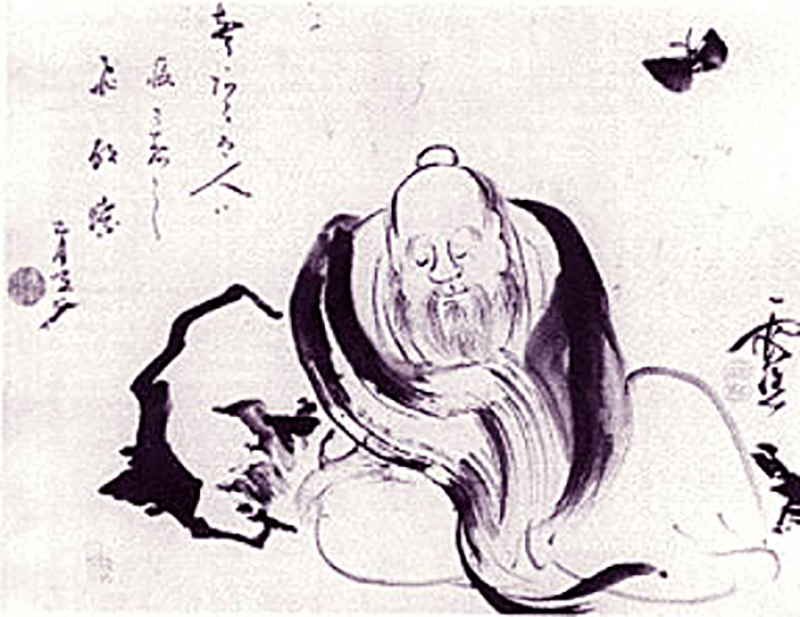
Figure 7.8 Is this a picture of a man dreaming of a butterfly, or is it a picture of a butterfly dreaming of a man? The Chinese philosopher Zhuang Zhou asks us to consider the possibility that everything we consider waking experience might actually be a dream. (credit: “Zhuangzi-Butterfly-Dream” by Ike no Taiga/Wikipedia, Public Domain)
図7.8 これは蝶の夢を見る人の絵だろうか。それとも、人の夢を見る蝶の絵だろうか。中国の哲学者荘周は、目覚めているときの経験と私たちが考えるものが、すべて実は夢かもしれないという可能性を、考えるよう求める。 (credit: “Zhuangzi-Butterfly-Dream” by Ike no Taiga/Wikipedia, Public Domain)
The Evil Demon Argument悪霊の論証
Nearly two millennia after Zhuang Zhou, René Descartes also proposed a dream hypothesis. Descartes argued that because dreams often incorporate experiences we have in real life, it is impossible to distinguish between dreaming and waking life (Descartes 2008). But Descartes eventually concludes that even if he could be dreaming, there are still some beliefs he can know, specifically arithmetic. Even in dreams, 1 + 1 = 2, and a square will always have four sides. And so, Descartes devises an even stronger skeptical hypothesis: what if we are being tricked by an evil demon?
英語のヒント
荘周からほぼ2000年後、ルネ・デカルトも、夢の仮説を提案した。デカルトは、夢には現実の生活での経験がしばしば取り込まれるため、夢と目覚めているときの生活を区別することは不可能だと論じた(Descartes 2008)。しかし最終的に彼は、夢を見ている可能性があるとしても、それでも知ることのできる信念がいくつかある、具体的には算術がそうだ、と結論する。夢の中でも1+1=2であり、正方形には常に4つの辺がある。そこでデカルトは、さらに強い懐疑的仮説を考案する。もし私たちが悪霊に欺かれているとしたら、どうだろうか。
Descartes’s evil demon is powerful. It can make you believe things, and it can trick you by controlling your experience. The evil demon can make you believe you are currently eating a sandwich by directly feeding you the sensory experience of eating a sandwich (the sight, the smells, the taste, the feel). Under this scenario, you cannot tell the difference between actually eating a sandwich and merely believing you are eating one because the evil demon is tricking you. If we cannot reliably tell the difference between experiences caused by reality and experiences caused by an evil demon, then we cannot know anything. We can represent Descartes’s argument as follows:
英語のヒント
デカルトの悪霊は強力である。あなたに何かを信じ込ませることができ、経験を支配することによって、あなたを欺ける。サンドイッチを食べるときの感覚経験、すなわち見え方、匂い、味、感触を直接送り込むことによって、いまサンドイッチを食べていると信じ込ませることができる。この想定のもとでは、実際にサンドイッチを食べていることと、悪霊に欺かれて、そう信じているだけであることの違いを、見分けられない。現実によって生じる経験と、悪霊によって生じる経験とを、信頼できる仕方で区別できないなら、何も知ることができない。デカルトの論証は、次のように表せる。
If I cannot rule out the possibility that an evil demon is tricking me, then I do not have any knowledge of the external world.
悪霊が私を欺いている可能性を排除できないなら、私は外部世界について、いかなる知識も持たない。
I cannot rule out the possibility that an evil demon is tricking me.
悪霊が私を欺いている可能性を、私は排除できない。
Therefore, I do not have knowledge of the external world.
したがって、私は外部世界について知識を持たない。
Why does Descartes claim we can’t have knowledge if we cannot rule out the evil demon hypothesis? If an evil demon is tricking us, then all our beliefs are wrong. And if we cannot rule out the possibility that we are wrong, then we are not justified. And if we are not justified in our beliefs, then we cannot have knowledge of them.
英語のヒント
デカルトはなぜ、悪霊の仮説を排除できなければ知識を持てないと主張するのだろうか。悪霊が私たちを欺いているなら、私たちの信念はすべて誤りである。そして、誤っている可能性を排除できないなら、正当化されていない。また、信念が正当化されていないなら、それらについて知識を持つことはできない。