第2章批判的思考と調査・読解・論文執筆Critical Thinking, Research, Reading, and Writing
2.1 The Brain Is an Inference Machine2.1 脳は推論する機械である
Learning Objectives学習目標
By the end of this section, you will be able to:
この節を学び終えると、次のことができるようになる。
Describe the role of emotion in thought.
思考における感情の役割を説明する。
Explain how cognitive systems produce inferences without conscious thought.
認知システムが、意識的に考えることなく推論を生み出す仕組みを説明する。
One of the first steps to becoming a more critical and reflective thinker is to understand how and why you are prone to making mistakes in thinking. These mistakes are not the result of a lack of intelligence but are a function of the way our minds work and how they naturally lead us astray.
英語のヒント
もっと批判的に、よく省察しながら考える人になるための第一歩の一つは、自分が思考の誤りを犯しやすい仕組みと理由を理解することである。こうした誤りは、知能の不足によって生じるのではない。私たちの心の働き方と、その働きが自然に私たちを誤った方向へ導く仕方から生じる。
From a biological perspective, we have been shaped by hundreds of thousands of years of evolution, which have primed our brains to become extremely effective inference machines. An inference is the mental process that allows us to draw conclusions from evidence. While we tend to think of inference as a deliberative and conscious process, we infer all kinds of things unconsciously, effortlessly, and immediately; in fact, most of sense perception is a kind of inference. Inference making has been crucial to human survival, but our conclusions are not always correct. By becoming aware of how our brains function to ward off threats and provide us with “cognitive ease,” or a feeling of well-being and comfort, we can begin to correct for and guard against faulty thinking.
英語のヒント
生物学の観点から見ると、私たちは何十万年にも及ぶ進化によって形づくられてきた。その進化は、脳がきわめて有効な推論の機械となるように準備を整えてきた。推論とは、証拠から結論を導けるようにする心的過程である。私たちは推論を、熟考を要する意識的な過程だと考えがちだが、実際にはあらゆることを、無意識に、労力をかけず、即座に推論している。実のところ、感覚的知覚の大部分も一種の推論である。推論することは人間の生存に欠かせなかったが、導かれる結論がいつも正しいとは限らない。脳がどのように働いて脅威を退け、「認知的な楽さ」、つまり心地よく安らいだ感覚をもたらすのかに気づけば、誤った思考を補正し、それを防ぐことができるようになる。
The Brain’s Adaptive Ability to Plan Ahead先のことを計画する脳の適応能力
One insight of evolutionary biology is that every cell and organ in our body is adapted to its local environment for the purpose of making it more likely that our genes will survive into the next generation. Consequently, it’s helpful to think about the brain’s role in propagating our genes. Our brains facilitate our survival and promote our ability to find a partner and reproduce by using thought, calculation, prediction, and inference. For this reason, our natural and genetically primed ways of thinking do not necessarily serve the goals of philosophy, science, or truth.
英語のヒント
進化生物学の知見の一つによれば、体内のすべての細胞と器官は、それぞれの周囲の環境に適応している。その目的は、私たちの遺伝子が次の世代まで生き残る可能性を高めることである。したがって、遺伝子を受け継がせるうえで脳が果たす役割を考えると役立つ。脳は、思考・計算・予測・推論を使って私たちの生存を助け、パートナーを見つけて繁殖する能力を高める。このため、自然に生じる、遺伝的に方向づけられた思考の仕方は、必ずしも哲学・科学・真理の目標に役立つわけではない。
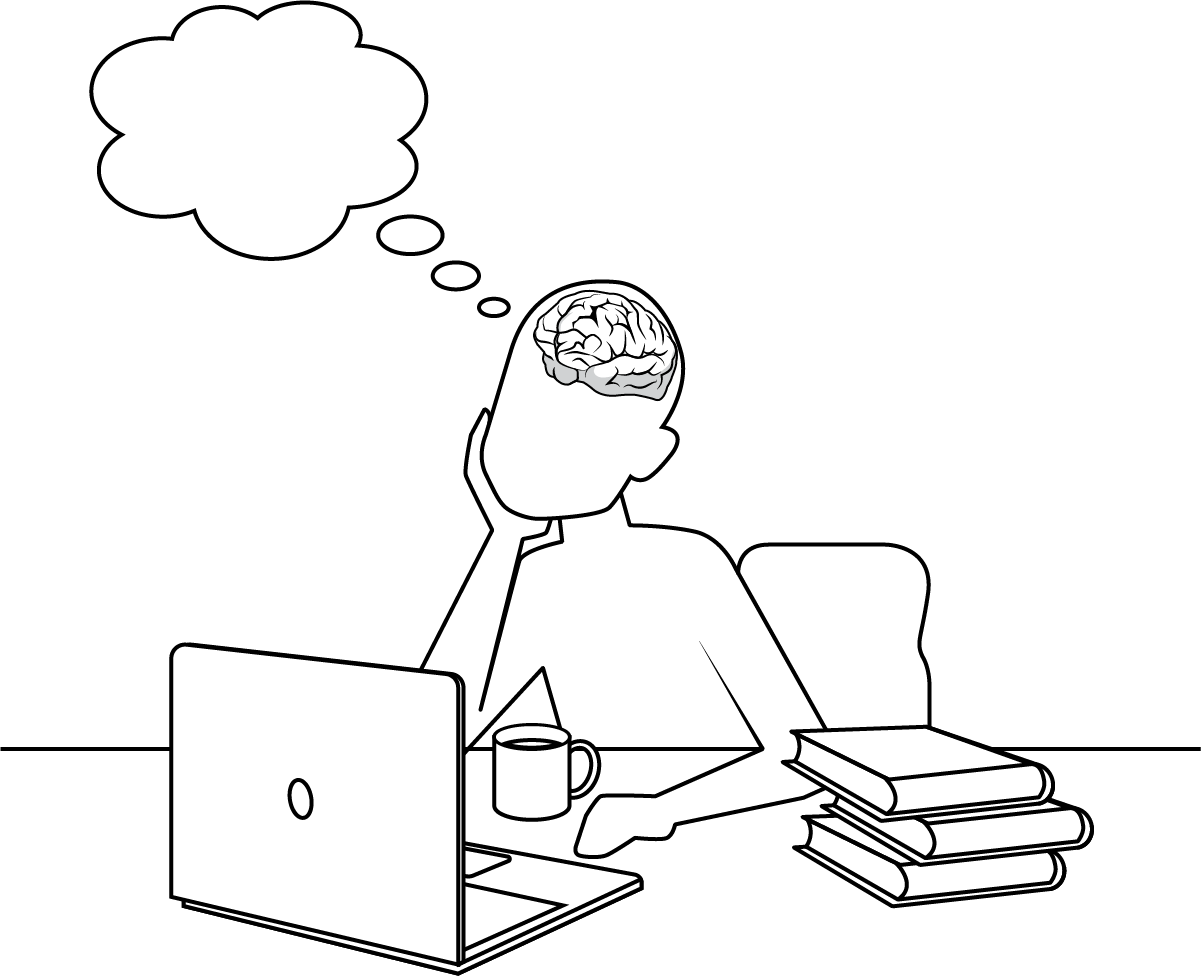
Figure 2.2 The “mind-brain” problem points to the unclear relationship between our thoughts, feelings, and perceptions, and the neurological and electrochemical interactions that take place in the brain. (attribution: Copyright Rice University, OpenStax, under CC BY 4.0 license)
図2.2 「心と脳の問題」が指し示すのは、私たちの思考・感情・知覚と、脳内で生じる神経学的・電気化学的な相互作用との、不明確な関係である。(帰属表示:Copyright Rice University, OpenStax、CC BY 4.0ライセンス)
Philosophical Caveats about “Brain Talk”「脳について語ること」に対する哲学的な留意点
Before we get much further, note that it is important to be cautious when we talk about brains and minds, which are distinct concepts. In fact, the relationship between mind and brain is one of the central problems of metaphysics, known as the “mind-body problem,” which might just as well be called the “mind-brain problem.” Briefly stated, the mind-body problem is the problem of understanding the relationship between the organic gray and white matter in our skulls (the brain) and the range of conscious awareness (the mind). We know that the brain and central nervous system provide the physical basis for our thoughts, perceptions, emotions, imagination, and desire—in short, our entire mental life. But biology does not tell us what the relationship is between our private mental life and the neurological, electrochemical interactions that take place in the brain. Is the relationship of the mind to the brain like the relationship between lightning and electrical discharge or a rainbow and the refraction of light through water droplets? In other words, is “the mind” just the term we use to label certain kinds of brain activity? Some philosophers think so. However, mental activity is not easily associated with any specific brain activity. Additionally, there seems to be something about the subjective experience of our mental life that is lost when we attempt to explain it fully in terms of brain activity. So other philosophers maintain that the mind is something different from the brain. Nonetheless, the mind and the brain are closely and somewhat mysteriously connected. As a result, it can be helpful to use the resources of psychology and cognitive science (the study of the brain’s processes) to help us understand how to become better thinkers. We can think of the resources from psychology and cognitive science as providing us with a description of how the brain actually behaves. By contrast, when we study critical thinking, we are interested in how we ought to think. Being aware of how we do think may help us devise effective strategies for how we ought to think, but we should understand that the descriptions provided by psychology are not determinative. In this chapter, we explore psychological findings that can help you become more reflective about the ways your thinking can go wrong.
英語のヒント
先へ進む前に、脳と心は異なる概念であり、それらについて語るときには慎重さが必要だと確認しておこう。心と脳の関係は、実は形而上学の中心的な問題の一つである。「心身問題」と呼ばれているが、「心と脳の問題」と呼んでもよいだろう。簡単にいえば心身問題とは、頭蓋骨内の有機的な灰白質と白質、すなわち脳と、意識的な気づきの広がり、すなわち心との関係を理解するという問題である。脳と中枢神経系が、思考・知覚・感情・想像・欲求、つまり精神生活全体の物理的基盤を提供していることは分かっている。しかし生物学は、私たちだけが内側から経験する精神生活と、脳内で生じる神経学的・電気化学的相互作用との関係が何であるかを教えてくれない。心と脳の関係は、稲妻と放電の関係、あるいは虹と水滴を通る光の屈折の関係のようなものだろうか。言い換えると、「心」とは、ある種の脳活動に名前をつけるために使っている言葉にすぎないのだろうか。そう考える哲学者もいる。しかし、精神活動を特定の脳活動に容易に結びつけられるわけではない。さらに、精神生活を脳活動だけで完全に説明しようとすると、その主観的な経験から何かが失われてしまうように思われる。そこで、心は脳とは異なるものだと主張する哲学者もいる。それでも、心と脳は密接に、そしていくぶん謎めいた仕方で結びついている。そのため、よりよく考える方法を理解するには、心理学と認知科学、つまり脳の過程を研究する学問の知見を使うことが役立つ。心理学と認知科学の知見は、脳が実際にどのように振る舞うかを記述してくれるものだと考えられる。これに対して、批判的思考の研究で関心があるのは、私たちがどのように考えるべきかである。実際の考え方を自覚すれば、どう考えるべきかについて有効な方策を工夫する助けになるかもしれない。しかし、心理学による記述が、それを決定するわけではないことを理解しておく必要がある。本章では、思考が誤る仕方について、さらに省察できるようになるための心理学的知見を検討する。
Representation as Projection投影としての表象
While you may consider thinking to be made up of ideas or thoughts, philosophers and cognitive scientists use the term representation to describe the basic elements of thinking. Representations are information-bearing units of thought. This notion of representation can be traced back to Aristotle and has played a significant role in the history of philosophy, but in contemporary philosophy the term representation is more precise. When we think about things, whether through perception, imagination, memory, or desire, we represent those things. What is represented may be something present and real, or it may be fictitious, imagined in the future, or remembered from the past. Representations may even be unconscious. That is, the mind may have some defined content that is directed toward an object without the person being aware that they have produced such a representation.
英語のヒント
思考は観念や考えから成ると思うかもしれないが、哲学者と認知科学者は、思考の基本的な要素を記述するために「表象」という言葉を使う。表象とは、情報を担う思考の単位である。この表象という考え方はアリストテレスにまでさかのぼることができ、哲学史で重要な役割を果たしてきた。ただし現代哲学では、「表象」という語はより厳密に使われている。知覚・想像・記憶・欲求のいずれを通じてであれ、何かについて考えるとき、私たちはその何かを表象している。表象されるものは、現在そこにある現実のものかもしれないし、架空のもの、未来にあると想像されるもの、過去から思い出されるものかもしれない。表象は、無意識であることさえある。つまり、自分がそのような表象を作り出したと気づかないまま、心が、対象に向けられた何らかの定まった内容をもつことがあるのだ。
During the process of representation, even in a relatively simple case of visual perception, the brain makes a complex set of inferences. For instance, consider the checkerboard below. You might imagine that when you perceive something like a checkerboard, your brain passively takes a mental picture of the grid. In this analogy, the eye functions like the lens of a camera, and the brain develops the picture to present to the mind. But there are several problems with this model. First, where is the picture in your brain? Who is viewing the picture in your head? There are further problems with the camera analogy that can be revealed when we examine optical illusions. Look at the checkered set of squares in Figure 2.2. Are the horizontal lines parallel?
英語のヒント
表象の過程では、視覚的知覚のように比較的単純な場合でさえ、脳は複雑な一連の推論を行う。たとえば、下の市松模様を考えてみよう。このような模様を知覚すると、脳がその格子模様を受動的に心の写真として撮影するのだと想像するかもしれない。この比喩では、目がカメラのレンズのように働き、脳が写真を現像して心に提示することになる。しかし、このモデルにはいくつか問題がある。まず、写真は脳のどこにあるのだろうか。頭の中の写真を見ているのは誰なのだろうか。錯視を調べると、カメラの比喩にはさらに問題があることが分かる。図2.2の市松模様状に並んだ正方形を見てほしい。横向きの線は平行だろうか。
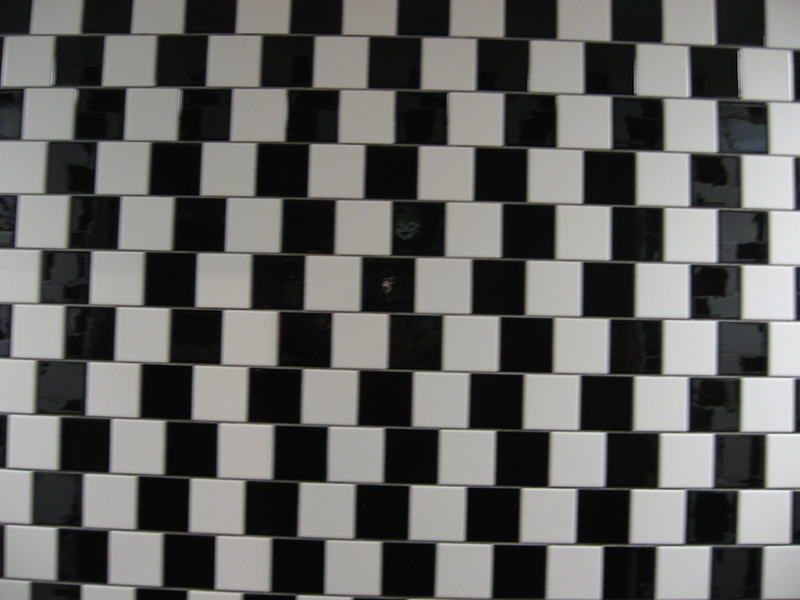
Figure 2.3 The horizontal lines on this grid are parallel, but unless you look at the image from the side, it is impossible to “see” this. This is one of many examples of common perceptual illusions. (credit: “Optical Illusion” by Selena N. B. H. CC BY 2.0)
図2.3 この格子模様の横線は平行だが、画像を横から見ないかぎり、そのように「見る」ことはできない。これは、よく見られる知覚の錯覚の多くの例の一つである。(クレジット:Selena N. B. H.「Optical Illusion」、CC BY 2.0)
In fact, the horizontal lines are parallel, but unless you look at the image from the side, it is impossible to visualize this. There are countless examples of these types of perceptual illusions. We represent the world outside as a stable picture that is completely filled in, in full focus, and uniformly colored. In reality, our visual field is limited and hazy around the edges, and colors change dramatically depending on lighting conditions, distance, movement, and a host of other factors. In fact, your brain is not passively capturing the world, like a camera, but is actively projecting the world so that it makes sense to you. In the illusion above, your brain is automatically adjusting your perception of the colored squares by accounting for the shadow cast by the cylinder. So your brain presents square B as if it is lighter than A by adjusting the hue of B to account for the shadow.
英語のヒント
実際には横線は平行だが、画像を横から見ないかぎり、そのように見ることはできない。この種の知覚の錯覚には無数の例がある。私たちは外界を、隙間なく埋められ、全体に焦点が合い、均一に彩色された、安定した画像として表象する。実際の視野は限られており、周辺ではぼやけている。また色は、照明条件・距離・動きなど、非常に多くの要因によって大きく変化する。実は脳は、カメラのように世界を受動的に捉えているのではない。世界があなたに理解できるものとなるよう、積極的に世界を投影しているのだ。上の錯覚では、脳が円柱の落とす影を考慮して、色のついた正方形の知覚を自動的に調整している。そのため、脳は影を考慮してBの色合いを調整し、正方形BがAより明るいかのように提示する。
Neuroscientist David Eagleman (2011) uses the analogy of the front page of a newspaper to describe how perception works. The front page is a representation of the world’s events for a given day. Of course, it does not present a full or complete picture of the world, but a summary intended to highlight the events of consequence, those that have changed, and those that we are most likely to care about. Like a newspaper editor, your brain is working overtime to project an image of the world based on what is relevant to your survival. You unconsciously adjust the images you perceive to give you the impression that they are far away, nearby, moving, and so forth. Instead of the fully formed, three-dimensional image of the world we seem to see, we actually perceive a kind of sketch, highlighting what we need to know to navigate safely in our environment and obtain what we need. You probably think that sense perception is the clearest and most certain way you can know the world around you. As the adage says, “Seeing is believing.” To become a better critical thinker, however, you will need to become skeptical of some of your basic beliefs. There are times when you absolutely should not believe your lying eyes.
英語のヒント
神経科学者デイヴィッド・イーグルマン(2011)は、知覚の働きを説明するために、新聞の一面という比喩を使う。一面は、ある日の世界の出来事を表象している。もちろん、世界の全体像を漏れなく提示するものではない。重大な出来事、変化したこと、そして私たちが最も関心をもちそうなことを目立たせるための要約である。新聞編集者と同じように、脳は生存に関係することに基づいて世界の像を投影しようと、休みなく働いている。あなたは無意識のうちに、知覚した像が遠くにある、近くにある、動いているなどの印象を得られるよう、その像を調整する。完全にできあがった世界の三次元像が見えているように思われるが、私たちが実際に知覚しているのは、一種の略図である。それは、環境の中を安全に進み、必要なものを手に入れるために知っておくべきことを強調している。おそらくあなたは、感覚的知覚が、周囲の世界を知る最も明晰で確実な方法だと考えているだろう。「見ることは信じること」ということわざもある。しかし、批判的に考える力を高めるには、基本的な信念の一部にも懐疑的になる必要がある。自分の目が告げる偽りを、絶対に信じてはいけない場合もあるのだ。