第1章哲学入門Introduction to Philosophy
1.4 An Overview of Contemporary Philosophy1.4 現代哲学の概観
Learning Objectives学習目標
By the end of this section, you will be able to:
この節を終えると、次のことができるようになる。
Identify the role of professional philosophers in academics and beyond.
大学などの学術界と、その外で、専門の哲学者が果たす役割を挙げる。
Identify the structure, organization, and thematic goals of the textbook.
この教科書の構造、構成、主題上の目標を把握する。
Contemporary academic philosophy bears minimal resemblance to the classical traditions we have discussed in the previous sections. Philosophers today, like other academics, focus on specific areas of research expertise with the goal of producing new research that advances our philosophical understanding of specific problems or topic areas. That said, philosophical investigation is still motivated by the same desire to make sense of things in the most general way possible. In this section, we will introduce you to what philosophy majors do. Additionally, we will provide a brief summary of the themes and organization of the textbook.
英語のヒント
現代の大学などで研究される哲学は、前の節で論じた古典的な伝統とは、ほとんど似ていない。今日の哲学者は、ほかの研究者と同じく、特定の専門領域に研究を集中させ、個々の問題や主題についての哲学的な理解を進める、新しい研究を生み出そうとしている。とはいえ、哲学的な探究は今も、可能なかぎり最も一般的な仕方で物事を理解したい、という同じ願いに動機づけられている。この節では、哲学の専攻者が何をしているかを紹介する。さらに、この教科書の主題と構成を簡潔にまとめる。
What Can You Do with a Philosophy Major?哲学を専攻すると、何ができるのか
Majoring in philosophy is a great way to complete a liberal arts degree. Philosophy will introduce you to fascinating ideas and teach you to think analytically and creatively. If you enjoy the topics in this book, you should consider a philosophy major.
英語のヒント
哲学を専攻することは、リベラルアーツの学位を取得する優れた方法である。哲学は魅力的な考えに触れさせ、分析的・創造的に考えることを教えてくれる。この本の話題を楽しめるなら、哲学の専攻を考えてみるとよい。
Becoming a Philosophy Teacher哲学を教える人になる
To pursue a career in academic philosophy, you must major in philosophy as an undergraduate and continue your studies in the field by doing some graduate work. Community colleges and some four-year schools employ instructors with a master’s degree in philosophy. However, it is very common for these jobs to be occupied almost entirely by people with PhDs. Academic jobs, particularly in the humanities and liberal arts, are extremely competitive. Even with a PhD, it will be difficult to find a job in an academic department. That said, it is much more common to find jobs teaching than doing research, but many teaching jobs still require some research. A philosophy professor or instructor may be asked to teach on a wide variety of subjects, depending on the needs of the school. By contrast, when doing research, academic philosophers tend to focus on a very specific area with the goal of becoming an expert in that topic. Expertise is generally marked by the production of research work, such as a dissertation, book, or several research articles on the topic. Academic research jobs are typically secured with tenure, meaning that there are strong protections against unjustified firing. However, recent studies of federal data show that 73 percent of all academic jobs are not on the tenure track (meaning there is no chance to secure tenure). Additionally, 40 percent of all academic teaching positions are occupied by part-time faculty. The distribution of tenured, tenure-track, non-tenure track, and part-time employees varies greatly by institution type, with community colleges employing far more part-time instructors and far fewer tenured and tenure-track instructors. Meanwhile, research universities employ more tenured and tenure-track faculty and fewer part-time faculty (AAUP 2018).
英語のヒント
大学などで哲学を仕事にするには、学部で哲学を専攻し、大学院でもその分野の勉強を続けなければならない。コミュニティ・カレッジや一部の4年制大学は、哲学の修士号を持つ人を教員として雇う。しかし、こうした職のほとんどが、博士号を持つ人で占められることも非常に多い。大学などの研究・教育職は、とくに人文学やリベラルアーツでは、競争がきわめて激しい。博士号があっても、学科で職を得ることは難しいだろう。とはいえ、研究職より教育職のほうが見つかることはずっと多い。ただし、教育を主とする仕事でも、多くの場合は一定の研究が求められる。哲学の教授や講師は、学校の必要に応じて、幅広い主題を教えるよう求められることがある。これに対して研究の際には、哲学者は、ある主題の専門家となることを目指し、非常に限定された領域に集中する傾向がある。専門性は通常、その主題についての学位論文、著書、複数の研究論文など、研究成果を生み出すことで示される。大学の研究職は一般にテニュア、すなわち終身在職権によって保障されており、不当な解雇に対して強い保護がある。しかし、近年の連邦データの研究によれば、大学などの職の73%は、テニュア取得につながるテニュア・トラック上にない。つまり、テニュアを得る可能性がない。さらに、大学などの教育職の40%を非常勤教員が占める。テニュアのある教員、テニュア・トラックの教員、そのいずれでもない教員、非常勤教員の割合は、機関の種類によって大きく異なる。コミュニティ・カレッジは非常勤講師がはるかに多く、テニュアを持つ教員や取得を目指す教員ははるかに少ない。一方、研究大学は、テニュアのある教員やテニュア・トラックの教員をより多く雇い、非常勤教員はより少ない(AAUP 2018)。
Alternatives to Academic Philosophy大学などで哲学を研究・教育する以外の道
Philosophy undergraduate and graduate degree majors have many options outside of teaching and research in an academic environment. There is a widespread and somewhat mistaken belief that the purpose of selecting a college major is to prepare you for a specific career. While that may be true for some technical degrees, like engineering or nursing, it is generally not true for degrees in the liberal arts and sciences. Many students enter college with a desire to pursue a career in some area of business or commerce. Others plan to go on to a professional graduate school in medicine or law. While it may seem like the best career decision would be to major in business, premed, or prelaw, this notion is probably misguided.
英語のヒント
学部や大学院で哲学の学位を得た人には、学術的な場での教育や研究以外にも、多くの選択肢がある。大学で専攻を選ぶ目的は、特定の職業に備えることだという考えが広く見られるが、これはいくらか誤っている。工学や看護のような一部の技術的な学位には当てはまるかもしれないが、人文・社会・自然科学を含む教養分野の学位には、一般には当てはまらない。多くの学生は、ビジネスや商業のある分野で働きたいと思って大学へ入る。医学や法学の専門大学院へ進むつもりの人もいる。そうであれば、経営学、医学部進学課程、法科大学院進学課程を専攻するのが、職業上最もよい選択に見えるかもしれない。しかし、この考えはおそらく見当違いである。
The original idea behind a liberal arts and sciences education was that high school graduates could study a broad range of fields in the core areas of knowledge that are foundational for our culture, society, and civilization—areas like the natural and social sciences, literature, history, religion, and philosophy. By studying these fields, students gain insights into the key ideas, methods of investigation, questions, and discoveries that underlie modern civilization. Those insights give you a perspective on the world today that is informed by the history and learning that make today’s world possible. And that perspective can have a transformative effect that goes far beyond job preparation.
英語のヒント
リベラルアーツと科学の教育のもともとの考えは、高校を卒業した人が、私たちの文化、社会、文明の基礎となる知識の中核分野を、幅広く学べるようにすることだった。その分野には、自然科学、社会科学、文学、歴史、宗教、哲学などがある。これらを学ぶことで、学生は、現代文明の根底にある重要な考え、探究の方法、問い、発見を理解する。こうして得た洞察は、今日の世界を可能にした歴史と学問に裏づけられた、現代を見る視点を与える。そして、その視点には、就職の準備をはるかに超えて、自分を大きく変える力がありうる。
When philosophy majors are compared to other majors in terms of their long-term career earnings, it appears that philosophy majors do very well. While the starting salaries of philosophy majors are lower than some other majors, their mid-career salaries compare very favorably with majors in areas like finance, engineering, and math.
英語のヒント
長期的な職業収入という点でほかの専攻と比べると、哲学専攻者は非常によい成績を収めているようである。哲学専攻者の初任給は一部のほかの専攻より低いものの、職業生活の中盤での給与は、金融、工学、数学などの専攻と比べても、十分に高い。
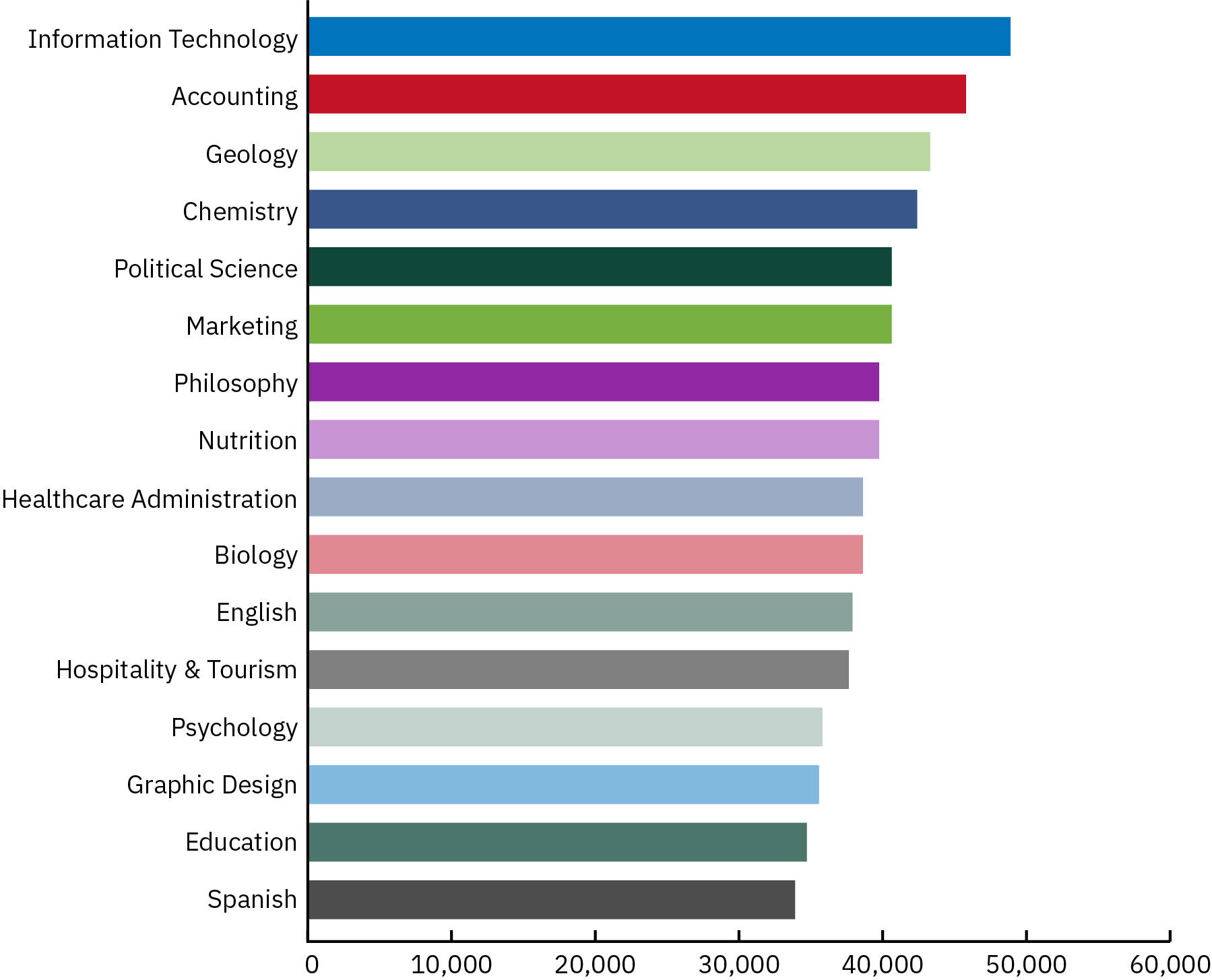
Figure 1.10 Median mid-career salaries (10 years after graduation) by college major. Philosophy majors make more, on average, than those majoring in many other areas. (source: Wall Street Journal) (attribution: Copyright Rice University, OpenStax under CC BY 4.0 license)
図1.10 大学の専攻別に見た、職業生活の中盤、すなわち卒業10年後の給与の中央値。哲学専攻者は、平均すると、ほかの多くの分野の専攻者より収入が多い。 (source: Wall Street Journal) (attribution: Copyright Rice University, OpenStax under CC BY 4.0 license)
Additionally, philosophy majors have some of the highest LSAT and GMAT scores of any major (these are the tests generally required for admission to law school and business school, respectively). Quite a few former philosophy majors have gone on to become CEOs of large corporations, such as Reid Hoffman, cofounder of LinkedIn, and Carly Fiorina, CEO of Hewlett-Packard (Chideya 2015).
英語のヒント
さらに、哲学専攻者はLSATとGMATでも、あらゆる専攻の中で最高水準の得点を得ている。これらは通常、それぞれロースクールとビジネススクールへの入学に必要な試験である。哲学を専攻した人のかなりの数が、その後、大企業のCEOになっている。例えば、LinkedInの共同創設者リード・ホフマンや、ヒューレット・パッカードのCEOとなったカーリー・フィオリーナがいる(Chideya 2015)。
Many philosophers who have earned a graduate degree in philosophy and held positions as professors and instructors have made successful transitions to other careers, including start-ups, technology, business, ethics review boards, and public philosophy. Nigel Warburton, a former philosophy professor, started the philosophy podcast “Philosophy Bites” that is one of the most downloaded podcasts on academic topics. He also is an editor-in-chief of the online magazine Aeon. David Barnett, a former philosophy professor, founded the company PopSockets in 2012 after leaving academia. That company now employs over 200 people and generates hundreds of millions of dollars in annual revenue. Additionally, there are a growing number of technology, neuroscience, and medical firms that are specifically looking to hire philosophers to help with research and ethics reviews. Marcus Arvan maintains a public directory of academic philosophers who have found work outside of academia at Philosophers in Industry. In short, philosophers can be found nearly everywhere doing useful work and making good money. You should not let concerns about career prospects drive you away from studying philosophy.
英語のヒント
哲学の大学院の学位を取得し、教授や講師として働いていた哲学者の多くが、新興企業、技術、ビジネス、倫理審査委員会、公共哲学など、ほかの仕事へ転身して成功している。元哲学教授のナイジェル・ウォーバートンは、哲学のポッドキャスト「Philosophy Bites」を始めた。これは学術的な話題を扱うポッドキャストの中で、最も多くダウンロードされるものの一つである。彼はオンライン雑誌Aeonの編集長の一人でもある。同じく元哲学教授のデイヴィッド・バーネットは、学術界を離れたあと、2012年にPopSockets社を設立した。この会社は現在200人以上を雇い、年間数億ドルの売上を生み出している。さらに、研究や倫理審査を支援するために、哲学者をとくに求めて採用する技術、神経科学、医療の企業が増えている。マーカス・アーヴァンは、学術界の外で仕事を得た大学の哲学者たちの公開名簿を、Philosophers in Industryで維持している。つまり、哲学者はほとんどあらゆる場所で役立つ仕事をし、よい収入を得ている。就職の見通しが気になるからといって、哲学の学習から離れるべきではない。