第1章哲学入門Introduction to Philosophy
Conceptual Analysis概念分析
One of the techniques that philosophers use to clarify and understand philosophical statements (either premises or conclusions) is conceptual analysis. Conceptual analysis involves the analysis of concepts, notions, or ideas as they are presented in statements or sentences. The term analysis has been a part of philosophical terminology and methodology since its beginning. In its most basic sense, analysis refers to the process of breaking apart complex ideas into simpler ones. Analysis also involves a cluster of related strategies that philosophers use to discover truths. Each of these techniques attempts to arrive at a clearer and more workable definition of the concepts in question.
英語のヒント
哲学者が、前提であれ結論であれ、哲学的な命題を明確にし、理解するために使う技法の一つが概念分析である。概念分析では、命題や文の中で示される概念、観念、考えを分析する。分析という言葉は、哲学の始まりから、その用語と方法の一部をなしてきた。最も基本的な意味では、分析とは、複雑な考えをより単純な考えに分ける過程を指す。分析にはまた、哲学者が真理を発見するために使う、互いに関連した方策も含まれる。それぞれの技法は、問題となっている概念について、より明確で使いやすい定義へたどり着こうとするものである。
When students are asked to give a definition of some concept or term, they frequently go to a dictionary. But a dictionary provides only a description of how a concept is used in ordinary speech. A dictionary cannot tell us what the word means in a fundamental sense because dictionary definitions never ask whether that common usage is coherent, accurate, or precise. It is up to the person engaged in reflection on the concept to figure out what the term means and whether that meaning fits within a larger understanding of the world. The next section illustrates four methods of analysis.
英語のヒント
学生は、概念や語を定義するよう求められると、しばしば辞書を引く。しかし辞書が示すのは、その概念が日常の言葉の中でどう使われるかという記述にすぎない。辞書は、その語が根本的な意味で何を意味するかを教えることはできない。辞書の定義は、一般的な用法が整合しているか、正確か、厳密かを決して問わないからである。語が何を意味し、その意味がより広い世界理解の中に収まるかを考え出すのは、その概念を省察している人自身の仕事である。次では四つの分析方法を示す。
Predicates述語
When philosophers today talk about concepts, they are usually referring to a notion that comes from the work on logic done by German philosopher Gottlob Frege. Frege demonstrated that any sentence in natural language could be translated into a formal, symbolic language, provided that we consider the sentence to be a kind of function that describes a relationship between names (or objects) and concepts. This symbolic language is what has become modern logic. Frege modeled his logic on mathematics, with the idea that he could eliminate the ambiguity and vagueness of natural language by translating it into a purely symbolic notation. Following Frege, we can break sentences into parts, including names, or object identifiers, and concepts, or predicates.
英語のヒント
今日、哲学者が概念について話すとき、通常は、ドイツの哲学者ゴットロープ・フレーゲによる論理学の研究に由来する考えを指している。フレーゲは、自然言語のどの文も、形式的な記号言語へ翻訳できることを示した。ただし、その文を、名前または対象と概念との関係を記述する、一種の関数と考えることが条件となる。この記号言語が、現代の論理学へと発展したものである。フレーゲは数学を模範として論理学を構築した。自然言語を純粋な記号表記へ翻訳することで、その曖昧さや漠然としたところを取り除けると考えたのである。フレーゲに従えば、文をいくつかの部分に分けられる。その部分には、対象を特定する名前と、述語とも呼ばれる概念が含まれる。
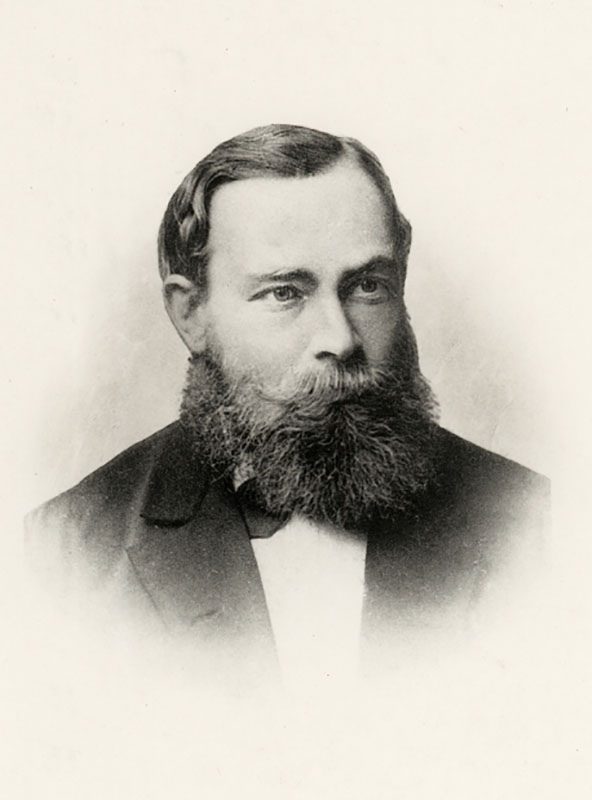
Figure 1.7 Young Gottlob Frege in about 1879. (credit: “Young Frege” by Unknown author/Wikimedia Commons, Public Domain)
図1.7 1879年ごろの若きゴットロープ・フレーゲ。 (credit: “Young Frege” by Unknown author/Wikimedia Commons, Public Domain)
Predicates are descriptive terms, like “yellow,” “six feet tall,” or “faster than a speeding bullet.” Simple sentences like “the flower is yellow,” or “Superman is faster than a speeding bullet” can be easily analyzed into object terms and predicates. But any sentence can be analyzed in multiple ways. And some sentences express multiple relations between predicates and objects. So the role of conceptual analysis is to identify the right predicates for analysis and to clarify the relationship between them. Predicates can help us clarify statements. For any sentence, we can ask, what is being predicated, and how is it being predicated?
英語のヒント
述語は、「黄色い」「身長が6フィートある」「飛ぶ弾丸より速い」のように、性質などを記述する語句である。「その花は黄色い」「スーパーマンは飛ぶ弾丸より速い」といった単純な文は、対象を指す語と述語に、容易に分析できる。しかし、どの文も複数の仕方で分析できる。また、述語と対象との複数の関係を表す文もある。そのため概念分析の役割は、分析に適切な述語を特定し、それらの関係を明確にすることである。述語によって、私たちは命題を明確にできる。どの文についても、何が述べられているのか、そしてそれはどのように述べられているのか、と問うことができる。
Descriptions記述
While the concepts that describe or categorize objects can be analyzed using predicates, the objects themselves can be analyzed by using descriptions. Bertrand Russell identified definite descriptions as the way to analyze proper names or objects. His idea is that in a sentence like “the flower is yellow” or “my dog likes naps,” the subject term—“flower” or “dog”—can be substituted with a descriptive sentence that uniquely identifies this particular flower or dog. There are unique characteristics that differentiate my dog from all others, for instance: my dog was born on a certain day, lives in a certain city, belongs to me, or occupies a specific location. Similarly, the flower can be identified by its position in a garden, field, or particular geographical location. One of Russell’s insights was that proper names, such as “Max” (suppose it is the name I use to call my dog), are definite descriptions in disguise. That is, any proper name can be substituted with a description that identifies the one and only thing named.
英語のヒント
対象を記述したり分類したりする概念は述語を使って分析できるが、対象そのものは記述を使って分析できる。バートランド・ラッセルは、固有名や対象を分析する方法として、確定記述を見いだした。彼の考えによれば、「その花は黄色い」「私の犬は昼寝が好きだ」といった文では、主語の語である「花」や「犬」を、その特定の花や犬だけを一意に特定する記述文に置き換えられる。私の犬をほかのすべての犬と区別する固有の特徴がある。例えば、ある日に生まれ、ある町に住み、私に所有され、ある場所を占めている、といったことである。同様に花も、庭や野原の中の位置、あるいは特定の地理的位置によって特定できる。ラッセルの洞察の一つは、「マックス」のような固有名は、姿を変えた確定記述であるというものだった。マックスは私が犬を呼ぶときの名前だとしよう。つまり、どの固有名も、その名前で呼ばれている唯一のものを特定する記述に置き換えることができる。
A definite description is a way of analyzing names and object terms for the purpose of making them more like predicates. This way we can clarify what we are talking about without resorting to gestures, context, or direct experience. You probably do this in your everyday life when you encounter confusion about a name. For instance, suppose a coworker says, “Kevin used up all the paper in the printer.” If there is more than one Kevin in the office, you might answer, “Which Kevin?” And your coworker may then respond, “The one with brown hair whose workspace is right next to the entrance.” “Oh,” you might reply, “You mean the one with the picture of his kids on his desk?” In a sense, this process of disambiguating the reference for the name “Kevin” is a process of seeking a more definite description to supplement the proper name. Understanding that language is composed of definite descriptions and predicates can help us remove some of the ambiguity and vagueness that is a natural part of speech.
英語のヒント
確定記述は、名前や対象を指す語を分析し、より述語に近いものにする方法である。こうすれば、身振り、文脈、直接の経験に頼らずに、自分が何について話しているかを明確にできる。あなたも日常生活で、名前をめぐって混乱が生じたときに、おそらく同じことをしている。例えば同僚が「ケヴィンがプリンターの紙を全部使ってしまった」と言ったとしよう。職場にケヴィンが二人以上いれば、「どのケヴィン?」と尋ねるかもしれない。すると同僚は「茶色い髪で、席が入り口のすぐ隣にある人」と答える。「ああ、机に子どもたちの写真を置いている人ね」と、あなたは返すかもしれない。ある意味で、「ケヴィン」という名前が指す相手の曖昧さを取り除くこの作業は、固有名を補う、より確定した記述を探す過程である。言語が確定記述と述語からできていると理解すると、言葉に自然に伴う曖昧さや漠然としたところを、いくらか取り除く助けになる。
Enumeration枚挙
Sometimes, to understand the meaning of a concept, it is helpful to enumerate its component parts. For instance, we may say that a governmental body is composed of its legislature, its executive, and its judicial branches. Or we might recognize that a cell is composed of a nucleus, a cell wall, and organelles. The process of enumeration can help us specify the nature of the thing we are talking about. In effect, we are identifying the parts that make up a whole. Since claims about the whole can be analyzed as claims about its parts and claims about how the parts pertain to the whole, it is helpful to enumerate the parts and consider how claims about the whole relate to claims about the parts.
英語のヒント
概念の意味を理解するには、その構成部分を列挙すると役立つ場合がある。例えば、政府は立法部門、行政部門、司法部門から成ると言える。あるいは、細胞は核、細胞壁、細胞小器官からできていると認識するかもしれない。枚挙の過程は、話題にしているものの本性を特定する助けになる。実際、私たちは全体を構成する部分を特定しているのである。全体についての主張は、その部分についての主張と、部分が全体にどう関わるかについての主張として分析できる。そのため、部分を列挙し、全体についての主張が部分についての主張とどう関係するか考えることが役立つ。
Just as enumeration is helpful in understanding material things, it can be used to understand abstract concepts. For example, Aristotle says that wisdom is composed of scientific knowledge, plus understanding, where understanding is the grasp of first principles and scientific knowledge is the grasp of demonstrated reasoning that follows from first principles. Whether or not Aristotle is correct, his enumeration may help us understand the nature of wisdom.
英語のヒント
枚挙は物質的なものを理解するのに役立つのと同じように、抽象的な概念を理解するためにも使える。例えばアリストテレスは、知恵は学的知識と理解から成ると述べる。ここで理解とは第一原理を把握することであり、学的知識とは第一原理から導かれた、証明された推論を把握することである。アリストテレスが正しいかどうかにかかわらず、彼のこの枚挙は、知恵の本性を理解する助けになるかもしれない。