第1章哲学入門Introduction to Philosophy
1.1 What Is Philosophy?1.1 哲学とは何か
Learning Objectives学習目標
By the end of this section, you will be able to:
この節を終えると、次のことができるようになる。
Identify sages (early philosophers) across historical traditions.
さまざまな歴史的伝統における賢者、すなわち初期の哲学者を挙げる。
Explain the connection between ancient philosophy and the origin of the sciences.
古代の哲学と諸科学の起源との関係を説明する。
Describe philosophy as a discipline that makes coherent sense of a whole.
哲学を、全体を一貫した形で理解する学問として説明する。
Summarize the broad and diverse origins of philosophy.
哲学の広範で多様な起源をまとめる。
It is difficult to define philosophy. In fact, to do so is itself a philosophical activity, since philosophers are attempting to gain the broadest and most fundamental conception of the world as it exists. The world includes nature, consciousness, morality, beauty, and social organizations. So the content available for philosophy is both broad and deep. Because of its very nature, philosophy considers a range of subjects, and philosophers cannot automatically rule anything out. Whereas other disciplines allow for basic assumptions, philosophers cannot be bound by such assumptions. This open-endedness makes philosophy a somewhat awkward and confusing subject for students. There are no easy answers to the questions of what philosophy studies or how one does philosophy. Nevertheless, in this chapter, we can make some progress on these questions by (1) looking at past examples of philosophers, (2) considering one compelling definition of philosophy, and (3) looking at the way academic philosophers today actually practice philosophy.
英語のヒント
哲学を定義することは難しい。実のところ、定義しようとすること自体が哲学的な活動である。哲学者は、現に存在している世界について、最も広範で根本的な捉え方を得ようとしているからだ。世界には、自然、意識、道徳、美、社会組織が含まれる。そのため、哲学が扱いうる内容は幅広く、奥深い。哲学はその本性ゆえに多様な主題を検討し、哲学者は何であれ初めから当然のように対象外にすることができない。ほかの学問分野では基本的な前提を置くことが認められるが、哲学者はそうした前提に縛られるわけにはいかない。このように探究の範囲や結論があらかじめ定まっていないため、学生にとって哲学は少々取り組みにくく、戸惑いやすい科目となる。哲学は何を研究するのか、哲学をするとはどういうことかという問いに、簡単な答えはない。それでもこの章では、①過去の哲学者の事例を見る、②説得力のある哲学の定義を一つ検討する、③今日の大学などの哲学者が実際にどのように哲学を実践しているかを見る、という方法で、これらの問いをいくらか前に進めることができる。
Historical Origins of Philosophy哲学の歴史的な起源
One way to begin to understand philosophy is to look at its history. The historical origins of philosophical thinking and exploration vary around the globe. The word philosophy derives from ancient Greek, in which the philosopher is a lover or pursuer (philia) of wisdom (sophia). But the earliest Greek philosophers were not known as philosophers; they were simply known as sages. The sage tradition provides an early glimpse of philosophical thought in action. Sages are sometimes associated with mathematical and scientific discoveries and at other times with their political impact. What unites these figures is that they demonstrate a willingness to be skeptical of traditions, a curiosity about the natural world and our place in it, and a commitment to applying reason to understand nature, human nature, and society better. The overview of the sage tradition that follows will give you a taste of philosophy’s broad ambitions as well as its focus on complex relations between different areas of human knowledge. There are some examples of women who made contributions to philosophy and the sage tradition in Greece, India, and China, but these were patriarchal societies that did not provide many opportunities for women to participate in philosophical and political discussions.
英語のヒント
哲学を理解し始める方法の一つは、その歴史を見ることだ。哲学的な思考や探究の歴史的な起源は、世界の地域によって異なる。philosophyという言葉は古代ギリシャ語に由来する。そこでは哲学者は、知恵(sophia)を愛する者、あるいは求める者(philia)である。しかし、最初期のギリシャの哲学者たちは、哲学者とは呼ばれず、単に賢者として知られていた。賢者の伝統からは、哲学的思考が働いている初期の姿を垣間見ることができる。賢者は数学的・科学的な発見と結びつけられることもあれば、政治的な影響力と結びつけられることもある。こうした人物に共通するのは、伝統を疑おうとする姿勢、自然界とその中での私たちの位置への好奇心、そして自然・人間性・社会をよりよく理解するために理性を用いることへの真剣な取り組みである。以下に示す賢者の伝統の概観からは、哲学が抱く広大な志とともに、人間の知識の異なる領域どうしの複雑な関係に哲学が注目することがわかるだろう。ギリシャ、インド、中国では、哲学や賢者の伝統に貢献した女性の例もある。しかし、これらは家父長制の社会であり、哲学的・政治的な議論に女性が参加する機会は多くなかった。
The Sages of India, China, Africa, and Greeceインド、中国、アフリカ、ギリシャの賢者
In classical Indian philosophy and religion, sages play a central role in both religious mythology and in the practice of passing down teaching and instruction through generations. The Seven Sages, or Saptarishi (seven rishis in the Sanskrit language), play an important role in sanatana dharma, the eternal duties that have come to be identified with Hinduism but that predate the establishment of the religion. The Seven Sages are partially considered wise men and are said to be the authors of the ancient Indian texts known as the Vedas. But they are partly mythic figures as well, who are said to have descended from the gods and whose reincarnation marks the passing of each age of Manu (age of man or epoch of humanity). The rishis tended to live monastic lives, and together they are thought of as the spiritual and practical forerunners of Indian gurus or teachers, even up to today. They derive their wisdom, in part, from spiritual forces, but also from tapas, or the meditative, ascetic, and spiritual practices they perform to gain control over their bodies and minds. The stories of the rishis are part of the teachings that constitute spiritual and philosophical practice in contemporary Hinduism.
英語のヒント
古典期のインド哲学と宗教では、賢者は宗教的な神話においても、教えや指導を世代から世代へ伝える実践においても、中心的な役割を果たす。七聖仙、すなわちサプタリシ(サンスクリット語で「7人のリシ」)は、サナータナ・ダルマにおいて重要な役割を担う。これは永遠の務めを意味し、のちにヒンドゥー教と結びつけられるようになったが、その宗教が成立するより以前から存在していた。七聖仙は、一面では知恵ある人々と見なされ、ヴェーダと呼ばれる古代インドの文献の著者とされている。しかし同時に神話的な人物でもある。神々の子孫とされ、その再生が、マヌの時代、つまり人間の時代・人類の一つの時期の移り変わりを示すといわれる。リシたちは概して修道的な生活を送り、今日に至るまで、インドのグル、すなわち教師たちの精神面と実践面での先駆者と考えられている。彼らの知恵は、一部は霊的な力に由来するが、タパスからも得られる。タパスとは、身体と心を統御するために行う瞑想的・禁欲的・霊的な実践である。リシたちの物語は、現代のヒンドゥー教における霊的・哲学的実践を形づくる教えの一部となっている。
Figure 1.2 depicts a scene from the Matsya Purana, where Manu, the first man whose succession marks the prehistorical ages of Earth, sits with the Seven Sages in a boat to protect them from a mythic flood that is said to have submerged the world. The king of serpents guides the boat, which is said to have also contained seeds, plants, and animals saved by Manu from the flood.
英語のヒント
図1.2は『マツヤ・プラーナ』の一場面を描いている。そこでは、代々の継承が地球の先史的な諸時代を区切る最初の人間マヌが、七聖仙とともに舟に座っている。世界を水没させたといわれる神話上の洪水から、彼らを守るためである。蛇の王が舟を導いている。この舟には、マヌが洪水から救った種子、植物、動物も載っていたといわれる。
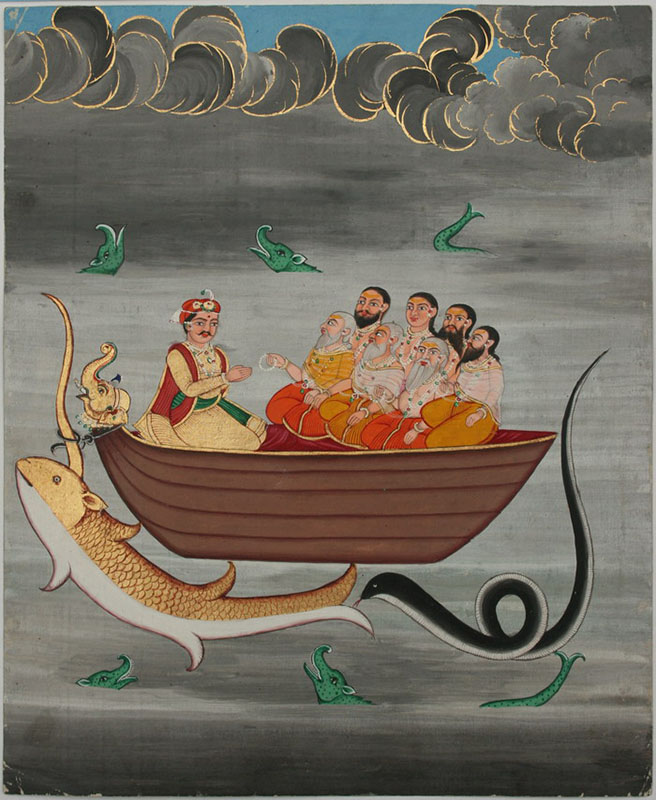
Figure 1.2 This painting, from the late eighteenth century, depicts the first man, Manu, guiding seven sages through floodwaters, with the aid of the king of serpents. (credit: “Manu and Saptarishi” by unknown author/Wikimedia Commons, Public Domain)
図1.2 18世紀末のこの絵は、最初の人間マヌが蛇の王の助けを得て、洪水の中で7人の賢者を導く様子を描いている。 (credit: “Manu and Saptarishi” by unknown author/Wikimedia Commons, Public Domain)
Despite the fact that classical Indian culture is patriarchal, women figures play an important role in the earliest writings of the Vedic tradition (the classical Indian religious and philosophical tradition). These women figures are partly connected to the Indian conception of the fundamental forces of nature—energy, ability, strength, effort, and power—as feminine. This aspect of God was thought to be present at the creation of the world. The Rig Veda, the oldest Vedic writings, contains hymns that tell the story of Ghosha, a daughter of Rishi Kakshivan, who had a debilitating skin condition (probably leprosy) but devoted herself to spiritual practices to learn how to heal herself and eventually marry. Another woman, Maitreyi, is said to have married the Rishi Yajnavalkya (himself a god who was cast into mortality by a rival) for the purpose of continuing her spiritual training. She was a devoted ascetic and is said to have composed 10 of the hymns in the Rig Veda. Additionally, there is a famous dialogue between Maitreyi and Yajnavalkya in the Upanishads (another early, foundational collection of texts in the Vedic tradition) about attachment to material possessions, which cannot give a person happiness, and the achievement of ultimate bliss through knowledge of the Absolute (God).
英語のヒント
古典期のインド文化は家父長制であったが、ヴェーダの伝統、すなわち古典的なインドの宗教・哲学の伝統の最初期の文献では、女性が重要な役割を果たしている。これらの女性像は、自然の根本的な力――エネルギー、能力、強さ、努力、力能――を女性的なものと捉えるインドの観念と、部分的に結びついている。神のこの側面は、世界の創造の際に存在していたと考えられた。最古のヴェーダ文献である『リグ・ヴェーダ』には、リシ・カクシーヴァンの娘ゴーシャーの物語を語る讃歌が収められている。彼女は体を衰弱させる皮膚病、おそらくハンセン病を患っていたが、自分を治癒する方法を学び、最後には結婚するために、霊的な修行に身を捧げた。もう一人の女性マイトレーイーは、霊的な修行を続けるために、リシ・ヤージュニャヴァルキヤと結婚したといわれる。彼自身も、敵対者によって死すべき存在に落とされた神だった。彼女は熱心な苦行者であり、『リグ・ヴェーダ』の讃歌を10篇作ったとされる。さらに『ウパニシャッド』、すなわちヴェーダの伝統における、もう一つの初期の根本的な文献群には、マイトレーイーとヤージュニャヴァルキヤの有名な対話がある。そこでは、人を幸福にできない物質的な所有物への執着と、絶対者、すなわち神を知ることによって至福に達することが論じられている。
Another woman sage named Gargi also participates in a celebrated dialogue with Yajnavalkya on natural philosophy and the fundamental elements and forces of the universe. Gargi is characterized as one of the most knowledgeable sages on the topic, though she ultimately concedes that Yajnavalkya has greater knowledge. In these brief episodes, these ancient Indian texts record instances of key women who attained a level of enlightenment and learning similar to their male counterparts. Unfortunately, this early equality between the sexes did not last. Over time Indian culture became more patriarchal, confining women to a dependent and subservient role. Perhaps the most dramatic and cruel example of the effects of Indian patriarchy was the ritual practice of sati, in which a widow would sometimes immolate herself, partly in recognition of the “fact” that following the death of her husband, her current life on Earth served no further purpose (Rout 2016). Neither a widow’s in-laws nor society recognized her value.
英語のヒント
ガールギーという別の女性の賢者も、自然哲学と宇宙の根本的な要素や力をめぐる、ヤージュニャヴァルキヤとの有名な対話に参加している。ガールギーはこの主題に最も通じた賢者の一人として描かれているが、最終的にはヤージュニャヴァルキヤのほうが多くを知っていると認める。これらの短い逸話を通じて、古代インドの文献は、男性の賢者たちと同程度の悟りと学識に達した、重要な女性たちの例を記録している。残念ながら、この初期の男女の平等は長く続かなかった。時とともにインド文化は家父長制の性格を強め、女性を従属的で服従を求められる役割に閉じ込めていった。インドの家父長制がもたらした影響のうち、おそらく最も激烈で残酷な例は、サティーという儀礼的な慣行だった。この慣行では、夫に先立たれた女性が自らを焼くことがあった。その理由の一つは、夫の死後、地上における自分の現在の生には、もはや何の目的もないという「事実」を認めることにあった(Rout 2016)。夫の親族も社会も、その女性の価値を認めなかった。
In similar fashion to the Indian tradition, the sage (sheng) tradition is important for Chinese philosophy. Confucius, one of the greatest Chinese writers, often refers to ancient sages, emphasizing their importance for their discovery of technical skills essential to human civilization, for their role as rulers and wise leaders, and for their wisdom. This emphasis is in alignment with the Confucian appeal to a well-ordered state under the guidance of a “philosopher-king.” This point of view can be seen in early sage figures identified by one of the greatest classical authors in the Chinese tradition, as the “Nest Builder” and “Fire Maker” or, in another case, the “Flood Controller.” These names identify wise individuals with early technological discoveries. The Book of Changes, a classical Chinese text, identifies the Five (mythic) Emperors as sages, including Yao and Shun, who are said to have built canoes and oars, attached carts to oxen, built double gates for defense, and fashioned bows and arrows (Cheng 1983). Emperor Shun is also said to have ruled during the time of a great flood, when all of China was submerged. Yü is credited with having saved civilization by building canals and dams.
英語のヒント
インドの伝統と同じように、中国哲学でも賢者、すなわち聖人の伝統は重要である。中国の最も偉大な著述家の一人である孔子は、古代の聖人にしばしば言及し、人間の文明に欠かせない技術を発見したこと、統治者や賢明な指導者として果たした役割、そしてその知恵の重要性を強調している。この強調は、「哲人王」の導きのもとに秩序ある国家を求める、儒家の考え方と一致している。この見方は、中国の伝統の最も偉大な古典的著述家の一人が、「巣を築く者」「火を作る者」、また別の場合には「洪水を治める者」として挙げた初期の聖人像にも見て取れる。これらの呼び名は、知恵ある人物を初期の技術的な発見と結びつけている。中国の古典『易経』は、神話上の五帝を聖人として挙げている。そこには堯と舜が含まれ、彼らは丸木舟や櫂を作り、車を牛につなぎ、防御のために二重の門を築き、弓矢を作ったといわれる(Cheng 1983)。また、舜帝は中国全土が水没する大洪水の時代に治めていたとされる。禹は、水路と堤を築いて文明を救った人物とされている。
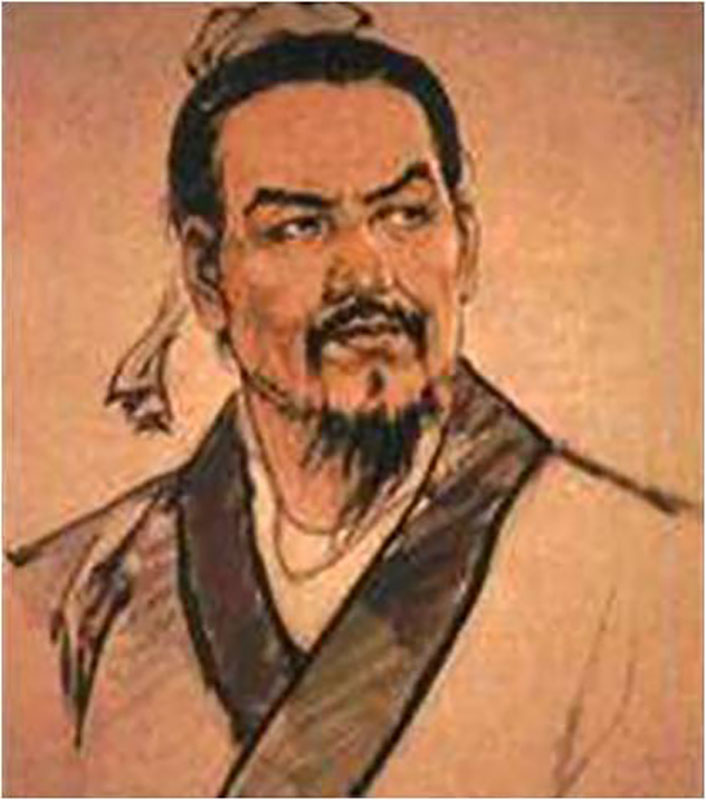
Figure 1.3 The Chinese philosopher and historian Han Feizi identified sages with technological discoveries. (credit: “Portrait of Han Fei” by unknown author/Wikimedia Commons, Public Domain)
図1.3 中国の哲学者・歴史家である韓非子は、聖人を技術的な発見と結びつけた。 (credit: “Portrait of Han Fei” by unknown author/Wikimedia Commons, Public Domain)
These figures are praised not only for their political wisdom and long rule, but also for their filial piety and devotion to work. For instance, Mencius, a Confucian philosopher, relates a story of Shun’s care for his blind father and wicked stepmother, while Yü is praised for his selfless devotion to work. In these ways, the Chinese philosophical traditions, such as Confucianism and Mohism, associate key values of their philosophical enterprises with the great sages of their history. Whether the sages were, in fact, actual people or, as many scholars have concluded, mythical forebearers, they possessed the essential human virtue of listening and responding to divine voices. This attribute can be inferred from the Chinese script for sheng, which bears the symbol of an ear as a prominent feature. So the sage is one who listens to insight from the heavens and then is capable of sharing that wisdom or acting upon it to the benefit of his society (Cheng 1983). This idea is similar to one found in the Indian tradition, where the most important texts, the Vedas, are known as shruti, or works that were heard through divine revelation and only later written down.
英語のヒント
これらの人物は、政治的な知恵や長い治世だけでなく、孝行と仕事への献身によっても称賛されている。例えば儒家の哲学者である孟子は、目の見えない父と意地の悪い継母を舜が世話した物語を伝えている。また、禹は私心を捨てて仕事に打ち込んだことで称賛される。このように、儒家や墨家など中国の哲学的伝統は、それぞれの哲学的な営みの核心となる価値を、歴史上の偉大な聖人と結びつけている。聖人たちが本当に実在した人物であったにせよ、多くの研究者が結論づけたように神話上の祖先であったにせよ、彼らは、神聖な声に耳を傾け、それに応えるという、人間にとって本質的な徳を備えていた。この特徴は、耳の字が目立つ構成要素となっている「聖」の漢字から推し量ることができる。したがって聖人とは、天からの洞察に耳を傾け、その知恵を人々に分かち合い、あるいは社会のためにそれに基づいて行動できる者である(Cheng 1983)。この考えはインドの伝統にある考えと似ている。そこでは、最も重要な文献であるヴェーダはシュルティ、つまり神の啓示を通して聞かれ、のちになって初めて文字にされた作品として知られている。
Although Confucianism is a venerable world philosophy, it is also highly patriarchal and resulted in the widespread subordination of women. The position of women in China began to change only after the Communist Revolution (1945–1952). While some accounts of Confucianism characterize men and women as emblematic of two opposing forces in the natural world, the Yin and Yang, this view of the sexes developed over time and was not consistently applied. Chinese women did see a measure of independence and freedom with the influence of Buddhism and Daoism, each of which had a more liberal view of the role of women (Adler 2006).
英語のヒント
儒教は長い歴史と威厳を持つ世界的な哲学であるが、同時にきわめて家父長制的でもあり、女性を広く従属させる結果をもたらした。中国で女性の地位が変わり始めたのは、共産主義革命(1945~1952年)の後になってからだった。儒教を説明する記述の中には、男女を、自然界の対立する二つの力である陰と陽の象徴として捉えるものもある。しかし、この男女観は時間をかけて形成され、一貫して適用されたわけではない。女性の役割について、いずれもより自由を認める見方を持っていた仏教と道教の影響によって、中国の女性は確かに一定の自立と自由を得た(Adler 2006)。
A detailed and important study of the sage tradition in Africa is provided by Henry Odera Oruka (1990), who makes the case that prominent folk sages in African tribal history developed complex philosophical ideas. Oruka interviewed tribal Africans identified by their communities as sages, and he recorded their sayings and ideas, confining himself to those sayings that demonstrated “a rational method of inquiry into the real nature of things” (Oruka 1990, 150). He recognized a tension in what made these sages philosophically interesting: they articulated the received wisdom of their tradition and culture while at the same time maintaining a critical distance from that culture, seeking a rational justification for the beliefs held by the culture.
英語のヒント
アフリカの賢者の伝統について、ヘンリー・オデラ・オルカ(1990)は詳細で重要な研究を行っている。彼は、アフリカの部族の歴史における著名な民間の賢者たちが、複雑な哲学的思想を発展させたと論じる。オルカは、それぞれの共同体によって賢者と認められたアフリカの部族の人々に聞き取りを行い、彼らの言葉や考えを記録した。その際、「物事の真の本性を探究する合理的な方法」を示している言葉に対象を絞った(Oruka 1990, 150)。彼は、これらの賢者を哲学的に興味深いものにしている点に、ある緊張関係を認めた。賢者たちは、自分の伝統や文化から受け継いだ知恵を明確に述べる一方で、その文化と批判的な距離を保ち、文化の中で抱かれている信念について合理的な正当化を求めていたのである。
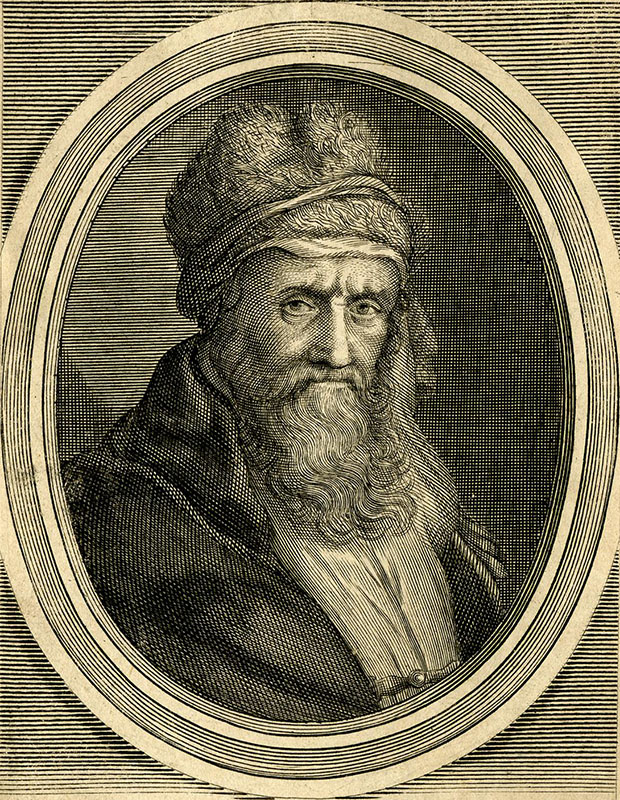
Figure 1.4 Engraving of Greek historian Diogenes Laërtius from a 1688 edition of his Lives and Opinions of Eminent Philosophers. (credit: “Diogenes Laërtius, ancient Greek writer” by Unidentified engraver/Wikimedia Commons, Public Domain)
図1.4 ギリシャの歴史家ディオゲネス・ラエルティオスの版画。1688年版の著書『哲学者列伝』(Lives and Opinions of Eminent Philosophers)に収められている。 (credit: “Diogenes Laërtius, ancient Greek writer” by Unidentified engraver/Wikimedia Commons, Public Domain)
Among the ancient Greeks, it is common to identify seven sages. The best-known account is provided by Diogenes Laërtius, whose text Lives and Opinions of Eminent Philosophers is a canonical resource on early Greek philosophy. The first and most important sage is Thales of Miletus. Thales traveled to Egypt to study with the Egyptian priests, where he became one of the first Greeks to learn astronomy. He is known for bringing back to Greece knowledge of the calendar, dividing the year into 365 days, tracking the progress of the sun from solstice to solstice, and—somewhat dramatically—predicting a solar eclipse in 585 BCE. The eclipse occurred on the day of a battle between the Medes and Lydians. It is possible that Thales used knowledge of Babylonian astronomical records to guess the year and location of the eclipse. This mathematical and astronomical feat is one of Thales’s several claims to sagacity. In addition, he is said to have calculated the height of the pyramids using the basic geometry of similar triangles and measuring shadows at a certain time of day. He is also reported to have predicted a particularly good year for olives: he bought up all the olive presses and then made a fortune selling those presses to farmers wanting to turn their olives into oil. Together, these scientific and technical achievements suggest that at least part of Thales’s wisdom can be attributed to a very practical, scientific, and mathematical knowledge of the natural world. If that were all Thales was known for, he might be called the first scientist or engineer. But he also made more basic claims about the nature and composition of the universe; for instance, he claimed that all matter was fundamentally made of up water. He also argued that everything that moved on its own possessed a soul and that the soul itself was immortal. These claims demonstrate a concern about the fundamental nature of reality.
英語のヒント
古代ギリシャでは、7人の賢者を挙げるのが一般的である。最もよく知られた記述はディオゲネス・ラエルティオスによるもので、彼の著書『哲学者列伝』(Lives and Opinions of Eminent Philosophers)は、初期ギリシャ哲学を知るための基本的な資料となっている。最初の、そして最も重要な賢者は、ミレトスのタレスである。タレスはエジプトの神官のもとで学ぶために渡航し、天文学を学んだ最初期のギリシャ人の一人となった。彼は暦の知識をギリシャへ持ち帰り、1年を365日に分け、太陽の動きを至点から次の至点まで追跡し、さらに劇的な例として、紀元前585年の日食を予言したことで知られている。その日食は、メディア人とリュディア人との戦いの日に起きた。タレスはバビロニアの天文記録についての知識を使って、日食の年と場所を推測した可能性がある。この数学と天文学の偉業は、タレスが賢者とされるいくつかの根拠の一つである。さらに、相似三角形の基本的な幾何学を使い、1日のある時刻に影を測って、ピラミッドの高さを計算したともいわれている。また、オリーブがとりわけ豊作になる年を予測したとも伝えられる。彼はオリーブの搾油機をすべて買い占め、その後、オリーブを油にしたい農民にそれらを売って大きな財産を築いた。これらの科学的・技術的な成果を総合すると、タレスの知恵の少なくとも一部は、自然界についての、きわめて実践的で科学的・数学的な知識に由来すると考えられる。タレスがこれだけで知られていたのなら、最初の科学者あるいは技術者と呼べたかもしれない。しかし、彼は宇宙の本性と構成についても、さらに根本的な主張をしていた。例えば、あらゆる物質は根本的には水でできている、と述べた。また、自ら動くものはすべて魂を持ち、魂そのものは不死であるとも論じた。これらの主張は、実在の根本的な本性に対する関心を示している。
Another of the seven sages was Solon, a famed political leader. He introduced the “Law of Release” to Athens, which cancelled all personal debts and freed indentured servants, or “debt-slaves” who had been consigned to service based on a personal debt they were unable to repay. In addition, he established a constitutional government in Athens with a representative body, a procedure for taxation, and a series of economic reforms. He was widely admired as a political leader but voluntarily stepped down so that he would not become a tyrant. He was finally forced to flee Athens when he was unable to persuade the members of the Assembly (the ruling body) to resist the rising tyranny of one of his relatives, Pisistratus. When he arrived in exile, he was reportedly asked whom he considered to be happy, to which he replied, “One ought to count no man happy until he is dead.” Aristotle interpreted this statement to mean that happiness was not a momentary experience, but a quality reflective of someone’s entire life.
英語のヒント
七賢人のもう一人は、有名な政治指導者ソロンだった。彼はアテナイに「解放法」を導入した。この法律は個人の負債をすべて帳消しにし、返済できない借金のために奉公を命じられていた契約奉公人、すなわち「債務奴隷」を解放した。さらに、代表者から成る機関、課税の手続き、一連の経済改革を備えた立憲的な政体をアテナイに築いた。政治指導者として広く尊敬されていたが、僭主にならないよう、自ら権力の座を退いた。最後には、親族の一人ペイシストラトスによる僭主支配の台頭に抵抗するよう、民会、すなわち統治機関の構成員を説得できず、アテナイを逃れざるを得なくなった。亡命先に着いた際、誰を幸福だと思うかと尋ねられた彼は、「死ぬまでは、誰も幸福だと数えてはならない」と答えたという。アリストテレスはこの言葉を、幸福とは一時的な経験ではなく、その人の生涯全体を反映する性質である、という意味に解釈した。