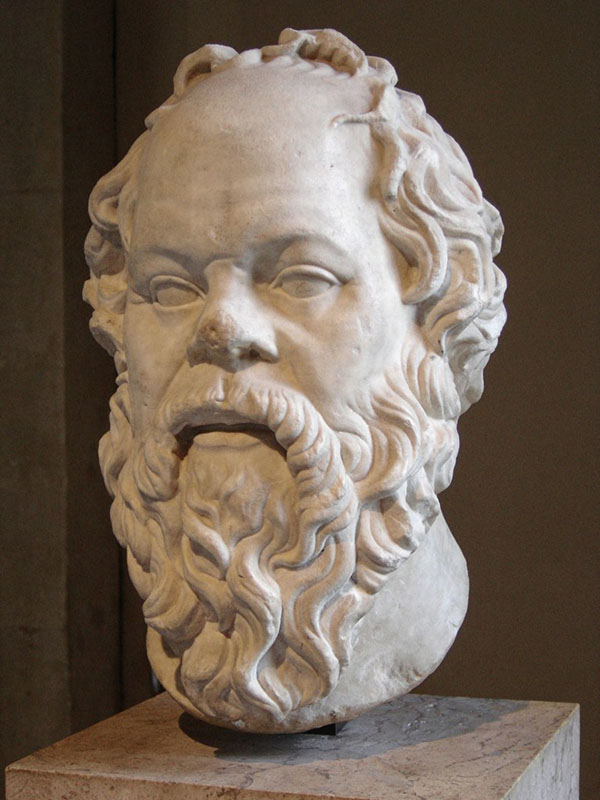
I dare say, Athenians, that someone among you will reply, “Why is this, Socrates, and what is the origin of these accusations of you: for there must have been something strange which you have been doing? All this great fame and talk about you would never have arisen if you had been like other men: tell us, then, why this is, as we should be sorry to judge hastily of you.” Now I regard this as a fair challenge, and I will endeavor to explain to you the origin of this name of “wise,” and of this evil fame. . . . I will refer you to a witness who is worthy of credit, and will tell you about my wisdom—whether I have any, and of what sort—and that witness shall be the god of Delphi. You must have known Chaerephon; he was early a friend of mine, and also a friend of yours, for he shared in the exile of the people, and returned with you. Well, Chaerephon, as you know, was very impetuous in all his doings, and he went to Delphi and boldly asked the oracle to tell him whether—as I was saying, I must beg you not to interrupt—he asked the oracle to tell him whether there was anyone wiser than I was, and the Pythian prophetess answered that there was no man wiser. Chaerephon is dead himself, but his brother, who is in court, will confirm the truth of this story.
英語のヒント
アテナイの諸君、おそらく諸君の中には、こう答える人がいるだろう。「ソクラテス、それはいったいどういうことなのか。君に対するこれらの告発は、どこから生まれたのか。君は何か変わったことをしていたはずではないか。ほかの人と同じようにしていたなら、これほど大きな評判やうわさが生まれることは決してなかったはずだ。だから、なぜこうなったのか話してほしい。君について軽々しく判断するのは避けたいのだから」。私はこれを、もっともな問いだと思う。そこで私は、「知恵ある者」というこの呼び名と、この悪い評判がどこから来たのかを、諸君に説明するよう努めよう。……私の知恵について――私に知恵があるのか、あるならどのような知恵かについて――語ってくれる、信頼に値する証人を示そう。その証人は、デルフォイの神である。諸君はカイレポンを知っていたはずだ。彼は若いころから私の友人で、諸君の友人でもあった。民衆とともに亡命し、諸君とともに帰還したからである。さてカイレポンは、諸君も知るとおり、何をするにもひどく性急な人だった。彼はデルフォイへ行き、大胆にも神託に尋ねた――先ほども言ったように、どうか話を遮らないでほしい――私より知恵のある者が誰かいるのか、と神託に尋ねたのである。するとピュティアの巫女は、私より知恵のある者はいないと答えた。カイレポン自身は亡くなっているが、法廷にいる彼の弟が、この話が真実であることを証言してくれるだろう。
Why do I mention this? Because I am going to explain to you why I have such an evil name. When I heard the answer, I said to myself, “What can the god mean? and what is the interpretation of this riddle? for I know that I have no wisdom, small or great. What can he mean when he says that I am the wisest of men? And yet he is a god and cannot lie; that would be against his nature.” After a long consideration, I at last thought of a method of trying the question. I reflected that if I could only find a man wiser than myself, then I might go to the god with a refutation in my hand. I should say to him, “Here is a man who is wiser than I am; but you said that I was the wisest.” Accordingly I went to one who had the reputation of wisdom, and observed to him—his name I need not mention; he was a politician whom I selected for examination—and the result was as follows: When I began to talk with him, I could not help thinking that he was not really wise, although he was thought wise by many, and wiser still by himself; and I went and tried to explain to him that he thought himself wise, but was not really wise; and the consequence was that he hated me, and his enmity was shared by several who were present and heard me. So I left him, saying to myself, as I went away: “Well, although I do not suppose that either of us knows anything really beautiful and good, I am better off than he is—for he knows nothing, and thinks that he knows. I neither know nor think that I know. In this latter particular, then, I seem to have slightly the advantage of him.” Then I went to another, who had still higher philosophical pretensions, and my conclusion was exactly the same. I made another enemy of him, and of many others besides him.
英語のヒント
なぜこの話を持ち出すのか。それは、私になぜこのような悪い評判があるのかを、諸君に説明しようとしているからだ。あの答えを聞いたとき、私は自分に言った。「神はいったい何を意味しているのか。この謎はどう解けばよいのか。私には、大きな知恵も小さな知恵もないことを、私は知っている。私が人間の中で最も知恵があると言うとき、神は何を意味しているのか。それでも、彼は神なのだから嘘はつけない。それは神の本性に反する」。長く考えたあと、私はようやく、この問いを試す方法を思いついた。私より知恵のある人を一人でも見つけられれば、反証を手にして神のもとへ行けるかもしれない、と考えたのだ。神にこう言おう。「ここに、私より知恵のある人がいます。しかし、あなたは私が最も知恵のある者だとおっしゃいました」。そこで私は、知恵があると評判の一人を訪ね、話してみた。名前を挙げる必要はないが、私が吟味のために選んだ政治家だった。結果はこうである。話し始めると、私は、彼は本当には知恵がないのではないかと考えずにはいられなくなった。多くの人から知恵があると思われ、本人はさらに強くそう思っていたのだが。そこで私は、彼が自分を知恵ある者だと考えてはいるが、実際にはそうではない、と説明しようとした。すると彼は私を憎み、その場にいて私の言葉を聞いていた何人もの人々も、その敵意を共有することになった。私は彼のもとを去りながら、こう独り言を言った。「さて、私たちのどちらも、本当に美しく善いものについて何も知っていないようだが、私は彼よりましだ。彼は何も知らないのに、知っていると思っている。私は知らないし、知っているとも思わない。だから、この後者の点で、私は彼より少しだけ優れているようだ」。それから私は、哲学的な知恵をさらに高く誇る別の人のところへ行ったが、結論はまったく同じだった。私はその人も、そのほか多くの人々も、さらに敵に回したのである。
After this I went to one man after another, being not unconscious of the enmity which I provoked, and I lamented and feared this: but necessity was laid upon me—the word of God, I thought, ought to be considered first. And I said to myself, “Go I must to all who appear to know, and find out the meaning of the oracle.” And I swear to you, Athenians, by the dog I swear!—for I must tell you the truth—the result of my mission was just this: I found that the men most in repute were all but the most foolish; and that some inferior men were really wiser and better. I will tell you the tale of my wanderings and of the “Herculean” labors, as I may call them, which I endured only to find at last the oracle irrefutable. When I left the politicians, I went to the poets; tragic, dithyrambic, and all sorts. And there, I said to myself, you will be detected; now you will find out that you are more ignorant than they are. Accordingly, I took them some of the most elaborate passages in their own writings, and asked what was the meaning of them—thinking that they would teach me something. Will you believe me? I am almost ashamed to speak of this, but still I must say that there is hardly a person present who would not have talked better about their poetry than they did themselves. That showed me in an instant that not by wisdom do poets write poetry, but by a sort of genius and inspiration; they are like diviners or soothsayers who also say many fine things, but do not understand the meaning of them. And the poets appeared to me to be much in the same case; and I further observed that upon the strength of their poetry they believed themselves to be the wisest of men in other things in which they were not wise. So I departed, conceiving myself to be superior to them for the same reason that I was superior to the politicians.
英語のヒント
その後、私は次々に人を訪ねた。自分が敵意を引き起こしていることに気づかないわけではなく、それを嘆き、恐れていた。しかし、私には避けられない務めがあった。神の言葉こそ、何より先に考えなければならないと思ったのだ。そして自分に言った。「知っているように見える者すべてのもとへ行き、神託の意味を見つけ出さなければならない」。アテナイの諸君、私は誓う、犬にかけて誓う。諸君には真実を告げなければならない。私の使命の結果は、まさにこうだった。最も評判の高い人々は、ほとんど最も愚かであり、劣るとされていた人々の中に、実際にはより賢く、より優れた者がいたのである。私の遍歴と、いわばヘラクレスの難行について話そう。それを耐え抜いて最後にわかったのは、神託は反駁できないということだった。政治家たちのもとを去ると、私は詩人たち――悲劇詩人、ディテュランボスの詩人、その他あらゆる種類の詩人――を訪ねた。そこで私は自分に言った。今度こそ正体が見破られるだろう、今度こそ彼らより自分のほうが無知だとわかるだろう、と。そこで私は、彼ら自身の作品から、とくに凝ったいくつかの箇所を取り上げ、その意味は何かと尋ねた。何か教えてくれるだろうと思ったのだ。諸君は信じてくれるだろうか。このことを話すのは、ほとんど恥ずかしいほどだ。しかし言わなければならない。ここにいる人の中で、詩人たち自身よりも、その詩についてうまく語れない人は、ほとんどいなかっただろう。そのことから私は、詩人が詩を書くのは知恵によってではなく、一種の天賦の才と霊感によってだと、たちどころにわかった。彼らは占い師や予言者に似ている。そうした人々も立派なことをたくさん言うが、その意味を理解していない。詩人たちも、私にはほとんど同じように見えた。さらに私は、彼らが詩を作れることを根拠に、知恵のないほかの事柄についても、人間の中で最も知恵があると思い込んでいることに気づいた。そこで私は、政治家たちより自分のほうが優れていると考えたのと同じ理由で、詩人たちよりも優れていると考え、立ち去ったのである。
At last I went to the artisans, for I was conscious that I knew nothing at all, as I may say, and I was sure that they knew many fine things; and in this I was not mistaken, for they did know many things of which I was ignorant, and in this they certainly were wiser than I was. But I observed that even the good artisans fell into the same error as the poets; because they were good workmen they thought that they also knew all sorts of high matters, and this defect in them overshadowed their wisdom—therefore I asked myself on behalf of the oracle, whether I would like to be as I was, neither having their knowledge nor their ignorance, or like them in both; and I made answer to myself and the oracle that I was better off as I was.
英語のヒント
最後に私は職人たちのところへ行った。私は、いわば何も知らないことを自覚していたし、彼らは多くの立派なことを知っているに違いないと思っていた。その点で私は間違っていなかった。彼らは私が知らない多くのことを確かに知っており、その点では確かに私より知恵があった。しかし私は、優れた職人でさえ、詩人たちと同じ誤りに陥っていることに気づいた。腕のよい仕事人であるために、あらゆる高尚な問題も知っていると思い込んでいたのである。この欠点が、彼らの知恵を覆い隠していた。そこで私は神託に代わって、自分に尋ねた。彼らの知識も無知も持たない今の自分でいたいのか。それとも、両方とも彼らと同じになりたいのか。そして私は、自分と神託に、今の自分のままでいるほうがよい、と答えた。
This investigation has led to my having many enemies of the worst and most dangerous kind, and has given occasion also to many calumnies, and I am called wise, for my hearers always imagine that I myself possess the wisdom which I find wanting in others: but the truth is, O men of Athens, that God only is wise; and in this oracle he means to say that the wisdom of men is little or nothing; he is not speaking of Socrates, he is only using my name as an illustration, as if he said, “He, O men, is the wisest, who, like Socrates, knows that his wisdom is in truth worth nothing.” And so I go my way, obedient to the god, and make inquisition into the wisdom of anyone, whether citizen or stranger, who appears to be wise; and if he is not wise, then in vindication of the oracle I show him that he is not wise; and this occupation quite absorbs me, and I have no time to give either to any public matter of interest or to any concern of my own, but I am in utter poverty by reason of my devotion to the god.
英語のヒント
この探究のために、私は最もたちの悪い、最も危険な敵を大勢持つことになり、多くの中傷が生まれるきっかけも作った。そして私は知恵ある者と呼ばれている。私の話を聞く人々は、私が他人に欠けていると見抜いた知恵を、私自身は持っていると、いつも思い込むからである。しかし、アテナイの人々よ、真実は、神だけが知恵を持つということだ。この神託で神が言おうとしているのは、人間の知恵はわずかな価値しかない、あるいは何の価値もないということである。神はソクラテスについて話しているのではない。私の名前を一つの例として使っているだけだ。まるでこう言うかのように。「人々よ、ソクラテスのように、自分の知恵には本当は何の価値もないと知っている者こそ、最も知恵のある者である」。だから私は神に従って歩み続け、市民であれ異邦人であれ、知恵があるように見える者がいれば、その知恵を問いただす。そして知恵がなければ、神託の正しさを示すために、その人に知恵がないことを示す。この仕事に私はすっかり没頭しており、公の事柄にも、自分自身の用事にも割く時間がない。神への献身ゆえに、私は極度の貧困の中にいるのである。