第8章価値論Value Theory
Ethical Naturalism倫理的自然主義
As discussed earlier, some philosophers believe that an essential link between values and telos, or purpose, creates an objective moral reality. Ethical naturalism argues that performing good actions fulfills human nature, while performing evil actions distorts it. If this is the case, moral values and “what is good” are based on natural facts about the world, not individuals’ subjective feelings or beliefs. Ethical naturalism often relies on concepts of pleasure, desire, happiness, or flourishing to define what is naturally good or bad.
英語のヒント
先に論じたように、一部の哲学者は、価値とテロス、すなわち目的との本質的な結びつきが、客観的な道徳的実在を作ると考える。倫理的自然主義は、よい行動をすることは人間本性を実現し、悪い行動をすることはそれを歪めると論じる。もしそうなら、道徳的価値や「よいもの」は、個人の主観的な感情や信念ではなく、世界についての自然的事実に基づく。倫理的自然主義は、何が自然によいか悪いかを定めるために、快楽、欲求、幸福、充実して生きることなどの概念に依拠することが多い。
The 20th-century philosopher Philippa Foot (1920–2010) provides one of the most famous philosophical arguments for ethical naturalism. In Natural Goodness (2003), Foot argues that moral values like “goodness” are not about statements, as G. E. Moore suggested in Principia Ethica, or about mere emotions that individuals feel, but are instead about human flourishing. Just as bees have qualities that help them thrive and build strong colonies, so humans have virtues that help them to thrive in life and build flourishing communities. Foot’s description of flourishing is influenced by Aristotle, who based his concept of ethics on an examination of different virtues, which involve fulfilling one’s telos, or purpose. This approach to morality is called virtue ethics. In ethical naturalism and virtue ethics, discovering moral values requires understanding one’s nature, which must be based on an objective understanding of human life.
英語のヒント
20世紀の哲学者フィリッパ・フット(1920–2010)は、倫理的自然主義を擁護する、最も有名な哲学的論証の一つを示している。『自然的な善さ』(2003)でフットは、「善さ」のような道徳的価値は、G・E・ムーアが『倫理学原理』で示唆したような言明に関するものでも、個人が感じる単なる感情に関するものでもなく、人間が充実して生きることに関するものだと論じる。ミツバチには、繁栄して強い群れを作るのに役立つ特質がある。同様に、人間には、人生を充実させ、栄える共同体を築くのに役立つ徳がある。充実して生きることについてのフットの説明は、アリストテレスの影響を受けている。彼は、さまざまな徳を検討することで倫理の概念を基礎づけ、その徳は自分のテロス、すなわち目的を果たすことに関わる。この道徳への取り組み方は徳倫理学と呼ばれる。倫理的自然主義と徳倫理学では、道徳的価値を発見するには自分の本性を理解する必要があり、その理解は人間の生についての客観的な理解に基づかなければならない。
In Natural Goodness, Foot further argues that moral evaluations are similar to the types of evaluations that people make about other living things in the natural world. Moral goodness describes how one should live according to human nature. Just as you can know what is good for an animal by studying its nature, you can know what is good for humans by understanding their nature.
英語のヒント
『自然的な善さ』でフットはさらに、道徳的評価は、人が自然界の他の生物について行う評価と似ていると論じる。道徳的な善さは、人間本性に即してどのように生きるべきかを表す。動物の本性を研究すれば、その動物に何がよいかがわかるように、人間の本性を理解すれば、人間に何がよいかがわかる。
More importantly, Foot argues that part of understanding what an organism is involves knowing what is good for it based on its vital processes. For example, you know what is good for a duck based on knowledge of what a duck is. This knowledge would include an understanding of the duck’s nature and what helps it live a good life. A duck is an aquatic bird, so a habitat with water will be good for it. Along similar lines, you can know what is good for a human based on knowledge of human nature.
英語のヒント
さらに重要なことに、フットは、ある生物が何であるかを理解することの一部には、その生命活動に基づいて、その生物に何がよいかを知ることが含まれると論じる。たとえば、カモが何であるかについての知識に基づいて、カモに何がよいかがわかる。この知識には、カモの本性と、カモがよく生きるのを助けるものについての理解が含まれるだろう。カモは水鳥なので、水のある生息地はカモにとってよい。同様に、人間本性についての知識に基づいて、人間に何がよいかを知ることができる。
In this sense, she connects morality to biological flourishing, or achieving the goals of human life. For example, if the purpose of human life is to develop meaningful relationships and to actualize one’s potential, then morality is based on the virtues that allow someone to achieve these ends. For example, one could argue that humans, like other primates, have evolved to cooperate and care for others as a part of their survival, so actions that promote cooperation and care are good, and actions that harm others are bad.
英語のヒント
この意味で、フットは道徳を、生物として充実して生きること、あるいは人間の生の目標を達成することと結びつける。たとえば、人間の生の目的が、意味ある人間関係を築き、自分の潜在能力を実現することなら、道徳は、そうした目的を達成するのを可能にする徳に基づく。たとえば、人間は他の霊長類と同様、生存の一環として協力し、他者を世話するよう進化してきたため、協力やケアを促す行動はよく、他者を傷つける行動は悪い、と論じることができるだろう。
Reason理性
Some ethical theories focus exclusively on certain human capacities, like reason. Reason is a methodical way of thinking that uses evidence and logic to draw conclusions. The use of reason as the grounds for morality became particularly important in Enlightenment philosophy because philosophers wanted to assert the validity of moral principles without relying on religious beliefs or God.
英語のヒント
ある種の倫理理論は、理性のような特定の人間の能力だけに焦点を当てる。理性は、証拠と論理によって結論を導く、秩序立った思考のあり方である。理性を道徳の基礎として用いることは、啓蒙期の哲学でとくに重要になった。哲学者たちは、宗教的信念や神に依拠せずに、道徳原理の妥当性を主張しようとしたからである。
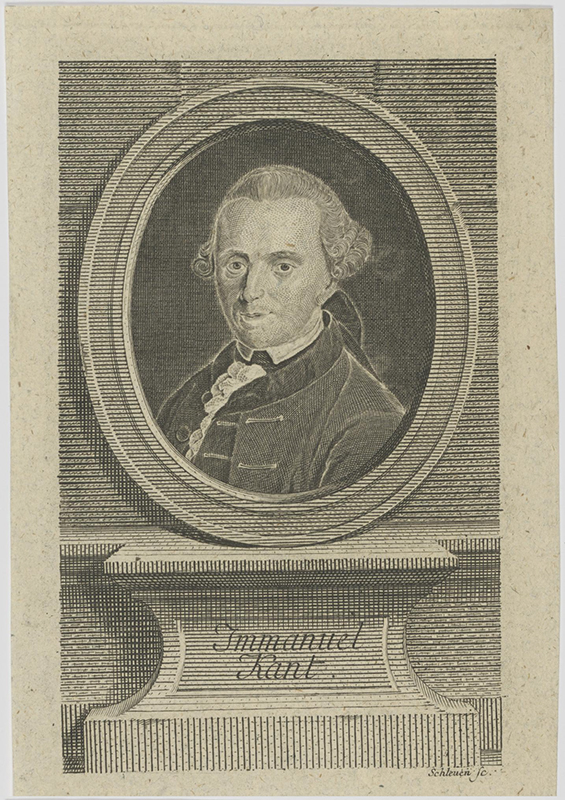
Figure 8.5 Enlightenment philosopher Immanuel Kant argued that an action is moral if it can be universal. (credit: “Bildnis des Immanuel Kant” by Johann Friedrich Schleuen (senior)/Leipzig University Library, Public Domain)
図8.5 啓蒙期の哲学者イマヌエル・カントは、ある行動が普遍的でありうるなら、その行動は道徳的だと論じた。(クレジット:Johann Friedrich Schleuen (senior)/Leipzig University Libraryによる “Bildnis des Immanuel Kant”、パブリックドメイン)
The Enlightenment philosopher Immanuel Kant (1724–1804) argued that as rational agents, humans express general principles or maxims when they act. You always act for a reason—namely, a goal or end in mind. For Kant, an action or decision is moral if you can universalize it, which he formulates in the categorical imperative. Kant’s categorical imperative states: “Act only according to that maxim whereby you can, at the same time, will that it should become a universal law” (Kant [1785] 1998, 31). That means you know an action is moral if can be universal for everyone. The categorical imperative works best when we note that an action contradicts it. For example, lying cannot be moral because it is not universalizable. It is impossible for everyone to lie. Even the act of lying assumes that people usually tell the truth.
英語のヒント
啓蒙期の哲学者イマヌエル・カント(1724–1804)は、人間は理性的な行為者として、行動するときに一般的な原理、すなわち格率を表すと論じた。あなたはつねに、理由があって行動する。つまり、何らかの目標や目的を念頭に置いている。カントにとって、行動や決定は、それを普遍化できるなら道徳的であり、彼はこれを定言命法として定式化する。カントの定言命法は、次のように述べる。「自分の格率が、それと同時に普遍的な法則となることを意志できるような、その格率にのみ従って行為せよ」(Kant [1785] 1998, 31)。これは、ある行動がすべての人にとって普遍的でありうるなら、その行動が道徳的であるとわかるという意味である。定言命法は、ある行動がそれに矛盾することに気づく場面で、最もよく働く。たとえば、嘘をつくことは普遍化できないため、道徳的ではありえない。誰もが嘘をつくことは不可能である。嘘をつくという行為でさえ、人が普段は真実を語ることを前提としている。
Self自己
Other approaches to ethical theory argue that morality originates in the self. How do people know what is right or wrong? What motivates them to be good and care for others? Some argue that the conscience, an individual’s inner sense of right and wrong, forms the basis for ethics. But where does one get this inner sense? Some argue that it comes through intuition—cognition that seems completely self-evident and impossible to deny—while others assert that individuals develop it through education or reason.
英語のヒント
倫理理論への別の取り組み方では、道徳は自己に由来すると論じる。人は、何が正しく、何が間違っていると知るのだろうか。よい人間になり、他者を気遣うよう動機づけるのは何だろうか。良心、すなわち個人の内なる善悪の感覚が倫理の基礎をなす、と論じる人もいる。しかし、この内なる感覚はどこから得られるのだろうか。それは直観、つまり完全に自明で否定できないように思える認知によって得られるとする人もいれば、教育や理性を通じて個人が育むとする人もいる。
Other approaches to ethics rely upon the individual’s psychology, moral sentiments, or feelings. Multiple moral theories emphasize compassion and empathy, the ability to suffer with and share others’ feelings. For the ancient Chinese philosopher Mencius (371–289 BCE), the feeling of compassion allows benevolent actions, which are the basis for ethics and well-being. Compassion and empathy might also be considered virtues that individuals cultivate. Virtue ethics bases its moral theory on virtues as personal characteristics that an individual can develop.
英語のヒント
倫理への別の取り組み方は、個人の心理、道徳的感情、気持ちに依拠する。多くの道徳理論は、思いやりと共感、すなわち他者とともに苦しみ、他者の感情を共有する能力を重視する。古代中国の哲学者孟子(紀元前371–289)にとって、思いやりの感情は仁愛ある行動を可能にし、それが倫理と、よく生きることの基礎となる。思いやりや共感は、個人が培う徳と見なすこともできる。徳倫理学は、個人が育てられる人格的特性としての徳に、道徳理論の基礎を置く。
Feminist care ethics bases ethics on individuals’ feelings for the people who play a significant role in their lives. In her book Caring: A Feminine Approach to Ethics and Moral Education, the American philosopher Nel Noddings (b. 1929) argues that an “ethics built on caring” is “characteristically and essentially feminine” insofar as it arises out of women’s experiences, which are traditionally defined through caregiving roles (2013, 8).
英語のヒント
フェミニズムのケアの倫理は、自分の人生で重要な役割を果たす人々に対する個人の感情に、倫理の基礎を置く。アメリカの哲学者ネル・ノディングズ(1929年生)は、著書『ケアリング――倫理と道徳教育への女性の観点からのアプローチ』で、「ケアに基づく倫理」は、女性の経験から生まれるかぎりで「特徴としても本質としても女性的」であると論じる。女性の経験は、伝統的にケアを担う役割によって定められてきたからである(2013, 8)。
An important debate within ethical theory is the importance of altruism, which is the selfless care for others’ well-being. Some moral philosophers argue that only altruistic actions are completely moral, while others assert that self-interest can motivate the moral treatment of others. It is this issue that the next section addresses.
英語のヒント
倫理理論における重要な論争の一つは、利他主義の重要性である。利他主義とは、他者の幸福を無私に気遣うことである。利他的な行動だけが完全に道徳的だと論じる道徳哲学者もいれば、自己利益によっても、他者を道徳的に扱う動機が生まれると主張する人もいる。次の節で扱うのは、この問題である。