第1章過去を理解するUnderstanding the Past
Interpretation in History歴史の解釈
Hand in hand with bringing causation to light is discovering what informed the choices people made in the past. What makes people act as they do? For much of history, we found the answer in the actions of elites—tsars, sultans, kings, and queens. The first historians largely concerned themselves with the study of wars and rulers, in accordance with the great man theory of history that credits leaders and heroes with triggering history’s pivotal events. Although these historians gave some attention to historical detail, there was also an equal measure of bravado, exaggeration, and political spin in their work. This seemed reasonable in a world where the king’s choice became everyone’s choice and where sources rarely spoke about anyone other than noble lords and ladies. That this type of history remained the norm for so long was also a function of who was writing it.
英語のヒント
因果関係を明らかにすることと密接に結び付いているのが、過去の人々の選択を何が形作ったのかを探ることである。人は何によって、ある行動を取るのだろうか。歴史の多くの時期には、その答えを、ツァーリ、スルタン、王、女王といった支配層の行動に求めてきた。初期の歴史家たちは、指導者や英雄が歴史の転機を生み出すとする英雄史観に従い、主に戦争と支配者の研究に取り組んだ。これらの歴史家は、歴史の細部にある程度注意を払っていたものの、その著作には同じくらい、虚勢、誇張、政治的な脚色も含まれていた。王の選択がすべての人の選択となり、史料が貴族の男女以外をほとんど語らない世界では、それはもっともなことに思えた。この種の歴史が長く標準であり続けたことは、誰が歴史を書いていたかにも関係している。
In the West, Thomas Carlyle, a nineteenth-century Scottish historian, considered the study of the lives of “big men” enough to understand all of history. Higher education was the privilege of only the rich; it must have seemed quite natural to believe that only the elites could move history. These ideas began to change, however, if slowly. In the early nineteenth century, a new school of thought called Romanticism emerged. The Romantics believed there was greatness in everyday life. Even a small flower was worthy of a poem, and the plight of a lowly squire was as important as the worries of the great lord of the manor, for both were essential actors in the human experience. The advent of Romantic art, poetry, music, and novels paved the way for a broad reexamination of what was worth knowing and studying. Writing a little later, in 1860, the Russian novelist Leo Tolstoy argued that there is more to history than the actions of one person. In his novel War and Peace, he contended that the “general mass of men” who participate in history are the ones who truly cause events.
英語のヒント
西洋では、19世紀のスコットランドの歴史家トマス・カーライルは、「偉人」の生涯を研究すれば、すべての歴史を理解できると考えた。高等教育は富裕層だけの特権であり、歴史を動かせるのは支配層だけだと考えることは、自然に思えたに違いない。しかし、ゆっくりとではあれ、こうした考えは変わり始めた。19世紀初めには、ロマン主義と呼ばれる新たな思想の流れが現れた。ロマン主義者は、日常生活にも偉大さがあると信じた。小さな花でさえ詩の題材に値し、身分の低い従者の苦境も、荘園を支配する大領主の悩みと同じほど重要だった。どちらも人間の経験を担う、欠かせない存在だったからである。ロマン主義の美術、詩、音楽、小説の登場は、何を知り、何を研究する価値があるかを、広く見直す道を開いた。それより少し後の1860年、ロシアの小説家レフ・トルストイは、歴史は一人の人間の行動にとどまるものではないと論じた。小説『戦争と平和』では、歴史に参加する「人々の大衆」こそが、出来事を真に引き起こすのだと主張した。
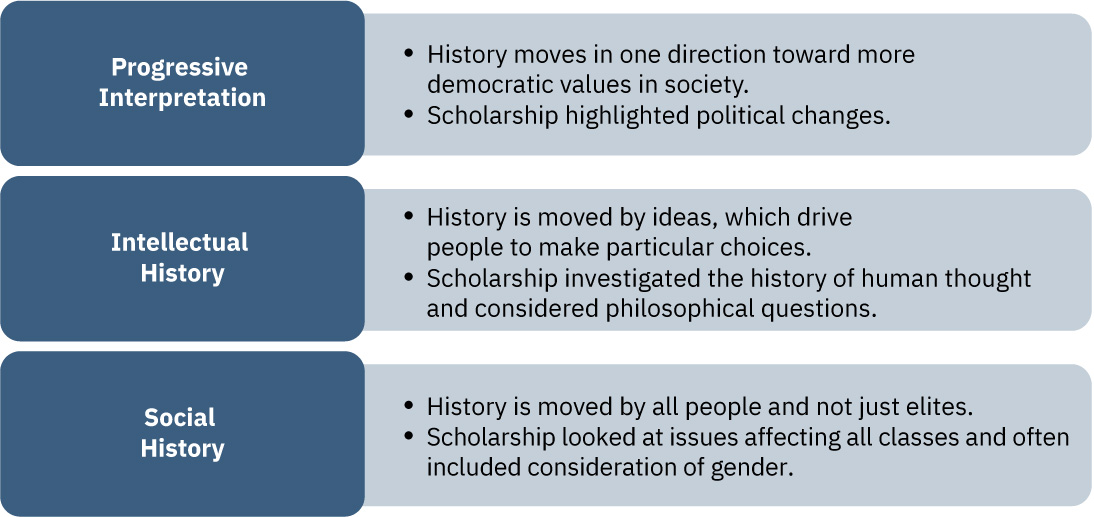
While on one hand historians began to look at people of the lower classes as more integral to the human story, history as a discipline became dominated by the same set of colonial powers that were conquering much of the globe in the nineteenth century. Therefore, two divergent streams of thought were operating simultaneously, and the picture of history both expanded in terms of class and contracted in terms of diversity. One of the early European schools of thought was progressive history, which viewed history as a straight line to a specific destination. Historians with this “progressive” view believed societies were becoming more democratic over time and that the advance of republican governments was inevitable. Their perspective might also be considered a form of teleological history, which proposes that history is moving to a particular end, a culmination of the human experience. Progressive historians believed in the betterment of people and of society, so long as it occurred on a European model. Progress looked only one way: the Western way. Consider what Chinua Achebe (quoted in Chinua Achebe on the Value of Indigenous History) would have said about European democracy and republicanism.
英語のヒント
歴史家たちが下層階級の人々を人類の物語に欠かせない存在とみなし始めた一方で、歴史という学問は、19世紀に世界の広い範囲を征服していた植民地列強に支配されるようになった。そのため、二つの異なる思想の流れが同時に働き、歴史の見取り図は、階級という面では広がり、多様性という面では狭まった。ヨーロッパで初期に現れた考え方の一つが、歴史は特定の到達点へ一直線に進むとみなす進歩史観だった。この「進歩的」な見方をする歴史家たちは、社会は時間とともにより民主的になり、共和制の発展は避けられないと信じていた。その視点は、歴史が人間の経験の完成という特定の終点へ向かって進むとする、目的論的な歴史観の一種とも考えられる。進歩史観の歴史家は、ヨーロッパをモデルとして進むかぎり、人と社会は改善されると信じた。進歩の道は、西洋の道ただ一つだった。「チヌア・アチェベが語る先住民の歴史の価値」で引用したアチェベなら、ヨーロッパの民主主義や共和主義について何と言っただろうか。
In the twentieth century, particularly after World War I, the idea of inevitable human progress seemed laughable. People grew more willing to question the authority of elites because these leaders were of little help once war began. Historians became more interested in the irrational aspects of the human condition, the psychology behind people’s choices. This is one reason for the rise of contemporary intellectual history, which looks at the ideas that drive people to make certain choices and focuses on philosophical questions and the history of human thought.
英語のヒント
20世紀、特に第一次世界大戦の後には、人類は必ず進歩するという考えは、ばかげたものに思えた。戦争が始まると指導者たちはほとんど役に立たなかったため、人々は支配層の権威を以前より疑うようになった。歴史家は、人間のあり方の非合理的な側面、人々の選択の背後にある心理に、いっそう関心を持った。これが、ある選択へ人々を導く考えを調べ、哲学上の問題と人間の思想の歴史に焦点を当てる、現代的な思想史が発展した理由の一つである。
The counterculture of the 1960s in the West deepened people’s desire to challenge existing norms, such as the lack of rights for women and for racial minorities. The field of social history, guided by the concept that history is made by all people and not just elites, became much more important during this period (Figure 1.14). In this context, young historians and sociologists began to develop new ideas. In their 1966 book The Social Construction of Reality, for example, sociologists Peter Berger and Thomas Luckmann argued that our belief systems are informed by social constructs, ideas that have been created and accepted by the people in a society, such as the concepts of class distinction and gender. Social constructs influence the ways people think and behave.
英語のヒント
1960年代の西洋の対抗文化は、女性や人種的少数者の権利の欠如など、既存の規範を問い直したいという人々の思いを強めた。歴史を作るのは支配層だけでなくすべての人だという考えに導かれる社会史の分野は、この時期にいっそう重要になった(図1.14)。この文脈で、若い歴史家や社会学者が新たな考えを展開し始めた。たとえば社会学者ピーター・バーガーとトーマス・ルックマンは、1966年の著書『現実の社会的構成』で、私たちの信念体系は社会的構築物によって形作られると論じた。社会的構築物とは、階級の区別やジェンダーの概念など、社会の人々が作り、受け入れてきた考え方であり、人々の思考や行動に影響する。
Trends in Historical Thought.歴史思想の流れ
(attribution: Copyright Rice University, OpenStax, under CC BY 4.0 license) · CC BY 4.0
Figure 1.14 Historians’ thinking has led from the progressive school of interpretation to the more contemporary fields of intellectual and social history. (attribution: Copyright Rice University, OpenStax, under CC BY 4.0 license)
図1.14 歴史家の考え方は、進歩史観の学派から、より現代的な思想史や社会史の分野へと進んできた。(権利表示:Copyright Rice University, OpenStax、CC BY 4.0)
To understand history, you must understand the social construction of reality, which is the way people define roles and perceive themselves within a social context. Consider our earlier thought exercise. You believe education is important. Why? Who has said that to you in the past? How did you come to believe it? In other words, what is your social construction of education, and where did it come from?
英語のヒント
歴史を理解するには、現実の社会的構成、すなわち人々が社会的な文脈のなかで役割を定め、自分を捉える仕組みを理解する必要がある。先ほどの思考の練習を振り返ろう。あなたは教育が大切だと信じている。なぜだろうか。これまで誰からそう教えられたのか。どのようにして、そう信じるようになったのか。つまり、あなたにとって教育は社会的にどのように構成されており、それはどこから来たのだろうか。
Social constructs exist everywhere and inform many decisions we make, often on a subconscious level. For example, consider the following questions:
英語のヒント
社会的構築物は至る所にあり、多くの場合、無意識の水準で、私たちのさまざまな決定を形作っている。たとえば次の問いを考えてみよう。
What do you buy a five-year-old girl for her birthday? What do you buy for a boy the same age? What influenced your decision?
5歳の女の子の誕生日には何を買うだろうか。同じ年の男の子には何を買うだろうか。その判断に何が影響したか。
What would you wear to a job interview? What would you wear to a party? Why?
就職の面接には何を着ていくだろうか。パーティーには何を着ていくだろうか。それはなぜか。
To which person standing at the front of a classroom would you give more respect: a woman dressed in a tailored suit, or a man wearing jeans and a t-shirt? Why?
教室の前に立っている人が、きちんと仕立てられたスーツ姿の女性だった場合と、ジーンズとTシャツ姿の男性だった場合では、どちらにより敬意を払うだろうか。それはなぜか。
In addition to examining reality as socially constructed, twentieth-century historians made interpretations through the lenses of Marxism, which considers history to be driven by class struggle, women’s history (now usually referred to in the context of gender history), which sees history as driven by power differences between men and women, and postcolonialism, which focuses on the history of places formerly occupied by colonial powers. In the process we call revisionism, each additional lens revised the great man story of history, adding new key players and viewpoints.
英語のヒント
20世紀の歴史家たちは、現実が社会的に構成されることを検討するだけでなく、ほかの視点からも解釈を行った。マルクス主義は歴史が階級闘争によって動くと考える。女性史(現在は通常、ジェンダー史の文脈で論じられる)は、男女間の権力の違いが歴史を動かすとみる。ポストコロニアリズムは、かつて植民地列強に占領された地域の歴史に焦点を当てる。歴史の見直しと呼ぶこの過程では、こうした視点が加わるたびに、偉人を中心とした歴史の物語が修正され、新たな重要人物や視点が取り入れられた。
Let us look at one more example. How would each school of historical thought approach the story of colonial Latin America between the Spanish conquest that began in 1493 and the independence movements of the 1820s? The progressive historian might explore the growth of democratic legal systems or people’s increased interest in republican forms of government. The intellectual historian might consider the Indigenous literature and philosophy of the period. The social historian would look at what conquered people ate, how they worked, and what they looked for in marriage partners. A Marxist historian would examine unfair labor practices and moments of class conflict like rebellion or riot. The gender historian would focus on the role that social constructs of gender played in the lives of people in the past. And the postcolonialist would highlight why aspects of colonialism, such as racism and poverty, remain influential after independence. All these interpretative elements help us weave a more complete picture of the past.
英語のヒント
もう一つ例を見よう。1493年に始まるスペインの征服から、1820年代の独立運動までの、植民地期ラテンアメリカの物語を、歴史思想の各学派はどのように扱うだろうか。進歩史観の歴史家なら、民主的な法制度の発達や、共和制への人々の関心の高まりを調べるかもしれない。思想史家なら、その時代の先住民の文学や哲学を考えるだろう。社会史家は、征服された人々が何を食べ、どのように働き、結婚相手に何を求めたかを見るだろう。マルクス主義の歴史家は、不公正な労働慣行や、反乱・暴動といった階級対立の局面を検討するだろう。ジェンダー史家は、社会的に構築されたジェンダーが、過去の人々の生活で果たした役割に注目する。ポストコロニアリズムの立場なら、人種差別や貧困などの植民地主義の側面が、独立後も影響力を持ち続ける理由を明らかにするだろう。これらの解釈上の要素はすべて、過去のより完全な姿を織り上げる助けとなる。
The variety of interpretations open to historians also helps us put in the final piece, which is the practice of historical empathy, the ability to meet the past on its own terms and without judgment or the imposition of our own modern-day attitudes. To fully embrace the study of the past, the student of history must be able to set aside the assumptions of the modern era. Everyone has a set of biases, generated by the people who influence our lives and the experiences that shape who we become. Historians must spend the time necessary to investigate these biases and understand how they affect their interpretations. It is not the historian’s job to pass judgment on the past, but to present it as clearly as possible and to preserve that clarity for future generations. This may mean reflecting impartially on historical positions, attitudes, or decisions we might find abhorrent as viewed from today’s world. However, the more strands of history we can investigate and bring together, the more accurate the picture will be. And there is still much work to be done. For example, recent and ongoing research into LGBTQ+ studies, Indigenous studies, and the history of the Global South will continue to sharpen our image of the past.
英語のヒント
歴史家に開かれた多様な解釈は、最後の要素を加える助けにもなる。それは歴史的共感の実践、すなわち、過去をその時代自身の条件に即して捉え、裁きを下したり現代の態度を押し付けたりしない能力である。過去の研究に十分に向き合うには、歴史を学ぶ人は現代の前提をいったん脇に置けなければならない。誰もが、人生に影響を与える人々や、自分を形作る経験から生まれた、一連の偏りを持っている。歴史家は、その偏りを調べ、解釈にどう影響するかを理解するために、必要な時間をかけなければならない。歴史家の仕事は過去に裁きを下すことではなく、できるかぎり明瞭に示し、その明瞭さを後世に残すことである。そのため、今日の世界から見れば忌まわしく感じる歴史上の立場、態度、決定についても、公平に考える必要があるかもしれない。しかし、歴史のより多くの糸を調べて結び合わせるほど、その姿は正確になる。なすべき仕事は、まだ多い。たとえば、近年進められ、今も続いているLGBTQ+研究、先住民研究、グローバル・サウスの歴史の研究は、過去の姿をさらに鮮明にしていくだろう。
The bottom line is that interpretation plays a central role in the field of history. And changes in our interpretation increase the number of ways we can get a clearer picture of those who lived before us. The danger lies in using only one lens. Yes, historians choose some causes as more important than others, but only after considering all the information available.
英語のヒント
歴史の分野では、解釈が中心的な役割を果たす。解釈が変わることで、先人たちのより明確な姿に近づく方法が増える。危険なのは、ただ一つのレンズだけを使うことである。確かに歴史家は、ある原因をほかより重要だと判断する。しかし、それは利用できるすべての情報を検討した後に行うことである。