第11章パーソナリティ
11.3 Neo-Freudians: Adler, Erikson, Jung, and Horney11.3 新フロイト派:アドラー、エリクソン、ユング、ホーナイ
Learning Objectives学習目標
By the end of this section, you will be able to:
この節を学び終えると、次のことができるようになる。
- Discuss the concept of the inferiority complex劣等コンプレックスの概念について論じる
- Discuss the core differences between Erikson’s and Freud’s views on personalityパーソナリティについてのエリクソンとフロイトの見方の核心的な違いを論じる
- Discuss Jung’s ideas of the collective unconscious and archetypes集合的無意識と元型についてのユングの考えを論じる
- Discuss the work of Karen Horney, including her revision of Freud’s “penis envy”フロイトの「ペニス羨望」に対する修正を含め、カレン・ホーナイの業績を論じる
Freud attracted many followers who modified his ideas to create new theories about personality. These theorists, referred to as neo-Freudians, generally agreed with Freud that childhood experiences matter, but deemphasized sex, focusing more on the social environment and effects of culture on personality. Four notable neo-Freudians include Alfred Adler, Erik Erikson, Carl Jung (pronounced “Yoong”), and Karen Horney (pronounced “HORN-eye”).
英語のヒント
フロイトのもとには多くの追随者が集まり、彼らはフロイトの考えを修正して、パーソナリティについての新しい理論をつくった。新フロイト派と呼ばれるこれらの理論家は、幼少期の経験が重要だという点ではおおむねフロイトに同意したが、性の比重を下げ、社会環境や、文化がパーソナリティに及ぼす影響により大きな焦点を当てた。著名な新フロイト派としては、アルフレッド・アドラー、エリク・エリクソン、カール・ユング(発音は「ユング」)、カレン・ホーナイ(発音は「ホーン・アイ」)の4人が挙げられる。
Alfred Adlerアルフレッド・アドラー
Alfred Adler, a colleague of Freud’s and the first president of the Vienna Psychoanalytical Society (Freud’s inner circle of colleagues), was the first major theorist to break away from Freud (Figure 11.8). He subsequently founded a school of psychology called individual psychology, which focuses on our drive to compensate for feelings of inferiority. Adler (1937, 1956) proposed the concept of the inferiority complex. An inferiority complex refers to a person’s feelings that they lack worth and don’t measure up to the standards of others or of society. Adler’s ideas about inferiority represent a major difference between his thinking and Freud’s. Freud believed that we are motivated by sexual and aggressive urges, but Adler (1930, 1961) believed that feelings of inferiority in childhood are what drive people to attempt to gain superiority and that this striving is the force behind all of our thoughts, emotions, and behaviors.
英語のヒント
アルフレッド・アドラーはフロイトの同僚で、ウィーン精神分析協会(フロイトを囲む同僚たちの内輪の集まり)の初代会長も務めた人物であり、フロイトから離反した最初の主要な理論家である(図11.8)。アドラーはその後、個人心理学と呼ばれる心理学の一派を創始した。個人心理学は、劣等感を補償しようとする私たちの欲求に焦点を当てる。アドラー(1937, 1956)は、劣等コンプレックスという概念を提唱した。劣等コンプレックスとは、自分には価値がなく、他者や社会の基準に達していないという、その人の感じ方を指す。劣等感についてのアドラーの考えは、彼の思想とフロイトの思想の大きな違いを表している。フロイトは、私たちは性的な衝動と攻撃的な衝動によって動機づけられていると考えた。これに対してアドラー(1930, 1961)は、人を駆り立てて優越性を得ようとさせるのは幼少期の劣等感であり、この優越性の追求こそが、私たちのあらゆる思考、感情、行動の背後にある力だと考えた。
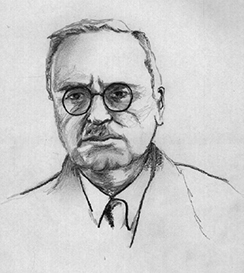

Figure 11.8図 11.8
Alfred Adler proposed the concept of the inferiority complex.
アルフレッド・アドラーは、劣等コンプレックスという概念を提唱した。
Adler also believed in the importance of social connections, seeing childhood development emerging through social development rather than the sexual stages Freud outlined. Adler noted the inter-relatedness of humanity and the need to work together for the betterment of all. He said, “The happiness of mankind lies in working together, in living as if each individual had set himself the task of contributing to the common welfare” (Adler, 1964, p. 255) with the main goal of psychology being “to recognize the equal rights and equality of others” (Adler, 1961, p. 691).
英語のヒント
アドラーはまた、社会的なつながりの重要性を信じていた。子どもの発達は、フロイトが示した性的な段階を通してではなく、社会的な発達を通して現れてくるとみていたのである。アドラーは、人間どうしが互いに結びついていること、そしてすべての人の向上のために協力し合う必要があることを指摘した。アドラーは「人類の幸福は、協力し合うこと、つまり一人ひとりが共通の福祉に貢献するという課題を自らに課したかのように生きることにある」と述べ(Adler, 1964, p. 255)、心理学の主な目標は「他者の平等な権利と平等性を認めること」だとした(Adler, 1961, p. 691)。
With these ideas, Adler identified three fundamental social tasks that all of us must experience: occupational tasks (careers), societal tasks (friendship), and love tasks (finding an intimate partner for a long-term relationship). Rather than focus on sexual or aggressive motives for behavior as Freud did, Adler focused on social motives. He also emphasized conscious rather than unconscious motivation, since he believed that the three fundamental social tasks are explicitly known and pursued. That is not to say that Adler did not also believe in unconscious processes—he did—but he felt that conscious processes were more important.
英語のヒント
こうした考えから、アドラーは、私たち全員が経験しなければならない三つの基本的な社会的課題を挙げた。仕事の課題(職業)、交友の課題(友情)、愛の課題(長く続く関係を結ぶ親密なパートナーを見つけること)である。アドラーは、フロイトのように行動の性的な動機や攻撃的な動機に焦点を当てるのではなく、社会的な動機に焦点を当てた。アドラーはまた、無意識の動機づけよりも意識的な動機づけを重視した。三つの基本的な社会的課題は、はっきりと自覚され、意識して追求されるものだと考えたからである。だからといって、アドラーが無意識の過程の存在を信じていなかったわけではない。実際には信じていたが、意識的な過程のほうが重要だと感じていたのである。
One of Adler’s major contributions to personality psychology was the idea that our birth order shapes our personality. He proposed that older siblings, who start out as the focus of their parents’ attention but must share that attention once a new child joins the family, compensate by becoming overachievers. The youngest children, according to Adler, may be spoiled, leaving the middle child with the opportunity to minimize the negative dynamics of the youngest and oldest children. Despite popular attention, research has not conclusively confirmed Adler’s hypotheses about birth order.
英語のヒント
パーソナリティ心理学へのアドラーの大きな貢献の一つは、生まれ順が私たちのパーソナリティを形づくるという考えだった。アドラーは、年上のきょうだいについて次のように唱えた。年上のきょうだいは、はじめは親の関心を一身に集めているが、新しい子どもが家族に加わると、その関心を分け合わなければならなくなる。そこで彼らは、人一倍成果を上げようと頑張る人になることで、それを埋め合わせるというのである。アドラーによれば、末っ子は甘やかされるかもしれない。その結果、真ん中の子には、末っ子と長子に見られる負の力学を最小限に抑える機会が残される。世間の関心を集めてきたにもかかわらず、生まれ順についてのアドラーの仮説は、研究によって決定的には確かめられていない。
Erik Eriksonエリク・エリクソン
As an art school dropout with an uncertain future, young Erik Erikson met Freud’s daughter, Anna Freud, while he was tutoring the children of an American couple undergoing psychoanalysis in Vienna. It was Anna Freud who encouraged Erikson to study psychoanalysis. Erikson received his diploma from the Vienna Psychoanalytic Institute in 1933, and as Nazism spread across Europe, he fled the country and immigrated to the United States that same year. As you learned when you studied lifespan development, Erikson later proposed a psychosocial theory of development, suggesting that an individual’s personality develops throughout the lifespan—a departure from Freud’s view that personality is fixed in early life. In his theory, Erikson emphasized the social relationships that are important at each stage of personality development, in contrast to Freud’s emphasis on sex. Erikson identified eight stages, each of which represents a conflict or developmental task (Table 11.2). The development of a healthy personality and a sense of competence depend on the successful completion of each task.
英語のヒント
美術学校を中退し、先の見えない若者だったエリク・エリクソンは、ウィーンで精神分析を受けていたアメリカ人夫婦の子どもたちの家庭教師をしていたときに、フロイトの娘アンナ・フロイトと出会った。エリクソンに精神分析を学ぶよう勧めたのは、ほかならぬアンナ・フロイトだった。エリクソンは1933年にウィーン精神分析研究所の修了証書を受け取り、ナチズムがヨーロッパ中に広がるなか、同じ年のうちに国外へ逃れてアメリカに移住した。生涯発達を学んだときに見たように、エリクソンはのちに心理社会的発達理論を提唱し、個人のパーソナリティは生涯を通じて発達すると唱えた。これは、パーソナリティは人生の早い時期に固まるというフロイトの見方からの離脱だった。エリクソンはその理論の中で、フロイトが性を重視したのとは対照的に、パーソナリティ発達の各段階で重要となる社会的関係を強調した。エリクソンは八つの段階を示し、その一つひとつが、ある葛藤、あるいは発達課題を表すとした(表11.2)。健全なパーソナリティと有能感が発達するかどうかは、一つひとつの課題をうまくやり遂げることにかかっている。
Erikson’s Psychosocial Stages of Development エリクソンの心理社会的発達段階 |
|||
|---|---|---|---|
Stage 段階 |
Age (years) 年齢(歳) |
Developmental Task 発達課題 |
Description 説明 |
1 |
0–1 |
Trust vs. mistrust 信頼対不信 |
Trust (or mistrust) that basic needs, such as nourishment and affection, will be met 栄養や愛情といった基本的な欲求が満たされるという信頼(または不信) |
2 |
1–3 |
Autonomy vs. shame/doubt 自律性対恥・疑惑 |
Sense of independence in many tasks develops 多くの作業で自立の感覚が育つ |
3 |
3–6 |
Initiative vs. guilt 自主性対罪悪感 |
Take initiative on some activities, may develop guilt when success not met or boundaries overstepped いくつかの活動で自主性を発揮する。うまくいかなかったときや、限度を踏み越えたときには、罪悪感を抱くことがある |
4 |
7–11 |
Industry vs. inferiority 勤勉性対劣等感 |
Develop self-confidence in abilities when competent or sense of inferiority when not 有能であれば自分の能力への自信を育み、そうでなければ劣等感を育む |
5 |
12–18 |
Identity vs. confusion アイデンティティ対混乱 |
Experiment with and develop identity and roles アイデンティティと役割を試し、育む |
6 |
19–29 |
Intimacy vs. isolation 親密性対孤立 |
Establish intimacy and relationships with others 他者との親密さと関係を築く |
7 |
30–64 |
Generativity vs. stagnation 世代性対停滞 |
Contribute to society and be part of a family 社会に貢献し、家族の一員となる |
8 |
65– |
Integrity vs. despair 統合対絶望 |
Assess and make sense of life and meaning of contributions 人生と自分の貢献の意味を評価し、理解する |