第9章生涯発達
9.4 Death and Dying9.4 死と死にゆくこと
Learning Objectives学習目標
By the end of this section, you will be able to:
この節を学び終えると、次のことができるようになる。
- Discuss hospice careホスピスケアについて論じる
- Describe the five stages of grief悲嘆の5段階を説明する
- Critique issues regarding living wills, Do Not Resuscitate (DNR) orders, and hospice careリビング・ウィル、蘇生処置拒否(DNR)指示、ホスピスケアをめぐる問題を批判的に検討する
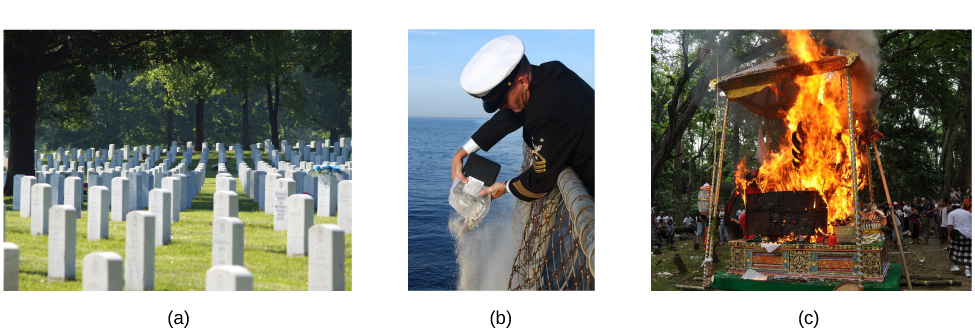
Every story has an ending. Death marks the end of your life story (Figure 9.21). Our culture and individual backgrounds influence how we view death. In some cultures, death is accepted as a natural part of life and is embraced. In contrast, until about 50 years ago in the United States, a doctor might not inform someone that they were dying, and the majority of deaths occurred in hospitals. In 1967 that reality began to change with Cicely Saunders, who created the first modern hospice in England. The aim of hospice is to help provide a death with dignity and pain management in a humane and comfortable environment, which is usually outside of a hospital setting. In 1974, Florence Wald founded the first hospice in the United States. Today, hospice provides care for 1.65 million Americans and their families. Because of hospice care, many terminally ill people are able to spend their last days at home.
英語のヒント
どんな物語にも終わりがある。死は、あなたの人生の物語の終わりを告げる(図9.21)。私たちが死をどのようにとらえるかには、文化や個人の背景が影響する。死が人生の自然な一部として受け入れられ、迎え入れられている文化もある。これに対してアメリカでは、およそ50年前まで、医師は死が迫っている人にそのことを告げないこともあり、大半の人は病院で亡くなっていた。1967年、シシリー・ソンダースがイングランドに最初の近代的なホスピスをつくったことで、そうした現実は変わりはじめた。ホスピスの目的は、人間的で快適な環境の中で、尊厳ある死と痛みの管理を提供する手助けをすることであり、その環境はふつう病院の外にある。1974年には、フローレンス・ウォルドがアメリカで最初のホスピスを設立した。今日、ホスピスは165万人のアメリカ人とその家族にケアを提供している。ホスピスケアのおかげで、末期の病を抱える多くの人が、最期の日々を自宅で過ごすことができる。
OpenStax, Rice University; Psychology 2e. (credit a: modification of work by Christina Rutz; credit b: modification of work by Chief Journalist Alan J. Baribeau/Wikimedia; credit c: modification of work by "CazzJj_Flickr"/Flickr) · CC BY 4.0 · Source出典

Figure 9.21図 9.21
Different cultures, societies, and religions have varying practices surrounding death. For example, people’s bodies may be (a) buried in a cemetery, (b) cremated and buried at sea as in this U.S. Navy ceremony, or (c) cremated such as in this Hindu ceremony in Bali. (credit a: modification of work by Christina Rutz; credit b: modification of work by Chief Journalist Alan J. Baribeau/Wikimedia; credit c: modification of work by "CazzJj_Flickr"/Flickr)
文化、社会、宗教によって、死をめぐる慣習はさまざまである。たとえば遺体は、(a)墓地に埋葬されることもあれば、(b)このアメリカ海軍の儀式のように火葬されて海に葬られることも、(c)このバリ島のヒンドゥー教の儀式のように火葬されることもある。(出典a:Christina Rutzの作品を改変、出典b:Chief Journalist Alan J. Baribeau/Wikimediaの作品を改変、出典c:"CazzJj_Flickr"/Flickrの作品を改変)
Research has indicated that hospice care is beneficial for the patient (Brumley, Enquidanos, & Cherin, 2003; Brumley et al., 2007; Godkin, Krant, & Doster, 1984) and for the patient’s family (Rhodes, Mitchell, Miller, Connor, & Teno, 2008; Godkin et al., 1984). Hospice patients report high levels of satisfaction with hospice care because they are able to remain at home and are not completely dependent on strangers for care (Brumley et al., 2007). In addition, hospice patients tend to live longer than non-hospice patients (Connor, Pyenson, Fitch, Spence, & Iwasaki, 2007; Temel et al., 2010). Family members receive emotional support and are regularly informed of their loved one’s treatment and condition. The family member’s burden of care is also reduced (McMillan et al., 2006). Both the patient and the patient’s family members report increased family support, increased social support, and improved coping while receiving hospice services (Godkin et al., 1984).
英語のヒント
研究によって、ホスピスケアは患者にとっても(Brumley, Enquidanos, & Cherin, 2003; Brumley et al., 2007; Godkin, Krant, & Doster, 1984)、患者の家族にとっても(Rhodes, Mitchell, Miller, Connor, & Teno, 2008; Godkin et al., 1984)有益であることが示されている。ホスピスの患者は、自宅にとどまることができ、ケアのことで見知らぬ人に全面的には頼らずにすむため、ホスピスケアへの満足度が高いと報告している(Brumley et al., 2007)。さらに、ホスピスの患者は、ホスピスを利用していない患者よりも長く生きる傾向がある(Connor, Pyenson, Fitch, Spence, & Iwasaki, 2007; Temel et al., 2010)。家族は情緒的なサポートを受け、愛する人の治療と容体について定期的に知らされる。家族の介護の負担も軽くなる(McMillan et al., 2006)。患者も患者の家族も、ホスピスのサービスを受けているあいだに、家族からのサポートとソーシャル・サポートが増え、コーピングが向上したと報告している(Godkin et al., 1984)。
How do you think you might react if you were diagnosed with a terminal illness like cancer? Elizabeth Kübler-Ross (1969), who worked with the founders of hospice care, described the process of an individual accepting his own death. She proposed five stages of grief: denial, anger, bargaining, depression, and acceptance. Most individuals experience these stages, but the stages may occur in different orders, depending on the individual. In addition, not all people experience all of the stages. It is also important to note that some psychologists believe that the more a dying person fights death, the more likely they are to remain stuck in the denial phase. This could make it difficult for the dying person to face death with dignity. However, other psychologists believe that not facing death until the very end is an adaptive coping mechanism for some people.
英語のヒント
もし、がんのような末期の病気と診断されたら、あなたは自分がどのように反応すると思うだろうか。エリザベス・キューブラー=ロス(1969)は、ホスピスケアの創始者たちとともに活動した人物で、人が自分自身の死を受け入れていく過程を記述した。彼女は、否認、怒り、取引、抑うつ、受容という悲嘆の5段階を提唱した。ほとんどの人はこれらの段階を経験するが、段階が起こる順序は人によって異なることがある。さらに、すべての人がすべての段階を経験するわけではない。また、次の点にも注意しておくことが重要である。心理学者の中には、死にゆく人が死にあらがえばあらがうほど、否認の段階にはまり込んだまま抜け出せなくなる可能性が高くなる、と考える人もいる。そうなると、死にゆく人が尊厳をもって死に向き合うことが難しくなるおそれがある。しかし、ほかの心理学者たちは、最後の最後まで死に向き合わないことが、一部の人にとっては適応的なコーピングの仕組みであると考えている。
Whether due to illness or old age, not everyone facing death or the loss of a loved one experiences the negative emotions outlined in the Kübler-Ross model (Nolen-Hoeksema & Larson, 1999). For example, research suggests that people with religious or spiritual beliefs are better able to cope with death because of their hope in an afterlife and because of social support from religious or spiritual associations (Hood, Spilka, Hunsberger, & Corsuch, 1996; McIntosh, Silver, & Wortman, 1993; Paloutzian, 1996; Samarel, 1991; Wortman & Park, 2008).
英語のヒント
病気によるものであれ老齢によるものであれ、死や愛する人の喪失に直面している人の誰もが、キューブラー=ロスのモデルで示された否定的な感情を経験するわけではない(Nolen-Hoeksema & Larson, 1999)。たとえば研究から、宗教的あるいはスピリチュアルな信念を持つ人は、死後の世界への希望があるために、また宗教的あるいはスピリチュアルな団体からのソーシャル・サポートがあるために、死により上手に対処できることが示唆されている(Hood, Spilka, Hunsberger, & Corsuch, 1996; McIntosh, Silver, & Wortman, 1993; Paloutzian, 1996; Samarel, 1991; Wortman & Park, 2008)。
A prominent example of a person creating meaning through death is Randy Pausch, who was a well-loved and respected professor at Carnegie Mellon University. Diagnosed with terminal pancreatic cancer in his mid-40s and given only 3–6 months to live, Pausch focused on living in a fulfilling way in the time he had left. Instead of becoming angry and depressed, he presented his now famous last lecture called “Really Achieving Your Childhood Dreams.” In his moving, yet humorous talk, he shares his insights on seeing the good in others, overcoming obstacles, and experiencing zero gravity, among many other things. Despite his terminal diagnosis, Pausch lived the final year of his life with joy and hope, showing us that our plans for the future still matter, even if we know that we are dying.
英語のヒント
死を通して意味を生み出した人のよく知られた例に、ランディ・パウシュがいる。パウシュはカーネギーメロン大学の教授で、多くの人に愛され、尊敬されていた。40代半ばで末期の膵臓がんと診断され、余命わずか3〜6か月と告げられたパウシュは、残された時間を充実したかたちで生きることに力を注いだ。怒ったりふさぎ込んだりする代わりに、彼は、今では有名になった「子どものころの夢を本当にかなえる」という題の最後の講義を行った。感動的でありながらユーモアにあふれたこの講演で、パウシュは、ほかにも多くのことを語るなかで、他者の良いところを見ること、障害を乗り越えること、無重力を体験することについての洞察を分かち合っている。末期の診断を受けたにもかかわらず、パウシュは人生最後の1年を喜びと希望をもって生き、たとえ自分が死にゆくと分かっていても、未来への計画はなお意味を持つということを私たちに示した。
As individuals become more knowledgeable about medical procedures and practices, some people want to ensure that their wishes and desires are known in advance. This ensures that if the person ever becomes incapacitated or can no longer express themselves, their loved ones will know what they want. For this reason, a person might write a living will or advance directive, which is a written legal document that details specific interventions a person wants. For example, a person in the last stages of a terminal illness may not want to receive life-extending treatments. A person may also include a Do Not Resuscitate (DNR) Order, which they would share with family and close friends. A DNR Order states that if a person stops breathing or their heart stops beating, medical personnel such as doctors and nurses are not to take steps to revive or resuscitate the patient. A living will can also include a health care proxy, which appoints a specific person to make medical decisions for you if you are unable to speak for yourself. People’s desire for living wills and DNRs are often influenced by their religion, culture, and upbringing.
英語のヒント
医療の手順や慣行について人々の知識が深まるにつれて、自分の希望や望みが前もって確実に知られているようにしておきたいと考える人も出てきている。そうしておけば、万一その人が判断能力を失ったり、もはや自分の意思を表せなくなったりした場合でも、愛する人たちにはその人が何を望んでいるかが確実に分かる。こうした理由から、人はリビング・ウィル、すなわち事前指示書を書くことがある。これは、本人が望む具体的な医療処置を詳しく記した、書面による法的文書である。たとえば、末期の病気の最終段階にある人は、延命治療を受けたくないと望むかもしれない。また、蘇生処置拒否(DNR)指示を含めることもある。その場合、本人はそれを家族や親しい友人と共有しておくことになるだろう。DNR指示は、その人の呼吸が止まったり心臓の拍動が止まったりした場合に、医師や看護師などの医療従事者は患者を生き返らせたり蘇生させたりするための処置をとってはならない、と定めるものである。リビング・ウィルには医療代理人指定書を含めることもできる。これは、あなたが自分で意思を伝えられなくなった場合に、あなたに代わって医療上の決定を下す特定の人を指名するものである。リビング・ウィルやDNRを求める気持ちは、その人の宗教、文化、生い立ちに影響されることが多い。