第9章生涯発達
Prenatal Influences出生前の影響
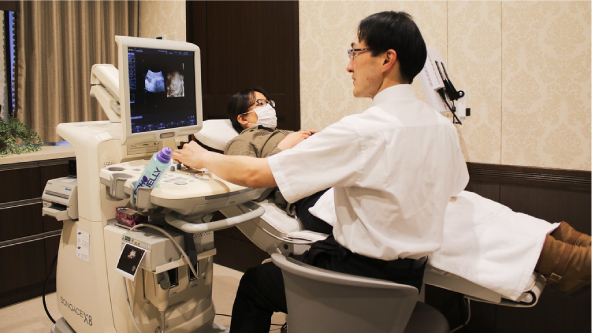
During each prenatal stage, genetic and environmental factors can affect development. The developing fetus is completely dependent on the person carrying it. Routine prenatal care, which is medical care during pregnancy that monitors the health of both the pregnant person and the fetus (Figure 9.9), is important because it can reduce the risk of complications during pregnancy (NIH, 2013). In fact, people who are trying to become pregnant or who may become pregnant should discuss pregnancy planning with their doctor. They may be advised, for example, to take a vitamin containing folic acid, which helps prevent certain birth defects, or to monitor aspects of their diet or exercise routines. People can face health risks without prenatal care, which is not provided equitably across populations or locations (Backes and Scrimshaw, 2020).
英語のヒント
出生前のどの段階でも、遺伝的要因と環境的要因が発達に影響を与えうる。発育中の胎児は、それを身ごもっている人に完全に依存している。定期的な出生前ケアとは、妊娠中に、妊娠している人と胎児の両方の健康を見守る医療のことであり(図9.9)、妊娠中の合併症のリスクを減らしうるので重要である(NIH, 2013)。実際、妊娠しようとしている人や妊娠する可能性のある人は、医師と妊娠の計画について話し合うべきである。たとえば、特定の先天異常を防ぐのに役立つ葉酸を含むビタミンを摂るよう、あるいは食事や運動習慣のいくつかの面に気を配るよう助言されるかもしれない。出生前ケアを受けなければ健康上のリスクに直面しうるが、出生前ケアはすべての集団や地域に公平に提供されているわけではない(Backes and Scrimshaw, 2020)。
OpenStax, Rice University; Psychology 2e. (credit: "MIKI Yoshihito_Flickr"/Flickr) · CC BY 4.0 · Source出典

Figure 9.9図 9.9
A pregnant person receives an ultrasound as part of their prenatal care. (credit: "MIKI Yoshihito_Flickr"/Flickr)
妊娠している人が、出生前ケアの一環として超音波検査を受けている。(出典:“MIKI Yoshihito_Flickr”/Flickr)
Recall that when the zygote attaches to the wall of the uterus, the placenta is formed. The placenta provides nourishment and oxygen to the fetus. Most everything a pregnant person ingests, including food, liquid, and even medication, travels through the placenta to the fetus, hence the common phrase “eating for two.” Everything in the environment affects the fetus; if they are exposed to something harmful, the child can show life-long effects.
英語のヒント
接合子が子宮の壁に付着すると胎盤が形成されることを思い出そう。胎盤は胎児に栄養と酸素を供給する。妊娠している人が摂取するものは、食べ物、飲み物、さらには薬も含めてほとんどすべてが、胎盤を通って胎児に届く。「二人分食べる」という言い回しがよく使われるのはそのためである。環境の中のあらゆるものが胎児に影響を与える。有害なものにさらされると、子どもに生涯にわたる影響が現れることがある。
A teratogen is any environmental agent—biological, chemical, or physical—that causes damage to the developing embryo or fetus. There are different types of teratogens. Alcohol and most drugs cross the placenta and affect the fetus. Alcohol is not safe to drink in any amount during pregnancy. Alcohol use during pregnancy has been found to be the leading preventable cause of intellectual disabilities in children in the United States (Maier & West, 2001). Excessive drinking while pregnant can cause fetal alcohol spectrum disorders with life-long consequences for the child ranging in severity from minor to major (Table 9.3). Fetal alcohol spectrum disorders (FASD) are a collection of birth defects associated with heavy consumption of alcohol during pregnancy. Physically, children with FASD may have a small head size and abnormal facial features. Cognitively, these children may have poor judgment, poor impulse control, higher rates of ADHD, learning issues, and lower IQ scores. These developmental problems and delays persist into adulthood (Streissguth et al., 2004). Based on studies conducted on animals, it also has been suggested that alcohol consumption during pregnancy may predispose offspring to like alcohol (Youngentob et al., 2007).
英語のヒント
催奇形因子とは、生物学的、化学的、物理的を問わず、発育中の胚や胎児に損傷を与える環境要因のことである。催奇形因子にはさまざまな種類がある。アルコールとほとんどの薬物は胎盤を通過し、胎児に影響を与える。妊娠中は、どんな量であってもアルコールを飲むのは安全ではない。妊娠中のアルコール摂取は、アメリカにおける子どもの知的障害の原因のうち、予防可能なものの第一であることが分かっている(Maier & West, 2001)。妊娠中の過度の飲酒は、胎児性アルコール・スペクトラム障害を引き起こしうる。この障害は子どもに生涯にわたる影響を残し、その重さは軽いものから重いものまでさまざまである(表9.3)。胎児性アルコール・スペクトラム障害(FASD)は、妊娠中の大量のアルコール摂取と関連する一群の先天異常である。身体面では、FASDの子どもは頭が小さく、顔の特徴に異常が見られることがある。認知面では、判断力や衝動の制御が弱く、ADHDの割合が高く、学習上の問題を抱え、IQの得点が低いことがある。こうした発達上の問題や遅れは、成人期まで続く(Streissguth et al., 2004)。また、動物を対象にした研究に基づいて、妊娠中のアルコール摂取は子にアルコールを好む素因をつくるかもしれない、とも示唆されている(Youngentob et al., 2007)。
Fetal Alcohol Syndrome Facial Features 胎児性アルコール症候群に見られる顔の特徴 |
|
|---|---|
Facial Feature 顔の部位 |
Potential Effect of Fetal Alcohol Syndrome 胎児性アルコール症候群が及ぼしうる影響 |
Head size 頭の大きさ |
Below-average head circumference 平均より小さい頭囲 |
Eyes 目 |
Smaller than average eye opening, skin folds at corners of eyes 平均より小さい目の開き、目の端の皮膚のひだ |
Nose 鼻 |
Low nasal bridge, short nose 低い鼻梁、短い鼻 |
Midface 顔の中央部 |
Smaller than average midface size 平均より小さい顔の中央部 |
Lip and philtrum 唇と人中 |
Thin upper lip, indistinct philtrum 薄い上唇、はっきりしない人中 |
Smoking is also considered a teratogen because nicotine travels through the placenta to the fetus. When the pregnant person smokes, the developing baby experiences a reduction in blood oxygen levels. According to the Centers for Disease Control and Prevention (2013), smoking while pregnant can result in premature birth, low-birth-weight infants, stillbirth, and sudden infant death syndrome (SIDS).
英語のヒント
喫煙も催奇形因子とみなされる。ニコチンが胎盤を通って胎児に届くからである。妊娠している人が喫煙すると、発育中の赤ちゃんの血中酸素濃度が低下する。アメリカ疾病予防管理センター(2013)によれば、妊娠中の喫煙は、早産、低出生体重児、死産、乳幼児突然死症候群(SIDS)をもたらしうる。
Heroin, cocaine, methamphetamine, almost all prescription medicines, and most over-the counter medications are also considered teratogens. Babies born with a heroin addiction need heroin just like an adult with a heroin addiction. The child will need to be gradually weaned from the heroin under medical supervision; otherwise, the child could have seizures and die. Other teratogens include radiation, viruses such as HIV and herpes, and rubella (German measles). People who were raised in the United States are much less likely to be afflicted with rubella because most received childhood immunizations or vaccinations that protect the body from disease.
英語のヒント
ヘロイン、コカイン、メタンフェタミン、ほぼすべての処方薬、そしてほとんどの市販薬も、催奇形因子とみなされる。ヘロイン依存の状態で生まれた赤ちゃんは、ヘロイン依存の大人と同じようにヘロインを必要とする。その子どもには、医療の監督のもとで、少しずつヘロインを断たせる必要がある。そうしなければ、けいれんを起こして死亡するおそれがある。ほかの催奇形因子には、放射線、HIVやヘルペスなどのウイルス、風疹(三日ばしか)がある。アメリカで育った人が風疹にかかる可能性ははるかに低い。ほとんどの人が、子どものころに、病気から体を守る予防接種やワクチンを受けているからである。
Each organ of the fetus develops during a specific period in the pregnancy, called the critical or sensitive period (Figure 9.8). For example, research with primate models of FASD has demonstrated that the time during which a developing fetus is exposed to alcohol can dramatically affect the appearance of facial characteristics associated with fetal alcohol syndrome. Specifically, this research suggests that alcohol exposure that is limited to day 19 or 20 of gestation can lead to significant facial abnormalities in the offspring (Ashley, Magnuson, Omnell, & Clarren, 1999). Given regions of the brain also show sensitive periods during which they are most susceptible to the teratogenic effects of alcohol (Tran & Kelly, 2003).
英語のヒント
胎児の各器官は、妊娠中の特定の期間に発達する。この期間は臨界期または敏感期と呼ばれる(図9.8)。たとえば、FASDの霊長類モデルを用いた研究では、発育中の胎児がアルコールにさらされる時期によって、胎児性アルコール症候群と関連する顔の特徴の現れ方が劇的に変わりうることが示されている。具体的には、この研究は、妊娠19日目または20日目だけに限られたアルコールへの曝露が、子に顔の重大な異常をもたらしうることを示唆している(Ashley, Magnuson, Omnell, & Clarren, 1999)。脳の特定の領域にも、アルコールの催奇形作用を最も受けやすい敏感期がある(Tran & Kelly, 2003)。