第9章生涯発達
Adulthood成人期
Adulthood begins around 20 years old and has three distinct stages: early, middle, and late. Each stage brings its own set of rewards and challenges.
英語のヒント
成人期は20歳ごろに始まり、前期、中期、後期という三つのはっきり区別される段階がある。それぞれの段階が、その段階ならではの喜びと課題をもたらす。
Physical Development身体発達
By the time we reach early adulthood (20 to early 40s), our physical maturation is complete, although our height and weight may increase slightly. In young adulthood, our physical abilities are at their peak, including muscle strength, reaction time, sensory abilities, and cardiac functioning. Most professional athletes are at the top of their game during this stage. People often carry and give birth to children in the young adulthood years, so they may see additional weight gain and breast changes.
英語のヒント
成人前期(20歳から40代前半)に達するころには、身長や体重がわずかに増えることはあるものの、身体的な成熟は完了している。成人前期には、筋力、反応時間、感覚能力、心臓の機能を含め、身体能力が最高の状態にある。プロのスポーツ選手の多くは、この段階で最も活躍する。人はしばしば成人前期の年代に子どもを身ごもり、出産するので、体重がさらに増えたり、乳房が変化したりすることがある。
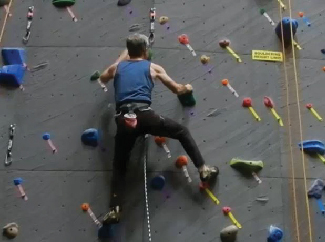
Middle adulthood extends from the 40s to the 60s (Figure 9.18). Physical decline is gradual. The skin loses some elasticity, and wrinkles are among the first signs of aging. Visual acuity decreases during this time. Fertility gradually declines with the approach to the onset of menopause, the end of the menstrual cycle, around 50 years old. Middle adulthood tends toward weight gain: in the abdominal area for men and in the hips and thighs for women. Hair begins to thin and turn gray.
英語のヒント
成人中期は40代から60代にわたる(図9.18)。身体の衰えはゆるやかである。皮膚はいくらか弾力を失い、しわは老化の最初のしるしの一つである。この時期には視力が低下する。月経周期の終わりである閉経が50歳ごろに近づくにつれて、生殖能力はしだいに低下していく。成人中期には体重が増える傾向があり、男性では腹部に、女性では腰と太ももに増える。髪が薄くなったり白くなったりしはじめる。
OpenStax, Rice University; Psychology 2e. (credit: modification of work by Peter Stevens) · CC BY 4.0 · Source出典
Figure 9.18図 9.18
Physical declines of middle and late adulthood can be minimized with proper exercise, nutrition, and an active lifestyle. (credit: modification of work by Peter Stevens)
成人中期と成人後期の身体の衰えは、適切な運動、栄養、活動的な生活様式によって最小限に抑えることができる。(出典:Peter Stevensの作品を改変)
Late adulthood is considered to extend from the 60s on. This is the last stage of physical change. The skin continues to lose elasticity, reaction time slows further, and muscle strength diminishes. Smell, taste, hearing, and vision, so sharp in our twenties, decline significantly. The brain may also no longer function at optimal levels, leading to problems like memory loss, dementia, and Alzheimer’s disease in later years.
英語のヒント
成人後期は、60代以降にわたると考えられている。これは身体的変化の最後の段階である。皮膚は弾力を失い続け、反応時間はさらに遅くなり、筋力は衰える。20代にはあれほど鋭かった嗅覚、味覚、聴覚、視覚も、大きく低下する。脳もまた最適な水準で機能しなくなることがあり、晩年には、記憶喪失、認知症、アルツハイマー病といった問題につながる。
Cognitive Development認知発達
Because we spend so many years in adulthood (more than any other stage), cognitive changes are numerous. In fact, research suggests that adult cognitive development is a complex, ever changing process that may be even more active than cognitive development in infancy and early childhood (Fischer, Yan, & Stewart, 2003).
英語のヒント
私たちは成人期に非常に多くの年月(ほかのどの段階よりも長い)を過ごすため、認知の変化は数多い。実際、研究によれば、成人の認知発達は複雑で絶えず変化する過程であり、乳児期や幼児期の認知発達よりもさらに活発であるかもしれない(Fischer, Yan, & Stewart, 2003)。
Unlike our physical abilities, which peak in our mid-20s and then begin a slow decline, our cognitive abilities remain steady throughout early and middle adulthood. Our crystallized intelligence (information, skills, and strategies we have gathered through a lifetime of experience) tends to hold steady as we age—it may even improve. For example, adults show relatively stable to increasing scores on intelligence tests until their mid-30s to mid-50s (Bayley & Oden, 1955). However, in late adulthood we begin to experience a decline in another area of our cognitive abilities—fluid intelligence (information processing abilities, reasoning, and memory). These processes become slower. How can we delay the onset of cognitive decline? Mental and physical activity seems to play a part (Figure 9.19). Research has found adults who engage in mentally and physically stimulating activities experience less cognitive decline and have a reduced incidence of mild cognitive impairment and dementia (Hertzog, Kramer, Wilson, & Lindenberger, 2009; Larson et al., 2006; Podewils et al., 2005).
英語のヒント
20代半ばにピークに達し、その後ゆっくりと衰えはじめる身体能力とは違って、認知能力は成人前期から成人中期を通じて安定したままである。結晶性知能(一生の経験を通じて蓄えてきた情報、技能、方略)は、年をとっても安定している傾向があり、向上することさえある。たとえば、成人は30代半ばから50代半ばまで、知能検査で比較的安定した、あるいは上昇する得点を示す(Bayley & Oden, 1955)。しかし成人後期になると、認知能力の別の領域、すなわち流動性知能(情報処理能力、推論、記憶)の低下を経験しはじめる。これらの処理は遅くなる。認知の衰えの始まりを遅らせるには、どうすればよいのだろうか。心の活動と体の活動が一役買っているようである(図9.19)。研究によれば、心と体を刺激する活動に取り組む成人は、認知の衰えが少なく、軽度認知障害や認知症の発生率も低い(Hertzog, Kramer, Wilson, & Lindenberger, 2009; Larson et al., 2006; Podewils et al., 2005)。
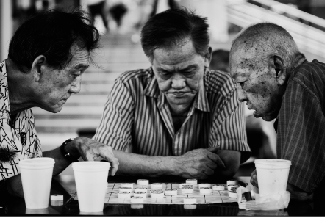


Figure 9.19図 9.19
Cognitive activities such as playing mahjong, chess, or other games, can keep you mentally fit. The same is true for solo pastimes like reading and completing crossword puzzles. (credit: Philippe Put)
麻雀やチェス、そのほかのゲームをするといった認知的な活動は、頭の働きを健やかに保ちうる。読書やクロスワードパズルを解くといった、一人で楽しむ娯楽も同様である。(出典:Philippe Put)
Researchers have examined the aging brain by comparing it to brain functioning in younger people. Forstmann and colleagues (2011) compared elderly participants to younger participants, who in the study were asked to report the direction of movement of a set of dots. They were given feedback regarding speed and accuracy. The researchers found that older participants made more errors and were slower due to degeneration of corticostriatal connections. In other words, the decreased ability typically assigned to elderly people may be due to circumstances in the brain beyond their control. Interestingly, other researchers have found similarities in spatial representations when comparing children aged 6–7 to those over the age of 80. Ruggiero, D’Errico, and Iachini (2016) reported that this is due to neurodegeneration in older adults and immature neurology in young children.
英語のヒント
研究者たちは、老化した脳を、若い人の脳の働きと比べることによって調べてきた。フォルストマンら(2011)は、高齢の参加者と若い参加者を比べた。この研究で参加者は、一群の点が動く方向を報告するよう求められ、速さと正確さについてのフィードバックを与えられた。研究者たちは、高齢の参加者の方が誤りが多く、反応も遅いこと、そしてそれが皮質線条体結合の変性によることを見いだした。言い換えれば、高齢者のものとされがちな能力の低下は、本人にはどうにもできない脳内の状況によるのかもしれない。興味深いことに、別の研究者たちは、6〜7歳の子どもと80歳を超える人を比べたとき、空間表象に類似点があることを見いだした。ルッジェーロ、デリーコ、イアキーニ(2016)は、これは高齢者では神経変性によるものであり、幼い子どもでは神経系が未熟であることによるものだと報告した。
Many elderly people experience dementia, changes in the brain that negatively affect cognition. Alzheimer’s disease is one type of dementia, initially studied by medical researcher Solomon Carter Fuller. Alzheimer’s disease has a genetic basis. Plaques in the brain are due to cell death, which then causes those affected with the disease severe forgetfulness. A person can forget how to walk, talk, and eventually eat. The disease can be mitigated by assessing environmental factors (exposure to lead, iron, and zinc increase risk) and nutritional factors (the Mediterranean diet lowers risk) (Arora, Mittal, & Kakkar, 2015). Although there is no cure, there is hope. Cognitive rehabilitation can offset mild cognitive impairment, as it can evolve into dementia. Garcia-Betances, Jimenez-Mixco, Arredondo, and Cabrera-Umpierrez (2015) examined the use of virtual reality as a possible cognitive rehabilitative method. They suggested that virtual reality technology should involve daily living activities, memory, and language, among other considerations.
英語のヒント
多くの高齢者が認知症、すなわち認知に悪影響を及ぼす脳の変化を経験する。アルツハイマー病は認知症の一種であり、当初、医学研究者ソロモン・カーター・フラーによって研究された。アルツハイマー病には遺伝的な基盤がある。脳内のプラークは細胞死によるものであり、その細胞死が、この病気にかかった人にひどい物忘れを引き起こす。人は歩き方や話し方を忘れ、最終的には食べ方まで忘れることがある。この病気は、環境要因(鉛、鉄、亜鉛への曝露はリスクを高める)と栄養要因(地中海式の食事はリスクを下げる)を評価することで軽減できる(Arora, Mittal, & Kakkar, 2015)。治療法はないが、希望はある。認知リハビリテーションは、認知症へと進行しうる軽度認知障害を補うことができる。ガルシア=ベタンセス、ヒメネス=ミスコ、アレドンド、カブレラ=ウンピエレス(2015)は、認知リハビリテーションの方法となりうるものとして、仮想現実の利用を検討した。彼らは、仮想現実の技術には、ほかの考慮事項とあわせて、日常生活の活動、記憶、言語を組み込むべきだと提案した。