第9章生涯発達
Attachment愛着
Psychosocial development occurs as children form relationships, interact with others, and understand and manage their feelings. In social and emotional development, forming healthy attachments is very important and is the major social milestone of infancy. Attachment is a long-standing connection or bond with others. Developmental psychologists are interested in how infants reach this milestone. They ask such questions as: How do parent and infant attachment bonds form? How does neglect affect these bonds? What accounts for children’s attachment differences?
英語のヒント
心理社会的発達は、子どもが人間関係を築き、他者とかかわり、自分の感情を理解してうまく扱えるようになるにつれて起こる。社会的・情緒的発達においては、健全な愛着を形成することがとても重要であり、それが乳児期の主要な社会的節目である。愛着とは、他者との長く続くつながり、すなわち絆である。発達心理学者は、乳児がどのようにしてこの節目に到達するのかに関心を持っている。彼らは次のような問いを立てる。親と乳児の愛着の絆はどのように形成されるのか。ネグレクトはこの絆にどう影響するのか。子どもの愛着の違いは何によって説明されるのか。
Researchers Harry Harlow, John Bowlby, and Mary Ainsworth conducted studies designed to answer these questions. In the 1950s, Harlow conducted a series of experiments on monkeys. He separated newborn monkeys from their mothers. Each monkey was presented with two surrogate mothers. One surrogate monkey was made out of wire mesh, and she could dispense milk. The other monkey was softer and made from cloth: This monkey did not dispense milk. Research shows that the monkeys preferred the soft, cuddly cloth monkey, even though she did not provide any nourishment. The baby monkeys spent their time clinging to the cloth monkey and only went to the wire monkey when they needed to be fed. Prior to this study, the medical and scientific communities generally thought that babies become attached to the people who provide their nourishment. However, Harlow (1958) concluded that there was more to the mother-child bond than nourishment. Feelings of comfort and security are the critical components to maternal-infant bonding, which leads to healthy psychosocial development.
英語のヒント
研究者のハリー・ハーロウ、ジョン・ボウルビィ、メアリー・エインズワースは、こうした問いに答えるための研究を行った。1950年代、ハーロウはサルを使った一連の実験を行った。彼は生まれたばかりのサルを母親から引き離した。それぞれのサルには、二体の代理母が与えられた。一方の代理母は金網でできていて、ミルクを出すことができた。もう一方はより柔らかく、布でできていたが、ミルクは出さなかった。研究によれば、サルたちは、栄養を与えてくれないにもかかわらず、柔らかくて抱き心地のよい布のサルを好んだ。赤ちゃんザルは布のサルにしがみついて時間を過ごし、授乳が必要なときにだけ金網のサルのところへ行った。この研究以前、医学界と科学界は一般に、赤ちゃんは栄養を与えてくれる人に愛着を持つようになると考えていた。しかし、ハーロウ(1958)は、母子の絆には栄養以上のものがあると結論づけた。安らぎと安心の感覚が母子の絆の決定的な要素であり、その絆が健全な心理社会的発達につながる。
Building on the work of Harlow and others, John Bowlby developed the concept of attachment theory. He defined attachment as the affectional bond or tie that an infant forms with the mother (Bowlby, 1969). An infant must form this bond with a primary caregiver in order to have normal social and emotional development. In addition, Bowlby proposed that this attachment bond is very powerful and continues throughout life. He used the concept of secure base to define a healthy attachment between parent and child (1988). A secure base is a parental presence that gives the child a sense of safety as he explores his surroundings. Bowlby said that two things are needed for a healthy attachment: The caregiver must be responsive to the child’s physical, social, and emotional needs; and the caregiver and child must engage in mutually enjoyable interactions (Bowlby, 1969) (Figure 9.13).
英語のヒント
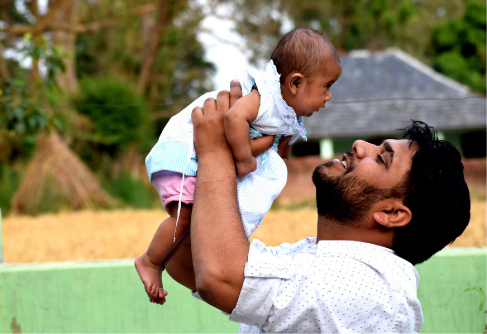
ハーロウらの研究を土台として、ジョン・ボウルビィは愛着理論という概念を展開した。彼は愛着を、乳児が母親とのあいだに形成する情愛の絆、つまり結びつきと定義した(Bowlby, 1969)。乳児が正常な社会的・情緒的発達を遂げるためには、主たる養育者とこの絆を形成しなければならない。加えてボウルビィは、この愛着の絆は非常に強力で、生涯を通じて続くと提唱した。彼は、親子のあいだの健全な愛着を定義するために、安全基地という概念を用いた(1988)。安全基地とは、子どもが周囲を探索するあいだ、子どもに安心感を与える親の存在である。ボウルビィは、健全な愛着には二つのことが必要だと述べた。養育者が子どもの身体的・社会的・情緒的な欲求に応答的であること、そして養育者と子どもが互いに楽しめるやりとりをすることである(Bowlby, 1969)(図9.13)。
OpenStax, Rice University; Psychology 2e. (credit: "balouriarajesh_Pixabay"/Pixabay) · CC BY 4.0 · Source出典
Figure 9.13図 9.13
Mutually enjoyable interactions promote the parent-infant bond. (credit: "balouriarajesh_Pixabay"/Pixabay)
互いに楽しめるやりとりは、親と乳児の絆を育む。(出典:“balouriarajesh_Pixabay”/Pixabay)
While Bowlby thought attachment was an all-or-nothing process, Mary Ainsworth’s (1970) research showed otherwise. Ainsworth wanted to know if children differ in the ways they bond, and if so, why. To find the answers, she used the Strange Situation procedure to study attachment between mothers and their infants (1970). In the Strange Situation, the mother (or primary caregiver) and the infant (age 12-18 months) are placed in a room together. There are toys in the room, and the caregiver and child spend some time alone in the room. After the child has had time to explore her surroundings, a stranger enters the room. The mother then leaves her baby with the stranger. After a few minutes, she returns to comfort her child.
英語のヒント
ボウルビィは愛着を「全か無か」の過程だと考えたが、メアリー・エインズワース(1970)の研究は、そうではないことを示した。エインズワースは、子どもの絆の結び方に違いがあるのかどうか、あるとすればなぜなのかを知りたいと考えた。その答えを見つけるために、彼女はストレンジ・シチュエーション法を用いて、母親と乳児のあいだの愛着を研究した(1970)。ストレンジ・シチュエーションでは、母親(または主たる養育者)と乳児(生後12〜18か月)が一緒に部屋に入れられる。部屋にはおもちゃがあり、養育者と子どもはしばらくのあいだ、部屋で二人だけで過ごす。子どもが周囲を探索する時間をとった後、見知らぬ人が部屋に入ってくる。その後、母親は赤ちゃんを見知らぬ人のもとに残して部屋を出る。数分後、母親は戻ってきて子どもをなだめる。
Based on how the infants/toddlers responded to the separation and reunion, Ainsworth identified three types of parent-child attachments: secure, avoidant, and resistant (Ainsworth & Bell, 1970). A fourth style, known as disorganized attachment, was later described (Main & Solomon, 1990). The most common type of attachment—also considered the healthiest—is called secure attachment (Figure 9.14). In this type of attachment, the toddler prefers his parent over a stranger. The attachment figure is used as a secure base to explore the environment and is sought out in times of stress. Securely attached children were distressed when their caregivers left the room in the Strange Situation experiment, but when their caregivers returned, the securely attached children were happy to see them. Securely attached children have caregivers who are sensitive and responsive to their needs.
英語のヒント
乳児やよちよち歩きの幼児が分離と再会にどう反応したかに基づいて、エインズワースは親子の愛着に三つの型を見いだした。安定型、回避型、抵抗型である(Ainsworth & Bell, 1970)。のちに、無秩序型愛着として知られる第四の型が記述された(Main & Solomon, 1990)。最もよく見られる型は――最も健全ともみなされているが――安定型愛着と呼ばれる(図9.14)。この型の愛着では、よちよち歩きの幼児は見知らぬ人よりも親を好む。愛着の対象は、環境を探索するための安全基地として使われ、ストレスを感じたときには求められる。ストレンジ・シチュエーション実験で、安定型の愛着を持つ子どもは、養育者が部屋を出ていくと苦痛を示したが、養育者が戻ってくると喜んで迎えた。安定型の愛着を持つ子どもの養育者は、子どもの欲求に敏感で応答的である。
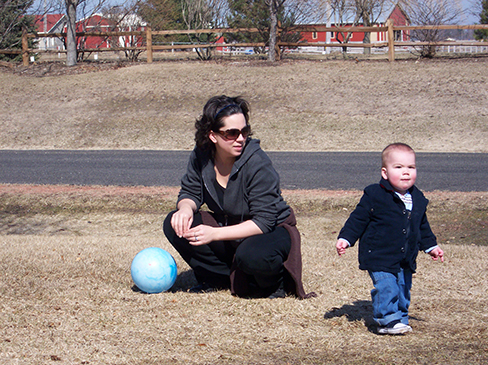


Figure 9.14図 9.14
In secure attachment, the parent provides a secure base for the toddler, allowing him to securely explore his environment. (credit: Kerry Ceszyk)
安定型愛着では、親がよちよち歩きの幼児に安全基地を提供し、子どもは安心して環境を探索できる。(出典:Kerry Ceszyk)
With avoidant attachment, the child is unresponsive to the parent, does not use the parent as a secure base, and does not care if the parent leaves. The toddler reacts to the parent the same way she reacts to a stranger. When the parent does return, the child is slow to show a positive reaction. Ainsworth theorized that these children were most likely to have a caregiver who was insensitive and inattentive to their needs (Ainsworth, Blehar, Waters, & Wall, 1978).
英語のヒント
回避型愛着では、子どもは親に反応せず、親を安全基地として使わず、親がいなくなっても気にしない。よちよち歩きの幼児は、見知らぬ人に対するのと同じように親に反応する。親が戻ってきても、子どもはなかなか肯定的な反応を示さない。エインズワースは、こうした子どもは、子どもの欲求に鈍感で注意を払わない養育者を持っている可能性が最も高いと理論化した(Ainsworth, Blehar, Waters, & Wall, 1978)。
In cases of resistant attachment, children tend to show clingy behavior, but then they reject the attachment figure’s attempts to interact with them (Ainsworth & Bell, 1970). These children do not explore the toys in the room, as they are too fearful. During separation in the Strange Situation, they became extremely disturbed and angry with the parent. When the parent returns, the children are difficult to comfort. Resistant attachment is the result of the caregivers’ inconsistent level of response to their child.
英語のヒント
抵抗型愛着の場合、子どもはまとわりつくような行動を見せる傾向があるが、その一方で、愛着の対象が自分とかかわろうとするのを拒む(Ainsworth & Bell, 1970)。こうした子どもは怖がりすぎていて、部屋のおもちゃを探索しない。ストレンジ・シチュエーションでの分離のあいだ、彼らはひどく動揺し、親に対して怒った。親が戻ってきても、子どもをなだめるのは難しい。抵抗型愛着は、養育者の子どもへの応答の度合いが一貫していないことの結果である。
Finally, children with disorganized attachment behaved oddly in the Strange Situation. They freeze, run around the room in an erratic manner, or try to run away when the caregiver returns (Main & Solomon, 1990). This type of attachment is seen most often in kids who have been abused. Research has shown that abuse disrupts a child’s ability to regulate their emotions.
英語のヒント
最後に、無秩序型愛着の子どもは、ストレンジ・シチュエーションで奇妙な行動をとった。養育者が戻ってくると、固まったり、部屋の中を不規則に走り回ったり、逃げ出そうとしたりする(Main & Solomon, 1990)。この型の愛着は、虐待を受けてきた子どもに最もよく見られる。研究によって、虐待は子どもが自分の感情を調整する能力を乱すことが示されている。
While Ainsworth’s research has found support in subsequent studies, it has also met criticism. Some researchers have pointed out that a child’s temperament may have a strong influence on attachment (Gervai, 2009; Harris, 2009), and others have noted that attachment varies from culture to culture, a factor not accounted for in Ainsworth’s research (Rothbaum, Weisz, Pott, Miyake, & Morelli, 2000; van Ijzendoorn & Sagi-Schwartz, 2008).
英語のヒント
エインズワースの研究は、その後の研究で支持を得てきた一方で、批判も受けてきた。子どもの気質が愛着に強い影響を与えうると指摘した研究者もいれば(Gervai, 2009; Harris, 2009)、愛着は文化によって異なり、それはエインズワースの研究では考慮されていない要因だと指摘した研究者もいる(Rothbaum, Weisz, Pott, Miyake, & Morelli, 2000; van Ijzendoorn & Sagi-Schwartz, 2008)。