第9章生涯発達
Cognitive Development認知発達
In addition to rapid physical growth, young children also exhibit significant development of their cognitive abilities. Piaget thought that children’s ability to understand objects—such as learning that a rattle makes a noise when shaken—was a cognitive skill that develops slowly as a child matures and interacts with the environment. Today, developmental psychologists think Piaget was incorrect. Researchers have found that even very young children understand objects and how they work long before they have experience with those objects (Baillargeon, 1987; Baillargeon, Li, Gertner, & Wu, 2011). For example, children as young as 3 months old demonstrated knowledge of the properties of objects that they had only viewed and did not have prior experience with them. In one study, 3-month-old infants were shown a truck rolling down a track and behind a screen. The box, which appeared solid but was actually hollow, was placed next to the track. The truck rolled past the box as would be expected. Then the box was placed on the track to block the path of the truck. When the truck was rolled down the track this time, it continued unimpeded. The infants spent significantly more time looking at this impossible event (Figure 9.11). Baillargeon (1987) concluded that they knew solid objects cannot pass through each other. Baillargeon’s findings suggest that very young children have an understanding of objects and how they work, which Piaget (1954) would have said is beyond their cognitive abilities due to their limited experiences in the world.
英語のヒント
急速な身体的成長に加えて、幼い子どもは認知能力にも著しい発達を示す。ピアジェは、物を理解する子どもの能力――たとえば、ガラガラは振ると音がすると学ぶこと――は、子どもが成熟し環境とかかわるにつれてゆっくり発達する認知技能だと考えた。今日、発達心理学者は、ピアジェは間違っていたと考えている。研究者たちは、ごく幼い子どもでも、物やその働き方について、それらの物を経験するずっと前から理解していることを見いだした(Baillargeon, 1987; Baillargeon, Li, Gertner, & Wu, 2011)。たとえば、生後わずか3か月の子どもでも、見たことがあるだけで以前に経験したことのない物について、その性質を知っていることを示した。ある研究では、生後3か月の乳児に、トラックが線路を転がり下りてスクリーンの後ろへ入っていく様子が見せられた。中身が詰まっているように見えて実は中が空洞の箱が、線路の横に置かれた。トラックは予想どおり、箱の横を転がって通り過ぎた。次に、トラックの進路をふさぐように、箱が線路の上に置かれた。今度トラックを線路に転がすと、トラックは妨げられることなく進み続けた。乳児は、このありえない出来事を見るのに有意に長い時間を費やした(図9.11)。ベイラージョン(1987)は、乳児たちは固体の物が互いを通り抜けられないことを知っていたと結論づけた。ベイラージョンの発見は、ごく幼い子どもが物とその働き方を理解していることを示唆している。ピアジェ(1954)なら、そうした理解は、世界での経験が限られているために子どもの認知能力を超えている、と言っただろう。

Figure 9.11図 9.11
In Baillargeon’s study, infants observed a truck (a) roll down an unobstructed track, (b) roll down an unobstructed track with an obstruction (box) beside it, and (c) roll down and pass through what appeared to be an obstruction.
ベイラージョンの研究で、乳児は、トラックが(a)障害物のない線路を転がり下りる様子、(b)横に障害物(箱)が置かれた、障害物のない線路を転がり下りる様子、(c)転がり下りて、障害物のように見えるものを通り抜ける様子を観察した。
Just as there are physical milestones that we expect children to reach, there are also cognitive milestones. It is helpful to be aware of these milestones as children gain new abilities to think, problem solve, and communicate. For example, infants shake their head “no” around 6–9 months, and they respond to verbal requests to do things like “wave bye-bye” or “blow a kiss” around 9–12 months. Remember Piaget’s ideas about object permanence? We can expect children to grasp the concept that objects continue to exist even when they are not in sight by around 8 months old. Because toddlers (i.e., 12–24 months old) have mastered object permanence, they enjoy games like hide and seek, and they realize that when someone leaves the room they will come back (Loop, 2013). Toddlers also point to pictures in books and look in appropriate places when you ask them to find objects.
英語のヒント
子どもが到達すると予想される身体的な節目があるのと同じように、認知的な節目もある。子どもが考え、問題を解決し、コミュニケーションをとる新しい能力を身につけていく中で、こうした節目を知っておくと役に立つ。たとえば、乳児は生後6〜9か月ごろに首を振って「いや」を示し、9〜12か月ごろには「バイバイして」「投げキスして」のような言葉での求めに応じるようになる。対象の永続性についてのピアジェの考えを覚えているだろうか。子どもは生後8か月ごろまでに、物は見えなくても存在し続けるという概念を理解すると予想できる。よちよち歩きの幼児(つまり生後12〜24か月)は対象の永続性を習得しているので、かくれんぼのような遊びを楽しみ、誰かが部屋を出ていってもまた戻ってくることを理解している(Loop, 2013)。よちよち歩きの幼児は、本の中の絵を指さしたり、物を探すよう頼まれると適切な場所を探したりもする。
Preschool-age children (i.e., 3–5 years old) also make steady progress in cognitive development. Not only can they count, name colors, and tell you their name and age, but they can also make some decisions on their own, such as choosing an outfit to wear. Preschool-age children understand basic time concepts and sequencing (e.g., before and after), and they can predict what will happen next in a story. They also begin to enjoy the use of humor in stories. Because they can think symbolically, they enjoy pretend play and inventing elaborate characters and scenarios. One of the most common examples of their cognitive growth is their blossoming curiosity. Preschool-age children love to ask “Why?”
英語のヒント
就学前の子ども(つまり3〜5歳)も、認知発達の面で着実に進歩する。数を数えたり、色の名前を言ったり、自分の名前と年齢を言えたりするだけでなく、着る服を選ぶといった、いくつかの決定を自分でできるようにもなる。就学前の子どもは、基本的な時間の概念や順序(たとえば「前」と「後」)を理解し、物語の中で次に何が起こるかを予測できる。また、物語の中のユーモアを楽しむようにもなる。象徴的に考えることができるので、ごっこ遊びや、手の込んだ登場人物や筋書きを作り出すことを楽しむ。認知的成長の最もよく見られる例の一つは、花開いていく好奇心である。就学前の子どもは「なぜ?」と聞くのが大好きである。
An important cognitive change occurs in children this age. Recall that Piaget described 2–3 year olds as egocentric, meaning that they do not have an awareness of others’ points of view. Between 3 and 5 years old, children come to understand that people have thoughts, feelings, and beliefs that are different from their own. This is known as theory-of-mind (TOM). Children can use this skill to tease others, persuade their parents to purchase a candy bar, or understand why a sibling might be angry. When children develop TOM, they can recognize that others have false beliefs (Dennett, 1987; Callaghan et al., 2005).
英語のヒント
この年齢の子どもには、重要な認知的変化が起こる。ピアジェが2〜3歳児を自己中心的だと述べたことを思い出そう。これは、他者の視点に気づいていないという意味である。3〜5歳のあいだに、子どもは、人には自分とは異なる考え、感情、信念があることを理解するようになる。これは心の理論(TOM)として知られる。子どもはこの技能を使って、他人をからかったり、親を説得してキャンディーバーを買ってもらったり、きょうだいが怒っている理由を推し量ったりできる。TOMが発達すると、子どもは、他者が誤信念を持っていることを認識できるようになる(Dennett, 1987; Callaghan et al., 2005)。
Cognitive skills continue to expand in middle and late childhood (6–11 years old). Thought processes become more logical and organized when dealing with concrete information (Figure 9.12). Children at this age understand concepts such as the past, present, and future, giving them the ability to plan and work toward goals. Additionally, they can process complex ideas such as addition and subtraction and cause-and-effect relationships. However, children’s attention spans tend to be very limited until they are around 11 years old. After that point, it begins to improve through adulthood.
英語のヒント
認知技能は、児童期の中期から後期(6〜11歳)にかけてさらに広がる。具体的な情報を扱うとき、思考の過程はより論理的で整理されたものになる(図9.12)。この年齢の子どもは、過去、現在、未来といった概念を理解するので、計画を立て、目標に向かって取り組むことができる。さらに、足し算や引き算、因果関係のような複雑な考えを処理できる。しかし、子どもの注意の持続時間は、11歳ごろまではかなり限られている傾向がある。その時点以降、注意の持続時間は成人期にかけて向上しはじめる。
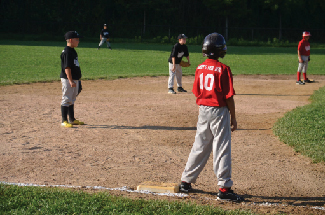


Figure 9.12図 9.12
Because they understand luck and fairness, children in middle and late childhood (6–11 years old) are able to follow rules for games. (credit: Edwin Martinez)
児童期の中期から後期(6〜11歳)の子どもは、運や公平さを理解しているので、ゲームのルールに従うことができる。(出典:Edwin Martinez)
One well-researched aspect of cognitive development is language acquisition. As mentioned earlier, the order in which children learn language structures is consistent across children and cultures (Hatch, 1983). You’ve also learned that some psychological researchers have proposed that children possess a biological predisposition for language acquisition.
英語のヒント
認知発達のうち、よく研究されている側面の一つが言語獲得である。前に述べたように、子どもが言語の構造を学ぶ順序は、子どもや文化を問わず一貫している(Hatch, 1983)。また、心理学の研究者の中に、子どもには言語獲得に向けた生物学的な素因が備わっていると提唱する人がいることも学んだ。
Starting before birth, babies begin to develop language and communication skills. At birth, babies apparently recognize their mother’s voice and can discriminate between the language(s) spoken by their mothers and foreign languages, and they show preferences for faces that are moving in synchrony with audible language (Blossom & Morgan, 2006; Pickens, 1994; Spelke & Cortelyou, 1981).
英語のヒント
赤ちゃんは生まれる前から、言語とコミュニケーションの技能を発達させはじめる。生まれた時点で、赤ちゃんはどうやら母親の声を聞き分けているらしく、母親が話す言語と外国語を区別でき、聞こえる言葉と同期して動く顔を好む(Blossom & Morgan, 2006; Pickens, 1994; Spelke & Cortelyou, 1981)。
Children communicate information through gesturing long before they speak, and there is some evidence that gesture usage predicts subsequent language development (Iverson & Goldin-Meadow, 2005). In terms of producing spoken language, babies begin to coo almost immediately. Cooing is a one-syllable combination of a consonant and a vowel sound (e.g., coo or ba). Interestingly, babies replicate sounds from their own languages. A baby whose parents speak French will coo in a different tone than a baby whose parents speak Spanish or Urdu. After cooing, the baby starts to babble. Babbling begins with repeating a syllable, such as ma-ma, da-da, or ba-ba. When babies are about 12 months old, we expect them to say their first word for meaning, and to start combining words for meaning at about 18 months.
英語のヒント
子どもは話しはじめるずっと前から、身ぶりを通して情報を伝える。そして、身ぶりの使用がその後の言語発達を予測するという証拠もいくらかある(Iverson & Goldin-Meadow, 2005)。話し言葉を発することについていえば、赤ちゃんは生まれてほとんどすぐにクーイングを始める。クーイングとは、子音と母音を組み合わせた1音節の音である(たとえば「クー」や「バ」)。興味深いことに、赤ちゃんは自分の言語の音をまねる。両親がフランス語を話す赤ちゃんは、両親がスペイン語やウルドゥー語を話す赤ちゃんとは違う調子でクーイングする。クーイングの後、赤ちゃんは喃語を発しはじめる。喃語は、「マ・マ」「ダ・ダ」「バ・バ」のように一つの音節を繰り返すことから始まる。赤ちゃんは生後12か月ごろに意味のある最初の単語を言い、18か月ごろには単語を組み合わせて意味を表しはじめると予想される。
At about 2 years old, a toddler uses between 50 and 200 words; by 3 years old they have a vocabulary of up to 1,000 words and can speak in sentences. During the early childhood years, children's vocabulary increases at a rapid pace. This is sometimes referred to as the “vocabulary spurt” and has been claimed to involve an expansion in vocabulary at a rate of 10–20 new words per week. Recent research may indicate that while some children experience these spurts, it is far from universal (as discussed in Ganger & Brent, 2004). It has been estimated that 5 year olds understand about 6,000 words, speak 2,000 words, and can define words and question their meanings. They can rhyme and name the days of the week. Seven year olds speak fluently and use slang and clichés (Stork & Widdowson, 1974).
英語のヒント
2歳ごろのよちよち歩きの幼児は50〜200語を使い、3歳までには最大1,000語の語彙を持ち、文で話せるようになる。幼児期の数年間、子どもの語彙は急速に増える。これは「語彙爆発」と呼ばれることもあり、1週間に10〜20語の新しい単語が加わる速さで語彙が拡大すると主張されてきた。最近の研究は、一部の子どもはこうした急増を経験するものの、それが普遍的とはとてもいえないことを示しているのかもしれない(Ganger & Brent, 2004 で論じられているとおり)。5歳児は約6,000語を理解し、2,000語を話し、単語を定義したり、その意味を問うたりできると推定されている。韻を踏んだり、曜日の名前を言ったりもできる。7歳児は流暢に話し、俗語や決まり文句を使う(Stork & Widdowson, 1974)。
What accounts for such dramatic language learning by children? Behaviorist B. F. Skinner thought that we learn language in response to reinforcement or feedback, such as through parental approval or through being understood. For example, when a two-year-old child asks for juice, he might say, “me juice,” to which his mother might respond by giving him a cup of apple juice. Noam Chomsky (1957) criticized Skinner’s theory and proposed that we are all born with an innate capacity to learn language. Chomsky called this mechanism a language acquisition device (LAD). Who is correct? Both Chomsky and Skinner are right. Remember that we are a product of both nature and nurture. Researchers now believe that language acquisition is partially inborn and partially learned through our interactions with our linguistic environment (Gleitman & Newport, 1995; Stork & Widdowson, 1974).
英語のヒント
子どもによるこれほど劇的な言語学習は、何によって説明されるのだろうか。行動主義者のB・F・スキナーは、私たちは親の承認や、相手に理解してもらうことなどを通じて、強化やフィードバックに反応して言語を学ぶと考えた。たとえば、2歳の男の子はジュースがほしいとき、「ぼく、ジュース」と言うかもしれない。それに対して母親は、リンゴジュースを1杯あげて応えるかもしれない。ノーム・チョムスキー(1957)はスキナーの理論を批判し、私たちはみな言語を学ぶ生得的な能力を持って生まれてくると提唱した。チョムスキーはこのしくみを言語獲得装置(LAD)と呼んだ。どちらが正しいのか。チョムスキーもスキナーも、どちらも正しい。私たちは生まれと育ちの両方の産物であることを思い出そう。現在、研究者たちは、言語獲得は一部は生得的であり、一部は言語環境とのかかわりを通じて学習されると考えている(Gleitman & Newport, 1995; Stork & Widdowson, 1974)。