第9章生涯発達
9.3 Stages of Development9.3 発達の段階
Learning Objectives学習目標
By the end of this section, you will be able to:
この節を学び終えると、次のことができるようになる。
- Describe the stages of prenatal development and recognize the importance of prenatal care出生前の発達の段階を説明し、出生前ケアの重要性を認識する
- Appraise physical, cognitive, and emotional development that occurs from infancy through childhood乳児期から児童期にかけて起こる身体的、認知的、感情的な発達を評価する
- Compare and contrast physical, cognitive, and emotional development that occurs during adolescence青年期に起こる身体的、認知的、感情的な発達を比較対照する
- Examine physical, cognitive, and emotional development that occurs in adulthood成人期に起こる身体的、認知的、感情的な発達を検討する
From the moment we are born until the moment we die, we continue to develop.
英語のヒント
私たちは、生まれた瞬間から死ぬ瞬間まで発達し続ける。
As discussed at the beginning of this chapter, developmental psychologists often divide our development into three areas: physical development, cognitive development, and psychosocial development. Mirroring Erikson’s stages, lifespan development is divided into different stages that are based on age. We will discuss prenatal, infant, child, adolescent, and adult development.
英語のヒント
この章の初めで述べたように、発達心理学者は、私たちの発達を身体発達、認知発達、心理社会的発達の三つの領域に分けることが多い。エリクソンの段階にならって、生涯発達は年齢に基づくいくつかの段階に分けられる。ここでは、出生前、乳児期、児童期、青年期、成人期の発達を論じる。
Prenatal Development出生前の発達
How did you come to be who you are? From beginning as a one-cell structure to your birth, your prenatal development occurred in an orderly and delicate sequence.
英語のヒント
あなたはどのようにして今のあなたになったのだろうか。一つの細胞から始まって誕生に至るまで、あなたの出生前の発達は、秩序立った繊細な順序で進んだ。
There are three stages of prenatal development: germinal, embryonic, and fetal. Let’s take a look at what happens to the developing baby in each of these stages.
英語のヒント
出生前の発達には三つの段階がある。胚芽期、胚期、胎児期である。それぞれの段階で、発育中の赤ちゃんに何が起こるのかを見ていこう。
Germinal Stage (Weeks 1–2)胚芽期(1〜2週)
In the discussion of biopsychology earlier in the book, you learned about genetics and DNA. DNA is passed on to the child at the moment of conception. Conception occurs when sperm fertilizes an egg and forms a zygote (Figure 9.7). A zygote begins as a one-cell structure that is created when a sperm and egg merge. The genetic makeup and sex of the zygote are set at this point. During the first week after conception, the zygote divides and multiplies, going from a one-cell structure to two cells, then four cells, then eight cells, and so on. This process of cell division is called mitosis. Mitosis is a fragile process, and fewer than one-half of all zygotes survive beyond the first two weeks (Hall, 2004). After 5 days of mitosis there are 100 cells, and after 9 months there are billions of cells. As the cells divide, they become more specialized, forming different organs and body parts. In the germinal stage, the mass of cells has yet to attach itself to the lining of the uterus. Once it does, the next stage begins.
英語のヒント
本書の前のほうの生物心理学の議論で、遺伝学とDNAについて学んだ。DNAは受胎の瞬間に子どもへ受け渡される。受胎は、精子が卵子を受精させ、接合子を形成するときに起こる(図9.7)。接合子は、精子と卵子が融合したときにつくられる一つの細胞として始まる。接合子の遺伝的な構成と性別は、この時点で決まる。受胎後の最初の1週間に、接合子は分裂して数を増やし、1個の細胞から2個、4個、8個……と増えていく。この細胞分裂の過程は有糸分裂と呼ばれる。有糸分裂はもろい過程であり、接合子全体のうち、最初の2週間を越えて生き残るのは半分に満たない(Hall, 2004)。5日間の有糸分裂を経ると細胞は100個になり、9か月後には数十億個になる。細胞は分裂するにつれて特殊化が進み、さまざまな器官や体の部位を形づくっていく。胚芽期には、細胞の塊はまだ子宮の内膜に付着していない。付着すると、次の段階が始まる。
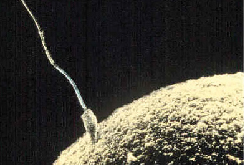
Figure 9.7図 9.7
Sperm and ovum fuse at the point of conception.
受胎の時点で、精子と卵子が融合する。
Embryonic Stage (Weeks 3–8)胚期(3〜8週)
After the zygote divides for about 7–10 days and has 150 cells, it travels down the fallopian tubes and implants itself in the lining of the uterus. Upon implantation, this multi-cellular organism is called an embryo. Now blood vessels grow, forming the placenta. The placenta is a structure connected to the uterus that provides nourishment and oxygen to the developing embryo via the umbilical cord. Basic structures of the embryo start to develop into areas that will become the head, chest, and abdomen. During the embryonic stage, the heart begins to beat and organs form and begin to function. The neural tube forms along the back of the embryo, developing into the spinal cord and brain.
英語のヒント
接合子は約7〜10日間分裂を続けて150個の細胞になると、卵管を下って移動し、子宮の内膜に着床する。着床すると、この多細胞の生物は胚と呼ばれる。このとき血管が成長し、胎盤を形づくる。胎盤は子宮につながった構造で、へその緒を通して、発育中の胚に栄養と酸素を供給する。胚の基本的な構造は、のちに頭部、胸部、腹部となる領域へと発達しはじめる。胚期には、心臓が拍動を始め、器官が形成されて機能しはじめる。胚の背中に沿って神経管が形成され、脊髄と脳へと発達していく。
Fetal Stage (Weeks 9–40)胎児期(9〜40週)
When the organism is about nine weeks old, the embryo is called a fetus. At this stage, the fetus is about the size of a kidney bean and begins to take on the recognizable form of a human being as the “tail” begins to disappear.
英語のヒント
この生物が9週ほどになると、胚は胎児と呼ばれるようになる。この段階の胎児はインゲン豆ほどの大きさで、「尾」が消えはじめるにつれて、人間だと分かる形をとりはじめる。
From 9–12 weeks, the sex organs begin to differentiate. At about 16 weeks, the fetus is approximately 4.5 inches long. Fingers and toes are fully developed, and fingerprints are visible. By the time the fetus reaches the sixth month of development (24 weeks), it weighs up to 1.4 pounds. Hearing has developed, so the fetus can respond to sounds. The internal organs, such as the lungs, heart, stomach, and intestines, have formed enough that a fetus born prematurely at this point has a chance to survive outside of the womb. Throughout the fetal stage the brain continues to grow and develop, nearly doubling in size from weeks 16 to 28. Around 36 weeks, the fetus is almost ready for birth. It weighs about 6 pounds and is about 18.5 inches long, and by week 37 all of the fetus’s organ systems are developed enough that it could survive outside the uterus without many of the risks associated with premature birth. The fetus continues to gain weight and grow in length until approximately 40 weeks. By then, the fetus has very little room to move around and birth becomes imminent. The progression through the stages is shown in Figure 9.8.
英語のヒント
9〜12週には、性器が分化しはじめる。16週ごろには、胎児の体長はおよそ4.5インチになる。手足の指が完全に発達し、指紋も見えるようになる。胎児が発達の6か月目(24週)に達するころには、体重は最大1.4ポンドになる。聴覚が発達しているので、胎児は音に反応できる。肺、心臓、胃、腸などの内臓は十分に形成されており、この時点で早産で生まれた胎児にも、子宮の外で生き延びる見込みがある。胎児期を通じて脳は成長と発達を続け、16週から28週にかけて大きさがほぼ2倍になる。36週ごろには、胎児は生まれる準備がほぼ整う。体重は約6ポンド、体長は約18.5インチで、37週までには胎児のすべての器官系が十分に発達し、早産に伴うリスクの多くを負うことなく子宮の外で生き延びられるようになる。胎児は約40週まで体重を増やし、体長を伸ばし続ける。そのころには、胎児が動き回る余地はほとんどなくなり、誕生が目前に迫る。各段階を経ていく様子を図9.8に示す。
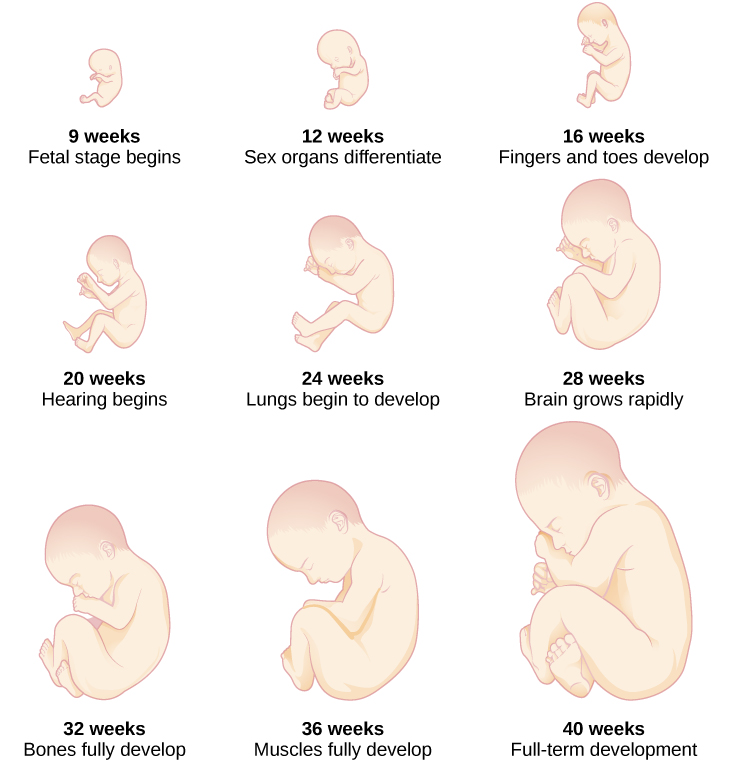


Figure 9.8図 9.8
During the fetal stage, the baby's brain develops and the body adds size and weight, until the fetus reaches full-term development.
胎児期には、赤ちゃんの脳が発達し、体は大きさと重さを増していき、やがて胎児は満期の発達に達する。