第12章現代哲学と社会理論Contemporary Philosophies and Social Theories
Phenomenology現象学
Phenomenology, very generally, can be defined as the study of how an individual encounters the world through first-person experience. One can dive deeper to identify several areas of inquiry within phenomenology, such as the nature of experience, the use of symbols to convey experience, objective vs. subjective experience, the connection between experience and values, and the experiential importance of religious ideas. Phenomenology argues that the starting point of philosophical reflection must be the realm of experience and not the realm of abstract ideas. Instead of starting with the purely mental idea of a thing, phenomenology suggests that we reflect on how the experience of a thing affects us. For example, a phenomenological approach would encounter a chair from the perspective of the purpose it is serving at that particular moment (perhaps it’s being used as a table) and not what the idea of “chair” may indicate. Phenomenology tasks us with working toward an understanding of various types of experiences involving the thing in question.
英語のヒント
現象学は、ごく一般的には、個人が一人称の経験を通じ、世界とどのように出会うかを研究する学問と定義できる。さらに踏み込めば、経験の性質、経験を伝えるための象徴の使用、客観的経験と主観的経験、経験と価値の結び付き、宗教的な考えが経験の中で持つ重要さなど、複数の探究領域を区別できる。現象学は、哲学的省察の出発点を、抽象的な観念の領域ではなく、経験の領域に置かなければならないと論じる。物事についての純粋に心的な観念から始める代わりに、その物事の経験が私たちにどう作用するかを、省察するよう提案する。たとえば、現象学的な立場は、椅子に出会う際、「椅子」という観念が何を示すかではなく、その瞬間に椅子がどんな目的に使われているかという観点から捉えるだろう。ひょっとすると、テーブルとして使われているかもしれない。現象学は、その物事が関わるさまざまな種類の経験を理解するよう、私たちに課題を与える。
Phenomenology and Reality現象学と実在
Phenomenology was largely developed by French thinker Maurice Merleau-Ponty (1908–1961) and German philosopher Edmund Husserl (1859–1938). Husserl argued that when one begins the phenomenological investigation, one must suspend the temptation to assert that an object is in essence what it appears to be. Rather, Husserl advocated that we focus on how the thing appears to us. Husserl thus provided the foundation of the phenomenological project: the relinquishing of assumptions about the objects of experience.
英語のヒント
現象学は、主としてフランスの思想家モーリス・メルロ=ポンティ(1908〜1961年)と、ドイツの哲学者エトムント・フッサール(1859〜1938年)によって発展した。フッサールは、現象学的な探究を始める際には、ある対象は本質的に、見えているとおりのものである、と断定したくなる誘惑を保留しなければならないと論じた。むしろ、その物事が私たちにどう現れるかに、焦点を当てるよう提案した。こうしてフッサールは、経験の対象についての前提を手放すことを、現象学の営みの基礎として示した。
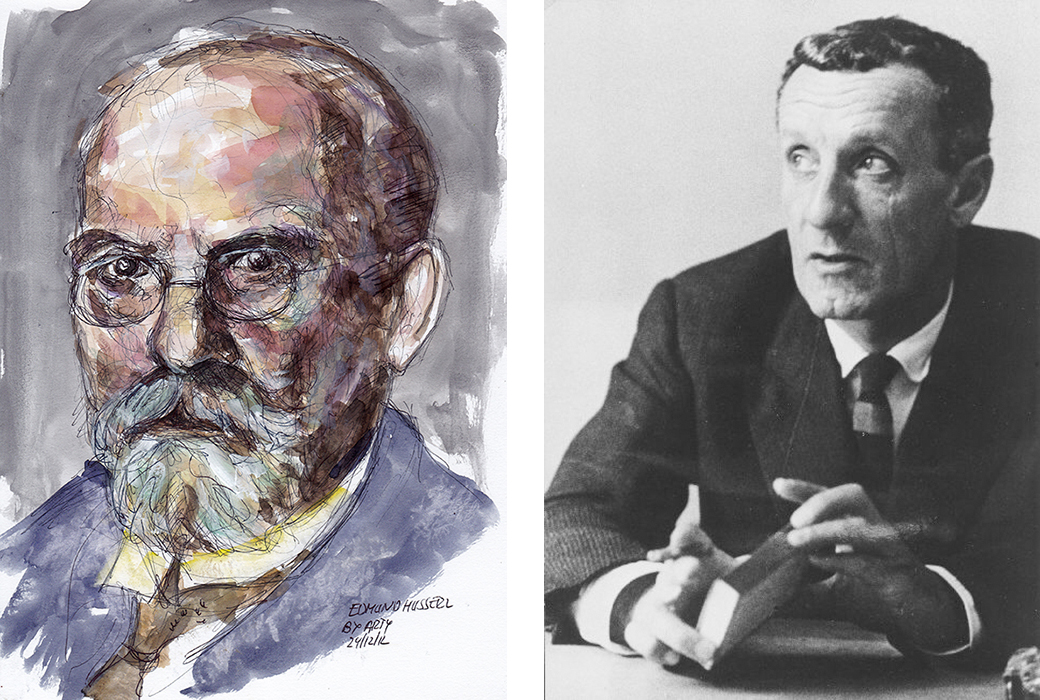
Figure 12.8 Edmund Husserl (left) and Maurice Merleau-Ponty (right) each made important contributions to phenomenology. (left credit: “Edmund Husserl for PIFAL” by Arturo Espinoza/Flickr, CC BY 2.0; right credit: “Maurice Merleau-Ponty” by philosophical-investigations.org/Wikimedia, Public Domain)
図12.8 エトムント・フッサール(左)とモーリス・メルロ=ポンティ(右)は、それぞれ現象学に重要な貢献をした。 (left credit: “Edmund Husserl for PIFAL” by Arturo Espinoza/Flickr, CC BY 2.0; right credit: “Maurice Merleau-Ponty” by philosophical-investigations.org/Wikimedia, Public Domain)
Merleau-Ponty further rejected Descartes’s distinction between the mind and the body. Merleau-Ponty argued that we cannot separate perception or consciousness from the body, as we perceive the outside world through our bodies. The body structures our perception. For example, Merleau-Ponty pointed to psychological studies of phenomena such as phantom-limb syndrome and hallucinations to show that the body mediates our perception of the outside world (Merleau-Ponty 2012).
英語のヒント
メルロ=ポンティは、さらに、デカルトによる心と身体の区別を退けた。私たちは身体を通じて外の世界を知覚するのだから、知覚や意識を身体から分離できない、と論じたのである。身体が、私たちの知覚を構造化する。たとえば、メルロ=ポンティは、幻肢症候群や幻覚などの現象の心理学的研究を示し、身体が、外の世界についての私たちの知覚を媒介することを論じた(Merleau-Ponty 2012)。
Martin Heidegger’s (1889-1976) brand of phenomenology, focusing on the nature of human being (what he referred to as “Dasein”), argued that being by necessity has to occur in the world, as being cannot manifest without a world. This view challenged attempts to discover the nature of being in the realm of theory and ideas. Heidegger proposed that abstract ideas don’t reveal much about being since they are not in the world. If we want to analyze the nature of being, we must not focus on individual instances of beings and our external assumptions about them, but rather examine the world, the realm in which being itself occurs. For Heidegger, what gives rise to the experience of being is more revealing than an investigation of things (Smith 2013).
英語のヒント
マルティン・ハイデガー(1889〜1976年)の現象学は、人間の存在の性質、彼が「現存在(Dasein)」と呼んだものに焦点を当てた。そして、存在は世界なしには現れえないため、必然的に世界の中で生じなければならない、と論じた。この見方は、理論や観念の領域で存在の性質を見いだそうとする試みに、異議を唱えた。ハイデガーは、抽象的な観念は世界の中にないため、存在について多くを明らかにしない、と提案した。存在の性質を分析したいなら、個々の存在者の事例や、それらに対して外から持ち込む前提に焦点を当てるのではなく、世界、すなわち、存在そのものが生じる領域を調べなければならない。ハイデガーにとって、物事を調査するよりも、存在の経験を生み出すもののほうが、多くを明らかにする(Smith 2013)。
For example, this view would privilege experiences from everyday life, such as driving to the store or greeting a neighbor on the sidewalk, as more informative on the nature of being than abstract philosophical reflections on transportation or neighborly interactions. As another example, consider the difference between music that aligns with standards of music theory and that which does not. In the case of the former, a song is good because it follows abstract ideas of harmony, uniform time signatures, etc. In the case of the latter, a song may break some or all the rules of music theory but still present a phenomenological reality of experiences of joy, pain, angst, or anger. In fact, Heidegger was very interested in works of art and their function to authentically imitate life as it is and not as abstract concepts say it should be.
英語のヒント
たとえば、この見方は、店へ車で行くことや、歩道で隣人に挨拶することといった日常の経験を、交通や隣人同士の交流についての抽象的な哲学的省察よりも、存在の性質をよく知らせるものとして重視するだろう。別の例として、音楽理論の基準に合う音楽と、合わない音楽の違いを考えてみよう。前者では、楽曲は、和声や一定の拍子などの抽象的な考えに従うため、よいものとされる。後者では、楽曲が音楽理論の規則の一部、あるいはすべてを破っていても、喜び、痛み、不安、怒りの経験について、現象学的な現実を表しうる。実際、ハイデガーは芸術作品と、その働きに強い関心を持っていた。抽象概念が「こうあるべきだ」とする人生ではなく、ありのままの人生を、真に描き出す働きである。
Phenomenology and Ethics現象学と倫理
There is a strong connection between ethics and phenomenology. The phenomenological vantage point of reflecting on experience engenders a sense of wonder. Some philosophers would assert that ethics has this sort of awe-inspiring quality; we do the “right” action because it compels us. From a phenomenological perspective, the ethical response, like all experience, cannot be reduced to biological, chemical, or logical reasons. That which persuades us to do something we are convinced of to be “good” or “right” makes a claim that transcends either of these. In other words, there is a difference between someone not causing unnecessary harm to another merely because the law prohibits it and a person who has truly been persuaded by the phenomenological presentation of another human that they matter greatly and should not be harmed unnecessarily.
英語のヒント
倫理と現象学には、強い結び付きがある。経験を省察する現象学の視点は、驚異の感覚を生む。倫理にも、このような畏敬を呼び起こす性質がある、と主張する哲学者もいるだろう。私たちは、「正しい」行為に強く促されるからこそ、それを行うのである。現象学の観点からすれば、倫理的な応答は、あらゆる経験と同じく、生物学的、化学的、論理的な理由へ還元できない。私たちが「よい」「正しい」と確信する何かを行うよう促すものは、そのいずれをも超えた要求を、私たちに突きつける。言い換えれば、単に法律で禁じられているから、他人に不要な害を与えない人と、現象学的に他者が現れることを通じ、その人には大きな重要さがあり、不要に害されるべきではないと、真に納得した人との間には、違いがある。
Phenomenology deeply engages the questions of ethics by investigation of the nature of immediate human experience. Allowing oneself to be authentically confronted with the suffering of other humans can cause us to want to fight for those who are suffering, even when abstract conceptual ethics might indicate that this is not our responsibility. For example, a person is not required by any abstract legal or ethical mandate to give one of their kidneys to a stranger. But when they are confronted phenomenologically with the suffering experience of the person who needs the kidney, they may be moved to donate their kidney even though they do not have to.
英語のヒント
現象学は、人間の直接的な経験の性質を探究することで、倫理の問いに深く関わる。他の人々の苦しみを、真に自分が直面するものとして受け入れると、苦しむ人々のために闘いたいと思うことがある。抽象的・概念的な倫理が、これは自分の責任ではないと示す場合でさえ、そうである。たとえば、見知らぬ人に自分の腎臓の一つを与えることは、抽象的な法的・倫理的命令からは要求されない。しかし、その腎臓を必要とする人の苦しみの経験に、現象学的に直面するとき、その人は、義務がなくても、自分の腎臓を提供するよう心を動かされるかもしれない。