第12章現代哲学と社会理論Contemporary Philosophies and Social Theories
Du Bois and Empirical Sociologyデュボイスと実証的な社会学
W. E. B. Du Bois, a prominent American intellectual and civil rights activist, pioneered the use of empirical methods in the field of sociology. When Du Bois first engaged with sociology, the young field of study was largely theoretical. Du Bois criticized early sociologists for making broad generalizations about human societies based on vague, personal impressions rather than first seeking to gather evidence (Westbrook 2018, 200). Du Bois set out to convert sociology into a scientific discipline.
英語のヒント
アメリカを代表する知識人で、公民権運動家でもあったW・E・B・デュボイスは、社会学で経験的方法を用いる先駆者だった。彼が社会学に取り組み始めた頃、この若い学問分野は、主に理論的なものだった。デュボイスは、初期の社会学者たちが、まず証拠を集めようとせず、曖昧で個人的な印象に基づいて、人間社会について広範な一般化を行っていると批判した(Westbrook 2018, 200)。彼は、社会学を科学的な学問へと変えることに取り掛かった。
After receiving his PhD from Harvard University in 1895, Du Bois came to the University of Pennsylvania in Philadelphia. Here he conducted a complex investigation into the obstacles that African Americans faced in becoming self-supporting. Over 15 months, Du Bois conducted 2,500 door-to-door interviews, collecting data on demographics, education, literacy, occupation, health, membership in civic organizations, criminality, rates of alcoholism, income levels, home ownership rates, voting practices, and the integration of African Americans into the larger society. He compared his findings with data compiled by the US Census Bureau and other sources to gain more insight. For example, comparing his data regarding the occupations of people living in the Seventh Ward, an African American neighborhood, to 1890 census data on the occupations of people in the whole of Philadelphia, he found that a significantly greater percentage of African Americans were engaged in low-skilled, low-paying occupations. Du Bois’s study and his subsequent book, entitled The Philadelphia Negro: A Social Study, became the first empirical analysis of racism in the United States.
英語のヒント
1895年にハーバード大学で博士号を取得した後、デュボイスはフィラデルフィアのペンシルベニア大学へ移った。そこで、アフリカ系アメリカ人が自立した生活を営む際に直面する障害について、複合的な調査を行った。15か月にわたり、デュボイスは2,500件の戸別訪問による聞き取りを行った。人口統計的な特徴、教育、識字、職業、健康、市民団体への所属、犯罪、アルコール依存の割合、所得水準、持ち家率、投票行動、そしてアフリカ系アメリカ人がより広い社会にどの程度組み込まれているかについて、データを集めた。さらに理解を深めるために、調査結果を、アメリカ国勢調査局や他の情報源がまとめたデータと比較した。たとえば、アフリカ系アメリカ人の居住地区である第7区の住民の職業についての自分のデータを、フィラデルフィア全体の住民の職業についての1890年の国勢調査データと比較した。その結果、アフリカ系アメリカ人は、技能の要件が低く、賃金も低い職業に従事する割合が、大幅に高いことを見いだした。デュボイスの研究と、それに続く著書『フィラデルフィアの黒人――社会的研究』(The Philadelphia Negro: A Social Study)は、アメリカにおける人種主義の、最初の実証的分析となった。
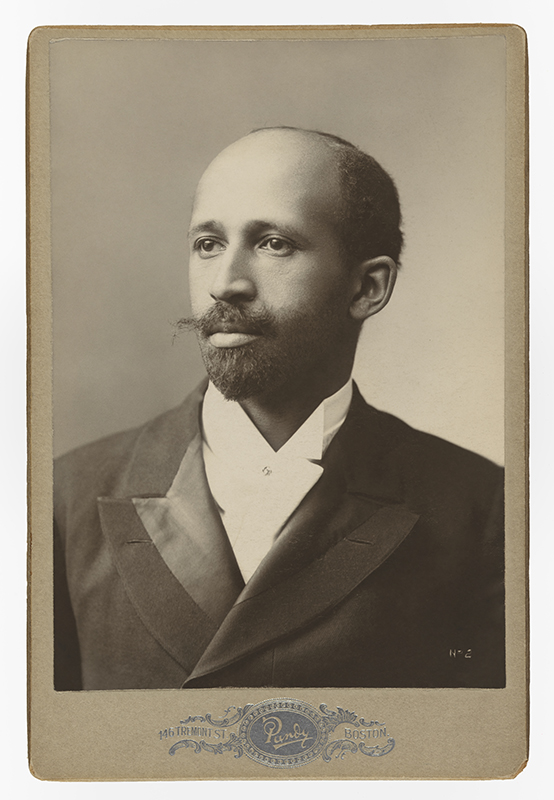
Figure 12.3 W.E.B. Du Bois pioneered the use of empirical methods in the field of sociology. (credit: “W.E.B. Du Bois by James E. Purdy, 1907” by James E. Purdy National Portrait Gallery/Wikimedia, Public Domain)
図12.3 W・E・B・デュボイスは、社会学で経験的方法を用いる先駆者だった。 (credit: “W.E.B. Du Bois by James E. Purdy, 1907” by James E. Purdy National Portrait Gallery/Wikimedia, Public Domain)
Today we take for granted our ability to find statistics such as the divorce rate, the crime rate, or the average salary for a job in the region where we live. However, the collection of this kind of data and its use as a tool to inform public policies aimed at addressing social problems is a product of Du Bois’s determination to bring science to the study of social issues.
英語のヒント
今日、私たちは、住んでいる地域の離婚率、犯罪率、ある仕事の平均給与といった統計を調べられることを、当たり前だと思っている。しかし、この種のデータを集め、社会問題への対処を目指す公共政策に知見を与える道具として使うことは、社会問題の研究に科学を持ち込もうという、デュボイスの決意が生んだものである。
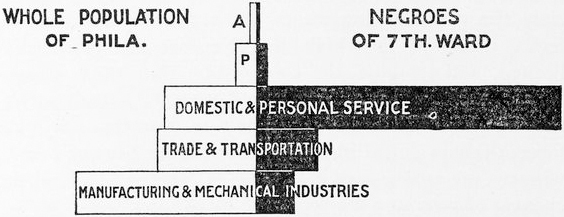
Figure 12.4 This bar graph from Du Bois’s The Philadelphia Negro: A Social Study, published in 1899, illustrates his conclusion that African Americans living in the Seventh Ward were less likely to work in the skilled professions of manufacturing and mechanical industries and more likely to work in unskilled positions of domestic labor. This data-based approach to studying human experiences was revolutionary at the time. Note that at this time, the term Negroes was commonly used to describe Black Americans. (credit: The Philadelphia Negro, p. 109, by W. E. B. Du Bois, Google Books, Public Domain)
図12.4 1899年刊行のデュボイス著『フィラデルフィアの黒人――社会的研究』(The Philadelphia Negro: A Social Study)に掲載されたこの棒グラフは、彼の結論を示している。第7区に暮らすアフリカ系アメリカ人は、製造業や機械工業の熟練職に就く可能性が低く、家事労働の非熟練職に就く可能性が高かった。人間の経験をデータに基づいて研究するこの手法は、当時としては革命的だった。なお、この当時は、黒人のアメリカ人を表すために Negroes という語が一般に用いられていた。 (credit: The Philadelphia Negro, p. 109, by W. E. B. Du Bois, Google Books, Public Domain)
Summaryまとめ
Enlightenment thinkers proposed that human reason, coupled with empirical study of the physical world, would lead to progress—the advancement of science and the improvement of the human condition. Kant proposed that reason alone could guide individuals to identify ethical codes. The application of reason, in this way, would usher the human race toward a moral society in which each individual could enjoy the greatest freedom. However, this work of reasoning out the moral code could not be carried out by individuals but societies over a period of generations. Comte proposed the establishment of a science of society, which he called sociology. He believed that society, like an organism in nature, could be studied empirically. In this way, social problems could be addressed, and the human race could progress.
啓蒙思想家たちは、人間の理性を物理的世界の経験的研究と組み合わせることで、科学の発展と人間の状況の改善という進歩が生まれると提案した。カントは、理性だけで、倫理規則を見いだすよう個人を導けると考えた。このように理性を用いれば、各個人が最大限の自由を享受できる道徳的社会へと、人類を導けるという。しかし、道徳規則を理性によって考え出すこの仕事は、個人ではなく、社会が何世代にもわたって行わなければならない。コントは、社会を研究する科学の創設を提案し、社会学と呼んだ。自然の中の生物と同じように、社会も経験的に研究できると考えたのである。こうして社会問題に対処でき、人類は進歩できるとした。
Review Questions復習問題
How did Enlightenment thinkers propose that societies would accumulate knowledge?
啓蒙思想家たちは、社会がどのように知識を蓄積すると考えたか。
What role did reason play in Kant’s belief in ethical progress?
倫理的進歩についてのカントの考えにおいて、理性はどのような役割を担ったか。
Positivism
実証主義
the third stage for the development of societies proposed by August Comte, in which people reject religion and focus only on things that can be proven.
オーギュスト・コントが提案した社会発展の第三段階。人々が宗教を退け、証明できるものだけに焦点を当てる段階である。