第12章現代哲学と社会理論Contemporary Philosophies and Social Theories
12.1 Enlightenment Social Theory12.1 啓蒙時代の社会理論
Learning Objectives学習目標
By the end of this section, you will be able to:
この節を終えると、次のことができるようになる。
Evaluate Enlightenment ideas of progress.
啓蒙思想における進歩の考え方を評価する。
Describe positivism.
実証主義を説明する。
Outline the emergence of empirical sociology as a means of solving social problems.
社会問題を解決する手段として、実証的な社会学が生まれた経緯を概説する。
Enlightenment thinkers proposed that human reason coupled with empirical study of the physical world would lead to progress—namely, the advancement of science and the improvement of the human condition. While time-, labor-, and life-saving scientific advances benefited many, the economic developments of the era exacerbated inequality and pushed many others into poverty. Concerns also grew about the power of governments and other institutions and the role of the individual in increasingly complex and interconnected economic and social systems. Political theorists such as John Locke (1632–1704) and Jean-Jacques Rousseau (1712–1778) proposed social contract theory, which spoke to the protection of individual freedoms. And new fields emerged to study and attempt to address the social problems that were developing.
英語のヒント
啓蒙思想家たちは、人間の理性を物理的世界の経験的研究と組み合わせれば、進歩につながると提案した。すなわち、科学が発展し、人間の置かれた状況が改善するということである。時間や労力を節約し、命を救う科学の進歩が多くの人々に利益をもたらす一方で、この時代の経済的発展は不平等を悪化させ、別の多くの人々を貧困に追いやった。政府や他の諸制度の権力、そして、ますます複雑に結び付く経済・社会の仕組みの中での個人の役割についても、懸念が高まった。ジョン・ロック(1632〜1704年)やジャン=ジャック・ルソー(1712〜1778年)などの政治理論家は、個人の自由の保護に応える社会契約説を提案した。また、生じつつあった社会問題を研究し、解決を試みる新たな分野も現れた。
Rationalism and Empiricism合理論と経験論
Enlightenment thinkers proposed that the knowledge needed to improve social conditions could be gathered through rationalism, which regards reason as the source of most knowledge, and empiricism, which relies upon the evidence provided by experiments. The French thinker René Descartes (1596–1650) argued that true knowledge could be acquired through reason alone, without relying on experience. Descartes’s famous quote “I think therefore I am” insists that we know what we know due to abstract reason. For example, knowing that one plus one equals two is a function of reason rather than personal experience.
英語のヒント
啓蒙思想家たちは、社会状況を改善するために必要な知識を、合理論と経験論によって得られると提案した。合理論は理性を大部分の知識の源泉とみなし、経験論は実験が与える証拠に依拠する。フランスの思想家ルネ・デカルト(1596〜1650年)は、経験に頼らず、理性だけによって真の知識を得られると論じた。デカルトの有名な「我思う、ゆえに我あり」という言葉は、抽象的な理性によって私たちが知ることを知っているのだ、と主張する。たとえば、1足す1が2になると知るのは、個人の経験ではなく、理性の働きによる。
Other Enlightenment thinkers, including the English philosophers Francis Bacon (1561–1626) and John Locke (1632–1704), believed that knowledge could be gained only through empirical methods, including direct and indirect observation and experience. According to these thinkers, we make deductions from observations that suggest patterns or connection. These deductions can then be tested by systematically observing further phenomena and recording and analyzing data surrounding these phenomena. The scientific method is an empirical method solidified during the Enlightenment period that has become the standard way of conducting any type of objective research.
英語のヒント
イギリスの哲学者フランシス・ベーコン(1561〜1626年)やジョン・ロック(1632〜1704年)など、他の啓蒙思想家たちは、知識は、直接・間接の観察や経験を含む、経験的方法によってのみ得られると考えた。彼らによれば、私たちは規則性やつながりを示唆する観察から、推論を行う。そして、さらに現象を系統的に観察し、その現象に関わるデータを記録・分析することで、その推論を検証できる。科学的方法は、啓蒙時代に確立した経験的方法であり、あらゆる種類の客観的研究を行う標準的な方法となった。
While rationalism and empiricism seem to be making opposing claims about truth, each has value, and the two can work together. The technological advances of the last 200 years—such as the launching of astronauts into space; the invention of radio, television, and the internet; and the eradication of diseases such as polio—can be said to be the result of both rationalism and empiricism.
英語のヒント
合理論と経験論は、真理について対立する主張をしているように見える。しかし、どちらにも価値があり、両者は協働できる。宇宙への宇宙飛行士の打ち上げ、ラジオ・テレビ・インターネットの発明、ポリオなどの病気の根絶といった、過去200年の技術的進歩は、合理論と経験論の双方の成果だと言える。
Kant and Ethical Progressカントと倫理的進歩
The German Enlightenment thinker Immanuel Kant (1724–1804) proposed that reason alone could guide individuals to identify ethical codes that would result in an improved society. These codes, which he called categorical imperatives, could be derived by determining which rules for ethical behavior we might wish to apply to everyone without exception.
英語のヒント
ドイツの啓蒙思想家イマヌエル・カント(1724〜1804年)は、理性だけで、社会の改善につながる倫理規則を個人が見いだすよう導けると提案した。彼が定言命法と呼んだこれらの規則は、倫理的行動のどの規則を、例外なくすべての人に適用したいと思えるかを判断することで、導き出せるという。
Kant believe that applying reason in this way could usher humanity toward a moral society in which each individual would enjoy the greatest possible freedom. However, Kant also believed that this work of reasoning out a moral code could not be accomplished by individuals but must be undertaken by entire societies. Nor could the work be accomplished in one generation; instead, it may take centuries of trial, reflection, and education. Yet, through this pursuit, societies would progress with each generation, ultimately reaching a more perfect moral code and a more ideal society (Dupré 1998).
英語のヒント
カントは、このように理性を用いることで、各個人が可能なかぎり最大の自由を享受する、道徳的な社会へと、人類を導けると考えた。しかし同時に、道徳規則を理性によって考え出すこの仕事は、個人では達成できず、社会全体で取り組まなければならないとも考えた。一世代のうちに達成できる仕事でもない。むしろ、試み、省察し、教育することを、何世紀にもわたって続ける必要があるかもしれない。それでも、この追求を通じ、社会は世代を重ねるごとに進歩し、最終的には、より完全な道徳規則と、より理想的な社会へ到達するだろう(Dupré 1998)。
Comte’s Positivismコントの実証主義
The French philosopher Auguste Comte (1798–1857) crafted a social theory with the goal of pushing humanity forward toward a more peaceful society—one that could weather the storms of the political revolutions that he experienced in his youth. Considered the first philosopher of science, Comte analyzed the development of the different branches of science that existed in his time. Based on this work, he proposed the law of three stages for the development of societies. In the first stage, individuals attributed the events of life to supernatural forces. In the second stage, individuals recognized that human efforts and natural forces were largely responsible for many events while still acknowledging the power of supernatural forces. In the third stage, individuals shift from focusing on causation to the scientific study of the natural world, human society, and history. In this third stage, Comte believed that humanity would reject religion and focus only on laws or postulates that can be proven. Comte called this third stage positivism.
英語のヒント
フランスの哲学者オーギュスト・コント(1798〜1857年)は、人類をより平和な社会へ前進させることを目指し、社会理論を作り上げた。それは、彼が若い頃に経験した政治革命の嵐にも耐えうる社会だった。最初の科学哲学者とみなされるコントは、当時存在した科学のさまざまな分野の発展を分析した。この仕事に基づき、社会の発展についての三段階の法則を提案した。第一段階では、人々は人生の出来事を超自然的な力によるものとした。第二段階では、超自然的な力をなお認めながらも、人間の努力と自然の力が、多くの出来事に大きく関わっていると認めた。第三段階では、原因に注目することから、自然界、人間社会、歴史を科学的に研究することへと、人々の関心が移る。コントは、この第三段階で、人類は宗教を退け、証明できる法則や公準だけに焦点を当てるようになると考えた。彼は、この第三段階を実証主義と呼んだ。
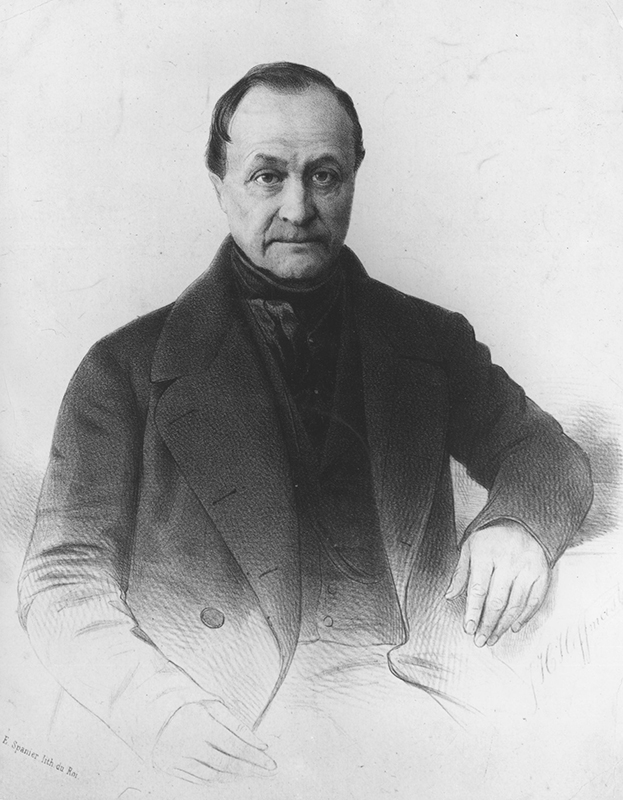
Figure 12.2 Auguste Comte believed that society could be studied empirically and that this study could result in human progress. (credit: “Auguste Comte” by Maison d'Auguste Comte/Wikimedia, Public Domain)
図12.2 オーギュスト・コントは、社会を経験的に研究でき、その研究が人類の進歩につながりうると考えた。 (credit: “Auguste Comte” by Maison d'Auguste Comte/Wikimedia, Public Domain)
Grounded in this positivist approach, Comte proposed the establishment of a science of society, which he called sociology. He believed that society, like an organism in nature, could be studied empirically and that this study could result in human progress. Comte’s conception of sociology as a field of study remained in the theoretical realm. A few decades after he first proposed it, however, his theoretical ideas for a new discipline crossed the Atlantic Ocean and found a home in universities in the United States. Here great minds—such as W. E. B. Du Bois, discussed in the next section—established sociology as a practical discipline that could inform the policies and programs of governments and institutions.
英語のヒント
この実証主義の立場に基づき、コントは社会を研究する科学の創設を提案し、これを社会学と呼んだ。自然の中の生物と同じように社会を経験的に研究でき、その研究が人類の進歩につながりうると考えたのである。研究分野としての社会学について、コントの構想は理論の領域にとどまった。しかし、最初に提案してから数十年後、新たな学問のための彼の理論的な考えは大西洋を渡り、アメリカの大学に受け入れられた。そこでは、次の項目で取り上げるW・E・B・デュボイスなど、優れた知識人たちが、社会学を実践的な学問として確立した。政府や諸制度の政策・事業に、知見を与えられる学問としてである。
Comte believed that humanity would struggle to transition to positivism, as religions provided comforting and meaningful structure and rituals. As a result, Comte founded his own church in 1849, which has as its theoretical legacy the secular humanism of today.
英語のヒント
コントは、宗教が人々に慰めや意味を与える枠組みと儀礼を提供してきたため、人類が実証主義へ移行するには苦労すると考えた。そのため、1849年に自分自身の教会を創設した。その教会は、理論的な遺産として、今日の世俗的人間主義を残している。