第11章政治哲学Political Philosophy
Anarchism無政府主義
While the idea of negative liberty decries unnecessary government intervention in people’s lives, anarchism literally means “no ruler” or “no government.” The absence of a political authority conjures an image of the state of nature imagined by Thomas Hobbes—that is, a state of chaos. Anarchists, however, believe that disorder comes from government. According to this view, rational individuals mostly desire to live peaceful lives, free of government intervention, and this desire naturally leads them to create societies and institutions built on the principles of self-governance.
英語のヒント
消極的自由の考えが、人々の生活への不必要な政府の介入を非難するのに対し、無政府主義は、文字どおり「統治者がいない」「政府がない」ことを意味する。政治的権威の不在は、トマス・ホッブズが想像した自然状態、すなわち混沌の状態を思い起こさせる。しかし、無政府主義者は、無秩序は政府から生じると考える。この見解によれば、理性的な個人は、おおむね政府の介入を受けずに平和に生きたいと望み、その欲求が自然に、自律的統治の原理に基づく社会や制度を作るよう、人々を導く。
Motivations for Anarchism無政府主義の動機
One defense of anarchism is that governments do things that would be impermissible for private individuals. French philosopher Pierre-Joseph Proudhon (1809–1865) observes that governments monitor citizens’ activities and attempt to control their behavior through force. The more technology governments have, the greater their attempts to control people. Proudhon ([1849] 2012) observes that such treatment is against human dignity.
英語のヒント
無政府主義を擁護する理由の一つは、政府が、私人には許されないことを行うという点である。フランスの哲学者ピエール=ジョゼフ・プルードン(1809–1865)は、政府は市民の活動を監視し、力によってその行動を統制しようとすると述べる。政府が技術を多くもつほど、人々を統制しようとする試みも大きくなる。プルードンは、このような扱いが人間の尊厳に反すると指摘する([1849] 2012)。
Proudhonian anarchists are aware of the argument that people may have consented to give up some of their power to the government (as people do in a representative democracy, for example), which means that they must accept the treatment they receive. Yet Proudhon would deny that there is any example in history of a just government. Lysander Spooner (1808–1887), the 19th-century anarchist, says that all governments have come into existence through force and maintain their existence through force (Spooner 1870). Thus, some defend anarchism on the grounds that governments violate human rights.
英語のヒント
プルードン派の無政府主義者は、人々は自らの権力の一部を政府に譲ることに同意したのかもしれず、そのため受ける扱いを受け入れなければならない、という論証を認識している。たとえば代表民主制では、人々はそのように同意している。しかしプルードンは、歴史上、公正な政府の例が一つでもあることを否定するだろう。19世紀の無政府主義者ライサンダー・スプーナー(1808–1887)は、すべての政府は力によって生まれ、力によって存続を維持していると述べる(Spooner 1870)。したがって、政府が人権を侵害することを根拠として、無政府主義を擁護する人もいる。
Limits of Anarchism無政府主義の限界
Criticisms of anarchy are often twofold. The first is that without an organized police force, society would be unable to control outbreaks of violence. A related concern is that without a judicial system to arbitrate disputes and mete out justice, any resolution would be arbitrary. Anarchists, on the other hand, claim that most incidents of violence are the result of socioeconomic imbalances that would be resolved if the government were dismantled. Social anarchism, for instance, points to community involvement and mutual exchange of goods and services as a solution (Fiala 2021).
英語のヒント
無政府状態への批判は、しばしば二つに分かれる。第一に、組織された警察力がなければ、社会は暴力の発生を抑えられないというものである。これに関連して、紛争を裁定し、正義を実施する司法制度がなければ、どのような解決も恣意的になるという懸念がある。これに対し無政府主義者は、暴力事件の大半は社会経済的な不均衡の結果であり、政府が解体されれば、その不均衡は解決されると主張する。たとえば社会的無政府主義は、共同体への参加と財・サービスの相互交換を、解決策として挙げる(Fiala 2021)。
Yet some people associate anarchism with political violence, and in fact, some anarchists see violence as an unavoidable result of clashes with a violent and oppressive government. One of the most famous anarchists, Emma Goldman (1869–1940), wrote in her essay “The Psychology of Political Violence,” “Such acts are the violent recoil from violence, whether aggressive or repressive; they are the last desperate struggle of outraged and exasperated human nature for breathing space and life” (1917). However, many anarchists favor nonviolent tactics and civil disobedience, such as protests and the creation of autonomous zones, as opposed to political violence (Fiala 2018).
英語のヒント
しかし、無政府主義を政治的暴力と結びつける人もいる。実際、一部の無政府主義者は、暴力的で抑圧的な政府との衝突から、暴力は避けがたく生じると考える。最も有名な無政府主義者の一人、エマ・ゴールドマン(1869–1940)は、論文「政治的暴力の心理学」で次のように書いた。「そのような行為は、攻撃的であれ抑圧的であれ、暴力から生じる激しい反動である。それは、怒り、憤激する人間本性が、息をする余地と生を求めて行う、最後の必死の闘いである」(1917)。しかし多くの無政府主義者は、政治的暴力よりも、抗議活動や自治区域の形成など、非暴力的な戦術や市民的不服従を支持する(Fiala 2018)。
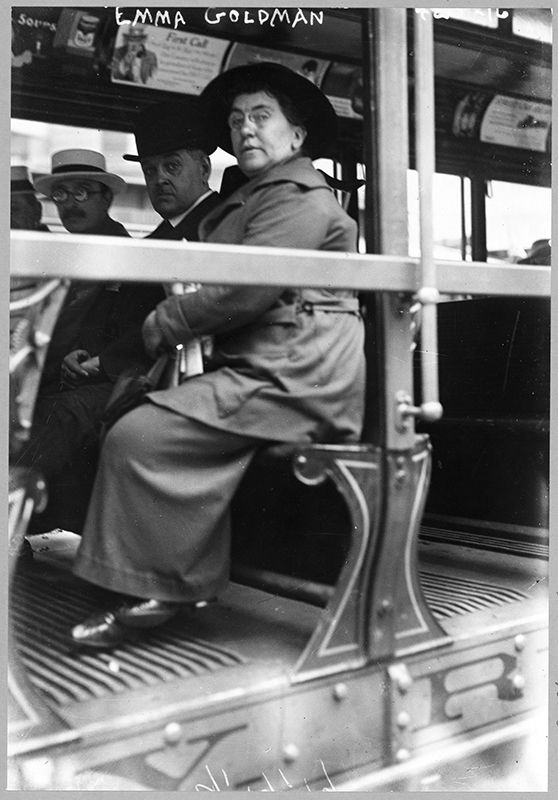
Figure 11.9 Born in Lithuania in 1869, Emma Goldman experienced anti-Semitic persecution before moving to the United States at age 16 and becoming a factory worker. She was quickly introduced to the anarchist movement and became a prolific writer and passionate speaker advocating the movement’s principles. (credit: “Emma Goldman on a Street Car, Library of Congress)
図11.9 1869年にリトアニアで生まれたエマ・ゴールドマンは、反ユダヤ的迫害を経験した後、16歳でアメリカに移り、工場労働者となった。まもなく無政府主義運動に出会い、その原理を擁護する多作な著述家、情熱的な演説家になった。(クレジット:“Emma Goldman on a Street Car”、Library of Congress)
Anarchism and Feminism無政府主義とフェミニズム
Within anarchism, anarcha-feminism seeks to fight against gendered concepts that create inequity. Traditional gender roles only serve to cement unequal power distribution and further the class divide. Particularly, traditional concepts of women’s role in the domestic sphere mirror the depersonalization of the worker, with the woman seen as an extension of the home and domestic labor, rather than an independent autonomous person. It is worth noting that anarcha-feminism is in direct opposition to Proudhon, who believed that family was an essential aspect of society and that the traditional role of women within the family was necessary for its success (Proudhon 1875).
英語のヒント
無政府主義の中で、アナーカ・フェミニズムは、不公正を生む、ジェンダー化された概念と闘おうとする。伝統的なジェンダー役割は、不平等な権力分配を固定し、階級の分断を深めることにしか役立たない。とくに、家庭領域における女性の役割についての伝統的概念は、労働者の非人格化を映し出す。女性は独立した自律的な人格ではなく、家庭と家事労働の延長として見られるからである。アナーカ・フェミニズムが、プルードンと正面から対立することにも注意が必要である。プルードンは、家族は社会の不可欠な側面であり、家族内の女性の伝統的役割が、その成功に必要だと考えていた(Proudhon 1875)。
The author and poet bell hooks believes that the concerns driving anarchism can provide a motivation for current social action. She notes that the gaps between the rich and the poor are widening in the United States and that because of the “feminization of poverty” (by which she means the inequality in living standards due to gender pay disparity), a grassroots radical feminist movement is needed “that can build on the strength of the past, including the positive gains generated by reforms, while offering meaningful interrogation of existing feminist theory that was simply wrongminded while offering us new strategies” (hooks 2000, 43). She sees such a “visionary movement” (43) as grounded in the real-life conditions experienced by working-class and impoverished women.
英語のヒント
作家・詩人のベル・フックスは、無政府主義を動かす関心が、現在の社会的行動の動機となりうると考える。彼女は、アメリカでは富裕層と貧困層の格差が広がっていることを指摘する。また、「貧困の女性化」、つまり、ジェンダーによる賃金格差から生じる生活水準の不平等のために、草の根の急進的なフェミニズム運動が必要だと述べる。それは、「改革が生んだ前向きな成果も含め、過去の強みを土台としながら、単に考え方が誤っていた既存のフェミニズム理論を意味ある形で問い直し、新しい戦略を与えてくれる」運動である(hooks 2000, 43)。彼女は、そのような「展望をもつ運動」(43)を、労働者階級の女性や貧しい女性が経験する、現実の生活条件に根ざすものと捉える。
Feminists historically have had to fight to make space for themselves within anarchist movements. The Spanish female collective Mujeres Libres formed during the Spanish Civil War (1936–1939) in reaction to what they saw as a dismissal of women’s issues by the anarchist movement. Members of Mujeres Libres sought to support female activists and improve the lives of working-class women through literacy drives, employment programs, and child care facilities in both neighborhoods and factories (Ackelsberg 1985). These and other initiatives that focused on creating opportunities for women helped develop a sense of social engagement and foster a desire for social change.
英語のヒント
歴史上、フェミニストたちは、無政府主義運動の中に自分たちの居場所を作るために闘わねばならなかった。スペインの女性集団ムヘーレス・リブレスは、無政府主義運動が女性の問題を軽視していると考え、それへの反応として、スペイン内戦(1936–1939)中に結成された。ムヘーレス・リブレスの成員は、地域と工場の両方で、識字運動、雇用プログラム、保育施設を通じて、女性活動家を支え、労働者階級の女性の生活を改善しようとした(Ackelsberg 1985)。女性の機会を作ることに重点を置いた、これらをはじめとする取り組みは、社会参加の感覚を育み、社会変革への欲求を育てる助けとなった。
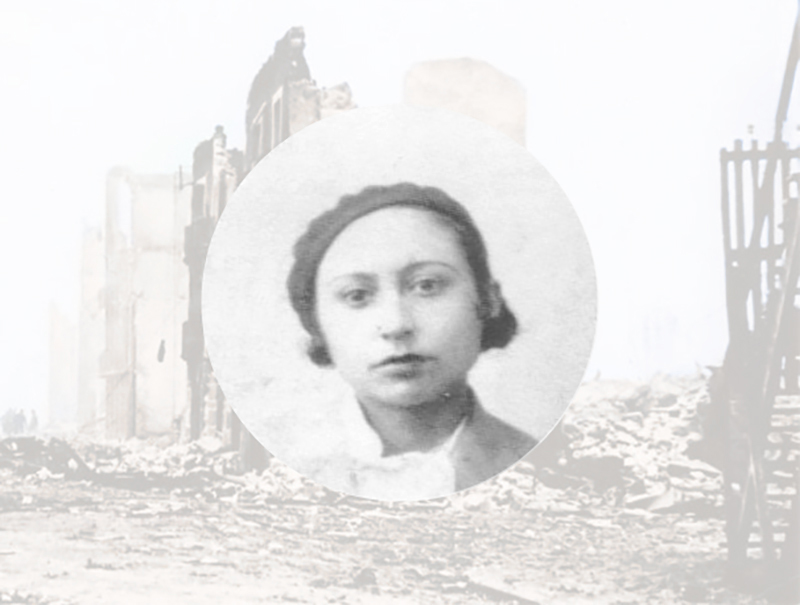
Figure 11.10 Lucía Sánchez Saornil, pictured here in 1933, was a Spanish anarchist and cofounder of Mujeres Libres. (credit: “Lucía Sánchez Saornil in 1933” by Unknown/Wikimedia Commons, CC0 1.0)
図11.10 1933年に撮影されたルシア・サンチェス・サオルニル。スペインの無政府主義者で、ムヘーレス・リブレスの共同創設者である。(クレジット:Unknown/Wikimedia Commonsによる “Lucía Sánchez Saornil in 1933”、CC0 1.0)
Table 11.2 summarizes the political ideologies discussed in this chapter.
表11.2は、本章で論じた政治イデオロギーをまとめている。
Political Ideology 政治イデオロギー |
Description 説明 |
Key Concerns 主な関心 |
|---|---|---|
Conservatism 保守主義 |
Favors institutions and practices that have demonstrated their value over time 時を経て価値を示してきた制度や慣行を重んじる。 |
Favors action at the local level, supports property rights, believes in the importance of self-discipline, sees the role of government as protecting the fundamental values of society 地域の水準での行動を支持し、財産権を支持する。自己規律の重要性を信じ、政府の役割を、社会の基本的価値を守ることと捉える。 |
Liberalism 自由主義 |
Favors limited government on the grounds of utility (different from current meaning of “liberalism” in the United States) 効用を根拠として、政府の権限を限定することを支持する。現在のアメリカでいう「リベラリズム」の意味とは異なる。 |
Attempts to maximize individual liberty, including both negative liberty (the absence of government control) and positive liberty (people’s power to control their own lives) 消極的自由(政府の統制がないこと)と、積極的自由(人々が自らの生活をコントロールする力)の両方を含め、個人の自由を最大化しようとする。 |
Egalitarianism 平等主義 |
Gives primary place to equality 平等に第一の位置を与える。 |
Aims to guarantee equal rights and equal opportunities to all, but not necessarily equal outcomes すべての人に平等な権利と機会を保障することを目指すが、必ずしも結果の平等を目指すわけではない。 |
Socialism 社会主義 |
Favors public ownership and management of goods and resources 財と資源の公共による所有・管理を支持する。 |
Typically allows for the ownership of private property, but gives most control over basic resources to the government 通常は私有財産の所有を認めるが、基本的資源への統制の大半を政府に与える。 |
Anarchism 無政府主義 |
“No ruler” or “no government”; instead of a central government, sees people as capable of governing themselves 「統治者がいない」「政府がない」こと。中央政府の代わりに、人々が自ら統治できると考える。 |
Believes that government is the cause of, rather than the solution to, most problems; views human nature as rational and peaceful 政府はほとんどの問題の解決策ではなく原因だと考える。人間本性を理性的で平和なものと捉える。 |