第5章論理学と推論Logic and Reasoning
Reasoning from Specific Instances to Generalities個別の事例から一般的なことへ推論する
Perhaps I experience several instances of some phenomenon, and I notice that all instances share a similar feature. For example, I have noticed that every year, around the second week of March, the red-winged blackbirds return from wherever they’ve wintering. So I can conclude that generally the red-winged blackbirds return to the area where I live (and observe them) in the second week of March. All my evidence is gathered from particular instances, but my conclusion is a general one. Here is the pattern:
英語のヒント
ある現象を何度か経験して、そのすべてに似た特徴があると気づくことがあるだろう。たとえば私は、毎年3月の第二週頃になると、ハゴロモガラスが越冬していた場所から戻ってくるのに気づいている。そこで、ハゴロモガラスは一般に、私が住んで観察している地域へ、3月の第二週に戻る、と結論できる。証拠はすべて個別の事例から集めているが、結論は一般的なものだ。そのパターンを示す。
Instance1, Instance2, Instance3 . . . Instancen --> Generalization
事例1、事例2、事例3、……、事例n → 一般化
And because each instance serves as a reason in support of the generalization, the instances are premises in the argument form of this type of inductive inference:
各事例が一般化を支持する理由となるので、この種類の帰納的推論を論証の形にすると、事例が前提となる。
Specific to General Inductive Argument Form:
個別から一般への帰納的論証の形式:
Instance1
事例1
Instance2
事例2
Instance3
事例3
General Conclusion
一般的な結論
Reasoning from Generalities to Specific Instances一般的なことから個別の事例へ推論する
Induction can work in the opposite direction as well: reasoning from accepted generalizations to specific instances. This feature of induction relies on the fact that we are learners and that we learn from past experiences and from one another. Much of what we learn is captured in generalizations. You have probably accepted many generalizations from your parents, teachers, and peers. You probably believe that a red “STOP” sign on the road means that when you are driving and see this sign, you must bring your car to a full stop. You also probably believe that water freezes at 32° Fahrenheit and that smoking cigarettes is bad for you. When you use accepted generalizations to predict or explain things about the world, you are using induction. For example, when you see that the nighttime low is predicted to be 30°F, you may surmise that the water in your birdbath will be frozen when you get up in the morning.
英語のヒント
帰納は逆向きにも働く。受け入れられた一般化から、個別の事例へ推論するのだ。帰納のこの特徴は、私たちが学ぶ存在であり、過去の経験や互いから学ぶという事実に依存する。学ぶことの多くは、一般化の形にまとめられている。あなたも、親、教員、仲間から、多くの一般化を受け入れてきただろう。おそらく、道路の赤い「STOP」標識は、運転中にそれを見たら、車を完全に止めなければならないという意味だと考えているはずである。水は華氏32度で凍り、喫煙は身体に悪いとも考えているだろう。受け入れられた一般化を使い、世界の物事を予測したり説明したりするとき、あなたは帰納を使っている。たとえば、夜間の最低気温が華氏30度と予報されているのを見れば、朝起きると庭の鳥用水浴び鉢の水が凍っているだろうと推測するかもしれない。
Some thought processes use more than one type of inductive inference. Take the following example:
一つの思考過程で、複数の種類の帰納的推論を使うこともある。次の例を見よう。
Every cat I have ever petted doesn’t tolerate its tail being pulled.
これまで私がなでた猫は、どれもしっぽを引っ張られるのを嫌がった。
So this cat probably will not tolerate having its tail pulled.
したがって、この猫も、おそらくしっぽを引っ張られるのを嫌がるだろう。
Notice that this reasoner has gone through a series of instances to make an inference about one additional instance. In doing so, the reasoner implicitly assumed a generalization along the way. The reasoner’s implicit generalization is that no cat likes its tail being pulled. They then use that generalization to determine that they shouldn’t pull the tail of the cat in front of them now. A reasoner can use several instances in their experience as premises to draw a general conclusion and then use that generalization as a premise to draw a conclusion about a specific new instance.
英語のヒント
この推論では、一連の事例をたどって、さらに一つの事例について推論していることに注目してほしい。その途中で、暗黙のうちに一般化を仮定している。それは、しっぽを引っ張られるのが好きな猫はいない、という一般化である。次にそれを使って、今目の前にいる猫のしっぽを引っ張るべきではないと判断している。経験したいくつかの事例を前提に一般的な結論を導き、その一般化を前提にして、新しい個別の事例について結論を導くことができるのだ。
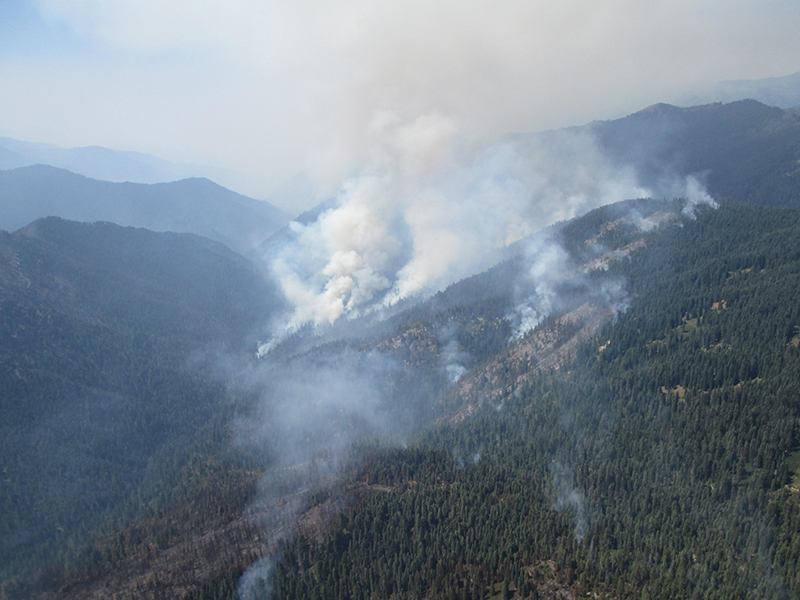
Inductive reasoning finds its way into everyday expressions, such as “Where there is smoke, there is fire.” When people see smoke, they intuitively come to believe that there is fire. This is the result of inductive reasoning. Consider your own thought process as you examine Figure 5.5.
英語のヒント
帰納的推論は、「煙のあるところには火がある」のような日常表現にも入り込んでいる。煙を見ると、人は直観的に、火があると考えるようになる。これは帰納的推論の結果である。図5.5を見ながら、自分自身の思考過程を考えてみてほしい。
Reasoning from Past to Future過去から未来へ推論する
We often use inductive reasoning to predict what will happen in the future. Based on our ample experience of the past, we have a basis for prediction. Reasoning from the past to the future is similar to reasoning from specific instances to generalities. We have experience of events across time, we notice patterns concerning the occurrence of those events at particular times, and then we reason that the event will happen again in the future. For example:
英語のヒント
私たちは、将来何が起きるかを予測するために、帰納的推論をよく使う。過去の豊富な経験が、予測の基盤となる。過去から未来への推論は、個別の事例から一般的なことへの推論に似ている。時間の中で出来事を経験し、その出来事が特定の時点で起きるパターンに気づき、未来にもまた起きるだろうと推論するのだ。たとえば、次のように考える。
I see my neighbor walking her dog every morning. So my neighbor will probably walk her dog this morning.
隣人が毎朝、犬を散歩させるのを見ている。したがって、今朝もおそらく隣人は犬を散歩させるだろう。
Could the person reasoning this way be wrong? Yes—the neighbor could be sick, or the dog could be at the vet. But depending upon the regularity of the morning dog walks and on the number of instances (say the neighbor has walked the dog every morning for the past year), the inference could be strong in spite of the fact that it is possible for it to be wrong.
英語のヒント
このように推論する人が間違うことはありうるか。ある。隣人が病気かもしれないし、犬が動物病院にいるかもしれない。しかし、朝の犬の散歩の規則性と事例の数、たとえば過去一年間、毎朝散歩していたかどうかによっては、誤りうるという事実にもかかわらず、推論は強いものになりうる。
Strong Inductive Inferences強い帰納的推論
The strength of inductive inferences depends upon the reliability of premises given as evidence and their relation to the conclusions drawn. A strong inductive inference is one where, if the evidence offered is true, then the conclusion is probably true. A weak inductive inference is one where, if the evidence offered is true, the conclusion is not probably true. But just how strong an inference needs to be to be considered good is context dependent. The word “probably” is vague. If something is more probable than not, then it needs at least a 51 percent chance of happening. However, in most instances, we would expect to have a much higher probability bar to consider an inference to be strong. As an example of this context dependence, compare the probability accepted as strong in gambling to the much higher probability of accuracy we expect in determining guilt in a court of law.
英語のヒント
帰納的推論の強さは、証拠として示される前提の信頼性と、それらが導かれる結論にどう関係するかに依存する。強い帰納的推論とは、提示された証拠が真ならば、結論もおそらく真である推論である。弱い帰納的推論とは、提示された証拠が真であっても、結論がおそらく真だとはいえない推論である。しかし、適切とみなされるのに、どの程度強くなければならないかは、文脈に依存する。「おそらく」という語は曖昧である。何かが、起こらないよりも起こりやすいなら、その起こる確率は少なくとも51%必要である。しかし、たいていの場合、推論を強いと考えるには、はるかに高い確率の基準を期待する。この文脈依存性の例として、賭博で強いと認められる確率と、法廷で有罪を判断するときに期待される、はるかに高い正確さの確率とを比べてみてほしい。
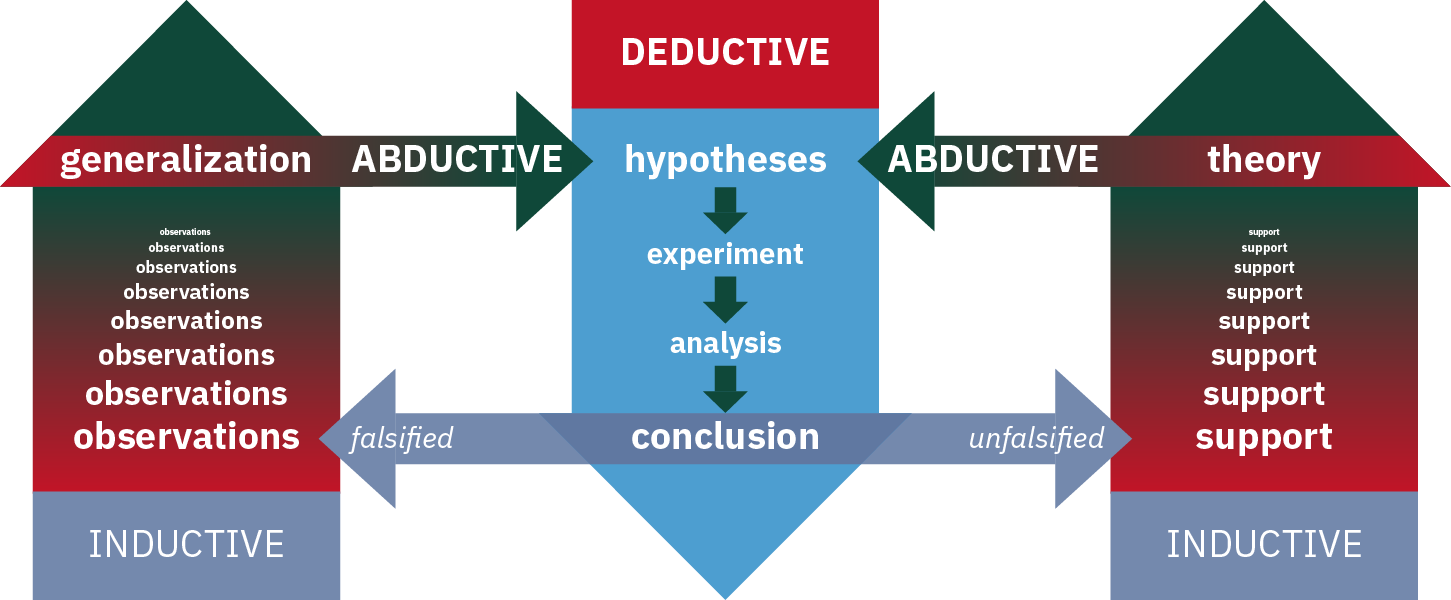
Figure 5.6 illustrates three forms of reasoning are used in the scientific method. Induction is used to glean patterns and generalizations, from which hypotheses are made. Hypotheses are tested, and if they remain unfalsified, induction is used again to assume support for the hypothesis.
英語のヒント
図5.6は、科学的方法で使われる三つの推論の形を示す。帰納によってパターンや一般化を得て、そこから仮説を作る。仮説を検証し、反証されないままであれば、再び帰納を使って、仮説が支持されたと判断する。