第7章化学結合と分子の形
Key Concepts and Summary重要な概念とまとめ
The strength of a covalent bond is measured by its bond dissociation energy, that is, the amount of energy required to break that particular bond in a mole of molecules. Multiple bonds are stronger than single bonds between the same atoms. The enthalpy of a reaction can be estimated based on the energy input required to break bonds and the energy released when new bonds are formed. For ionic bonds, the lattice energy is the energy required to separate one mole of a compound into its gas phase ions. Lattice energy increases for ions with higher charges and shorter distances between ions. Lattice energies are often calculated using the Born-Haber cycle, a thermochemical cycle including all of the energetic steps involved in converting elements into an ionic compound.
共有結合の強さは結合解離エネルギーで測る。これは、分子1 mol中の特定の結合を切るために必要なエネルギーである。同じ原子間では、多重結合のほうが単結合より強い。反応のエンタルピーは、結合を切るために与えるエネルギーと、新しい結合ができる際に放出するエネルギーから見積もれる。イオン結合では、格子エネルギーは化合物1 molを気相のイオンに分離するのに必要なエネルギーである。イオンの電荷が大きく、イオン間距離が短いほど格子エネルギーは大きい。格子エネルギーは、元素からイオン化合物を生成する全段階のエネルギーを含む熱化学的サイクル、ボルン–ハーバーサイクルを用いて計算することが多い。
Key Equations重要な式
Bond energy for a diatomic molecule: 二原子分子の結合エネルギー: |
Enthalpy change: ΔH = ƩDbonds broken – ƩDbonds formed エンタルピー変化:ΔH = ƩDbonds broken − ƩDbonds formed |
Lattice energy for a solid MX: 固体MXの格子エネルギー: |
Lattice energy for an ionic crystal: イオン結晶の格子エネルギー: |
Chemistry End of Chapter Exercises章末問題
Exercises 64–84練習問題 64–84
Exercise 64問題 64
Which bond in each of the following pairs of bonds is the strongest?
次の各組について、どちらの結合が強いか。
(a) C–C or
(a) C–Cと
(b) C–N or
(b) C–Nと
(c) or
(c) と
(d) H–F or H–Cl
(d) H–FとH–Cl
(e) C–H or O–H
(e) C–HとO–H
(f) C–N or C–O
(f) C–NとC–O
Exercise 65問題 65
Using the bond energies in Table 7.2, determine the approximate enthalpy change for each of the following reactions:
表7.2の結合エネルギーを使い、次の各反応のエンタルピー変化の近似値を求めなさい。
(a)
(a)
(b)
(b)
(c)
(c)
Solution解き方
(a) −114 kJ; (b) 30 kJ; (c) −1055 kJ
(a) −114 kJ; (b) 30 kJ; (c) −1055 kJ
Exercise 66問題 66
Exercise 67問題 67
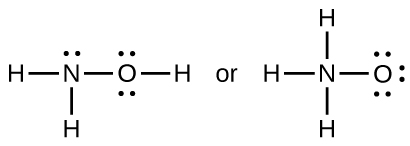
When a molecule can form two different structures, the structure with the stronger bonds is usually the more stable form. Use bond energies to predict the correct structure of the hydroxylamine molecule:
1つの分子について2つの異なる構造が考えられるとき、通常、結合が強い構造のほうが安定である。結合エネルギーを使い、ヒドロキシルアミン分子の正しい構造を予測しなさい。
Solution解き方
The greater bond energy is in the figure on the left. It is the more stable form.
左の図の構造のほうが結合エネルギーが大きく、より安定である。
Exercise 68問題 68
How does the bond energy of HCl(g) differ from the standard enthalpy of formation of HCl(g)?
HCl(g)の結合エネルギーは、HCl(g)の標準生成エンタルピーとどのように異なるか。
Exercise 69問題 69
Using the standard enthalpy of formation data in Appendix G, show how the standard enthalpy of formation of HCl(g) can be used to determine the bond energy.
付録Gの標準生成エンタルピーのデータを用い、HCl(g)の標準生成エンタルピーから結合エネルギーを求める方法を示しなさい。
Solution解き方
Exercise 70問題 70
Using the standard enthalpy of formation data in Appendix G, calculate the bond energy of the carbon-sulfur double bond in CS2.
付録Gの標準生成エンタルピーのデータを用い、CS2中の炭素–硫黄二重結合の結合エネルギーを計算しなさい。
Exercise 71問題 71
Using the standard enthalpy of formation data in Appendix G, determine which bond is stronger: the S–F bond in SF4(g) or in SF6(g)?
付録Gの標準生成エンタルピーのデータを用い、SF4(g)とSF6(g)のどちらのS–F結合が強いかを求めなさい。
Solution解き方
The S–F bond in SF4 is stronger.
SF4のS–F結合のほうが強い。
Exercise 72問題 72
Using the standard enthalpy of formation data in Appendix G, determine which bond is stronger: the P–Cl bond in PCl3(g) or in PCl5(g)?
付録Gの標準生成エンタルピーのデータを用い、PCl3(g)とPCl5(g)のどちらのP–Cl結合が強いかを求めなさい。
Exercise 73問題 73
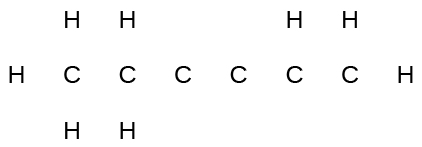
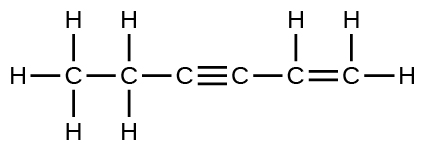
Complete the following Lewis structure by adding bonds (not atoms), and then indicate the longest bond:
次のルイス構造に結合を加えて完成させ、最も長い結合を示しなさい。原子は加えないこと。
Exercise 74問題 74


Exercise 75問題 75
This exercise and its answer are omitted because reusable rights for the third-party material could not be verified.この問題と解答は、第三者の素材の再利用条件を確認できないため、権利の関係で割愛しています。
Exercise 76問題 76
The lattice energy of LiF is 1023 kJ/mol, and the Li–F distance is 200.8 pm. NaF crystallizes in the same structure as LiF but with a Na–F distance of 231 pm. Which of the following values most closely approximates the lattice energy of NaF: 510, 890, 1023, 1175, or 4090 kJ/mol? Explain your choice.
LiFの格子エネルギーは1023 kJ/mol、Li–F間距離は200.8 pmである。NaFはLiFと同じ構造の結晶になるが、Na–F間距離は231 pmである。NaFの格子エネルギーに最も近いのは、510、890、1023、1175、4090 kJ/molのどれか。選んだ理由を説明しなさい。
Exercise 77問題 77
For which of the following substances is the least energy required to convert one mole of the solid into separate ions?
次の物質のうち、固体1 molを個々のイオンに変えるのに必要なエネルギーが最も小さいのはどれか。
(a) MgO
(a) MgO
(b) SrO
(b) SrO
(c) KF
(c) KF
(d) CsF
(d) CsF
(e) MgF2
(e) MgF2
Solution解き方
(d)
(d)
Exercise 78問題 78
The reaction of a metal, M, with a halogen, X2, proceeds by an exothermic reaction as indicated by this equation: For each of the following, indicate which option will make the reaction more exothermic. Explain your answers.
金属MとハロゲンX2の反応は、次の式で示すように発熱反応として進む。次の各項目について、どちらを選ぶと反応がより発熱的になるかを示し、理由を説明しなさい。
(a) a large radius vs. a small radius for M+2
(a) M+2の半径が大きい場合と小さい場合
(b) a high ionization energy vs. a low ionization energy for M
(b) Mのイオン化エネルギーが高い場合と低い場合
(c) an increasing bond energy for the halogen
(c) ハロゲンの結合エネルギーが増加する場合
(d) a decreasing electron affinity for the halogen
(d) ハロゲンの電子親和力が減少する場合
(e) an increasing size of the anion formed by the halogen
(e) ハロゲンから生じる陰イオンの大きさが増加する場合
Exercise 79問題 79
The lattice energy of LiF is 1023 kJ/mol, and the Li–F distance is 201 pm. MgO crystallizes in the same structure as LiF but with a Mg–O distance of 205 pm. Which of the following values most closely approximates the lattice energy of MgO: 256 kJ/mol, 512 kJ/mol, 1023 kJ/mol, 2046 kJ/mol, or 4008 kJ/mol? Explain your choice.
LiFの格子エネルギーは1023 kJ/mol、Li–F間距離は201 pmである。MgOはLiFと同じ構造の結晶になるが、Mg–O間距離は205 pmである。MgOの格子エネルギーに最も近いのは、256、512、1023、2046、4008 kJ/molのどれか。選んだ理由を説明しなさい。
Solution解き方
4008 kJ/mol; both ions in MgO have twice the charge of the ions in LiF; the bond length is very similar and both have the same structure; a quadrupling of the energy is expected based on the equation for lattice energy
4008 kJ/mol。MgOの両方のイオンは、LiFのイオンの2倍の電荷をもつ。結合長は非常に近く、構造も同じなので、格子エネルギーの式から、エネルギーは4倍になると予想される。
Exercise 80問題 80
Which compound in each of the following pairs has the larger lattice energy? Note: Mg2+ and Li+ have similar radii; O2– and F– have similar radii. Explain your choices.
次の各組で、格子エネルギーが大きいのはどちらの化合物か。選んだ理由を説明しなさい。ただし、Mg2+とLi+の半径は近く、O2–とF–の半径も近い。
(a) MgO or MgSe
(a) MgOとMgSe
(b) LiF or MgO
(b) LiFとMgO
(c) Li2O or LiCl
(c) Li2OとLiCl
(d) Li2Se or MgO
(d) Li2SeとMgO
Exercise 81問題 81
Which compound in each of the following pairs has the larger lattice energy? Note: Ba2+ and
次の各組で、格子エネルギーが大きいのはどちらの化合物か。ただし、Ba2+と
K+ have similar radii; S2– and Cl– have similar radii. Explain your choices.
K+の半径は近く、S2–とCl–の半径も近い。選んだ理由を説明しなさい。
(a) K2O or Na2O
(a) K2OとNa2O
(b) K2S or BaS
(b) K2SとBaS
(c) KCl or BaS
(c) KClとBaS
(d) BaS or BaCl2
(d) BaSとBaCl2
Solution解き方
(a) Na2O; Na+ has a smaller radius than K+; (b) BaS; Ba has a larger charge than K; (c) BaS; Ba and S have larger charges; (d) BaS; S has a larger charge
(a) Na2O。Na+の半径がK+より小さいため。(b) BaS。Baの電荷がKより大きいため。(c) BaS。BaもSも電荷が大きいため。(d) BaS。Sの電荷が大きいため。
Exercise 82問題 82
Which of the following compounds requires the most energy to convert one mole of the solid into separate ions?
次の化合物のうち、固体1 molを個々のイオンに変えるのに最も多くのエネルギーが必要なのはどれか。
(a) MgO
(a) MgO
(b) SrO
(b) SrO
(c) KF
(c) KF
(d) CsF
(d) CsF
(e) MgF2
(e) MgF2
Exercise 83問題 83
Which of the following compounds requires the most energy to convert one mole of the solid into separate ions?
次の化合物のうち、固体1 molを個々のイオンに変えるのに最も多くのエネルギーが必要なのはどれか。
(a) K2S
(a) K2S
(b) K2O
(b) K2O
(c) CaS
(c) CaS
(d) Cs2S
(d) Cs2S
(e) CaO
(e) CaO
Solution解き方
(e)
(e)
Exercise 84問題 84
The lattice energy of KF is 794 kJ/mol, and the interionic distance is 269 pm. The Na–F
KFの格子エネルギーは794 kJ/mol、イオン間距離は269 pmである。NaFのNa–F間の
distance in NaF, which has the same structure as KF, is 231 pm. Which of the following values is the closest approximation of the lattice energy of NaF: 682 kJ/mol, 794 kJ/mol, 924 kJ/mol, 1588 kJ/mol, or 3175 kJ/mol? Explain your answer.
距離は231 pmで、NaFはKFと同じ構造をもつ。NaFの格子エネルギーに最も近いのは、682、794、924、1588、3175 kJ/molのどれか。理由を説明しなさい。
bond energy
結合エネルギー
(also, bond dissociation energy) energy required to break a covalent bond in a gaseous substance
気体の物質中の共有結合を切るのに必要なエネルギー。結合解離エネルギーともいう。
Born-Haber cycle
ボルン・ハーバーサイクル
thermochemical cycle relating the various energetic steps involved in the formation of an ionic solid from the relevant elements
対応する元素からイオン結晶が生成するときの、エネルギーの関わる各段階を結び付けた熱化学サイクル。
lattice energy (ΔHlattice)
格子エネルギー(ΔHlattice)
energy required to separate one mole of an ionic solid into its component gaseous ions
イオン結晶1モルを、構成成分である気体のイオンに分離するのに必要なエネルギー。