第7章化学結合と分子の形
Writing Lewis Structures with the Octet Ruleオクテット則を使ってルイス構造を書く
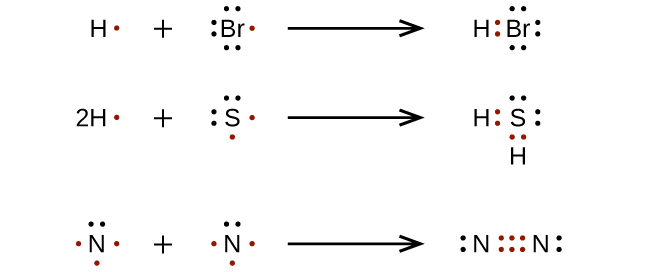
For very simple molecules and molecular ions, we can write the Lewis structures by merely pairing up the unpaired electrons on the constituent atoms. See these examples:
英語のヒント
ごく単純な分子や分子イオンでは、構成原子の不対電子どうしを対にするだけで、ルイス構造を書ける。次の例を見てみよう。
For more complicated molecules and molecular ions, it is helpful to follow the step-by-step procedure outlined here:
英語のヒント
より複雑な分子や分子イオンでは、次の段階的な手順に従うとよい。
- Determine the total number of valence (outer shell) electrons. For cations, subtract one electron for each positive charge. For anions, add one electron for each negative charge.価電子(最外殻電子)の総数を求める。陽イオンでは、正電荷1つにつき電子を1個引く。陰イオンでは、負電荷1つにつき電子を1個加える。
- Draw a skeleton structure of the molecule or ion, arranging the atoms around a central atom. (Generally, the least electronegative element should be placed in the center.) Connect each atom to the central atom with a single bond (one electron pair).
英語のヒント
中心原子の周りに原子を配置し、分子またはイオンの骨格構造を書く。一般に、電気陰性度が最も小さい元素を中央に置く。各原子を中心原子と、単結合(電子対1組)でつなぐ。 - Distribute the remaining electrons as lone pairs on the terminal atoms (except hydrogen), completing an octet around each atom.
英語のヒント
残りの電子を、末端の原子(水素を除く)の非共有電子対として配分し、各原子の周りをオクテットにする。 - Place all remaining electrons on the central atom.それでも残った電子をすべて中心原子に置く。
- Rearrange the electrons of the outer atoms to make multiple bonds with the central atom in order to obtain octets wherever possible.
英語のヒント
可能なかぎりオクテットを満たすため、外側の原子の電子を並べ替え、中心原子との間に多重結合をつくる。
Let us determine the Lewis structures of SiH4, NO+, and OF2 as examples in following this procedure:
この手順を用いる例として、SiH4、、NO+、OF2のルイス構造を求めよう。
- Determine the total number of valence (outer shell) electrons in the molecule or ion.分子またはイオンの価電子(最外殻電子)の総数を求める。
- For a molecule, we add the number of valence electrons on each atom in the molecule:分子の場合、分子をつくる各原子の価電子数を足す。
- For a negative ion, such as we add the number of valence electrons on the atoms to the number of negative charges on the ion (one electron is gained for each single negative charge):のような陰イオンでは、各原子の価電子数の合計に、イオンの負電荷の数を加える。負電荷1つにつき電子を1個受け取っているためである。
- For a positive ion, such as NO+, we add the number of valence electrons on the atoms in the ion and then subtract the number of positive charges on the ion (one electron is lost for each single positive charge) from the total number of valence electrons:NO+のような陽イオンでは、イオンをつくる各原子の価電子数を足し、その総数からイオンの正電荷の数を引く。正電荷1つにつき電子を1個失っているためである。
- Since OF2 is a neutral molecule, we simply add the number of valence electrons:OF2は中性分子なので、単純に価電子数を足し合わせる。
- Draw a skeleton structure of the molecule or ion, arranging the atoms around a central atom and connecting each atom to the central atom with a single (one electron pair) bond. (Note that we denote ions with brackets around the structure, indicating the charge outside the brackets:)中心原子の周りに各原子を配置し、それぞれを中心原子と単結合(電子対1組)でつないで、分子またはイオンの骨格構造を書く。イオンを示すときは構造を角括弧で囲み、その外側に電荷を書くことに注意しよう。
When several arrangements of atoms are possible, as for we must use experimental evidence to choose the correct one. In general, the less electronegative elements are more likely to be central atoms. In the less electronegative carbon atom occupies the central position with the oxygen and hydrogen atoms surrounding it. Other examples include P in POCl3, S in SO2, and Cl in An exception is that hydrogen is almost never a central atom. As the most electronegative element, fluorine also cannot be a central atom.英語のヒント
のように複数の原子配置が考えられる場合、正しいものを選ぶには実験的な証拠を使わなければならない。一般に、電気陰性度の小さい元素ほど中心原子になりやすい。では、電気陰性度の小さい炭素原子が中央を占め、酸素原子と水素原子が周りを囲む。他の例には、POCl3のP、SO2のS、のClがある。例外として、水素はほぼ決して中心原子にならない。また、フッ素は電気陰性度が最も大きい元素なので、中心原子になれない。 - Distribute the remaining electrons as lone pairs on the terminal atoms (except hydrogen) to complete their valence shells with an octet of electrons.残りの電子を末端原子(水素を除く)の非共有電子対として配分し、それぞれの価電子殻を8個の電子で満たす。
- There are no remaining electrons on SiH4, so it is unchanged:SiH4には残りの電子がないので、そのままである。
- Place all remaining electrons on the central atom.残った電子をすべて中心原子に置く。
- For SiH4, and NO+, there are no remaining electrons; we already placed all of the electrons determined in Step 1.SiH4、、NO+では、残りの電子はない。手順1で求めた電子を、すでにすべて配置している。
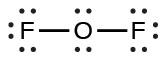
- For OF2, we had 16 electrons remaining in Step 3, and we placed 12, leaving 4 to be placed on the central atom:OF2では、手順3で残っていた16個の電子のうち12個を配置した。残る4個を中心原子に置く。
- Rearrange the electrons of the outer atoms to make multiple bonds with the central atom in order to obtain octets wherever possible.可能なかぎりオクテットを満たすため、外側の原子の電子を並べ替え、中心原子との間に多重結合をつくる。
- SiH4: Si already has an octet, so nothing needs to be done.SiH4:Siはすでにオクテットになっているので、変更する必要はない。
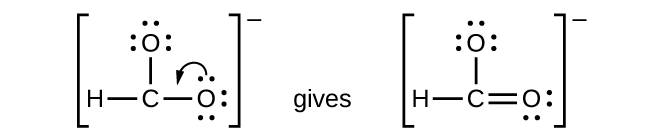
- We have distributed the valence electrons as lone pairs on the oxygen atoms, but the carbon atom lacks an octet:
英語のヒント
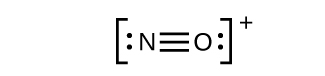
:価電子を酸素原子の非共有電子対として配分したが、炭素原子はオクテットに達していない。 - NO+: For this ion, we added eight valence electrons, but neither atom has an octet. We cannot add any more electrons since we have already used the total that we found in Step 1, so we must move electrons to form a multiple bond:
英語のヒント
NO+:このイオンには8個の価電子を追加したが、どちらの原子もオクテットになっていない。手順1で求めた総数をすでに使い切っているので、これ以上電子を加えることはできない。したがって、電子を移して多重結合をつくらなければならない。
This still does not produce an octet, so we must move another pair, forming a triple bond:これでもまだオクテットにならないので、もう1組の電子対を移して三重結合にする。 - In OF2, each atom has an octet as drawn, so nothing changes.OF2は、描いたままの状態ですべての原子がオクテットになっているので、変更しない。



Example 7.4例題 7.4
Writing Lewis Structuresルイス構造を書く
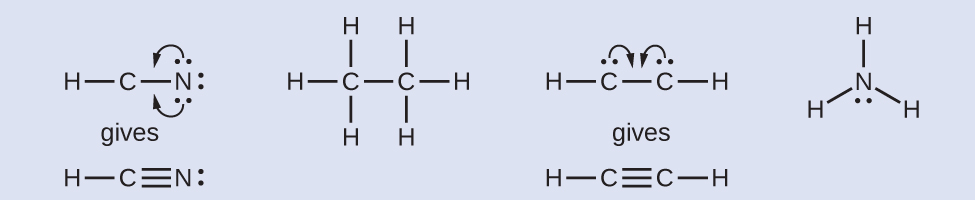
NASA’s Cassini-Huygens mission detected a large cloud of toxic hydrogen cyanide (HCN) on Titan, one of Saturn’s moons. Titan also contains ethane (H3CCH3), acetylene (HCCH), and ammonia (NH3). What are the Lewis structures of these molecules?
英語のヒント
NASAのカッシーニ・ホイヘンス探査では、土星の衛星の1つであるタイタンに、有毒なシアン化水素(HCN)の大きな雲が検出された。タイタンには、エタン(H3CCH3)、アセチレン(HCCH)、アンモニア(NH3)も存在する。これらの分子のルイス構造はどうなるか。
Solution解答
- Calculate the number of valence electrons.
HCN: (1 1) + (4 1) + (5 1) = 10
H3CCH3: (1 3) + (2 4) + (1 3) = 14
HCCH: (1 1) + (2 4) + (1 1) = 10
NH3: (5 1) + (3 1) = 8価電子数を計算する。HCN:(1 1) + (4 1) + (5 1) = 10H3CCH3:(1 3) + (2 4) + (1 3) = 14HCCH:(1 1) + (2 4) + (1 1) = 10NH3:(5 1) + (3 1) = 8 - Draw a skeleton and connect the atoms with single bonds. Remember that H is never a central atom:骨格を書き、原子を単結合でつなぐ。Hは決して中心原子にならないことを思い出そう。
- Where needed, distribute electrons to the terminal atoms:必要な場合は、末端原子に電子を配分する。
HCN: six electrons placed on N
H3CCH3: no electrons remain
HCCH: no terminal atoms capable of accepting electrons
NH3: no terminal atoms capable of accepting electronsHCN:Nに電子6個を配置する。H3CCH3:残りの電子はない。HCCH:電子を受け入れられる末端原子はない。NH3:電子を受け入れられる末端原子はない。 - Where needed, place remaining electrons on the central atom:必要な場合は、残りの電子を中心原子に置く。
HCN: no electrons remain
H3CCH3: no electrons remain
HCCH: four electrons placed on carbon
NH3: two electrons placed on nitrogenHCN:残りの電子はない。H3CCH3:残りの電子はない。HCCH:炭素に電子4個を配置する。NH3:窒素に電子2個を配置する。 - Where needed, rearrange electrons to form multiple bonds in order to obtain an octet on each atom:
HCN: form two more C–N bonds
H3CCH3: all atoms have the correct number of electrons
HCCH: form a triple bond between the two carbon atoms
NH3: all atoms have the correct number of electrons必要な場合は、各原子をオクテットにするため、電子を並べ替えて多重結合をつくる。HCN:C–N結合をさらに2本つくる。H3CCH3:すべての原子が適切な電子数をもつ。HCCH:2つの炭素原子間を三重結合にする。NH3:すべての原子が適切な電子数をもつ。





Check Your Learning理解を確かめよう
Both carbon monoxide, CO, and carbon dioxide, CO2, are products of the combustion of fossil fuels. Both of these gases also cause problems: CO is toxic and CO2 has been implicated in global climate change. What are the Lewis structures of these two molecules?
英語のヒント
一酸化炭素COと二酸化炭素CO2は、ともに化石燃料の燃焼によって生じる。また、どちらの気体も問題を引き起こす。COは有毒であり、CO2は地球規模の気候変動への関与が指摘されている。これら2つの分子のルイス構造はどうなるか。