第7章化学結合と分子の形
Key Concepts and Summary重要な概念とまとめ
Valence electronic structures can be visualized by drawing Lewis symbols (for atoms and monatomic ions) and Lewis structures (for molecules and polyatomic ions). Lone pairs, unpaired electrons, and single, double, or triple bonds are used to indicate where the valence electrons are located around each atom in a Lewis structure. Most structures—especially those containing second row elements—obey the octet rule, in which every atom (except H) is surrounded by eight electrons. Exceptions to the octet rule occur for odd-electron molecules (free radicals), electron-deficient molecules, and hypervalent molecules.
原子や単原子イオンではルイス記号を、分子や多原子イオンではルイス構造を書くことで、価電子の構造を視覚的に表せる。ルイス構造では、非共有電子対、不対電子、単結合、二重結合、三重結合を使い、各原子の周りで価電子がどこにあるかを示す。ほとんどの構造、特に第2周期の元素を含む構造は、各原子(Hを除く)の周りに電子が8個あるというオクテット則に従う。奇数電子分子(フリーラジカル)、電子不足分子、超原子価分子は、オクテット則の例外となる。
Chemistry End of Chapter Exercises章末問題
Exercises 23–43練習問題 23–43
Exercise 23問題 23
Write the Lewis symbols for each of the following ions:
次の各イオンのルイス記号を書きなさい。
(a) As3–
(a) As3–
(b) I–
(b) I–
(c) Be2+
(c) Be2+
(d) O2–
(d) O2–
(e) Ga3+
(e) Ga3+
(f) Li+
(f) Li+
(g) N3–
(g) N3–
Solution解き方
(a) eight electrons:
(a) 電子8個:

(b) eight electrons:
(b) 電子8個:

(c) no electrons Be2+
(d) eight electrons:
(c) 電子なし:Be2+(d) 電子8個:

(e) no electrons Ga3+
(f) no electrons Li+
(g) eight electrons:
(e) 電子なし:Ga3+(f) 電子なし:Li+(g) 電子8個:

Exercise 24問題 24
Many monatomic ions are found in seawater, including the ions formed from the following list of elements. Write the Lewis symbols for the monatomic ions formed from the following elements:
海水には、次の元素からできるイオンを含め、多くの単原子イオンが存在する。次の元素からできる単原子イオンのルイス記号を書きなさい。
(a) Cl
(a) Cl
(b) Na
(b) Na
(c) Mg
(c) Mg
(d) Ca
(d) Ca
(e) K
(e) K
(f) Br
(f) Br
(g) Sr
(g) Sr
(h) F
(h) F
Exercise 25問題 25
Write the Lewis symbols of the ions in each of the following ionic compounds and the Lewis symbols of the atom from which they are formed:
次の各イオン化合物に含まれるイオンのルイス記号と、それらのイオンになる前の原子のルイス記号を書きなさい。
(a) MgS
(a) MgS
(b) Al2O3
(b) Al2O3
(c) GaCl3
(c) GaCl3
(d) K2O
(d) K2O
(e) Li3N
(e) Li3N
(f) KF
(f) KF
Solution解き方
(a)
(a)

(b)
(b)

(c)
(c)

(d)
(d)

(e)
(e)

(f)
(f)

Exercise 26問題 26
In the Lewis structures listed here, M and X represent various elements in the third period of the periodic table. Write the formula of each compound using the chemical symbols of each element:
ここに示すルイス構造で、MとXは周期表の第3周期にあるさまざまな元素を表す。それぞれの元素記号を使い、各化合物の化学式を書きなさい。


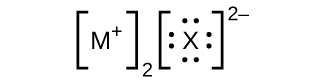
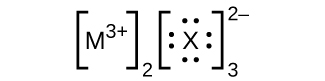
Exercise 27問題 27
Write the Lewis structure for the diatomic molecule P2, an unstable form of phosphorus found in high-temperature phosphorus vapor.
英語のヒント
高温のリン蒸気中に見られる、リンの不安定な形態である二原子分子P2のルイス構造を書きなさい。

Exercise 28問題 28
Write Lewis structures for the following:
次のルイス構造を書きなさい。
(a) H2
(a) H2
(b) HBr
(b) HBr
(c) PCl3
(c) PCl3
(d) SF2
(d) SF2
(e) H2CCH2
(e) H2CCH2
(f) HNNH
(f) HNNH
(g) H2CNH
(g) H2CNH
(h) NO–
(h) NO–
(i) N2
(i) N2
(j) CO
(j) CO
(k) CN–
(k) CN–
Exercise 29問題 29
Write Lewis structures for the following:
次のルイス構造を書きなさい。
(a) O2
(a) O2
(b) H2CO
(b) H2CO
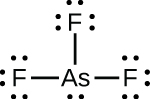
(c) AsF3
(c) AsF3
(d) ClNO
(d) ClNO
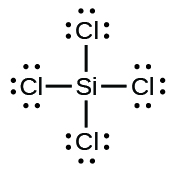
(e) SiCl4
(e) SiCl4
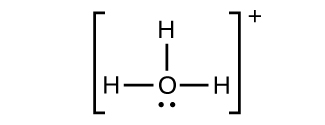
(f) H3O+
(f) H3O+
(g)
(g)
(h)
(h)
(i) HCCH
(i) HCCH
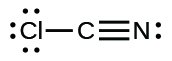
(j) ClCN
(j) ClCN
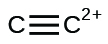
(k)
(k)
Solution解き方
(a)
(a)
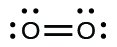
In this case, the Lewis structure is inadequate to depict the fact that experimental studies have shown two unpaired electrons in each oxygen molecule.
(b)
英語のヒント
実験研究により、それぞれの酸素分子に2個の不対電子があることがわかっている。この場合、ルイス構造ではその事実を十分に表せない。(b)
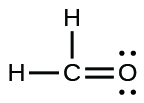
(c)
(c)
(d)
(d)

(e)
(e)
(f)
(f)
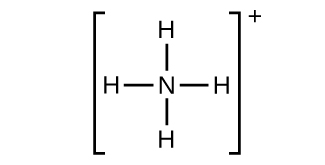
(g)
(g)
(h)
(h)
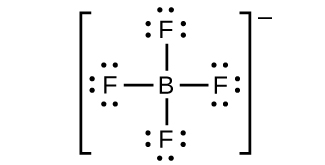
(i)
(i)

(j)
(j)
(k)
(k)
Exercise 30問題 30
Write Lewis structures for the following:
次のルイス構造を書きなさい。
(a) ClF3
(a) ClF3
(b) PCl5
(b) PCl5
(c) BF3
(c) BF3
(d)
(d)
Exercise 31問題 31
Write Lewis structures for the following:
次のルイス構造を書きなさい。
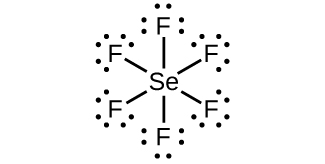
(a) SeF6
(a) SeF6
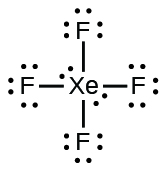
(b) XeF4
(b) XeF4
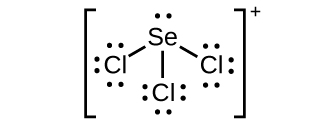
(c)
(c)
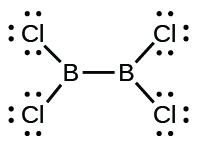
(d) Cl2BBCl2 (contains a B–B bond)
(d) Cl2BBCl2(B–B結合を含む)
Solution解き方
(a) SeF6:
(a) SeF6:
(b) XeF4:
(b) XeF4:
(c)
(c)
(d) Cl2BBCl2:
(d) Cl2BBCl2:
Exercise 32問題 32
Write Lewis structures for:
次のルイス構造を書きなさい。
(a)
(a)
(b)
(b)
(c)
(c)
(d) HONO
(d) HONO
Exercise 33問題 33
Correct the following statement: “The bonds in solid PbCl2 are ionic; the bond in a HCl molecule is covalent. Thus, all of the valence electrons in PbCl2 are located on the Cl– ions, and all of the valence electrons in a HCl molecule are shared between the H and Cl atoms.”
次の記述を正しく直しなさい。「固体のPbCl2の結合はイオン結合で、HCl分子の結合は共有結合である。したがって、PbCl2の価電子はすべてCl–イオン上にあり、HCl分子の価電子はすべてH原子とCl原子の間で共有される。」
Solution解き方
Two valence electrons per Pb atom are transferred to Cl atoms; the resulting Pb2+ ion has a 6s2 valence shell configuration. Two of the valence electrons in the HCl molecule are shared, and the other six are located on the Cl atom as lone pairs of electrons.
Pb原子1個につき価電子2個がCl原子へ移動する。その結果生じたPb2+イオンは、6s2という価電子殻の電子配置をもつ。HCl分子では、価電子のうち2個が共有され、残る6個はCl原子上の非共有電子対となっている。
Exercise 34問題 34
Write Lewis structures for the following molecules or ions:
次の分子またはイオンのルイス構造を書きなさい。
(a) SbH3
(a) SbH3
(b) XeF2
(b) XeF2
(c) Se8 (a cyclic molecule with a ring of eight Se atoms)
(c) Se8(8個のSe原子で環をつくる環状分子)
Exercise 35問題 35
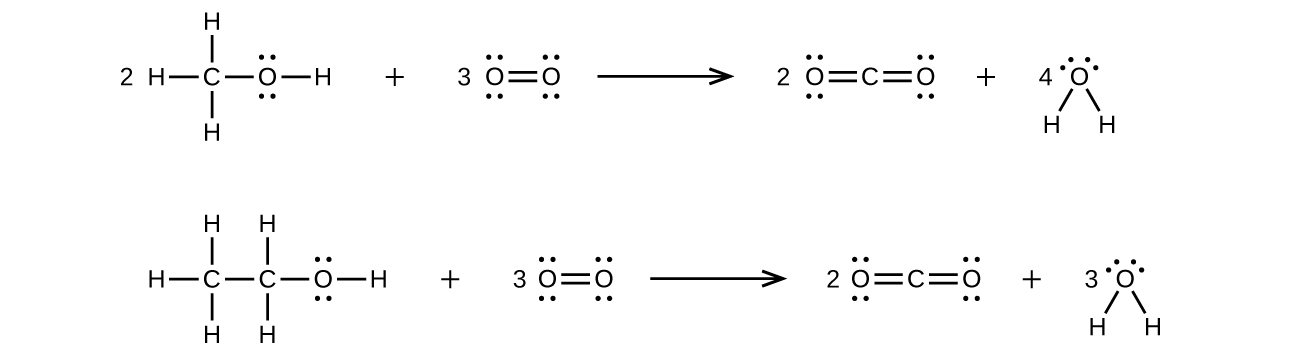
Methanol, H3COH, is used as the fuel in some race cars. Ethanol, C2H5OH, is used extensively as motor fuel in Brazil. Both methanol and ethanol produce CO2 and H2O when they burn. Write the chemical equations for these combustion reactions using Lewis structures instead of chemical formulas.
英語のヒント
メタノールH3COHは、一部のレーシングカーの燃料に用いられる。エタノールC2H5OHは、ブラジルで自動車燃料として広く使われる。メタノールもエタノールも、燃焼するとCO2とH2Oを生じる。化学式の代わりにルイス構造を使い、これらの燃焼反応の化学反応式を書きなさい。
Exercise 36問題 36
Many planets in our solar system contain organic chemicals including methane (CH4) and traces of ethylene (C2H4), ethane (C2H6), propyne (H3CCCH), and diacetylene (HCCCCH). Write the Lewis structures for each of these molecules.
英語のヒント
太陽系の多くの惑星には、メタン(CH4)や、微量のエチレン(C2H4)、エタン(C2H6)、プロピン(H3CCCH)、ジアセチレン(HCCCCH)などの有機化合物が含まれる。これらの分子それぞれのルイス構造を書きなさい。
Exercise 37問題 37
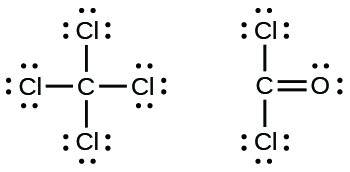
Carbon tetrachloride was formerly used in fire extinguishers for electrical fires. It is no longer used for this purpose because of the formation of the toxic gas phosgene, Cl2CO. Write the Lewis structures for carbon tetrachloride and phosgene.
英語のヒント
四塩化炭素はかつて電気火災用の消火器に使われた。しかし、有毒ガスのホスゲンCl2COが生成するため、この目的にはもはや使われていない。四塩化炭素とホスゲンのルイス構造を書きなさい。
Exercise 38問題 38
Identify the atoms that correspond to each of the following electron configurations. Then, write the Lewis symbol for the common ion formed from each atom:
次の各電子配置に対応する原子を特定しなさい。次に、それぞれの原子から通常生じるイオンのルイス記号を書きなさい。
(a) 1s22s22p5
(a) 1s22s22p5
(b) 1s22s22p63s2
(b) 1s22s22p63s2
(c) 1s22s22p63s23p64s23d10
(c) 1s22s22p63s23p64s23d10
(d) 1s22s22p63s23p64s23d104p4
(d) 1s22s22p63s23p64s23d104p4
(e) 1s22s22p63s23p64s23d104p1
(e) 1s22s22p63s23p64s23d104p1
Exercise 39問題 39
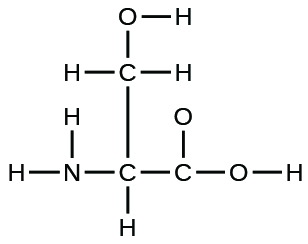
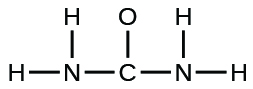
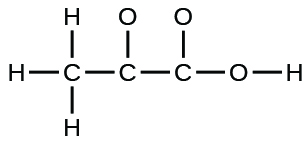
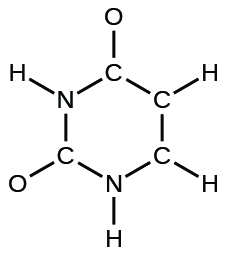
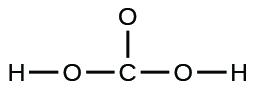
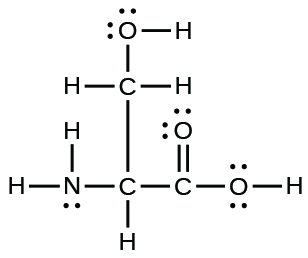
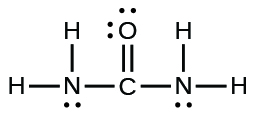
The arrangement of atoms in several biologically important molecules is given here. Complete the Lewis structures of these molecules by adding multiple bonds and lone pairs. Do not add any more atoms.
生物学的に重要ないくつかの分子の原子配列を示す。多重結合と非共有電子対を書き加え、それぞれのルイス構造を完成させなさい。原子は追加しないこと。
(a) the amino acid serine:
(a) アミノ酸のセリン:
(b) urea:
(b) 尿素:
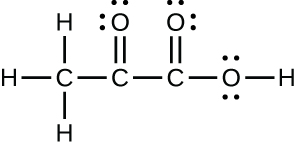
(c) pyruvic acid:
(c) ピルビン酸:
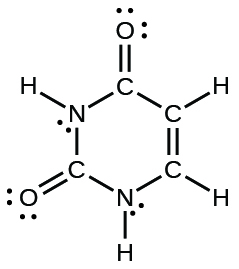
(d) uracil:
(d) ウラシル:
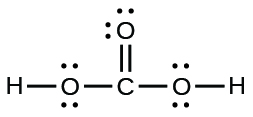
(e) carbonic acid:
(e) 炭酸:
Solution解き方
(a)
(a)
(b)
(b)
(c)
(c)
(d)
(d)
(e)
(e)
Exercise 40問題 40
A compound with a molar mass of about 28 g/mol contains 85.7% carbon and 14.3% hydrogen by mass. Write the Lewis structure for a molecule of the compound.
モル質量が約28 g/molのある化合物は、質量比で炭素85.7%、水素14.3%を含む。この化合物の分子のルイス構造を書きなさい。
Exercise 41問題 41
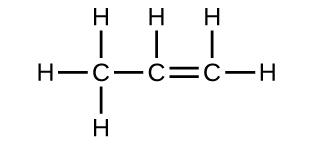
A compound with a molar mass of about 42 g/mol contains 85.7% carbon and 14.3% hydrogen by mass. Write the Lewis structure for a molecule of the compound.
モル質量が約42 g/molのある化合物は、質量比で炭素85.7%、水素14.3%を含む。この化合物の分子のルイス構造を書きなさい。


Exercise 42問題 42
Two arrangements of atoms are possible for a compound with a molar mass of about 45 g/mol that contains 52.2% C, 13.1% H, and 34.7% O by mass. Write the Lewis structures for the two molecules.
モル質量が約45 g/molで、質量比でCを52.2%、Hを13.1%、Oを34.7%含む化合物には、2通りの原子配列が考えられる。その2つの分子のルイス構造を書きなさい。
Exercise 43問題 43
How are single, double, and triple bonds similar? How do they differ?
単結合、二重結合、三重結合は、どの点が似ているか。どの点が異なるか。
Solution解き方
Each bond includes a sharing of electrons between atoms. Two electrons are shared in a single bond; four electrons are shared in a double bond; and six electrons are shared in a triple bond.
いずれの結合でも、原子間で電子を共有する。単結合では電子2個、二重結合では電子4個、三重結合では電子6個を共有する。
double bond
二重結合
covalent bond in which two pairs of electrons are shared between two atoms
2つの原子間で2組の電子対を共有する共有結合。
free radical
フリーラジカル
molecule that contains an odd number of electrons
奇数個の電子を含む分子。
hypervalent molecule
超原子価分子
molecule containing at least one main group element that has more than eight electrons in its valence shell
価電子殻に8個を超える電子をもつ典型元素を、少なくとも1つ含む分子。
Lewis structure
ルイス構造
diagram showing lone pairs and bonding pairs of electrons in a molecule or an ion
分子またはイオンの非共有電子対と結合電子対を示した図。
Lewis symbol
ルイス記号
symbol for an element or monatomic ion that uses a dot to represent each valence electron in the element or ion
元素または単原子イオンの記号で、それぞれの価電子を1つの点で表すもの。
lone pair
非共有電子対
two (a pair of) valence electrons that are not used to form a covalent bond
共有結合の形成に用いられない2個(1対)の価電子。
octet rule
オクテット則
guideline that states main group atoms will form structures in which eight valence electrons interact with each nucleus, counting bonding electrons as interacting with both atoms connected by the bond
典型元素の原子は、各原子核と8個の価電子が相互作用する構造をつくるという指針。結合電子は、その結合でつながる両方の原子と相互作用するものとして数える。
single bond
単結合
bond in which a single pair of electrons is shared between two atoms
2つの原子間で1組の電子対を共有する結合。
triple bond
三重結合
bond in which three pairs of electrons are shared between two atoms
2つの原子間で3組の電子対を共有する結合。