第2章極限
Additional Limit Evaluation Techniques極限を求めるためのさらに進んだ方法
As we have seen, we may evaluate easily the limits of polynomials and limits of some (but not all) rational functions by direct substitution. However, as we saw in the introductory section on limits, it is certainly possible for to exist when is undefined. The following observation allows us to evaluate many limits of this type:
英語のヒント
多項式関数や、一部の有理関数の極限は、そのまま代入すれば簡単に求められた。しかし、極限の導入で見たように、が未定義でもが存在することはある。次の性質を使うと、そのような極限を多く求められる。
If for all over some open interval containing a, then
aを含むある開区間で、aを除くすべてのxについてが成り立つなら、である。
To understand this idea better, consider the limit
この考えをよく理解するため、極限を考えよう。
The function
次の関数を考える。
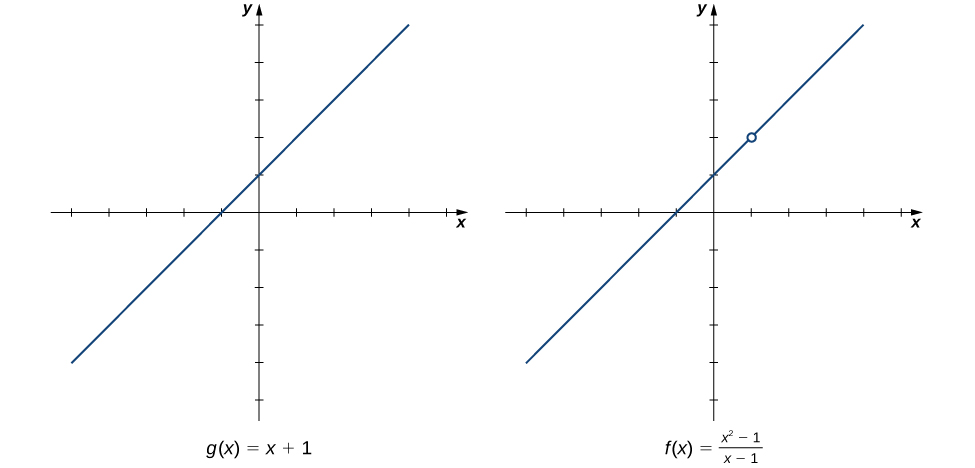
and the function are identical for all values of The graphs of these two functions are shown in Figure 2.24.
この関数とは、を満たすすべての値で一致する。図2.24に、2つのグラフを示す。
OpenStax, Rice University; Calculus Volume 1. · CC BY-NC-SA 4.0
Figure 2.24図 2.24
The graphs of and are identical for all Their limits at 1 are equal.
とのグラフは、で一致し、1での極限も等しい。
We see that
したがって、次のようになる。
The limit has the form where and (In this case, we say that has the indeterminate form The following Problem-Solving Strategy provides a general outline for evaluating limits of this type.
英語のヒント
この極限はの形で、かつとなっている。このとき、はという不定形になるという。次の解法の指針は、この型の極限を求めるための大まかな手順である。
The next examples demonstrate the use of this Problem-Solving Strategy. Example 2.17 illustrates the factor-and-cancel technique; Example 2.18 shows multiplying by a conjugate. In Example 2.19, we look at simplifying a complex fraction.
英語のヒント
Example 2.17例題 2.17
Evaluating a Limit by Factoring and Canceling因数分解と約分によって極限を求める
Evaluate
を求めなさい。
Solution解き方
Step 1. The function is undefined for In fact, if we substitute 3 into the function we get which is indeterminate. Factoring and canceling is a good strategy:
手順1.関数はで未定義である。実際に3を代入すると、不定形になる。ここでは、因数分解して約分する方法が有効である。
Step 2. For all Therefore,
手順2.が成り立つ。したがって、次のようになる。
Step 3. Evaluate using the limit laws:
手順3.極限の法則を使って計算する。
Example 2.18例題 2.18
Evaluating a Limit by Multiplying by a Conjugate共役な式を掛けて極限を求める
Evaluate
を求めなさい。
Solution解き方
Step 1. has the form at −1. Let’s begin by multiplying by the conjugate of on the numerator and denominator:
手順1.は−1での不定形になる。まず、の共役な式であるを、分子と分母の両方に掛ける。
Step 2. We then multiply out the numerator. We don’t multiply out the denominator because we are hoping that the in the denominator cancels out in the end:
手順2.分子を展開する。分母は展開せずに残す。最後に分母のを約分で消せると期待しているからである。
Step 3. Then we cancel:
手順3.約分する。
Step 4. Last, we apply the limit laws:
手順4.最後に、極限の法則を使う。
Example 2.19例題 2.19
Evaluating a Limit by Simplifying a Complex Fraction繁分数を整理して極限を求める
Evaluate
を求めなさい。
Solution解き方
Step 1. has the form at 1. We simplify the algebraic fraction by multiplying by
手順1.は1での不定形になる。を掛けて、分子にある分数を取り除く。
Step 2. Next, we multiply through the numerators. Do not multiply the denominators because we want to be able to cancel the factor
手順2.分子を展開する。分母は展開せず、因子を約分できる形に残す。
Step 3. Then, we simplify the numerator:
手順3.分子を整理する。
Step 4. Now we factor out −1 from the numerator:
手順4.分子から−1をくくり出す。
Step 5. Then, we cancel the common factors of
手順5.共通の因子を約分する。
Step 6. Last, we evaluate using the limit laws:
手順6.最後に、極限の法則を使って求める。
Example 2.20 does not fall neatly into any of the patterns established in the previous examples. However, with a little creativity, we can still use these same techniques.
英語のヒント
例題2.20は、これまでの例題の型にそのまま当てはまらない。しかし、少し工夫すれば、同じ手法を使える。
Example 2.20例題 2.20
Evaluating a Limit When the Limit Laws Do Not Apply極限の法則を直接使えない場合
Evaluate
を求めなさい。
Solution解き方
Both and fail to have a limit at zero. Since neither of the two functions has a limit at zero, we cannot apply the sum law for limits; we must use a different strategy. In this case, we find the limit by performing addition and then applying one of our previous strategies. Observe that
英語のヒント
もも、0での極限を持たない。そのため、和の極限の法則は使えず、別の方法が必要である。この場合は、先に和を計算してから、これまでの方法を使う。次の式変形に注目しよう。
Thus,
したがって、
Let’s now revisit one-sided limits. Simple modifications in the limit laws allow us to apply them to one-sided limits. For example, to apply the limit laws to a limit of the form we require the function to be defined over an open interval of the form for a limit of the form we require the function to be defined over an open interval of the form Example 2.21 illustrates this point.
英語のヒント
ここで、片側極限に戻ろう。極限の法則は、条件を少し変更すれば片側極限にも使える。たとえば、に適用するには、がの形の開区間で定義されていることを要求する。に適用するには、がの形の開区間で定義されていることを要求する。例題2.21で具体的に見よう。
Example 2.21例題 2.21
Evaluating a One-Sided Limit Using the Limit Laws極限の法則を使って片側極限を求める
Evaluate each of the following limits, if possible.
可能なら、次の各極限を求めなさい。
Solution解き方
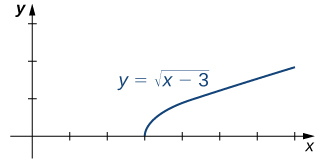
Figure 2.25 illustrates the function and aids in our understanding of these limits.
図2.25にを示す。グラフを見ると、これらの極限を理解しやすい。
OpenStax, Rice University; Calculus Volume 1. · CC BY-NC-SA 4.0
Figure 2.25図 2.25
The graph shows the function
関数のグラフ。
- The function is defined over the interval Since this function is not defined to the left of 3, we cannot apply the limit laws to compute In fact, since is undefined to the left of 3, does not exist.関数の定義域はである。3より左側では定義されないため、を求めるのに極限の法則は使えない。実際、は3の左側で未定義なので、は存在しない。
- Since is defined to the right of 3, the limit laws do apply to By applying these limit laws we obtainは3より右側で定義されているため、には極限の法則を使える。計算すると、を得る。
In Example 2.22 we look at one-sided limits of a piecewise-defined function and use these limits to draw a conclusion about a two-sided limit of the same function.
例題2.22では、区分的に定義された関数の片側極限を求め、それを使って両側極限について結論を出す。
Example 2.22例題 2.22
Evaluating a Two-Sided Limit Using the Limit Laws極限の法則を使って両側極限を求める
For evaluate each of the following limits:
について、次の各極限を求めなさい。
Solution解き方
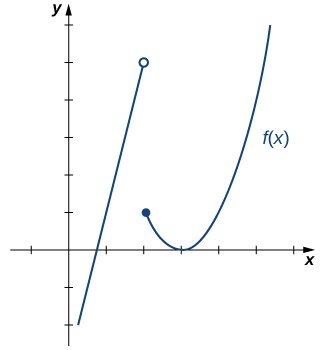
Figure 2.26 illustrates the function and aids in our understanding of these limits.
図2.26にを示す。グラフを見ると、これらの極限を理解しやすい。
OpenStax, Rice University; Calculus Volume 1. · CC BY-NC-SA 4.0
Figure 2.26図 2.26
This graph shows a function
関数のグラフ。
- Since for all x in replace in the limit with and apply the limit laws:区間のすべてのxでなので、極限の中のをに置き換え、極限の法則を使う。
- Since for all x in replace in the limit with and apply the limit laws:区間のすべてのxでなので、極限の中のをに置き換え、極限の法則を使う。
- Since and we conclude that does not exist.とは一致しないため、は存在しない。
We now turn our attention to evaluating a limit of the form where where and That is, has the form at a.
次に、、、を満たす場合の極限を考える。つまり、aでがの形になる場合である。
Example 2.23例題 2.23
Evaluating a Limit of the Form Using the Limit Lawsの形になる極限を求める
Evaluate
を求めなさい。
Solution解き方
Step 1. After substituting in we see that this limit has the form That is, as x approaches 2 from the left, the numerator approaches −1; and the denominator approaches 0. Consequently, the magnitude of becomes infinite. To get a better idea of what the limit is, we need to factor the denominator:
英語のヒント
手順1.を代入すると、の形になる。つまり、xが左から2に近づくと、分子は−1へ、分母は0へ近づく。このため、の絶対値は際限なく大きくなる。正負どちらに発散するかを調べるため、分母を因数分解する。
Step 2. Since is the only part of the denominator that is zero when 2 is substituted, we then separate from the rest of the function:
手順2.分母の因子のうち、2を代入して0になるのはだけである。そこで、を残りの因子から分ける。
Step 3. and Therefore, the product of and has a limit of
手順3.であり、である。したがって、との積はに発散する。