第4章意識の状態
Alcohol and Other Depressantsアルコールとその他の抑制薬
Ethanol, which we commonly refer to as alcohol, is in a class of psychoactive drugs known as depressants (Figure 4.15). A depressant is a drug that tends to suppress central nervous system activity. Other depressants include barbiturates and benzodiazepines. These drugs share in common their ability to serve as agonists of the gamma-Aminobutyric acid (GABA) neurotransmitter system. Because GABA has a quieting effect on the brain, GABA agonists also have a quieting effect; these types of drugs are often prescribed to treat both anxiety and insomnia.
英語のヒント
エタノールは、ふつうアルコールと呼ばれているもので、抑制薬として知られる精神作用薬の一群に属する(図4.15)。抑制薬とは、中枢神経系の活動を抑える傾向のある薬物である。ほかの抑制薬には、バルビツール酸系薬やベンゾジアゼピン系薬がある。これらの薬物に共通するのは、γ-アミノ酪酸(GABA)神経伝達物質系のアゴニストとして働く能力である。GABAは脳を静める作用を持つので、GABAのアゴニストにも静める作用がある。こうした種類の薬物は、不安と不眠症の両方の治療によく処方される。
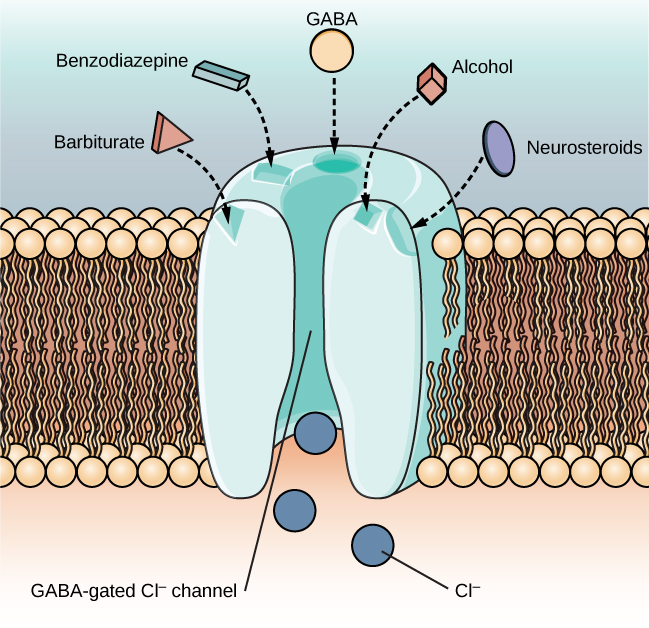
Figure 4.15図 4.15
The GABA-gated chloride (Cl–) channel is embedded in the cell membrane of certain neurons. The channel has multiple receptor sites where alcohol, barbiturates, and benzodiazepines bind to exert their effects. The binding of these molecules opens the chloride channel, allowing negatively-charged chloride ions (Cl–) into the neuron's cell body. Changing its charge in a negative direction pushes the neuron away from firing; thus, activating a GABA neuron has a quieting effect on the brain.
GABAによって開閉する塩化物イオン(Cl–)チャネルは、ある種のニューロンの細胞膜に埋め込まれている。このチャネルには複数の受容部位があり、アルコール、バルビツール酸系薬、ベンゾジアゼピン系薬はそこに結合して作用を及ぼす。これらの分子が結合すると塩化物イオンチャネルが開き、負の電荷を帯びた塩化物イオン(Cl–)がニューロンの細胞体に入る。ニューロンの電荷が負の方向に変わると、ニューロンは発火から遠ざかる方向へ押しやられる。したがって、GABAニューロンを活性化することは、脳を静める作用を持つ。
Acute alcohol administration results in a variety of changes to consciousness. At rather low doses, alcohol use is associated with feelings of euphoria. As the dose increases, people report feeling sedated. Generally, alcohol is associated with decreases in reaction time and visual acuity, lowered levels of alertness, and reduction in behavioral control. With excessive alcohol use, a person might experience a complete loss of consciousness and/or difficulty remembering events that occurred during a period of intoxication (McKim & Hancock, 2013). In addition, if a pregnant person consumes alcohol, their infant may be born with a cluster of birth defects and symptoms collectively called fetal alcohol spectrum disorder (FASD) or fetal alcohol syndrome (FAS).
英語のヒント
アルコールの急性摂取は、意識にさまざまな変化をもたらす。比較的少ない量では、アルコールの使用は多幸感と関連している。量が増えるにつれて、人は鎮静した感じがすると報告する。一般に、アルコールは、反応時間の減少と視力の低下、覚醒度の低下、行動の制御の低下と関連している。アルコールを過度に使用すると、完全に意識を失ったり、酩酊していた間に起きた出来事を思い出せなくなったり(あるいはその両方が起きたり)することがある(McKim & Hancock, 2013)。さらに、妊娠している人がアルコールを摂取すると、その子どもは、胎児性アルコール・スペクトラム障害(FASD)または胎児性アルコール症候群(FAS)と総称される一群の先天異常と症状を持って生まれることがある。
With repeated use of many central nervous system depressants, such as alcohol, a person becomes physically dependent upon the substance and will exhibit signs of both tolerance and withdrawal. Psychological dependence on these drugs is also possible. Therefore, the abuse potential of central nervous system depressants is relatively high.
英語のヒント
アルコールのような中枢神経系の抑制薬の多くでは、繰り返し使用するうちに、人はその物質に身体的に依存するようになり、耐性と離脱の両方の徴候を示すようになる。これらの薬物への精神的依存が生じることもある。したがって、中枢神経系の抑制薬は、乱用の可能性が比較的高い。
Drug withdrawal is usually an aversive experience, and it can be a life-threatening process in individuals who have a long history of very high doses of alcohol and/or barbiturates. This is of such concern that people who are trying to overcome addiction to these substances should only do so under medical supervision.
英語のヒント
薬物の離脱はたいてい嫌悪的な経験であり、アルコールやバルビツール酸系薬(あるいはその両方)を非常に大量に使ってきた長い経歴を持つ人にとっては、命にかかわる過程になりうる。これは非常に大きな懸念であるため、これらの物質への依存症を克服しようとしている人は、医学的な管理のもとでのみそうすべきである。
Stimulants刺激薬
Stimulants are drugs that tend to increase overall levels of neural activity. Many of these drugs act as agonists of the dopamine neurotransmitter system. Dopamine activity is often associated with reward and craving; therefore, drugs that affect dopamine neurotransmission often have abuse liability. Drugs in this category include cocaine, amphetamines (including methamphetamine), cathinones (i.e., bath salts), MDMA (ecstasy), nicotine, and caffeine.
英語のヒント
刺激薬とは、神経活動の全体的な水準を高める傾向のある薬物である。こうした薬物の多くは、ドーパミン神経伝達物質系のアゴニストとして働く。ドーパミンの活動は報酬や渇望と関連していることが多い。そのため、ドーパミンの神経伝達に影響する薬物は、乱用のおそれがあることが多い。この分類に入る薬物には、コカイン、アンフェタミン類(メタンフェタミンを含む)、カチノン類(すなわちバスソルト)、MDMA(エクスタシー)、ニコチン、カフェインがある。
Cocaine can be taken in multiple ways. While many users snort cocaine, intravenous injection and inhalation (smoking) are also common. The freebase version of cocaine, known as crack, is a potent, smokable version of the drug. Like many other stimulants, cocaine agonizes the dopamine neurotransmitter system by blocking the reuptake of dopamine in the neuronal synapse.
英語のヒント
コカインはさまざまな方法で摂取されうる。多くの使用者はコカインを鼻から吸引するが、静脈注射や吸入(喫煙)も一般的である。コカインのフリーベース型はクラックとして知られ、効力が強く、喫煙できる形のコカインである。ほかの多くの刺激薬と同じく、コカインは、ニューロンのシナプスでのドーパミンの再取り込みを阻害することによって、ドーパミン神経伝達物質系を作動させる。
Amphetamines have a mechanism of action quite similar to cocaine in that they block the reuptake of dopamine in addition to stimulating its release (Figure 4.16). While amphetamines are often abused, they are also commonly prescribed to people diagnosed with attention deficit hyperactivity disorder (ADHD). It may seem counterintuitive that stimulant medications are prescribed to treat a disorder that involves hyperactivity, but the therapeutic effect comes from increases in neurotransmitter activity within certain areas of the brain associated with impulse control. These brain areas include the prefrontal cortex and basal ganglia.
英語のヒント
アンフェタミン類は、ドーパミンの放出を促すことに加えてその再取り込みを阻害するという点で、コカインとよく似た作用機序を持つ(図4.16)。アンフェタミン類はよく乱用されるが、注意欠如・多動性障害(ADHD)と診断された人にもよく処方される。多動を伴う障害の治療に刺激薬が処方されるのは直感に反するように思えるかもしれないが、その治療効果は、衝動の制御と関連する脳の特定の領域で神経伝達物質の活動が高まることから生じる。そうした脳の領域には、前頭前野や大脳基底核が含まれる。
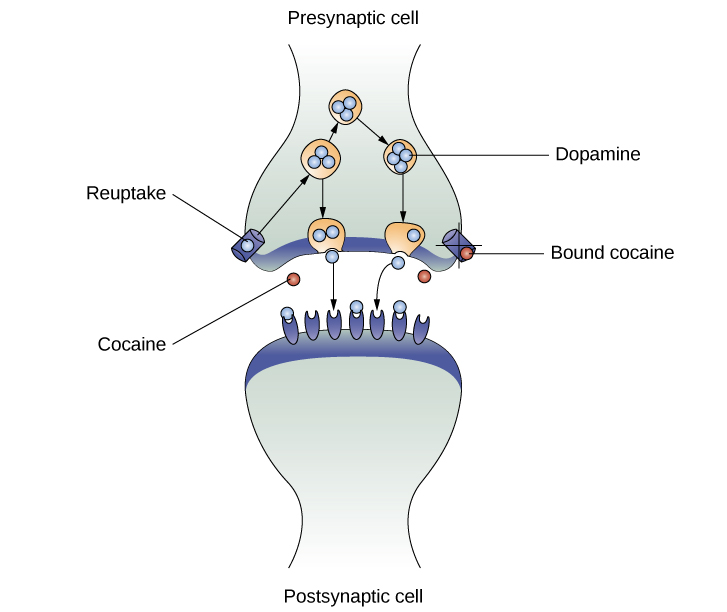


Figure 4.16図 4.16
As one of their mechanisms of action, cocaine and amphetamines block the reuptake of dopamine from the synapse into the presynaptic cell.
作用機序の一つとして、コカインとアンフェタミン類は、シナプスからシナプス前細胞へのドーパミンの再取り込みを阻害する。
In recent years, methamphetamine (meth) use has become increasingly widespread. Methamphetamine is a type of amphetamine that can be made from ingredients that are readily available (e.g., medications containing pseudoephedrine, a compound found in many over-the-counter cold and flu remedies). Despite recent changes in laws designed to make obtaining pseudoephedrine more difficult, methamphetamine continues to be an easily accessible and relatively inexpensive drug option (Shukla, Crump, & Chrisco, 2012).
英語のヒント
近年、メタンフェタミン(メス)の使用はますます広がっている。メタンフェタミンはアンフェタミンの一種で、容易に手に入る原料からつくることができる(たとえば、プソイドエフェドリンを含む薬。プソイドエフェドリンは、風邪やインフルエンザ用の多くの市販薬に含まれる化合物である)。プソイドエフェドリンの入手をより難しくするために最近法律が改正されたにもかかわらず、メタンフェタミンは今も、手に入れやすく比較的安価な薬物の選択肢であり続けている(Shukla, Crump, & Chrisco, 2012)。
Stimulant users seek a euphoric high, feelings of intense elation and pleasure, especially in those users who take the drug via intravenous injection or smoking. MDMA (3.4-methelynedioxy-methamphetamine, commonly known as "ecstasy" or "Molly") is a mild stimulant with perception-altering effects. It is typically consumed in pill form. Users experience increased energy, feelings of pleasure, and emotional warmth. Repeated use of these stimulants can have significant adverse consequences. Users can experience physical symptoms that include nausea, elevated blood pressure, and increased heart rate. In addition, these drugs can cause feelings of anxiety, hallucinations, and paranoia (Fiorentini et al., 2011). Normal brain functioning is altered after repeated use of these drugs. For example, repeated use can lead to overall depletion among the monoamine neurotransmitters (dopamine, norepinephrine, and serotonin). Depletion of certain neurotransmitters can lead to mood dysphoria, cognitive problems, and other factors. This can lead to people compulsively using stimulants such as cocaine and amphetamines, in part to try to reestablish the person's physical and psychological pre-use baseline. (Jayanthi & Ramamoorthy, 2005; Rothman, Blough, & Baumann, 2007).
英語のヒント
刺激薬の使用者は、多幸感、すなわち強烈な高揚感と快感を求める。静脈注射や喫煙によって薬物を摂取する使用者では、とくにそうである。MDMA(3,4-メチレンジオキシメタンフェタミン。一般に「エクスタシー」や「モリー」として知られる)は、知覚を変化させる作用を持つ弱い刺激薬である。ふつうは錠剤の形で摂取される。使用者は、活力の高まり、快感、情緒的な温かさを経験する。これらの刺激薬を繰り返し使用すると、深刻な悪影響が生じうる。使用者は、吐き気、血圧の上昇、心拍数の増加といった身体症状を経験することがある。さらに、これらの薬物は不安感、幻覚、パラノイアを引き起こしうる(Fiorentini et al., 2011)。これらの薬物を繰り返し使用すると、脳の正常な働きが変化する。たとえば、繰り返しの使用は、モノアミン神経伝達物質(ドーパミン、ノルエピネフリン、セロトニン)の全体的な枯渇につながりうる。特定の神経伝達物質の枯渇は、不快気分、認知の問題、その他の要因につながりうる。このことから、人はコカインやアンフェタミン類のような刺激薬を強迫的に使うようになりうる。その一因は、その人の使用前の身体的・心理的な基準の状態を取り戻そうとすることにある(Jayanthi & Ramamoorthy, 2005; Rothman, Blough, & Baumann, 2007)。
Caffeine is another stimulant drug. While it is probably the most commonly used drug in the world, the potency of this particular drug pales in comparison to the other stimulant drugs described in this section. Generally, people use caffeine to maintain increased levels of alertness and arousal. Caffeine is found in many common medicines (such as weight loss drugs), beverages, foods, and even cosmetics (Herman & Herman, 2013). While caffeine may have some indirect effects on dopamine neurotransmission, its primary mechanism of action involves antagonizing adenosine activity (Porkka-Heiskanen, 2011). Adenosine is a neurotransmitter that promotes sleep. Caffeine is an adenosine antagonist, so caffeine inhibits the adenosine receptors, thus decreasing sleepiness and promoting wakefulness.
英語のヒント
カフェインも刺激薬の一つである。カフェインはおそらく世界で最もよく使われている薬物だが、その効力は、この節で述べるほかの刺激薬と比べると見劣りする。一般に、人は覚醒度や覚醒の水準を高く保つためにカフェインを使う。カフェインは、多くの一般的な薬(減量薬など)、飲料、食品、さらには化粧品にまで含まれている(Herman & Herman, 2013)。カフェインは、ドーパミンの神経伝達に間接的な影響を与えることもあるかもしれないが、その主な作用機序は、アデノシンの活動に拮抗することである(Porkka-Heiskanen, 2011)。アデノシンは睡眠を促す神経伝達物質である。カフェインはアデノシンのアンタゴニストなので、アデノシン受容体を阻害し、その結果、眠気を減らして覚醒を促す。
While caffeine is generally considered a relatively safe drug, high blood levels of caffeine can result in insomnia, agitation, muscle twitching, nausea, irregular heartbeat, and even death (Reissig, Strain, & Griffiths, 2009; Wolt, Ganetsky, & Babu, 2012). In 2012, Kromann and Nielson reported on a case study of a 40-year-old woman who suffered significant ill effects from her use of caffeine. The woman used caffeine in the past to boost her mood and to provide energy, but over the course of several years, she increased her caffeine consumption to the point that she was consuming three liters of soda each day. Although she had been taking a prescription antidepressant, her symptoms of depression continued to worsen and she began to suffer physically, displaying significant warning signs of cardiovascular disease and diabetes. Upon admission to an outpatient clinic for treatment of mood disorders, she met all of the diagnostic criteria for substance dependence and was advised to dramatically limit her caffeine intake. Once she was able to limit her use to less than 12 ounces of soda a day, both her mental and physical health gradually improved. Despite the prevalence of caffeine use and the large number of people who confess to suffering from caffeine addiction, this was the first published description of soda dependence appearing in scientific literature.
英語のヒント
カフェインは一般に比較的安全な薬物とみなされているが、血中のカフェイン濃度が高くなると、不眠症、焦燥、筋肉のけいれん、吐き気、不整脈が生じ、死に至ることさえある(Reissig, Strain, & Griffiths, 2009; Wolt, Ganetsky, & Babu, 2012)。2012年、クロマンとニールソンは、カフェインの使用によって深刻な悪影響を受けた40歳の女性についての事例研究を報告した。この女性は以前、気分を高め、活力を得るためにカフェインを使っていたが、数年のうちにカフェインの摂取量を増やしていき、ついには毎日3リットルのソーダを飲むまでになった。処方された抗うつ薬を服用していたにもかかわらず、彼女の抑うつ症状は悪化し続け、身体にも苦しみが現れはじめ、心血管疾患や糖尿病の重大な警告徴候を示すようになった。気分障害の治療のために外来クリニックを受診した時点で、彼女は物質依存の診断基準をすべて満たしており、カフェインの摂取を大幅に制限するよう助言された。ソーダの摂取を1日12オンス未満に抑えられるようになると、心の健康も身体の健康も徐々に改善した。カフェインの使用がこれほど広まり、カフェイン依存症に苦しんでいると打ち明ける人が大勢いるにもかかわらず、これは、科学文献に掲載されたソーダ依存についての最初の記述だった。
Nicotine is highly addictive, and the use of tobacco products is associated with increased risks of heart disease, stroke, and a variety of cancers. Nicotine exerts its effects through its interaction with acetylcholine receptors. Acetylcholine functions as a neurotransmitter in motor neurons. In the central nervous system, it plays a role in arousal and reward mechanisms. Nicotine is most commonly used in the form of tobacco products like cigarettes or chewing tobacco; therefore, there is a tremendous interest in developing effective smoking cessation techniques. To date, people have used a variety of nicotine replacement therapies in addition to various psychotherapeutic options in an attempt to discontinue their use of tobacco products. In general, smoking cessation programs may be effective in the short term, but it is unclear whether these effects persist (Cropley, Theadom, Pravettoni, & Webb, 2008; Levitt, Shaw, Wong, & Kaczorowski, 2007; Smedslund, Fisher, Boles, & Lichtenstein, 2004). Vaping as a means to deliver nicotine is becoming increasingly popular, especially among teens and young adults. Vaping uses battery-powered devices, sometimes called e-cigarettes, that deliver liquid nicotine and flavorings as a vapor. Originally reported as a safe alternative to the known cancer-causing agents found in cigarettes, vaping is now known to be very dangerous and has led to serious lung disease and death in users (Shmerling, 2019).
英語のヒント
ニコチンは依存性が非常に高く、たばこ製品の使用は、心臓病、脳卒中、さまざまながんのリスクの増加と関連している。ニコチンは、アセチルコリン受容体との相互作用を通して作用を及ぼす。アセチルコリンは、運動ニューロンでは神経伝達物質として働く。中枢神経系では、覚醒と報酬の仕組みに役割を果たしている。ニコチンは、紙巻きたばこや噛みたばこのようなたばこ製品の形で使われるのが最も一般的である。そのため、効果的な禁煙の技法を開発することに非常に大きな関心が寄せられている。これまで人々は、たばこ製品の使用をやめようとして、さまざまな心理療法的な選択肢に加え、さまざまなニコチン置換療法を用いてきた。一般に、禁煙プログラムは短期的には効果があるかもしれないが、その効果が持続するかどうかは明らかではない(Cropley, Theadom, Pravettoni, & Webb, 2008; Levitt, Shaw, Wong, & Kaczorowski, 2007; Smedslund, Fisher, Boles, & Lichtenstein, 2004)。ニコチンを体内に送り込む手段としてのベイピングは、とくに10代や若い成人のあいだで、ますます広まっている。ベイピングでは、電子たばこと呼ばれることもあるバッテリー式の装置を使い、液体のニコチンと香料を蒸気として送り込む。ベイピングは、当初は紙巻きたばこに含まれる既知の発がん物質に代わる安全な選択肢として報じられていたが、現在では非常に危険であることが知られており、使用者に深刻な肺疾患や死をもたらしてきた(Shmerling, 2019)。