第4章意識の状態
Other Parasomniasその他の睡眠時随伴症
A person with restless leg syndrome has uncomfortable sensations in the legs during periods of inactivity or when trying to fall asleep. This discomfort is relieved by deliberately moving the legs, which, not surprisingly, contributes to difficulty in falling or staying asleep. Restless leg syndrome is quite common and has been associated with a number of other medical diagnoses, such as chronic kidney disease and diabetes (Mahowald & Schenck, 2000). There are a variety of drugs that treat restless leg syndrome: benzodiazepines, opiates, and anticonvulsants (Restless Legs Syndrome Foundation, n.d.).
英語のヒント
むずむず脚症候群の人は、じっとしているときや寝つこうとしているときに、脚に不快な感覚を覚える。この不快感は脚を意図的に動かすことで和らぐが、当然ながら、そのことが、寝つくことや眠り続けることを難しくする一因となる。むずむず脚症候群はかなりよく見られる障害で、慢性腎臓病や糖尿病など、ほかの多くの病気の診断と関連づけられてきた(Mahowald & Schenck, 2000)。むずむず脚症候群を治療する薬はさまざまで、ベンゾジアゼピン系薬、アヘン剤、抗けいれん薬がある(Restless Legs Syndrome Foundation, n.d.)。
Night terrors result in a sense of panic in the sufferer and are often accompanied by screams and attempts to escape from the immediate environment (Mahowald & Schenck, 2000). Although individuals suffering from night terrors appear to be awake, they generally have no memories of the events that occurred, and attempts to console them are ineffective. Typically, individuals suffering from night terrors will fall back asleep again within a short time. Night terrors apparently occur during the NREM phase of sleep (Provini, Tinuper, Bisulli, & Lagaresi, 2011). Generally, treatment for night terrors is unnecessary unless there is some underlying medical or psychological condition that is contributing to the night terrors (Mayo Clinic, n.d.).
英語のヒント
夜驚は、それに苦しむ人にパニックの感覚を引き起こし、しばしば叫び声や、その場から逃げ出そうとする行動を伴う(Mahowald & Schenck, 2000)。夜驚のある人は目が覚めているように見えるが、一般に、起きた出来事の記憶はなく、なだめようとしても効果がない。たいていの場合、夜驚のある人は短時間のうちに再び眠りに戻る。夜驚は、どうやらノンレム睡眠の段階で起こるらしい(Provini, Tinuper, Bisulli, & Lagaresi, 2011)。一般に、夜驚の一因となっている何らかの医学的または心理的な状態が根底にある場合を除けば、夜驚の治療は必要ない(Mayo Clinic, n.d.)。
Sleep Apnea睡眠時無呼吸
Sleep apnea is defined by episodes during which a sleeper’s breathing stops. These episodes can last 10–20 seconds or longer and often are associated with brief periods of arousal. While individuals suffering from sleep apnea may not be aware of these repeated disruptions in sleep, they do experience increased levels of fatigue. Many individuals diagnosed with sleep apnea first seek treatment because their sleeping partners indicate that they snore loudly and/or stop breathing for extended periods of time while sleeping (Henry & Rosenthal, 2013). Sleep apnea is much more common in overweight people and is often associated with loud snoring. Surprisingly, sleep apnea may exacerbate cardiovascular disease (Sánchez-de-la-Torre, Campos-Rodriguez, & Barbé, 2012). Anyone, regardless of their weight, who snores loudly or gasps for air while sleeping, should be checked for sleep apnea.
英語のヒント
睡眠時無呼吸は、眠っている人の呼吸が止まるエピソードによって定義される。こうしたエピソードは10〜20秒、あるいはそれ以上続くことがあり、短い覚醒と関連していることが多い。睡眠時無呼吸の人は、睡眠がこのように繰り返し中断されていることに気づいていないかもしれないが、疲労が強まっていることは確かに経験している。睡眠時無呼吸と診断された人の多くが最初に治療を求めるのは、一緒に寝ている相手から、大きないびきをかいている、または眠っている間に長時間呼吸が止まっている(あるいはその両方)と指摘されるためである(Henry & Rosenthal, 2013)。睡眠時無呼吸は、過体重の人にはるかに多く見られ、大きないびきと関連していることが多い。意外なことに、睡眠時無呼吸は心血管疾患を悪化させる可能性がある(Sánchez-de-la-Torre, Campos-Rodriguez, & Barbé, 2012)。体重にかかわらず、眠っている間に大きないびきをかいたり、あえぐように息をしたりする人は、誰でも睡眠時無呼吸の検査を受けるべきである。
While people are often unaware of their sleep apnea, they are keenly aware of some of the adverse consequences of insufficient sleep. Consider a patient who believed that as a result of his sleep apnea he “had three car accidents in six weeks. They were ALL my fault. Two of them I didn’t even know I was involved in until afterwards” (Henry & Rosenthal, 2013, p. 52). It is not uncommon for people suffering from undiagnosed or untreated sleep apnea to fear that their careers will be affected by the lack of sleep, illustrated by this statement from another patient, “I’m in a job where there’s a premium on being mentally alert. I was really sleepy… and having trouble concentrating…. It was getting to the point where it was kind of scary” (Henry & Rosenthal, 2013, p. 52).
英語のヒント
人は自分の睡眠時無呼吸に気づいていないことが多いが、睡眠不足がもたらす悪影響のいくつかには、痛いほど気づいている。睡眠時無呼吸のせいで「6週間で3回も車の事故を起こした。どれも全部私のせいだった。そのうち2回は、あとになるまで自分が事故にかかわっていたことさえ知らなかった」と考えていた患者を例に考えてみよう(Henry & Rosenthal, 2013, p. 52)。診断されていない、あるいは治療されていない睡眠時無呼吸を抱える人が、睡眠不足によって自分のキャリアに影響が出るのではないかと恐れるのは珍しいことではない。別の患者の次の言葉が、そのことを示している。「私は、頭が冴えていることがとても重視される仕事に就いている。本当に眠くて……集中するのにも苦労していた……。少し怖いと思うほどになっていた」(Henry & Rosenthal, 2013, p. 52)。
There are two types of sleep apnea: obstructive sleep apnea and central sleep apnea. Obstructive sleep apnea occurs when an individual’s airway becomes blocked during sleep, and air is prevented from entering the lungs. In central sleep apnea, disruption in signals sent from the brain that regulate breathing cause periods of interrupted breathing (White, 2005).
英語のヒント
睡眠時無呼吸には、閉塞性睡眠時無呼吸と中枢性睡眠時無呼吸の2種類がある。閉塞性睡眠時無呼吸は、睡眠中に気道がふさがり、空気が肺に入るのが妨げられるときに起こる。中枢性睡眠時無呼吸では、呼吸を調節する、脳から送られる信号が乱れることで、呼吸が途切れる期間が生じる(White, 2005)。
One of the most common treatments for sleep apnea involves the use of a special device during sleep. A continuous positive airway pressure (CPAP) device includes a mask that fits over the sleeper’s nose and mouth, which is connected to a pump that pumps air into the person’s airways, forcing them to remain open, as shown in Figure 4.13. Some newer CPAP masks are smaller and cover only the nose. This treatment option has proven to be effective for people suffering from mild to severe cases of sleep apnea (McDaid et al., 2009). However, alternative treatment options are being explored because consistent compliance by users of CPAP devices is a problem. Recently, a new EPAP (expiratory positive air pressure) device has shown promise in double-blind trials as one such alternative (Berry, Kryger, & Massie, 2011).
英語のヒント
睡眠時無呼吸の最も一般的な治療法の一つは、睡眠中に特別な装置を使うものである。持続陽圧呼吸療法(CPAP)の装置には、眠る人の鼻と口を覆うマスクが付いている。図4.13に示すように、このマスクはポンプにつながっており、ポンプが空気をその人の気道に送り込んで、気道が開いた状態を保たせる。比較的新しいCPAPマスクの中には、より小型で、鼻だけを覆うものもある。この治療法は、軽度から重度までの睡眠時無呼吸に苦しむ人に効果があることが分かっている(McDaid et al., 2009)。しかし、CPAP装置の利用者が指示どおりの使用を続けることが課題になっているため、別の治療法も探られている。最近では、そうした代替法の一つとして、新しいEPAP(呼気陽圧)装置が、二重盲検試験で有望な結果を示している(Berry, Kryger, & Massie, 2011)。
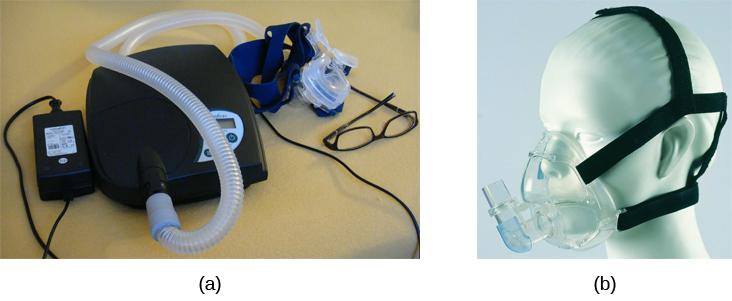

Figure 4.13図 4.13
(a) A typical CPAP device used in the treatment of sleep apnea is (b) affixed to the head with straps, and a mask that covers the nose and mouth.
(a)睡眠時無呼吸の治療に使われる一般的なCPAP装置は、(b)ストラップと、鼻と口を覆うマスクによって頭に取り付けられる。