第2章心理学の研究
Causality: Conducting Experiments and Using the Data因果関係:実験を行い、データを使う
As you’ve learned, the only way to establish that there is a cause-and-effect relationship between two variables is to conduct a scientific experiment. Experiment has a different meaning in the scientific context than in everyday life. In everyday conversation, we often use it to describe trying something for the first time, such as experimenting with a new hair style or a new food. However, in the scientific context, an experiment has precise requirements for design and implementation.
英語のヒント
すでに学んだように、二つの変数のあいだに因果関係があることを立証する唯一の方法は、科学的な実験を行うことである。「実験」という語は、科学の文脈では日常生活とは異なる意味を持つ。日常の会話では、新しい髪型を試す、新しい食べ物を試してみるなど、何かを初めてやってみることを表すのに、この語をよく使う。しかし科学の文脈では、実験には、計画と実施について厳密な要件がある。
The Experimental Hypothesis実験仮説
In order to conduct an experiment, a researcher must have a specific hypothesis to be tested. As you’ve learned, hypotheses can be formulated either through direct observation of the real world or after careful review of previous research. For example, if you think that the use of technology in the classroom has negative impacts on learning, then you have basically formulated a hypothesis—namely, that the use of technology in the classroom should be limited because it decreases learning. How might you have arrived at this particular hypothesis? You may have noticed that your classmates who take notes on their laptops perform at lower levels on class exams than those who take notes by hand, or those who receive a lesson via a computer program versus via an in-person teacher have different levels of performance when tested (Figure 2.15).
英語のヒント
実験を行うには、研究者は検証すべき具体的な仮説を持っていなければならない。すでに学んだように、仮説は、現実の世界を直接観察することによっても、先行研究を注意深く検討したあとでも立てることができる。たとえば、教室でのテクノロジーの使用が学習に悪い影響を与えると考えるなら、あなたは基本的に一つの仮説を立てたことになる。すなわち、教室でのテクノロジーの使用は学習を低下させるので制限すべきだ、という仮説である。あなたはどのようにして、この特定の仮説にたどり着いたのだろうか。ノートパソコンでノートを取るクラスメートは、手書きでノートを取るクラスメートよりも授業の試験の成績が低いことや、コンピューター・プログラムで授業を受ける人と対面の教師から授業を受ける人とでは、テストをしたときの成績の水準が異なることに気づいたのかもしれない(図2.15)。

OpenStax, Rice University; Psychology 2e. (credit: modification of work by Nikolay Georgiev/Pixabay) · CC BY 4.0 · Source出典

Figure 2.15図 2.15
How might the use of technology in the classroom impact learning? (credit: modification of work by Nikolay Georgiev/Pixabay)
教室でのテクノロジーの使用は、学習にどのような影響を与えるのだろうか。(出典:Nikolay Georgiev/Pixabayの作品を改変)
These sorts of personal observations are what often lead us to formulate a specific hypothesis, but we cannot use limited personal observations and anecdotal evidence to rigorously test our hypothesis. Instead, to find out if real-world data supports our hypothesis, we have to conduct an experiment.
英語のヒント
このような個人的な観察こそが、私たちに具体的な仮説を立てさせることが多い。しかし、限られた個人的な観察や逸話的な証拠を使って、仮説を厳密に検証することはできない。そうではなく、現実世界のデータが仮説を支持するかどうかを確かめるには、実験を行わなければならない。
Designing an Experiment実験を計画する
The most basic experimental design involves two groups: the experimental group and the control group. The two groups are designed to be the same except for one difference— experimental manipulation. The experimental group gets the experimental manipulation—that is, the treatment or variable being tested (in this case, the use of technology)—and the control group does not. Since experimental manipulation is the only difference between the experimental and control groups, we can be sure that any differences between the two are due to experimental manipulation rather than chance.
英語のヒント
最も基本的な実験計画には、二つの群がある。実験群と統制群である。二つの群は、ただ一つの違い、すなわち実験操作を除いて同じになるように設計される。実験群は実験操作、つまり検証されている処置や変数(この場合はテクノロジーの使用)を受け、統制群は受けない。実験操作が実験群と統制群のあいだの唯一の違いなので、二つの群のあいだの違いはどんなものであれ、偶然ではなく実験操作によるものだと確信できる。
In our example of how the use of technology should be limited in the classroom, we have the experimental group learn algebra using a computer program and then test their learning. We measure the learning in our control group after they are taught algebra by a teacher in a traditional classroom. It is important for the control group to be treated similarly to the experimental group, with the exception that the control group does not receive the experimental manipulation.
英語のヒント
教室でのテクノロジーの使用は制限すべきだ、という私たちの例では、実験群にはコンピューター・プログラムを使って代数を学ばせ、そのあとで学習の成果をテストする。統制群については、従来型の教室で教師から代数を教わったあとに学習を測定する。統制群が実験操作を受けないという点を除いて、統制群を実験群と同じように扱うことが重要である。
We also need to precisely define, or operationalize, how we measure learning of algebra. An operational definition is a precise description of our variables, and it is important in allowing others to understand exactly how and what a researcher measures in a particular experiment. In operationalizing learning, we might choose to look at performance on a test covering the material on which the individuals were taught by the teacher or the computer program. We might also ask our participants to summarize the information that was just presented in some way. Whatever we determine, it is important that we operationalize learning in such a way that anyone who hears about our study for the first time knows exactly what we mean by learning. This aids peoples’ ability to interpret our data as well as their capacity to repeat our experiment should they choose to do so.
英語のヒント
また、代数の学習をどのように測定するのかを厳密に定義する、すなわち操作化する必要もある。操作的定義とは変数を厳密に記述したものであり、特定の実験で研究者が何をどのように測定するのかを、ほかの人が正確に理解できるようにするうえで重要である。学習を操作化するにあたっては、その人たちが教師やコンピューター・プログラムから教わった内容を扱うテストの成績を見ることにしてもよい。あるいは、参加者に、いま提示されたばかりの情報を何らかの形で要約してもらうこともできる。何に決めるにせよ、私たちの研究について初めて聞く人の誰もが、私たちが学習という語で何を意味しているのかを正確に分かるような形で、学習を操作化することが重要である。そうしておけば、ほかの人が私たちのデータを解釈しやすくなり、また、そうしたいと思ったときに私たちの実験を繰り返すこともしやすくなる。
Once we have operationalized what is considered use of technology and what is considered learning in our experiment participants, we need to establish how we will run our experiment. In this case, we might have participants spend 45 minutes learning algebra (either through a computer program or with an in-person math teacher) and then give them a test on the material covered during the 45 minutes.
英語のヒント
実験の参加者について、何をテクノロジーの使用とみなし、何を学習とみなすのかを操作化したら、次は実験をどのように進めるのかを決める必要がある。この場合であれば、参加者に45分間代数を学んでもらい(コンピューター・プログラムを通してか、対面の数学教師によってか、どちらか)、そのあとで、その45分間に扱った内容についてのテストを受けてもらう、というやり方が考えられる。
Ideally, the people who score the tests are unaware of who was assigned to the experimental or control group, in order to control for experimenter bias. Experimenter bias refers to the possibility that a researcher’s expectations might skew the results of the study. Remember, conducting an experiment requires a lot of planning, and the people involved in the research project have a vested interest in supporting their hypotheses. If the observers knew which child was in which group, it might influence how they interpret ambiguous responses, such as sloppy handwriting or minor computational mistakes. By being blind to which child is in which group, we protect against those biases. This situation is a single-blind study, meaning that one of the groups (participants) are unaware as to which group they are in (experiment or control group) while the researcher who developed the experiment knows which participants are in each group.
英語のヒント
理想的には、テストを採点する人は、誰が実験群に割り当てられ、誰が統制群に割り当てられたのかを知らないほうがよい。実験者バイアスを統制するためである。実験者バイアスとは、研究者の期待が研究の結果をゆがめてしまう可能性のことをいう。思い出してほしいが、実験を行うには多くの計画が必要であり、研究プロジェクトにかかわる人々は、自分たちの仮説を裏づけることに強い利害関係を持っている。もし観察者が、どの子どもがどの群にいるのかを知っていたら、それが、雑な手書きの文字やちょっとした計算間違いのような、あいまいな解答をどう解釈するかに影響するかもしれない。どの子どもがどの群にいるのかを知らされずにいることで、私たちはそうしたバイアスを防ぐ。この状況は単盲検研究である。単盲検研究とは、一方の側(参加者)が自分がどちらの群(実験群か統制群か)にいるのかを知らない一方で、実験を考案した研究者はどの参加者がどちらの群にいるのかを知っている、ということを意味する。
In a double-blind study, both the researchers and the participants are blind to group assignments. Why would a researcher want to run a study where no one knows who is in which group? Because by doing so, we can control for both experimenter and participant expectations. If you are familiar with the phrase placebo effect, you already have some idea as to why this is an important consideration. The placebo effect occurs when people's expectations or beliefs influence or determine their experience in a given situation. In other words, simply expecting something to happen can actually make it happen.
英語のヒント
二重盲検研究では、研究者も参加者も、群への割り当てを知らされていない。なぜ研究者は、誰がどの群にいるのかを誰も知らない研究を行いたいと思うのだろうか。そうすることで、実験者の期待と参加者の期待の両方を統制できるからである。プラセボ効果という言葉を知っていれば、これがなぜ重要な考慮点なのか、すでにある程度見当がつくだろう。プラセボ効果は、人の期待や信念が、ある状況での経験に影響を与えたり、それを決めたりするときに生じる。言い換えれば、何かが起こると期待するだけで、実際にそれが起こりうるのである。
The placebo effect is commonly described in terms of testing the effectiveness of a new medication. Imagine that you work in a pharmaceutical company, and you think you have a new drug that is effective in treating depression. To demonstrate that your medication is effective, you run an experiment with two groups: The experimental group receives the medication, and the control group does not. But you don’t want participants to know whether they received the drug or not.
英語のヒント
プラセボ効果は、新しい薬の効果を検証するという文脈で説明されることが多い。あなたが製薬会社で働いていて、うつ病の治療に効果のある新薬を手にしていると考えているとしよう。その薬が効くことを示すために、あなたは二つの群で実験を行う。実験群はその薬を投与され、統制群は投与されない。しかし、参加者には、薬を投与されたのかどうかを知らせたくない。
Why is that? Imagine that you are a participant in this study, and you have just taken a pill that you think will improve your mood. Because you expect the pill to have an effect, you might feel better simply because you took the pill and not because of any drug actually contained in the pill—this is the placebo effect.
英語のヒント
それはなぜだろうか。あなたがこの研究の参加者で、気分をよくしてくれると思っている錠剤を飲んだばかりだと想像してほしい。錠剤に効果があると期待しているので、あなたは、錠剤に実際に含まれている薬のためではなく、単に錠剤を飲んだという理由で気分がよくなるかもしれない。これがプラセボ効果である。
To make sure that any effects on mood are due to the drug and not due to expectations, the control group receives a placebo (in this case a sugar pill). Now everyone gets a pill, and once again neither the researcher nor the experimental participants know who got the drug and who got the sugar pill. Any differences in mood between the experimental and control groups can now be attributed to the drug itself rather than to experimenter bias or participant expectations (Figure 2.16).
英語のヒント
気分への影響がどんなものであれ、それが期待によるものではなく薬によるものであることを確実にするために、統制群にはプラセボ(この場合は砂糖の錠剤)が与えられる。これで全員が錠剤を受け取り、そして繰り返しになるが、研究者も実験参加者も、誰が薬を受け取り誰が砂糖の錠剤を受け取ったのかを知らない。こうすれば、実験群と統制群のあいだの気分の違いは、どんなものであれ、実験者バイアスや参加者の期待ではなく、薬そのものによるものだと考えることができる(図2.16)。
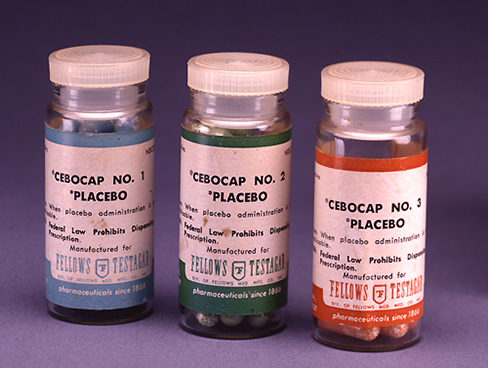
OpenStax, Rice University; Psychology 2e. (credit: Elaine and Arthur Shapiro) · CC BY 4.0 · Source出典

Figure 2.16図 2.16
Providing the control group with a placebo treatment protects against bias caused by expectancy. (credit: Elaine and Arthur Shapiro)
統制群にプラセボによる処置を施すことで、期待によって生じるバイアスを防ぐことができる。(出典:Elaine and Arthur Shapiro)