第1章過去を理解するUnderstanding the Past
1.3 Causation and Interpretation in History1.3 歴史における因果関係と解釈
Learning Objectives学習の目標
By the end of this section, you will be able to:
この節を学ぶと、次のことができるようになる。
Describe causation as it is used in the study of history
歴史研究で用いる因果関係の考え方を説明する。
Identify the levels of causation
因果関係の段階を区別する。
Analyze the role of interpretation in producing an accurate historical record
正確な歴史の記録を作るうえで、解釈が果たす役割を分析する。
The study of history has always been about more than giving a recounting of past events. It is about remembering our shared past, making human connections that traverse centuries, and helping us know more about ourselves. Once we know how to muster as many facts as we can, we must consider the next step—understanding causation. Causation is the why behind events; understanding it is the way historians get at the heart of the matter. The powerful and public forces that change society and government are also present when individuals make choices about their lives. What, then, are the forces that shape history, that shift it one way or another, that move people to change on both an individual and a societal level?
英語のヒント
歴史を学ぶことは、昔の出来事を語り直すだけではなかった。私たちが共有する過去を記憶し、何世紀もの時を越える人と人とのつながりを築き、自分自身をもっと知る助けとなる営みである。できるだけ多くの事実を集める方法が分かったら、次の段階、すなわち因果関係の理解を考えなければならない。因果関係とは、出来事の背後にある「なぜ」である。これを理解することによって、歴史家は問題の核心に迫る。社会や政府を変える強大な公的な力は、一人ひとりが人生の選択をするときにも働いている。では、歴史を形づくり、その進む方向を変え、個人と社会の両方の次元で人々を変化へと動かす力とは何だろうか。
All of us see these historical causes through the lens of our own experiences, circumstances, and value systems. Historians, particularly those trained in recent times, work to eliminate as much bias as they can, but we cannot wholly disconnect ourselves from our environment and beliefs. Bias can even sometimes act as a positive force, allowing us to look at the past in new ways. For example, historians in the 1960s and 1970s began to question their discipline’s traditional focus on elites and sought out new sources that highlight the lives of more ordinary people. Driven by a bias in favor of the counterculture and politics of the era, they wanted to know more about what all people experienced.
英語のヒント
私たちは皆、自分自身の経験、状況、価値観を通して、これらの歴史的原因を見る。とりわけ近年に訓練を受けた歴史家は、できる限り判断の偏りを取り除こうとするが、私たちは自分の環境や信念から完全に切り離されることはできない。偏りは、ときには積極的な力として働き、過去を新しい仕方で見られるようにすることさえある。たとえば1960~1970年代の歴史家は、歴史学が伝統的にエリートに焦点を当ててきたことを問い直し、より普通の人々の生活に光を当てる新しい史料を探し求めた。彼らは、その時代の対抗文化や政治に好意的な偏りに動かされて、あらゆる人が何を経験したのかを、もっと知りたいと考えた。
Levels of Causation因果関係の段階
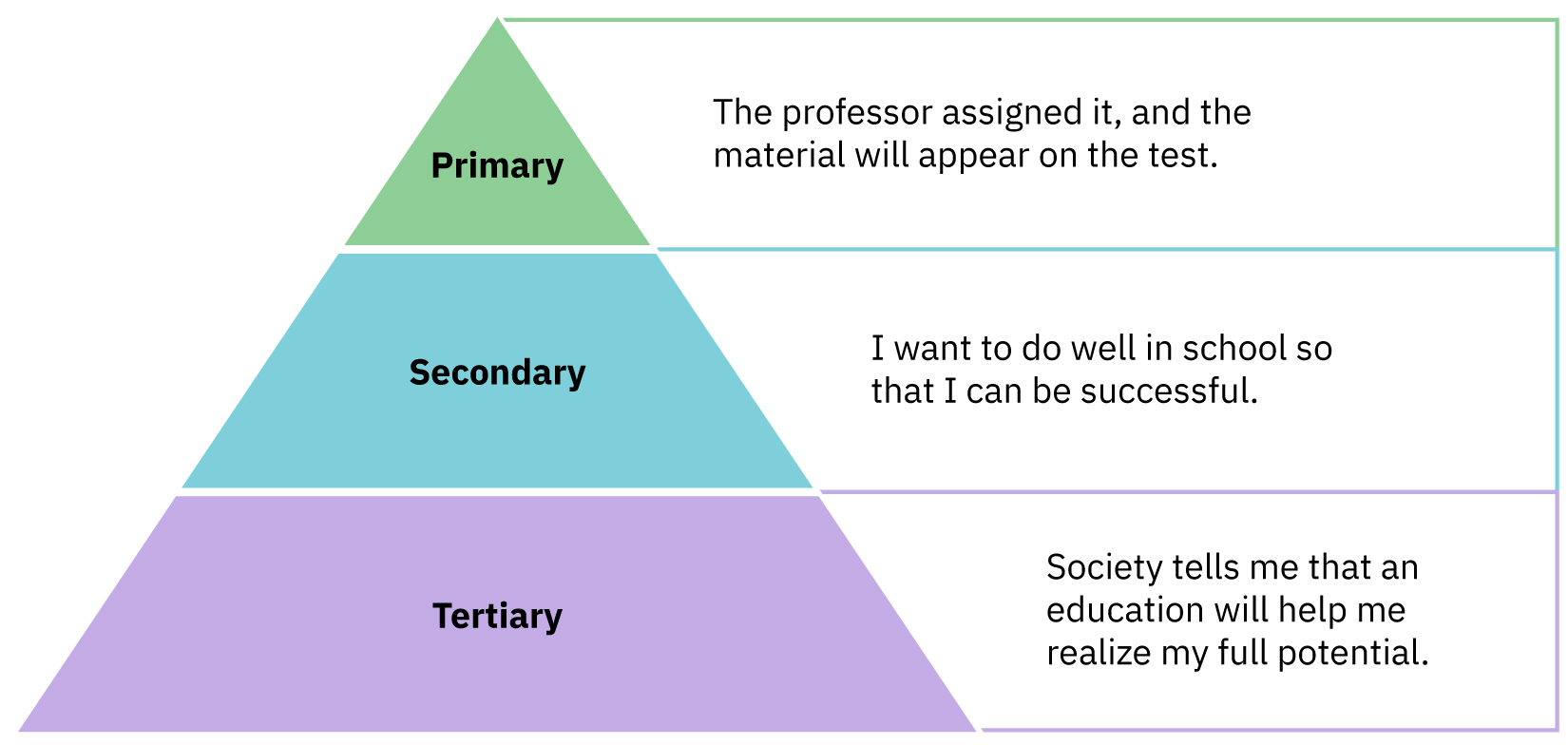
In their quest for the why of an event, historians look at both the immediate and the long-term circumstances of that event. Not all causes are equally significant; we need to rank them in importance. Let us begin with a thought exercise. At this moment in your history, you are reading this textbook. Why? Perhaps you would say, “Because the instructor told me to, and it will be on the test.” Certainly that is a valid reason. But if you think a bit more deeply, you might also say, “I want to do well in my education so I can be successful.” And at an even deeper level, “Society tells me that education is necessary to realize my full potential, find fulfillment, and participate in the community.”
英語のヒント
出来事の「なぜ」を探るため、歴史家は直近の状況と長期的な状況の両方を見る。すべての原因が同じ重みを持つわけではなく、重要さの順に位置付ける必要がある。まず、思考の練習から始めよう。あなたの人生のこの瞬間、あなたはこの教科書を読んでいる。なぜだろうか。「先生に読むように言われたし、試験に出るから」と答えるかもしれない。それは確かに、もっともな理由である。しかし、もう少し深く考えると、「成功するために、勉強でよい成果を上げたいから」とも答えられるだろう。さらに深いところでは、「教育は、自分の可能性を十分に実現し、充実感を得て、共同体に参加するために必要だと、社会から教えられているから」と答えられるかもしれない。
Think of all the other things that caused you to be here in this moment. There are no wrong answers; just explore the levels of causation behind your reading right now. Now rank them in order of importance. Which causes had the most influence on you, and which were more remote? Your response might look something like a pyramid (Figure 1.10). The primary cause is the most immediate. It is the spark. The secondary cause is once removed. The tertiary cause offers the broader context.
英語のヒント
いまこの瞬間に、自分がここにいることを引き起こしたほかの事柄をすべて考えよう。間違った答えはない。いま読んでいることの背後にある因果関係の段階を探ってみればよい。次に、それらを重要な順に並べよう。自分に最も大きく影響した原因はどれで、より間接的な原因はどれか。答えは、ピラミッドのような形になるかもしれない(図1.10)。一次の原因は、最も直接的なものであり、引き金となる火花である。二次の原因は、そこから一段離れている。三次の原因は、より広い背景を示す。
Causation Explained.因果関係を説明する
(attribution: Copyright Rice University, OpenStax, under CC BY 4.0 license) · CC BY 4.0
Figure 1.10 This causation chart answers the question, “Why are you reading?” on three levels. The primary level is the most immediate. (attribution: Copyright Rice University, OpenStax, under CC BY 4.0 license)
図1.10 この因果関係の図は、「なぜ読んでいるのか」という問いに三つの段階で答えている。一次の段階が最も直接的である。(権利表示:Copyright Rice University, OpenStax、CC BY 4.0)
To reach a true understanding of why you are reading your text, you needed to know yourself well, understand the connection between education and career, and assess how social factors, such as the value employers place on education, influence your decision-making. The more aspects of causation historians can find, the closer they can get to the true nature of the event.
英語のヒント
なぜ自分が教科書を読んでいるのかを本当に理解するには、自分をよく知り、教育と職業の関係を理解し、雇用主が教育に置く価値などの社会的要因が、自分の意思決定にどう影響するかを評価する必要があった。歴史家も、因果関係のより多くの側面を見いだすほど、出来事の本質に近づくことができる。
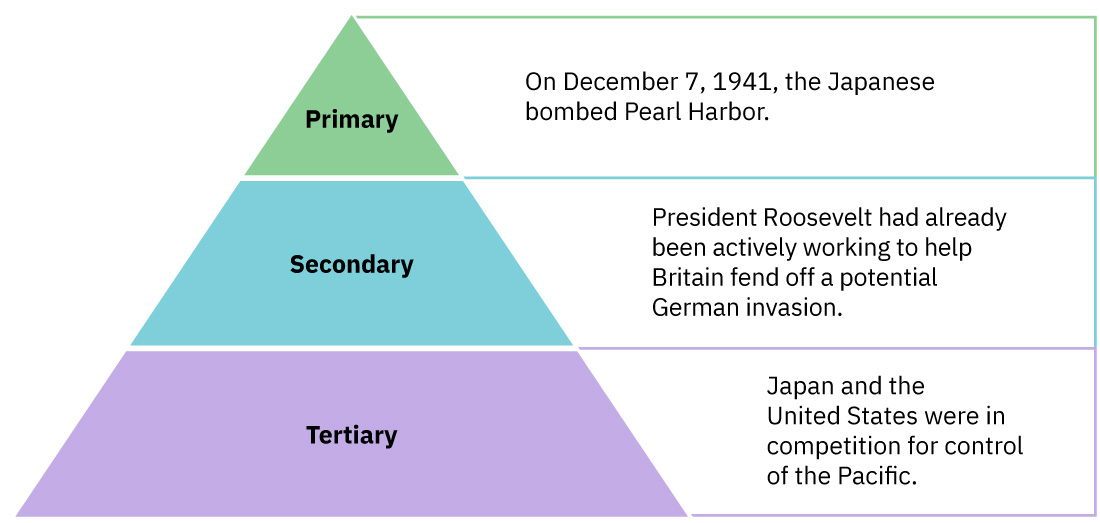
Let’s try another example, this one from history. Why did the United States enter World War II in 1941? In this case, the immediate cause was Japan’s attack on the U.S. naval base at Pearl Harbor in Hawaii, but hostilities had been brewing for some time. The president of the United States, Franklin D. Roosevelt, had been looking for ways to help the British fend off a potential German invasion, and Japan and the United States had long-standing issues over the use of power in the Pacific (Figure 1.11).
英語のヒント
歴史から、もう一つ例を考えてみよう。アメリカはなぜ1941年に第二次世界大戦へ参戦したのか。この場合、直接の原因は、日本がハワイの真珠湾にあるアメリカ海軍基地を攻撃したことである。しかし敵対関係は、それ以前からしばらく醸成されていた。アメリカ大統領フランクリン・D・ルーズヴェルトは、イギリスがドイツによる侵攻の可能性を退けるのを支援する方法を探していた。また、日本とアメリカの間には、太平洋における権力の行使をめぐって、長年の争点が存在した(図1.11)。
Causation Applied to World War II.第二次世界大戦への参戦に因果関係を当てはめる
(attribution: Copyright Rice University, OpenStax, under CC BY 4.0 license) · CC BY 4.0
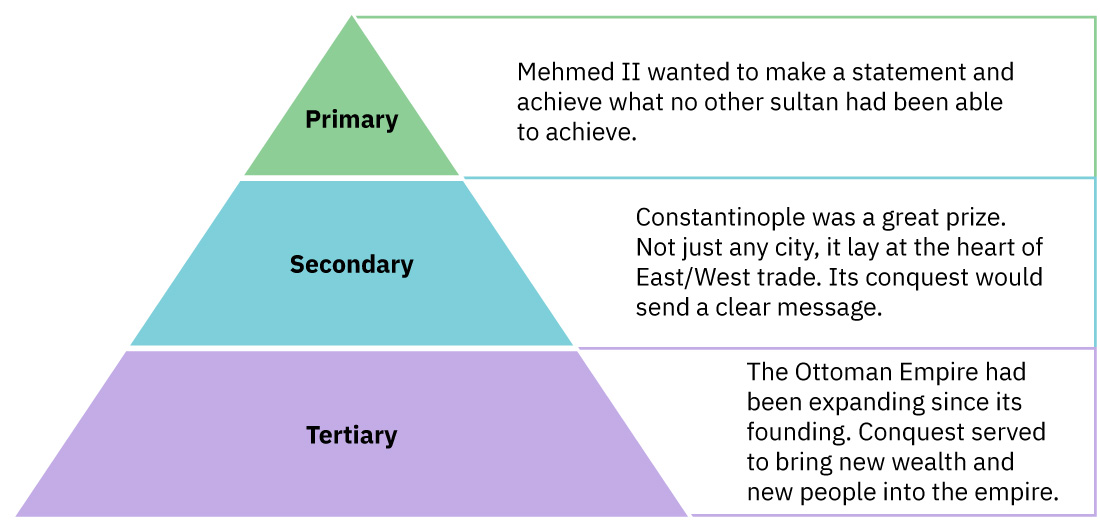
Here is one more example. In 1453, Mehmed II laid siege to the city of Constantinople. Why? Mehmed II was the leader of the Ottoman Empire, the sultan. He had been badly treated by his father, and when he ascended the throne, he felt he had something to prove. The Ottomans had tried several times to take Constantinople because it lay at the crossroads of many civilizations. Conquest had long been a reliable mechanism for bringing new people and wealth into the Ottoman Empire and for keeping its economy prosperous. All these factors played a role in the siege undertaken by Mehmed II. Can you order them by importance? This is the point where historians usually disagree, even about events for which most of the facts are clear. A historian who believes powerful leaders are the most influential factor driving events would rank Mehmed’s personal goals first (Figure 1.12). Base your ranking on the strongest arguments you can make.
英語のヒント
もう一つ例を挙げよう。1453年、メフメト2世はコンスタンティノープルを包囲した。なぜだろうか。メフメト2世はオスマン帝国の指導者、スルタンだった。父親からひどい扱いを受けており、即位したときには、自分の実力を証明しなければならないと感じていた。コンスタンティノープルは多くの文明の交差点にあったため、オスマン朝は何度も占領を試みていた。征服は長い間、新しい人々と富を帝国へもたらし、経済を繁栄させ続けるための確実な仕組みだった。これらすべてが、メフメト2世による包囲の要因となった。重要な順に並べられるだろうか。事実の大部分がはっきりしている出来事でも、通常、歴史家が意見を異にするのはこの点である。強力な指導者こそ出来事を動かす最も重要な要因だと考える歴史家なら、メフメト個人の目標を第一に置くだろう(図1.12)。自分が示せる最も強い論拠に基づいて、順位を決めよう。
Causation Applied to the Conquest of Constantinople.コンスタンティノープル征服に因果関係を当てはめる
(attribution: Copyright Rice University, OpenStax, under CC BY 4.0 license) · CC BY 4.0
Figure 1.12 This causation chart ranks the reasons for Mehmed II’s 1453 Ottoman conquest of Constantinople. (attribution: Copyright Rice University, OpenStax, under CC BY 4.0 license)
図1.12 この因果関係の図は、1453年にメフメト2世がオスマン帝国によるコンスタンティノープル征服を行った理由に、順序を付けている。(権利表示:Copyright Rice University, OpenStax、CC BY 4.0)
There can be more than three causes to any event, of course, and because human choice always plays a role, we sometimes cannot separate events on the big stage from the smallest of personal moments in history. The context of the Ottoman Empire’s continuous expansion set the scene in this example, and Mehmed II’s desire to prove his ability was the spark.
英語のヒント
もちろん、出来事の原因が三つより多いこともある。また、人間の選択は常に関わるため、歴史の大舞台の出来事と、ごく小さな個人的な瞬間とを切り離せない場合もある。この例では、オスマン帝国が拡大を続けていたことが背景となり、自分の能力を示したいというメフメト2世の願望が火花となった。
Before moving on, try one more example on your own. Pick a moment in history with which you are familiar and follow the same process.
先へ進む前に、もう一つ、自分で例を試してみよう。よく知っている歴史上の場面を一つ選び、同じ手順で考えてみよう。