第1章過去を理解するUnderstanding the Past
World History and Global Citizenship世界史と地球市民としての自覚
The study of world history recognizes the integrated nature of modern life and prepares students for diverse, global workplaces. Knowing about the world will prepare you to be a global citizen, someone who may reside in only one nation but who self-identifies as part of the larger world community. Issues in need of solutions, like climate change, social justice, and human rights, are global in scale. You must know the world to be the change it needs. How do you fit in the global environment? What is your story, and how is it linked to that of others?
英語のヒント
世界史の学習は、現代の生活が互いに結び付いていることを認識し、多様で国際的な職場への準備を学生に整えさせる。世界を知ることは、地球市民になるための備えとなる。地球市民とは、一つの国だけに住んでいても、より大きな世界の共同体の一員であると自覚する人のことである。気候変動、社会正義、人権など、解決を必要とする問題は地球規模に及ぶ。世界が必要とする変化を自ら担うには、世界を知らなければならない。あなたは世界のなかでどのような位置を占めているだろうか。あなた自身の物語はどのようなもので、それはほかの人々の物語とどう結び付いているだろうか。
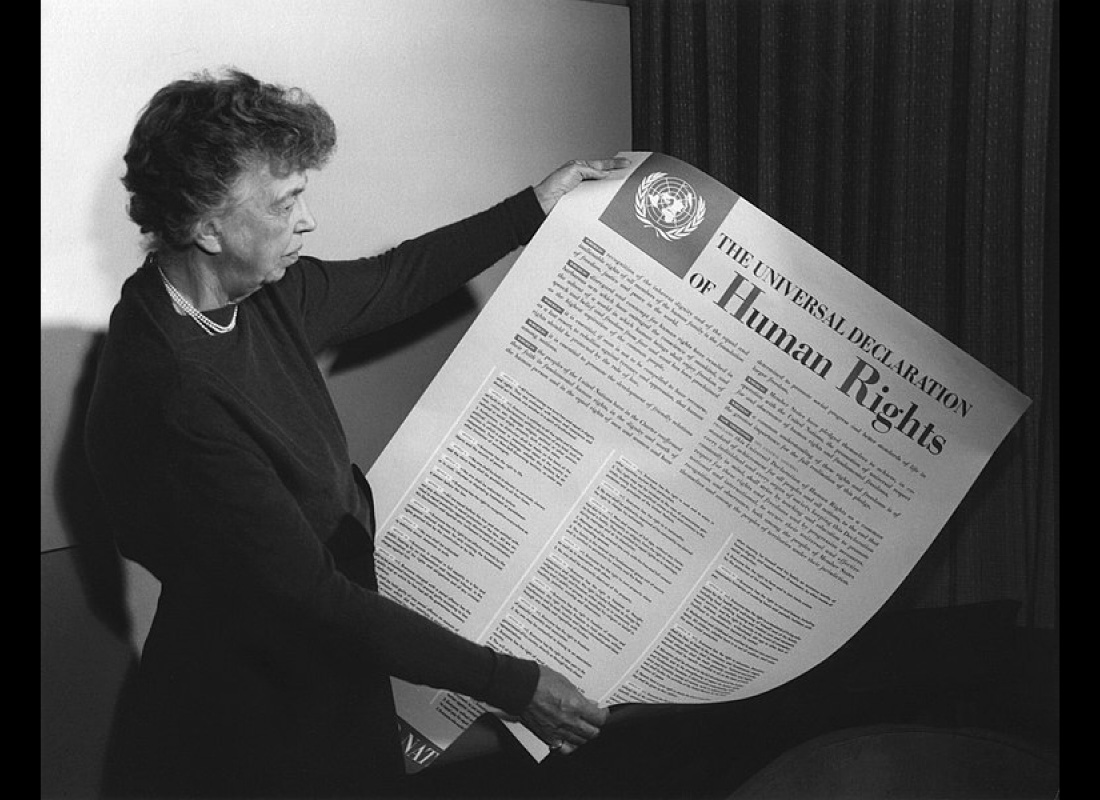
In many ways, the idea of global citizenship emerged from the human wreckage of the two world wars. Beginning in 1948, the United Nations (UN) established a series of universal declarations that conceived of all people as deserving of human rights and dignity (Figure 1.3). Three such declarations further affirmed the rights of women (Convention on the Elimination of All Forms of Discrimination Against Women, also known as CEDAW, 1979), of children (The Declaration of the Rights of the Child, 1959), and of people with disabilities (The Declaration on the Rights of Disabled Persons, 1975). The UN regularly requires that member nations report on progress in these areas. Words and declarations help to create an ethos, a set of guiding principles. So, in addition to participating in global economies that transcend lines on a map, many in our world recognize that we have also agreed to a series of rights and obligations that do the same.
英語のヒント
地球市民という考え方は、多くの点で、二度の世界大戦が人類にもたらした惨禍から生まれた。1948年以降、国際連合(国連)は、すべての人に人権と尊厳があるべきだとする、普遍的な宣言を相次いで採択した(図1.3)。そのうち三つは、女性の権利(1979年の「女子に対するあらゆる形態の差別の撤廃に関する条約」、CEDAWとも呼ばれる)、子どもの権利(1959年の「児童の権利に関する宣言」)、障害のある人の権利(1975年の「障害者の権利に関する宣言」)を、さらに明確に確認した。国連は、これらの分野での進展について、加盟国に定期的な報告を求めている。言葉や宣言は、行動の指針となる一連の原則、すなわちエートスを形作る助けになる。そのため、地図上の線を越えて広がる世界経済に参加するだけでなく、同じように国境を越える一連の権利と義務にも自分たちは合意している、と世界の多くの人々は認識している。
Human Rights, Codified.明文化された人権
(credit: “Eleanor Roosevelt UDHR” by FDR Presidential Library & Museum/Flickr, CC BY 2.0) · CC BY 2.0
Figure 1.3 Eleanor Roosevelt is shown holding a poster of the UN Universal Declaration of Human Rights in November 1949. Roosevelt, the former First Lady of the United States, chaired the committee that drafted the declaration. (credit: “Eleanor Roosevelt UDHR” by FDR Presidential Library & Museum/Flickr, CC BY 2.0)
図1.3 1949年11月、国連の世界人権宣言のポスターを掲げるエレノア・ルーズベルト。米国の元ファーストレディーである彼女は、宣言を起草した委員会の議長を務めた。(出典:FDR Presidential Library & Museum/Flickr「Eleanor Roosevelt UDHR」、CC BY 2.0)
A BBC poll in 2015–2016 surveyed eighteen countries and found that more than half the respondents believed themselves to be “global citizens.” It also found that in times of prosperity, sentiments favoring a world community grow, while in times of strife, people tend to revert to more local, national identities. Though no one can see the future, it is difficult to imagine turning the clock back on the processes of globalization. Whether you would like to be a global citizen of the world or not, understanding the world is essential.
英語のヒント
BBCが2015~2016年に18か国で行った世論調査では、回答者の半数以上が自分を「地球市民」と捉えていた。また、繁栄の時期には世界的な共同体を支持する気持ちが強まるのに対し、紛争の時期には、より地域的・国家的な帰属意識へ戻る傾向があることも分かった。未来を見通せる人はいないが、グローバル化の過程を逆戻りさせることは想像しにくい。地球市民になりたいかどうかにかかわらず、世界を理解することは欠かせない。
Features of This Textbookこの教科書の特色
This text is a great place to begin your journey into the world’s past. It has several features that will help you understand the history of world civilizations from the fifteenth century and the beginning of the early modern period until today. For the most part, it adopts a traditional chronological approach, studying events in roughly the order in which they took place. The first few chapters will explore changes that took place in particular regions of the world in the fifteenth through seventeenth centuries. In Exchange in East Asia and the Indian Ocean, you will learn about the civilizations that were connected through Indian and Pacific Ocean trade—India, Malaysia, Indonesia, China, and Japan. Early Modern Africa and the Wider World studies the civilizations of West and East Africa. The Islamic World explores two great Islamic empires, the Ottoman and the Safavid, in southwest Asia, which we commonly call the Middle East. Beginning with Foundations of the Atlantic World, the chapters cover events that integrated the world’s different regions, such as colonization, global trade, political revolutions, and wars and intellectual movements like the Enlightenment.
英語のヒント
この教科書は、世界の過去を探る旅の出発点に適している。15世紀、すなわち近世の始まりから現在まで、世界の文明の歴史を理解するための工夫をいくつも備えている。大部分では従来の年代順の方法を採り、出来事をおおむね発生した順に学ぶ。最初の数章では、15~17世紀に世界の特定の地域で起きた変化を扱う。「東アジアとインド洋の交流」では、インド洋と太平洋の交易によって結ばれたインド、マレーシア、インドネシア、中国、日本の文明を学ぶ。「近世アフリカと広域世界」は西アフリカと東アフリカの文明を扱う。「イスラーム世界」は、通常、中東と呼ばれる南西アジアの二大イスラーム帝国、オスマン帝国とサファヴィー朝を探る。「大西洋世界の形成」以降の章では、植民地化、世界規模の交易、政治革命、戦争、啓蒙思想のような知的運動など、世界の異なる地域を一体化させた出来事を取り上げる。
Each chapter features maps prominently and will help you frame world cultures in their geographic and historical context. You will engage with firsthand accounts of key people and events—including instances in which people’s recollections of the same events might differ. And the text will highlight links between the past and the present to emphasize how earlier knowledge applies to our world.
英語のヒント
各章では地図を大きく取り上げ、世界の文化を地理的・歴史的な文脈の中に位置づけられるようにする。重要な人物や出来事についての当事者の記録を読み、同じ出来事について人々の記憶が食い違う例にも接する。また、過去と現在のつながりを示し、昔の知識が今日の世界にどう当てはまるかを明らかにする。
Of particular note are the feature boxes within each chapter. These present documents and images from the eras you are studying. Sometimes you will be guided outside the text—such as in the Link to Learning boxes—to explore other digital resources that clarify content, expand on ideas, and highlight interesting new work happening in the field. Finally, where appropriate, the text will offer material relevant to your current experiences, to help you understand the links between the past and the present. Following is a quick reference to these features.
英語のヒント
各章に置かれた特集欄には、特に注目してほしい。学習している時代の文書や画像が示されている。「学びを広げるリンク」の欄などでは、本文の外にあるデジタル資料へ案内することもある。それらは内容を分かりやすくし、考えを広げ、その分野で進められている興味深い新たな研究を紹介する。さらに、必要に応じて、あなたの現在の経験に関わる資料も示し、過去と現在のつながりを理解する助けとする。以下は、こうした特色の簡単な案内である。
In Their Own Words当事者の言葉で
In Their Own Words feature boxes present a source composed in the period the chapter covers and allow you to examine it in context, learning how to critically analyze source material. A short series of questions will help to guide your analysis.
英語のヒント
「当事者の言葉で」の特集欄では、その章が扱う時代に作られた史料を提示する。文脈のなかで史料を検討し、批判的に分析する方法を学べる。いくつかの短い問いが、分析の道しるべとなる。
Dueling Voices対立する声
Dueling Voices feature boxes present either an ongoing historical debate or conflicting reports of the same event or idea that were written around the time it occurred or emerged.
英語のヒント
「対立する声」の特集欄では、現在も続く歴史上の論争、あるいは同じ出来事や考えについて、その発生・出現のころに書かれた、互いに食い違う記録を取り上げる。