第13章産業・組織心理学
Bias and Protections in Hiring採用におけるバイアスと保護
In an ideal hiring process, an organization would generate a job analysis that accurately reflects the requirements of the position, and it would accurately assess candidates’ KSAs to determine who the best individual is to carry out the job’s requirements. For many reasons, hiring decisions in the real world are often made based on factors other than matching a job analysis to KSAs. As mentioned earlier, interview rankings can be influenced by other factors: similarity to the interviewer (Bye, Horverak, Sandal, Sam, & Vijver, 2014) and the regional accent of the interviewee (Rakić, Steffens, & Mummendey 2011). A study by Agerström & Rooth (2011) examined hiring managers’ decisions to invite equally qualified non-obese and obese job applicants to an interview. The decisions of the hiring managers were based on photographs of the two applicants. The study found that hiring managers that scored high on a test of negative associations with overweight people displayed a bias in favor of inviting the equally qualified non-obese applicant but not inviting the obese applicant. The association test measures automatic or subconscious associations between an individual’s negative or positive values and, in this case, the body-size attribute. A meta-analysis of experimental studies found that physical attractiveness benefited individuals in various job-related outcomes such as hiring, promotion, and performance review (Hosoda, Stone-Romero, & Coats, 2003). They also found that the strength of the benefit appeared to be decreasing with time between the late 1970s and the late 1990s.
英語のヒント
理想的な採用の過程では、組織はその職の要件を正確に反映した職務分析を作成し、候補者のKSAを正確に評価して、職務の要件を遂行するのに最もふさわしい人物が誰かを判断するだろう。さまざまな理由から、現実の世界での採用の決定は、職務分析とKSAを照らし合わせること以外の要因に基づいて下されることが多い。前に述べたように、面接での順位づけは、面接官との類似性(Bye, Horverak, Sandal, Sam, & Vijver, 2014)や、面接を受ける人の地方のなまり(Rakić, Steffens, & Mummendey 2011)といった、ほかの要因に影響されうる。アゲルストレムとルート(2011)の研究は、同等の資格を持つ肥満でない応募者と肥満の応募者を面接に招くかどうかについての、採用担当の管理者の決定を調べた。採用担当の管理者の決定は、二人の応募者の写真に基づいて行われた。この研究では、過体重の人々に対する否定的な連合を測る検査で高い得点をとった採用担当の管理者は、同等の資格を持つ肥満でない応募者を招き、肥満の応募者は招かないという方向のバイアスを示すことが分かった。この連合検査は、個人の否定的または肯定的な価値と、この場合には体の大きさという属性とのあいだの、自動的あるいは意識下の連合を測定するものである。実験研究のメタ分析では、身体的魅力が、採用、昇進、人事評価といったさまざまな職務関連の結果において、個人に有利に働いていたことが分かった(Hosoda, Stone-Romero, & Coats, 2003)。この研究者たちは、その有利さの強さが、1970年代後半から1990年代後半にかけて、時とともに弱まっていたらしいことも見いだした。
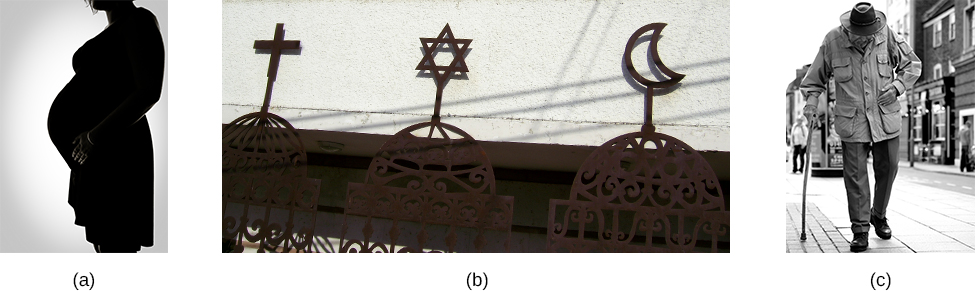
Some hiring criteria may be related to a particular group an applicant belongs to and not individual abilities. Unless membership in that group directly affects potential job performance, a decision based on group membership is discriminatory (Figure 13.11). To combat hiring discrimination, in the United States there are numerous city, state, and federal laws that prevent hiring based on various group-membership criteria. For example, did you know it is illegal for a potential employer to ask your age in an interview? Did you know that an employer cannot ask you whether you are married, a U.S. citizen, have disabilities, or what your race or religion is? They cannot even ask questions that might shed some light on these attributes, such as where you were born or who you live with. These are only a few of the restrictions that are in place to prevent discrimination in hiring. In the United States, federal anti-discrimination laws are administered by the U.S. Equal Employment Opportunity Commission (EEOC).
英語のヒント
採用の基準の中には、個人の能力ではなく、応募者が属する特定の集団にかかわるものがあるかもしれない。その集団に属していることが、見込まれる職務成績に直接影響するのでないかぎり、集団への所属に基づく決定は差別である(図13.11)。採用差別と闘うために、アメリカには、さまざまな集団所属の基準に基づく採用を禁じる市、州、連邦の法律が数多くある。たとえば、雇用主になるかもしれない相手が面接であなたの年齢を尋ねるのは違法だということを知っていただろうか。雇用主が、あなたが結婚しているかどうか、アメリカ市民かどうか、障害があるかどうか、あなたの人種や宗教は何かを尋ねてはならないことを知っていただろうか。雇用主は、こうした属性を推測する手がかりになりそうな質問、たとえばどこで生まれたかや誰と住んでいるかといった質問さえしてはならない。これらは、採用における差別を防ぐために設けられている制限のほんの一部にすぎない。アメリカでは、連邦の差別禁止法は米国雇用機会均等委員会(EEOC)が運用している。
OpenStax, Rice University; Psychology 2e. (credit a: modification of work by Sean McGrath; credit b: modification of work by Ze’ev Barkan; credit c: modification of work by David Hodgson) · CC BY 4.0 · Source出典
Figure 13.11図 13.11
(a) Pregnancy, (b) religion, and (c) age are some of the criteria on which hiring decisions cannot legally be made. (credit a: modification of work by Sean McGrath; credit b: modification of work by Ze’ev Barkan; credit c: modification of work by David Hodgson)
(a)妊娠、(b)宗教、(c)年齢は、それに基づいて採用を決定することが法的に許されない基準の一部である。(出典a:Sean McGrathの作品を改変、出典b:Ze’ev Barkanの作品を改変、出典c:David Hodgsonの作品を改変)
The U.S. Equal Employment Opportunity Commission (EEOC)米国雇用機会均等委員会(EEOC)
The U.S. Equal Employment Opportunity Commission (EEOC) is responsible for enforcing federal laws that make it illegal to discriminate against a job applicant or an employee because of the person's race, color, religion, sex (including pregnancy), sexual orientation, national origin, age (40 or older), disability, or genetic information. Figure 13.12 provides some of the legal language from laws that have been passed to prevent discrimination.
英語のヒント
米国雇用機会均等委員会(EEOC)は、人種、肌の色、宗教、性別(妊娠を含む)、性的指向、出身国、年齢(40歳以上)、障害、遺伝情報を理由に、求職者や従業員を差別することを違法とする連邦法を執行する責任を負っている。図13.12は、差別を防ぐために制定された法律の条文の一部を示している。
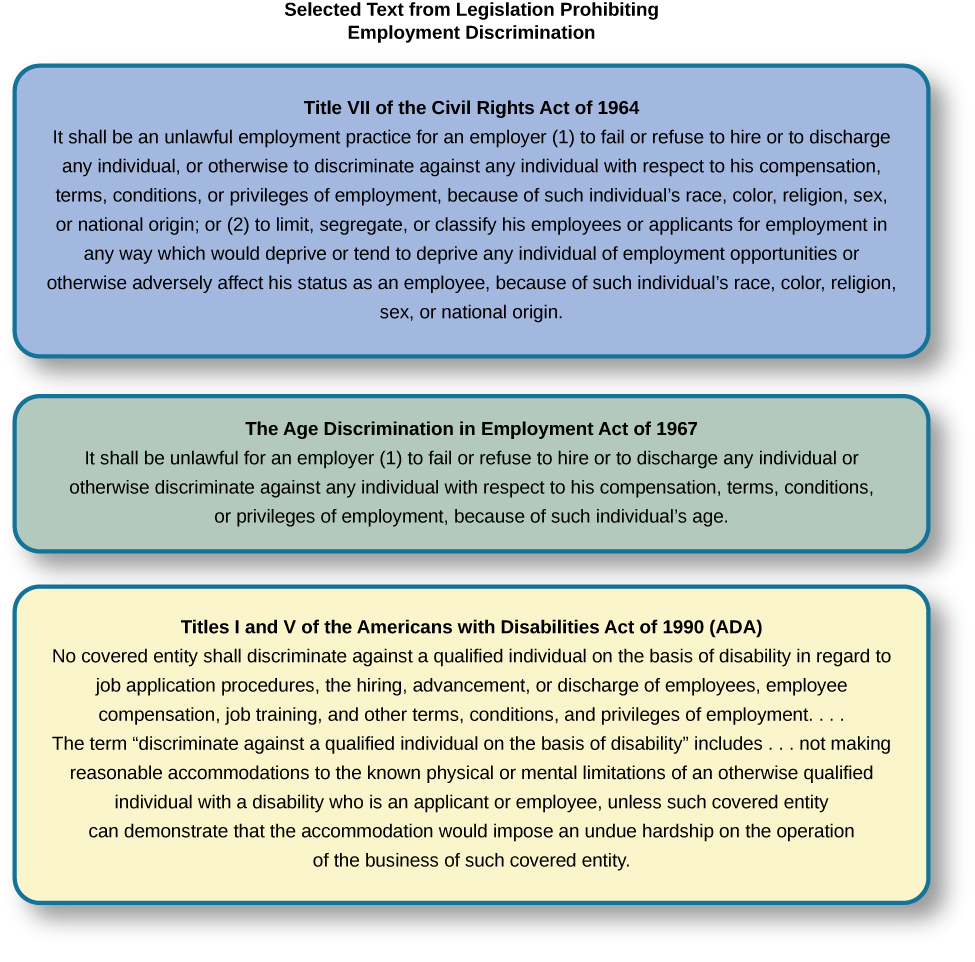


Figure 13.12図 13.12
The laws shown here protect employees in the U.S. from discriminatory practices.
ここに示した法律は、アメリカの従業員を差別的な慣行から守っている。
The United States has several specific laws regarding fairness and avoidance of discrimination. The Equal Pay Act requires equal pay for men and women in the same workplace who are performing equal work. Despite the law, persistent inequities in earnings between men and women exist. Corbett & Hill (2012) studied one facet of the gender gap by looking at earnings in the first year after college in the United States. Just comparing the earnings of women to men, women earn about 82 cents for every dollar a man earns in their first year out of college. However, some of this difference can be explained by education, career, and life choices, such as choosing majors with lower earning potential or specific jobs within a field that have less responsibility. When these factors were corrected the study found an unexplained seven-cents-on-the-dollar gap in the first year after college that can be attributed to gender discrimination in pay. This approach to analysis of the gender pay gap, called the human capital model, has been criticized. Lips (2013) argues that the education, career, and life choices can, in fact, be constrained by necessities imposed by gender discrimination. This suggests that removing these factors entirely from the gender gap equation leads to an estimate of the size of the pay gap that is too small.
英語のヒント
アメリカには、公正さと差別の回避にかかわる具体的な法律がいくつかある。同一賃金法は、同じ職場で同等の仕事をしている男女に同一の賃金を支払うことを求めている。この法律があるにもかかわらず、男女間の収入の不平等は根強く存在している。コーベットとヒル(2012)は、アメリカにおける大学卒業後1年目の収入を調べることで、男女格差の一つの側面を研究した。女性と男性の収入を単純に比べると、大学を出て1年目の女性は、男性が1ドル稼ぐごとに約82セントを稼いでいる。しかし、この差の一部は、教育、キャリア、人生の選択によって説明できる。たとえば、収入の見込みが低い専攻を選ぶことや、同じ分野の中でも責任の軽い特定の職を選ぶことである。これらの要因を補正したところ、この研究では、大学卒業後1年目に1ドルあたり7セントの説明のつかない格差が見つかった。この格差は、賃金における性別による差別に帰することができる。人的資本モデルと呼ばれる、男女の賃金格差を分析するこのアプローチは、批判されてきた。リップス(2013)は、教育、キャリア、人生の選択は、実のところ、性別による差別によって課された必要に制約されうると論じている。このことは、これらの要因を男女格差の計算式から完全に取り除くと、賃金格差の大きさの推定値が小さすぎるものになることを示唆している。
Title VII of the Civil Rights Act of 1964 makes it illegal to treat individuals unfavorably because of their race or color of their skin: An employer cannot discriminate based on skin color, hair texture, or other immutable characteristics, which are traits of an individual that are fundamental to their identity, in hiring, benefits, promotions, or termination of employees. The Pregnancy Discrimination Act of 1978 amends the Civil Rights Act; it prohibits job (e.g., employment, pay, and termination) discrimination of a woman because she is pregnant as long as she can perform the work required.
英語のヒント
1964年公民権法第7編は、人種や肌の色を理由に個人を不利に扱うことを違法としている。雇用主は、従業員の採用、福利厚生、昇進、解雇において、肌の色、髪質、その他の不変の特性、すなわち個人のアイデンティティにとって根本的な特性に基づいて差別してはならない。1978年妊娠差別禁止法は公民権法を改正したもので、女性が求められる仕事を遂行できるかぎり、妊娠していることを理由に、その女性を職務上(たとえば雇用、賃金、解雇において)差別することを禁じている。
The Supreme Court ruling in Griggs v. Duke Power Co. made it illegal under Title VII of the Civil Rights Act to include educational requirements in a job description (e.g., high school diploma) that negatively impacts one race over another if the requirement cannot be shown to be directly related to job performance. The EEOC (2014) received more than 94,000 charges of various kinds of employment discrimination in 2013. Many of the filings are for multiple forms of discrimination and include charges of retaliation for making a claim, which itself is illegal. Only a small fraction of these claims become suits filed in a federal court, although the suits may represent the claims of more than one person. In 2013, there were 148 suits filed in federal courts.
英語のヒント
「グリッグス対デューク・パワー社」裁判の最高裁判所判決によって、ある人種に別の人種よりも不利な影響を与える学歴要件(たとえば高校卒業資格)を職務記述書に含めることは、その要件が職務成績と直接関連していることを示せない場合には、公民権法第7編のもとで違法とされた。EEOC(2014)は、2013年に、さまざまな種類の雇用差別について9万4000件を超える申し立てを受けた。申し立ての多くは複数の形の差別に関するもので、申し立てをしたことに対する報復の訴えを含んでいる。報復はそれ自体が違法である。これらの申し立てのうち、連邦裁判所に提起される訴訟になるのはごく一部にすぎないが、一つの訴訟が複数の人の申し立てを代表していることもある。2013年には、連邦裁判所に148件の訴訟が提起された。
Based on a 2020 Supreme Court ruling regarding the application of the Civil Rights Act, federal legislation now protects employees in the private sector from discrimination related to sexual orientation and gender identity. These groups include lesbian, gay, bisexual, and transgender individuals. There is evidence of discrimination derived from surveys of workers, studies of complaint filings, wage comparison studies, and controlled job-interview studies (Badgett, Sears, Lau, & Ho, 2009). Prior to the ruling, federal legislation protected federal employees from such discrimination; the District of Columbia and 20 states have laws protecting public and private employees from discrimination for sexual orientation (American Civil Liberties Union, n.d). Most of the states with these laws also protect against discrimination based on gender identity. Gender identity refers to one’s sense of being male, female, neither of these, both of these, or another gender.
英語のヒント
公民権法の適用に関する2020年の最高裁判所判決に基づいて、現在では連邦法が、民間部門の従業員を性的指向と性自認に関連する差別から守っている。こうした集団には、レズビアン、ゲイ、バイセクシュアル、トランスジェンダーの人々が含まれる。労働者を対象とした調査、苦情申し立ての研究、賃金比較研究、統制された就職面接の研究から得られた、差別の証拠がある(Badgett, Sears, Lau, & Ho, 2009)。この判決より前には、連邦法は連邦職員をこうした差別から守っていた。コロンビア特別区と20の州には、公共部門と民間部門の従業員を性的指向による差別から守る法律がある(American Civil Liberties Union, n.d)。こうした法律を持つ州の大半は、性自認に基づく差別からも保護している。性自認とは、自分が男性である、女性である、そのどちらでもない、その両方である、あるいはそれ以外の性別である、という感覚を指す。
While the Supreme Court's Civil Rights Act interpretation is regarded as a landmark outcome for LGBTQ people, it will be continually tested by organizations that for various reasons see a need to exclude LGBTQ people from employment or service. The First Amendment protects religious organizations from some aspects of anti-discrimination laws, and some recent court decisions have expanded these exceptions so that certain ministries, schools, or other organizations could avoid employing or serving LGBTQ people.
英語のヒント
最高裁判所による公民権法の解釈は、LGBTQの人々にとって画期的な成果とみなされているが、さまざまな理由からLGBTQの人々を雇用やサービスから排除する必要があると考える組織によって、今後も繰り返し試されることになるだろう。合衆国憲法修正第1条は、宗教団体を差別禁止法の一部の側面から保護しており、最近のいくつかの裁判所の判決は、特定の宗教活動団体や学校などの組織がLGBTQの人々の雇用やサービス提供を避けられるよう、こうした例外を広げてきた。