第8章共有結合の理論
Key Concepts and Summary重要概念とまとめ
Multiple bonds consist of a σ bond located along the axis between two atoms and one or two π bonds. The σ bonds are usually formed by the overlap of hybridized atomic orbitals, while the π bonds are formed by the side-by-side overlap of unhybridized orbitals. Resonance occurs when there are multiple unhybridized orbitals with the appropriate alignment to overlap, so the placement of π bonds can vary.
英語のヒント
多重結合は、二原子間の軸に沿う一つのσ結合と、一つまたは二つのπ結合からなる。σ結合は通常、混成した原子軌道の重なりによって形成され、π結合は混成していない軌道が横に並んで重なることによって形成される。複数の混成していない軌道が適切な向きで並び、互いに重なれるとき、π結合の位置を変えられるため共鳴が生じる。
Chemistry End of Chapter Exercises章末演習
Exercises 23–31練習問題 23–31
Exercise 23問題 23
The bond energy of a C–C single bond averages 347 kJ mol−1; that of a triple bond averages 839 kJ mol−1. Explain why the triple bond is not three times as strong as a single bond.
C–C単結合の結合エネルギーは平均347 kJ mol−1、三重結合の結合エネルギーは平均839 kJ mol−1である。三重結合の強さが単結合の3倍にならない理由を説明しなさい。
Solution解き方
A triple bond consists of one σ bond and two π bonds. A σ bond is stronger than a π bond due to greater overlap.
三重結合は、一つのσ結合と二つのπ結合からなる。σ結合は重なりが大きいため、π結合より強い。
Exercise 24問題 24
For the carbonate ion, draw all of the resonance structures. Identify which orbitals overlap to create each bond.
炭酸イオンのすべての共鳴構造を描きなさい。各結合を形成するために、どの軌道が重なるかを特定しなさい。
Exercise 25問題 25
A useful solvent that will dissolve salts as well as organic compounds is the compound acetonitrile, H3CCN. It is present in paint strippers.
英語のヒント
アセトニトリルH3CCNは、有機化合物だけでなく塩も溶かす有用な溶媒である。塗料剥離剤に含まれている。
(a) Write the Lewis structure for acetonitrile, and indicate the direction of the dipole moment in the molecule.
(a)アセトニトリルのルイス構造を書き、分子の双極子モーメントの向きを示しなさい。
(b) Identify the hybrid orbitals used by the carbon atoms in the molecule to form σ bonds.
(b)分子内の炭素原子がσ結合を形成するために使う混成軌道を特定しなさい。
(c) Describe the atomic orbitals that form the π bonds in the molecule. Note that it is not necessary to hybridize the nitrogen atom.
(c)分子内のπ結合を形成する原子軌道を説明しなさい。窒素原子を混成させる必要はないことに注意しよう。
Solution解き方
(a)
(a)

(b) The terminal carbon atom uses sp3 hybrid orbitals, while the central carbon atom is sp hybridized. (c) Each of the two π bonds is formed by overlap of a 2p orbital on carbon and a nitrogen 2p orbital.
英語のヒント
(b)末端の炭素原子はsp3混成軌道を使い、中央の炭素原子はsp混成している。(c)二つのπ結合は、それぞれ炭素の2p軌道と窒素の2p軌道との重なりで形成される。
Exercise 26問題 26
For the molecule allene, give the hybridization of each carbon atom. Will the hydrogen atoms be in the same plane or perpendicular planes?
アレン分子の各炭素原子の混成を答えなさい。水素原子は同じ平面内にあるか、それとも互いに垂直な平面内にあるか。
Exercise 27問題 27
Identify the hybridization of the central atom in each of the following molecules and ions that contain multiple bonds:
多重結合を含む次の各分子・イオンについて、中心原子の混成を特定しなさい。
(a) ClNO (N is the central atom)
(a)ClNO(中心原子はN)
(b) CS2
(b)CS2
(c) Cl2CO (C is the central atom)
(c)Cl2CO(中心原子はC)
(d) Cl2SO (S is the central atom)
(d)Cl2SO(中心原子はS)
(e) SO2F2 (S is the central atom)
(e)SO2F2(中心原子はS)
(f) XeO2F2 (Xe is the central atom)
(f)XeO2F2(中心原子はXe)
(g) (Cl is the central atom)
(g)(中心原子はCl)
Solution解き方
(a) sp2; (b) sp; (c) sp2; (d) sp3; (e) sp3; (f) sp3d; (g) sp3
(a)sp2。(b)sp。(c)sp2。(d)sp3。(e)sp3。(f)sp3d。(g)sp3。
Exercise 28問題 28
Describe the molecular geometry and hybridization of the N, P, or S atoms in each of the following compounds.
次の各化合物のN、P、S原子について、分子の幾何学的配置と混成を説明しなさい。
(a) H3PO4, phosphoric acid, used in cola soft drinks
(a)コーラ飲料に使われるリン酸H3PO4
(b) NH4NO3, ammonium nitrate, a fertilizer and explosive
(b)肥料や爆薬として使われる硝酸アンモニウムNH4NO3
(c) S2Cl2, disulfur dichloride, used in vulcanizing rubber
英語のヒント
(c)ゴムの加硫に使われる二塩化二硫黄S2Cl2
(d) K4[O3POPO3], potassium pyrophosphate, an ingredient in some toothpastes
(d)一部の歯磨き剤の成分であるピロリン酸カリウムK4[O3POPO3]
Exercise 29問題 29
For each of the following molecules, indicate the hybridization requested and whether or not the electrons will be delocalized:
次の各分子について、指定された原子の混成と、電子が非局在化するかどうかを答えなさい。
(a) ozone (O3) central O hybridization
(a)オゾン(O3)の中心O原子の混成
(b) carbon dioxide (CO2) central C hybridization
(b)二酸化炭素(CO2)の中心C原子の混成
(c) nitrogen dioxide (NO2) central N hybridization
(c)二酸化窒素(NO2)の中心N原子の混成
(d) phosphate ion central P hybridization
(d)リン酸イオンの中心P原子の混成
Solution解き方
(a) sp2, delocalized; (b) sp, localized; (c) sp2, delocalized; (d) sp3, delocalized
(a)sp2、非局在化する。(b)sp、局在化している。(c)sp2、非局在化する。(d)sp3、非局在化する。
Exercise 30問題 30
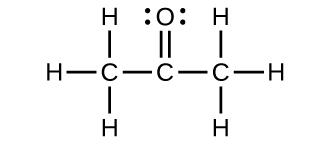
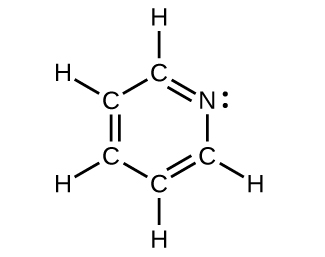
For each of the following structures, determine the hybridization requested and whether the electrons will be delocalized:
次の各構造について、指定された混成と、電子が非局在化するかどうかを求めなさい。
(a) Hybridization of each carbon
(a)各炭素原子の混成
(b) Hybridization of sulfur
(b)硫黄の混成

(c) All atoms
(c)すべての原子
Exercise 31問題 31
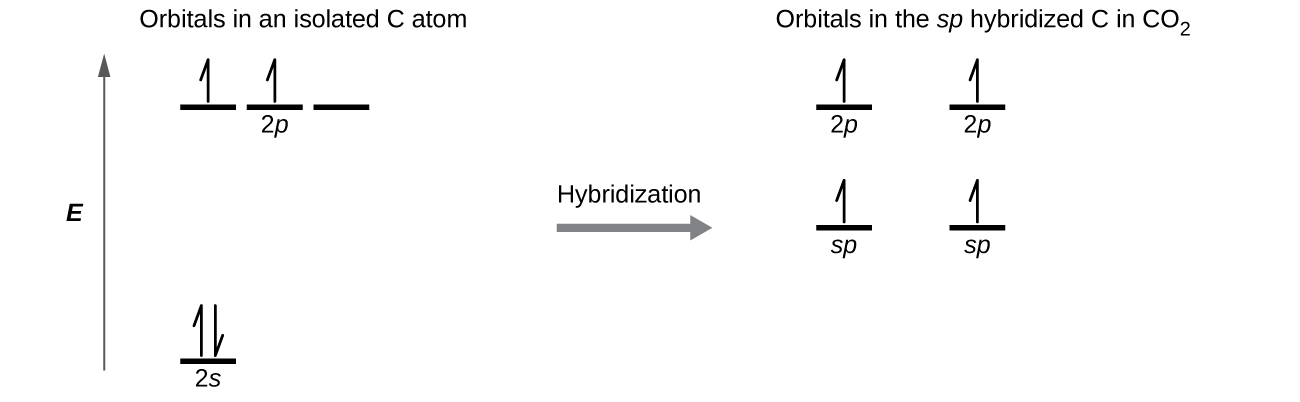
Draw the orbital diagram for carbon in CO2 showing how many carbon atom electrons are in each orbital.
CO2の炭素の軌道図を描き、炭素原子の電子が各軌道にいくつ入るかを示しなさい。