第3章関数Functions
Performing a Sequence of Transformations変形を続けて行う
When combining transformations, it is very important to consider the order of the transformations. For example, vertically shifting by 3 and then vertically stretching by 2 does not create the same graph as vertically stretching by 2 and then vertically shifting by 3, because when we shift first, both the original function and the shift get stretched, while only the original function gets stretched when we stretch first.
変形を組み合わせるときは、変形の順序をよく考えることがきわめて大切である。たとえば、縦に3だけ動かしてから縦に2倍に伸ばすのと、縦に2倍に伸ばしてから縦に3だけ動かすのとでは、同じグラフにならない。先に動かすと、もとの関数も移動分も一緒に伸ばされるが、先に伸ばすともとの関数だけが伸ばされるからである。
When we see an expression such as which transformation should we start with? The answer here follows nicely from the order of operations. Given the output value of we first multiply by 2, causing the vertical stretch, and then add 3, causing the vertical shift. In other words, multiplication before addition.
のような式を見たとき、どの変形から始めるべきか。ここでの答えは、演算の順序からうまく導かれる。 の出力値に対して、まず2を掛けて縦の拡大を起こし、次に3を足して縦の平行移動を起こす。言い換えると、加法より先に乗法である。
Horizontal transformations are a little trickier to think about. When we write for example, we have to think about how the inputs to the function relate to the inputs to the function Suppose we know What input to would produce that output? In other words, what value of will allow We would need To solve for we would first subtract 3, resulting in a horizontal shift, and then divide by 2, causing a horizontal compression.
横の変形は少し考えにくい。たとえば と書いたときは、関数 への入力が関数 への入力とどう結びつくかを考えなければならない。 が分かっているとしよう。その出力を生む への入力は何か。言い換えると、 となる の値は何か。 が必要になる。 について解くには、まず3を引いて横の平行移動を起こし、次に2で割って横の縮小を起こすことになる。
This format ends up being very difficult to work with, because it is usually much easier to horizontally stretch a graph before shifting. We can work around this by factoring inside the function.
この形は結局とても扱いにくい。ふつうは動かす前に横に伸ばす方がずっと楽だからである。関数の内側を因数分解すれば、これを避けられる。
Let’s work through an example.
例で見てみよう。
We can factor out a 2.
2をくくり出せる。
Now we can more clearly observe a horizontal shift to the left 2 units and a horizontal compression. Factoring in this way allows us to horizontally stretch first and then shift horizontally.
これで、左へ2の横の平行移動と横の縮小がはっきり見てとれる。このように因数分解しておけば、先に横に伸ばしてから横に動かせる。
Combining Transformations グラフの変換の組み合わせ
When combining vertical transformations written in the form first vertically stretch by and then vertically shift by
の形で書かれた縦の変形を組み合わせるときは、まず縦に 倍に伸ばし、次に縦に だけ動かす。
When combining horizontal transformations written in the form first horizontally shift by and then horizontally stretch by
の形で書かれた横の変形を組み合わせるときは、まず横に だけ動かし、次に横に 倍に伸ばす。
When combining horizontal transformations written in the form first horizontally stretch by and then horizontally shift by
の形で書かれた横の変形を組み合わせるときは、まず横に 倍に伸ばし、次に横に だけ動かす。
Horizontal and vertical transformations are independent. It does not matter whether horizontal or vertical transformations are performed first.
横の変形と縦の変形は互いに関わらない。横と縦のどちらを先に行っても関係ない。
Example 19例19
Finding a Triple Transformation of a Tabular Function表で表された関数の三重の変形を求める
Given Table 15 for the function create a table of values for the function
関数 について表15が与えられたとき、関数 の値の表を作れ。
| 6 | 12 | 18 | 24 | |
| 10 | 14 | 15 | 17 |
Solution 解答
There are three steps to this transformation, and we will work from the inside out. Starting with the horizontal transformations, is a horizontal compression by which means we multiply each value by See Table 16.
この変形には三つの段があり、内側から外へ進める。まず横の変形から。 は 倍の横の縮小なので、各 の値に を掛ける。表16を見よ。
| 2 | 4 | 6 | 8 | |
| 10 | 14 | 15 | 17 |
Looking now to the vertical transformations, we start with the vertical stretch, which will multiply the output values by 2. We apply this to the previous transformation. See Table 17.
次に縦の変形を見る。まず縦の拡大で、出力値に2を掛ける。これを先ほどの変形に当てる。表17を見よ。
| 2 | 4 | 6 | 8 | |
| 20 | 28 | 30 | 34 |
Finally, we can apply the vertical shift, which will add 1 to all the output values. See Table 18.
最後に縦の平行移動を当て、すべての出力値に1を足す。表18を見よ。
| 2 | 4 | 6 | 8 | |
| 21 | 29 | 31 | 35 |
Example 20例20
Finding a Triple Transformation of a Graphグラフの三重の変形を求める
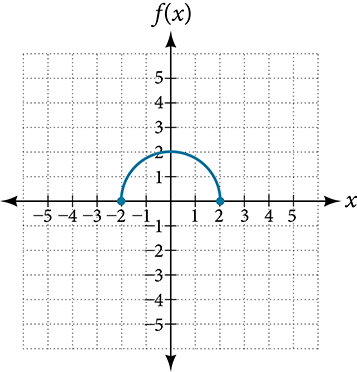
Use the graph of in Figure 27 to sketch a graph of
図27の のグラフを使って、 のグラフの概形を描け。
Solution 解答
To simplify, let’s start by factoring out the inside of the function.
簡単にするため、まず関数の内側を因数分解しよう。
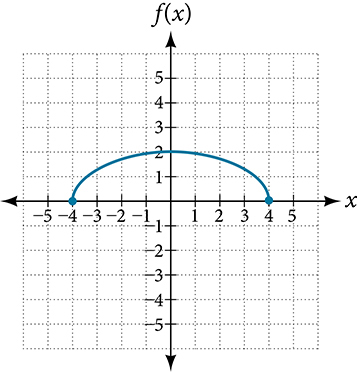
By factoring the inside, we can first horizontally stretch by 2, as indicated by the on the inside of the function. Remember that twice the size of 0 is still 0, so the point (0,2) remains at (0,2) while the point (2,0) will stretch to (4,0). See Figure 28.
内側を因数分解すれば、関数の内側の が示すとおり、まず横に2倍に伸ばせる。0の2倍は0のままなので、点 (0,2) は (0,2) のままで、点 (2,0) は (4,0) へ伸びることを覚えておこう。図28を見よ。
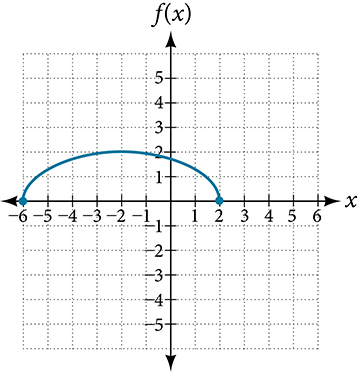
Next, we horizontally shift left by 2 units, as indicated by See Figure 29.
次に、 が示すとおり、横に左へ2だけ動かす。図29を見よ。
Last, we vertically shift down by 3 to complete our sketch, as indicated by the on the outside of the function. See Figure 30.
最後に、関数の外側の が示すとおり、縦に下へ3だけ動かして概形を仕上げる。図30を見よ。
Media 教材
Access this online resource for additional instruction and practice with transformation of functions.
関数の変形についての説明と練習をさらに求めるなら、次のオンライン教材にあたるとよい。
・関数の変形
Verbal言葉で答える問題
2. When examining the formula of a function that is the result of multiple transformations, how can you tell a horizontal stretch from a vertical stretch?
2. 複数の変形の結果である関数の式を見るとき、横の拡大と縦の拡大をどう見分けるか。
4. When examining the formula of a function that is the result of multiple transformations, how can you tell a reflection with respect to the x-axis from a reflection with respect to the y-axis?
4. 複数の変形の結果である関数の式を見るとき、x軸に関する対称移動と y軸に関する対称移動をどう見分けるか。
Algebraic代数の問題
For the following exercises, write a formula for the function obtained when the graph is shifted as described.
次の各問について、述べられたとおりにグラフを動かして得られる関数の式を書け。
6. is shifted up 1 unit and to the left 2 units.
6. を上へ1、左へ2だけ動かす。
8. is shifted down 4 units and to the right 3 units.
8. を下へ4、右へ3だけ動かす。
For the following exercises, describe how the graph of the function is a transformation of the graph of the original function
次の各問について、その関数のグラフが、もとの関数 のグラフをどう変形したものかを述べよ。
For the following exercises, determine the interval(s) on which the function is increasing and decreasing.
次の各問について、関数が増加する区間と減少する区間を求めよ。
Graphicalグラフの問題
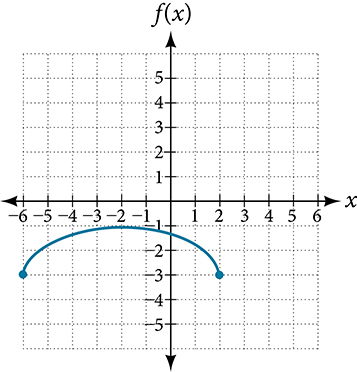
For the following exercises, use the graph of shown in Figure 31 to sketch a graph of each transformation of
次の各問では、図31に示した のグラフを使って、 の各変形のグラフの概形を描け。
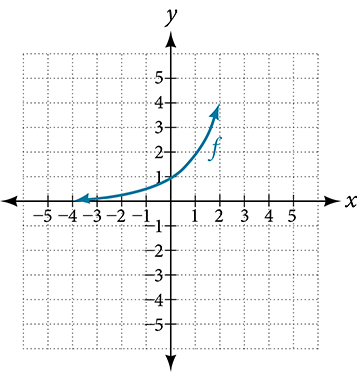
For the following exercises, sketch a graph of the function as a transformation of the graph of one of the toolkit functions.
次の各問について、道具となる関数の一つのグラフの変形として、その関数のグラフの概形を描け。
Numeric数値の問題
31. Tabular representations for the functions and are given below. Write and as transformations of
31. 関数 と を表で表したものを下に示す。 と を の変形として書け。
| −2 | −1 | 0 | 1 | 2 | |
| −2 | −1 | −3 | 1 | 2 |
| −1 | 0 | 1 | 2 | 3 | |
| −2 | −1 | −3 | 1 | 2 |
| −2 | −1 | 0 | 1 | 2 | |
| −1 | 0 | −2 | 2 | 3 |
32. Tabular representations for the functions and are given below. Write and as transformations of
32. 関数 と を表で表したものを下に示す。 と を の変形として書け。
| −2 | −1 | 0 | 1 | 2 | |
| −1 | −3 | 4 | 2 | 1 |
| −3 | −2 | −1 | 0 | 1 | |
| −1 | −3 | 4 | 2 | 1 |
| −2 | −1 | 0 | 1 | 2 | |
| −2 | −4 | 3 | 1 | 0 |
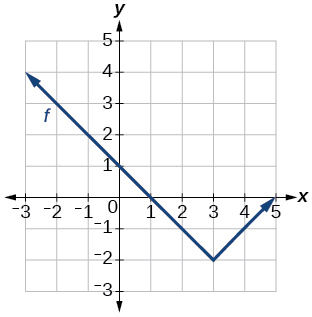
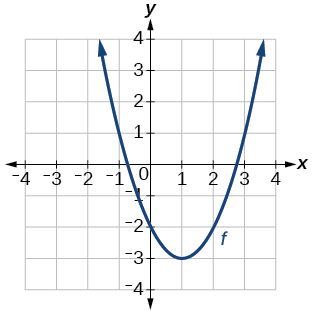
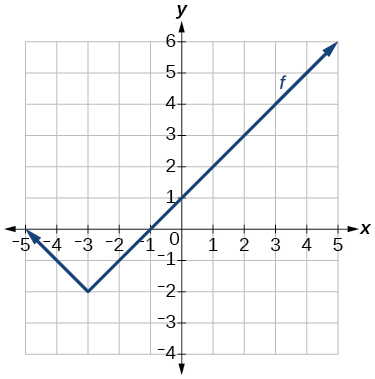
For the following exercises, write an equation for each graphed function by using transformations of the graphs of one of the toolkit functions.
次の各問について、道具となる関数の一つのグラフの変形を使って、描かれた各関数の方程式を書け。
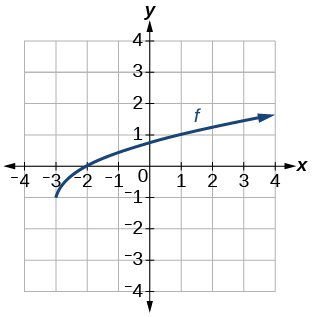
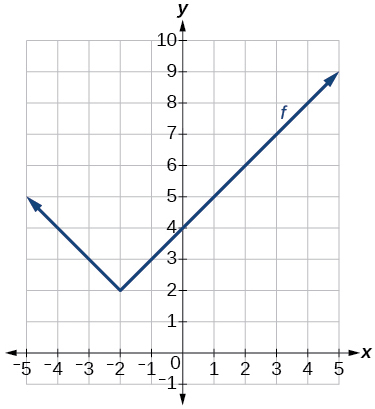
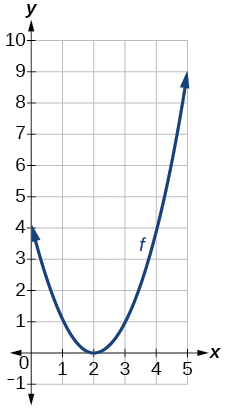
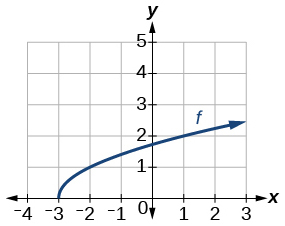
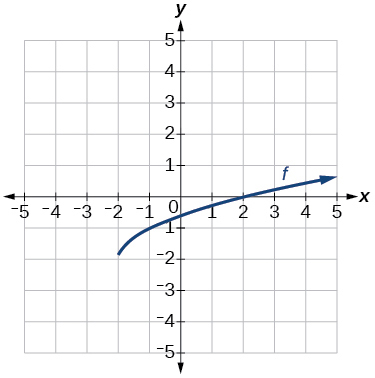
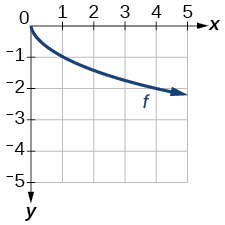
For the following exercises, use the graphs of transformations of the square root function to find a formula for each of the functions.
次の各問について、平方根の関数を変形したグラフを使って、各関数の式を求めよ。
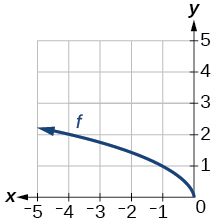
For the following exercises, use the graphs of the transformed toolkit functions to write a formula for each of the resulting functions.
次の各問について、変形した道具となる関数のグラフを使って、できた各関数の式を書け。
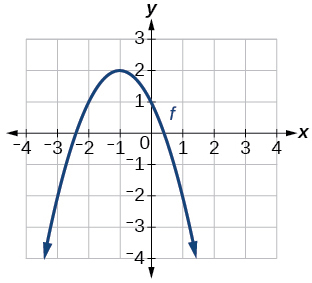
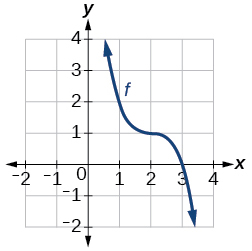
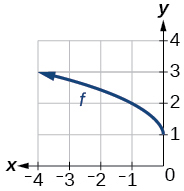
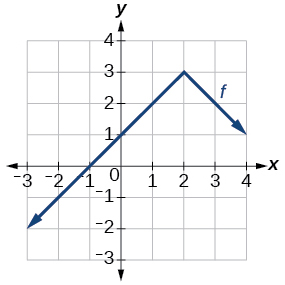
For the following exercises, determine whether the function is odd, even, or neither.
次の各問について、関数が奇関数か偶関数かどちらでもないかを判定せよ。
For the following exercises, describe how the graph of each function is a transformation of the graph of the original function
次の各問について、各関数のグラフが、もとの関数 のグラフをどう変形したものかを述べよ。
For the following exercises, write a formula for the function that results when the graph of a given toolkit function is transformed as described.
次の各問について、与えられた道具となる関数のグラフを述べられたとおりに変形して得られる関数 の式を書け。
64. The graph of is reflected over the -axis and horizontally stretched by a factor of 2.
64. のグラフを 軸に関して折り返し、横に2倍に伸ばす。
66. The graph of is vertically stretched by a factor of 8, then shifted to the right 4 units and up 2 units.
66. のグラフを縦に8倍に伸ばし、そのうえで右へ4、上へ2だけ動かす。
68. The graph of is horizontally stretched by a factor of 3, then shifted to the left 4 units and down 3 units.
68. のグラフを横に3倍に伸ばし、そのうえで左へ4、下へ3だけ動かす。
For the following exercises, describe how the formula is a transformation of a toolkit function. Then sketch a graph of the transformation.
次の各問について、その式が道具となる関数をどう変形したものかを述べよ。そのうえで変形のグラフの概形を描け。
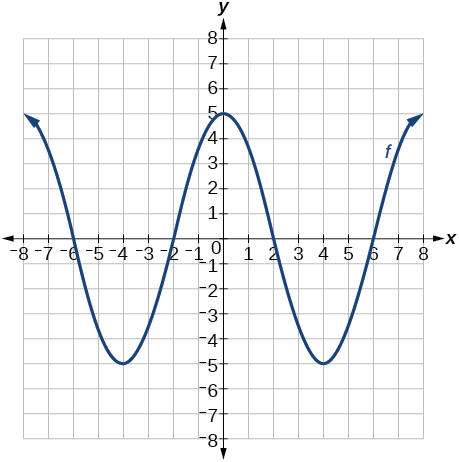
For the following exercises, use the graph in Figure 32 to sketch the given transformations.
次の各問では、図32のグラフを使って、指示された変形の概形を描け。