第3章関数Functions
Evaluating Composite Functions合成関数の値を求める
Once we compose a new function from two existing functions, we need to be able to evaluate it for any input in its domain. We will do this with specific numerical inputs for functions expressed as tables, graphs, and formulas and with variables as inputs to functions expressed as formulas. In each case, we evaluate the inner function using the starting input and then use the inner function’s output as the input for the outer function.
二つの関数から新しい関数を合成したら、その定義域のどの入力についても値を求められなければならない。表・グラフ・式で表された関数について具体的な数の入力で、また式で表された関数について変数を入力として、これを行う。どの場合も、まず最初の入力で内側の関数の値を求め、その出力を外側の関数の入力として使う。
Evaluating Composite Functions Using Tables表を使って合成関数の値を求める
When working with functions given as tables, we read input and output values from the table entries and always work from the inside to the outside. We evaluate the inside function first and then use the output of the inside function as the input to the outside function.
表で与えられた関数を扱うときは、表の項目から入力値と出力値を読み、つねに内側から外側へ進む。まず内側の関数の値を求め、その出力を外側の関数の入力として使う。
Example 5例5
Using a Table to Evaluate a Composite Function表を使って合成関数の値を求める
Using Table 1, evaluate and
表1を使って と の値を求めよ。
| 1 | 6 | 3 |
| 2 | 8 | 5 |
| 3 | 3 | 2 |
| 4 | 1 | 7 |
Solution 解答
To evaluate we start from the inside with the input value 3. We then evaluate the inside expression using the table that defines the function We can then use that result as the input to the function so is replaced by 2 and we get Then, using the table that defines the function we find that
の値を求めるには、内側の入力値3から始める。関数 を定める表を使って内側の式 の値を求めると である。その結果を関数 の入力として使えるので、 を2に置き換えて を得る。そのうえで関数 を定める表から が分かる。
To evaluate we first evaluate the inside expression using the first table: Then, using the table for we can evaluate
の値を求めるには、まず一つ目の表を使って内側の式 の値を求める。 である。そのうえで の表を使って値を求められる。
Table 2 shows the composite functions and as tables.
表2に、合成関数 と を表として示す。
| 3 | 2 | 8 | 3 | 2 |
Try It #3やってみよう3
Using Table 1, evaluate and
表1を使って と の値を求めよ。
Evaluating Composite Functions Using Graphsグラフを使って合成関数の値を求める
When we are given individual functions as graphs, the procedure for evaluating composite functions is similar to the process we use for evaluating tables. We read the input and output values, but this time, from the and axes of the graphs.
それぞれの関数がグラフで与えられているときも、合成関数の値を求める手つきは表のときと似ている。入力値と出力値を読むのだが、今度はグラフの 軸と 軸から読む。
How To 手順
Given a composite function and graphs of its individual functions, evaluate it using the information provided by the graphs.
合成関数と、それを作る各関数のグラフが与えられたとき、グラフの情報を使って値を求める。
1. Locate the given input to the inner function on the axis of its graph.2. Read off the output of the inner function from the axis of its graph.3. Locate the inner function output on the axis of the graph of the outer function.4. Read the output of the outer function from the axis of its graph. This is the output of the composite function.
1. 内側の関数のグラフの 軸で、与えられた入力を見つける。2. 内側の関数のグラフの 軸から、その出力を読み取る。3. 外側の関数のグラフの 軸で、内側の関数の出力を見つける。4. 外側の関数のグラフの 軸から、その出力を読み取る。これが合成関数の出力である。
Example 6例6
Using a Graph to Evaluate a Composite Functionグラフを使って合成関数の値を求める
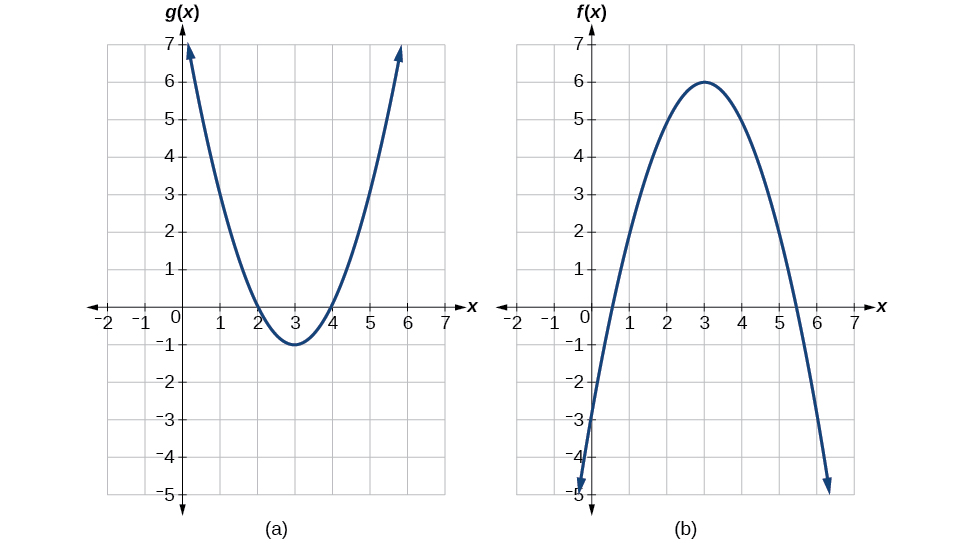
Using Figure 1, evaluate
図1を使って の値を求めよ。
Solution 解答
To evaluate we start with the inside evaluation. See Figure 2.
の値を求めるには、内側から始める。図2を見よ。
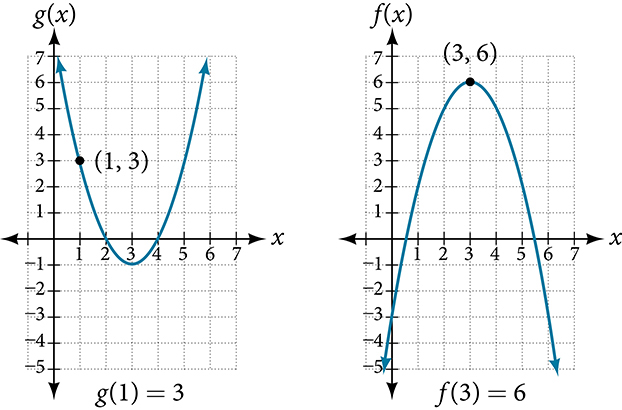
We evaluate using the graph of finding the input of 1 on the axis and finding the output value of the graph at that input. Here, We use this value as the input to the function
のグラフを使って の値を求める。 軸で入力1を見つけ、その入力でのグラフの出力値を読む。ここでは である。この値を関数 の入力として使う。
We can then evaluate the composite function by looking to the graph of finding the input of 3 on the axis and reading the output value of the graph at this input. Here, so
そのうえで のグラフを見て、 軸で入力3を見つけ、その入力でのグラフの出力値を読めば、合成関数の値が求まる。ここでは なので である。
Analysis 考察
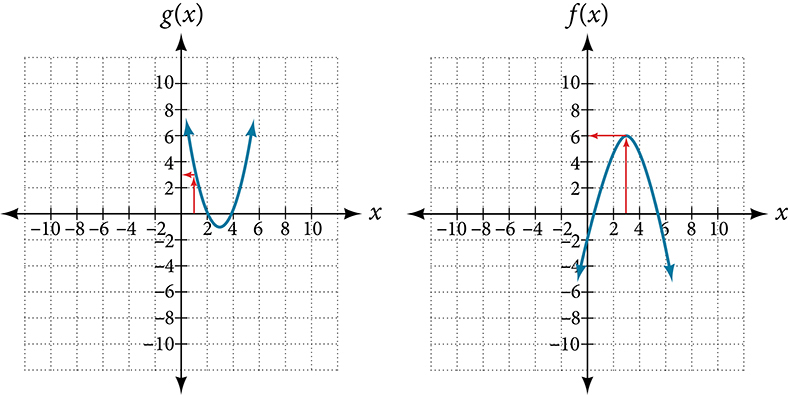
Figure 3 shows how we can mark the graphs with arrows to trace the path from the input value to the output value.
図3に、入力値から出力値までの道筋を矢でたどれるようグラフに印を付けたものを示す。
Try It #4やってみよう4
Using Figure 1, evaluate
図1を使って の値を求めよ。
Evaluating Composite Functions Using Formulas式を使って合成関数の値を求める
When evaluating a composite function where we have either created or been given formulas, the rule of working from the inside out remains the same. The input value to the outer function will be the output of the inner function, which may be a numerical value, a variable name, or a more complicated expression.
式を自分で作った場合でも与えられた場合でも、合成関数の値を求めるときは内側から外側へという規則は変わらない。外側の関数への入力値は内側の関数の出力であり、それは数でも、変数の名前でも、もっと込み入った式でもよい。
While we can compose the functions for each individual input value, it is sometimes helpful to find a single formula that will calculate the result of a composition To do this, we will extend our idea of function evaluation. Recall that, when we evaluate a function like we substitute the value inside the parentheses into the formula wherever we see the input variable.
入力値ごとに関数を合成することもできるが、合成 の結果を計算する一つの式を求めておくと役に立つことがある。そのために、関数の値を求めるという考えを広げる。 のような関数の値を求めるとき、括弧の中の値を、入力の変数が現れるところすべてに代入したのを思い出そう。
How To 手順
Given a formula for a composite function, evaluate the function.
合成関数の式が与えられたとき、その値を求める。
1. Evaluate the inside function using the input value or variable provided.2. Use the resulting output as the input to the outside function.
1. 与えられた入力値または変数を使って、内側の関数の値を求める。2. その出力を外側の関数の入力として使う。
Example 7例7
Evaluating a Composition of Functions Expressed as Formulas with a Numerical Input式で表された関数の合成の値を、数の入力について求める
Given and evaluate
と が与えられたとき、 の値を求めよ。
Solution 解答
Because the inside expression is we start by evaluating at 1.
内側の式が なので、まず の1での値を求める。
Then so we evaluate at an input of 5.
すると なので、 の入力5での値を求める。
Analysis 考察
It makes no difference what the input variables and were called in this problem because we evaluated for specific numerical values.
この問題では具体的な数の値で計算したので、入力の変数が と のどちらの名前で呼ばれていたかは関係ない。
Try It #5やってみよう5
Given and evaluate
と が与えられたとき、次の値を求めよ。