第1章前提知識Prerequisites
Introduction to Prerequisitesはじめに
• 1.1 Real Numbers: Algebra Essentials • 1.2 Exponents and Scientific Notation • 1.3 Radicals and Rational Exponents • 1.4 Polynomials • 1.5 Factoring Polynomials • 1.6 Rational Expressions
・1.1 実数:代数の基礎・1.2 指数と科学的記数法・1.3 根号と有理数の指数・1.4 多項式・1.5 多項式の因数分解・1.6 有理式
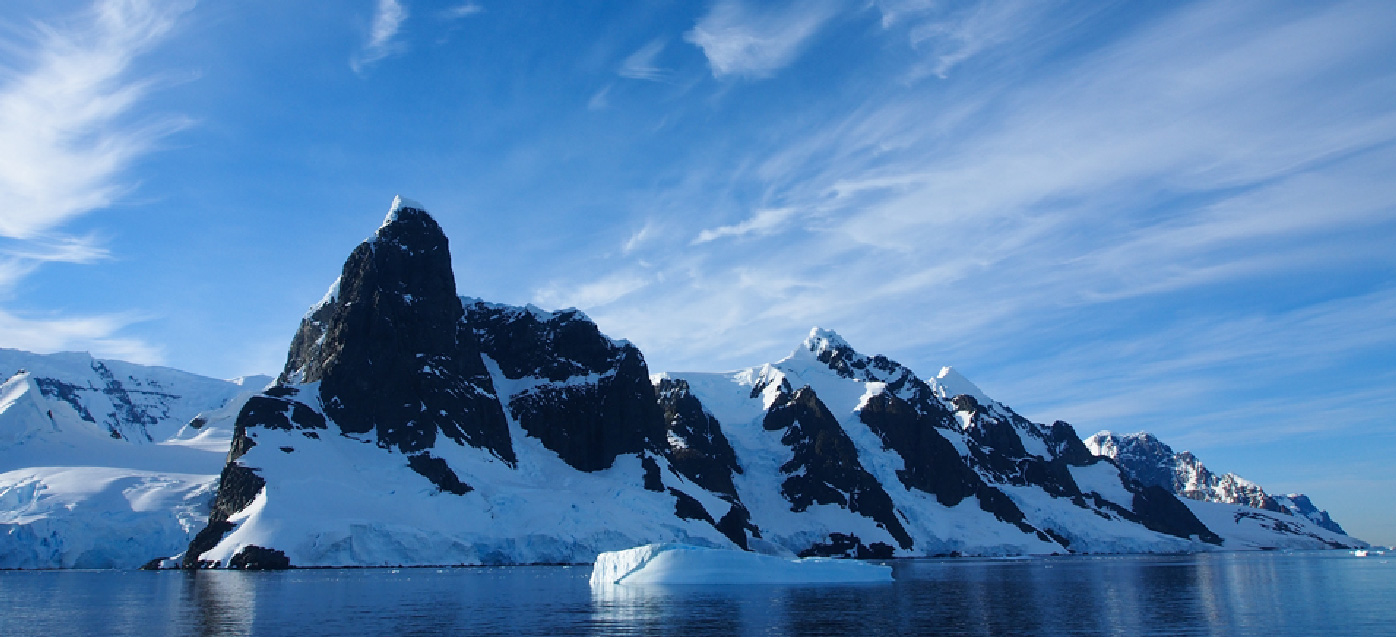
It’s a cold day in Antarctica. In fact, it’s always a cold day in Antarctica. Earth’s southernmost continent, Antarctica experiences the coldest, driest, and windiest conditions known. The coldest temperature ever recorded, over one hundred degrees below zero on the Celsius scale, was recorded by remote satellite. It is no surprise then, that no native human population can survive the harsh conditions. Only explorers and scientists brave the environment for any length of time.
南極は今日も寒い。地球の最南端にあるこの大陸は、世界でもとりわけ寒く、乾燥し、風の強い場所である。人工衛星の観測では、氷床の表面温度が摂氏マイナス90度を下回る地点も見つかっている。こうした厳しい環境のため、南極には先住の住民がおらず、探検家や科学者が一定の期間滞在して調査を行っている。
Measuring and recording the characteristics of weather conditions in Antarctica requires a use of different kinds of numbers. For tens of thousands of years, humans have undertaken methods to tally, track, and record numerical information. While we don’t know much about their usage, the Lebombo Bone (dated to about 35,000 BCE) and the Ishango Bone (dated to about 20,000 BCE) are among the earliest mathematical artifacts. Found in Africa, their clearly deliberate groupings of notches may have been used to track time, moon cycles, or other information. Performing calculations with them and using the results to make predictions requires an understanding of relationships among numbers. In this chapter, we will review sets of numbers and properties of operations used to manipulate numbers. This understanding will serve as prerequisite knowledge throughout our study of algebra and trigonometry.
南極の気象を測定し、記録するには、さまざまな種類の数が必要になる。人類は何万年もの間、数量を数え、変化を追い、記録する方法を工夫してきた。アフリカで発見されたレボンボの骨(紀元前35,000年ごろ)とイシャンゴの骨(紀元前20,000年ごろ)は、数学に関係する最古級の遺物である。用途ははっきりしないが、意図的にまとまりをつけて刻まれた印は、時の経過や月の満ち欠けなどを記録するためのものだった可能性がある。数を使って計算し、その結果から予測を立てるには、数どうしの関係を理解する必要がある。この章では、数の集合と演算の性質を復習する。ここで学ぶ内容は、これから代数と三角法を学ぶための基礎になる。