第6章指数関数と対数関数Exponential and Logarithmic Functions
Introduction to Exponential and Logarithmic Functions指数関数と対数関数への導入
• 6.1 Exponential Functions • 6.2 Graphs of Exponential Functions • 6.3 Logarithmic Functions • 6.4 Graphs of Logarithmic Functions • 6.5 Logarithmic Properties • 6.6 Exponential and Logarithmic Equations • 6.7 Exponential and Logarithmic Models • 6.8 Fitting Exponential Models to Data
・6.1 指数関数・6.2 指数関数のグラフ・6.3 対数関数・6.4 対数関数のグラフ・6.5 対数の性質・6.6 指数方程式と対数方程式・6.7 指数・対数モデル・6.8 データへの指数モデルの当てはめ
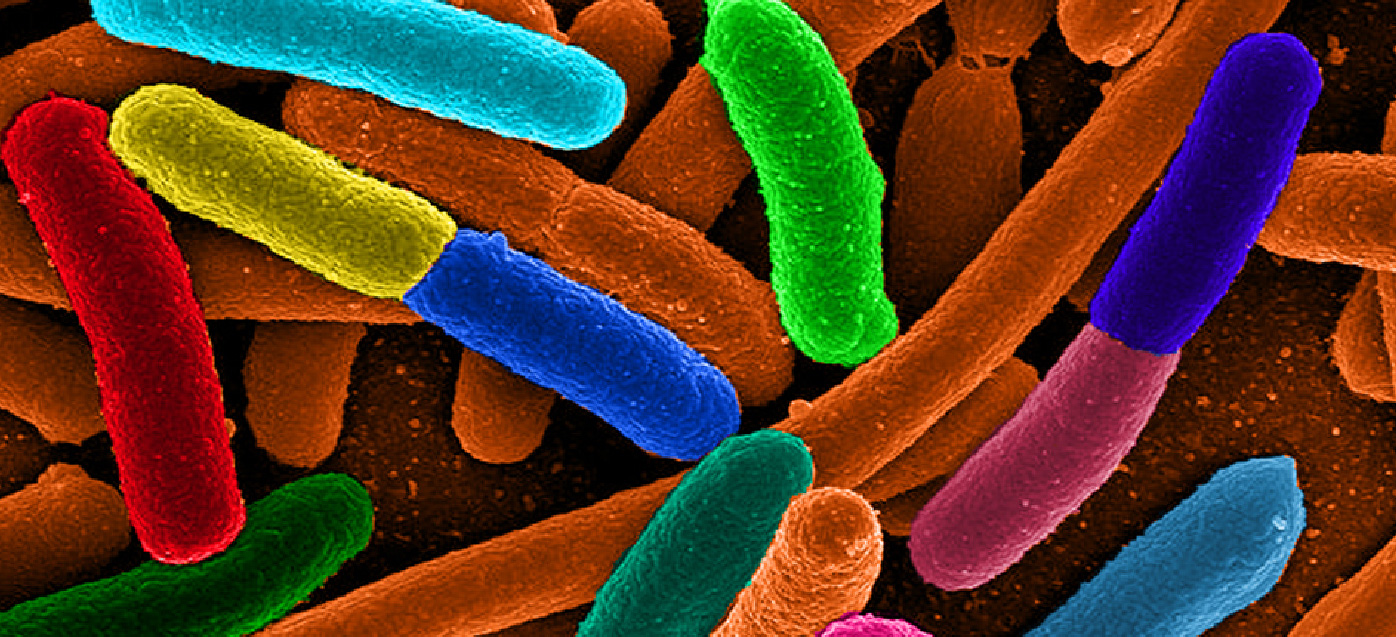
Focus in on a square centimeter of your skin. Look closer. Closer still. If you could look closely enough, you would see hundreds of thousands of microscopic organisms. They are bacteria, and they are not only on your skin, but in your mouth, nose, and even your intestines. In fact, the bacterial cells in your body at any given moment outnumber your own cells. But that is no reason to feel bad about yourself. While some bacteria can cause illness, many are healthy and even essential to the body.
自分の皮膚の1平方センチメートルほどの範囲を想像し、そこをどんどん拡大してみよう。十分に細かく見ることができれば、何十万もの微生物が見えるだろう。これらは細菌で、皮膚だけでなく、口や鼻、さらには腸の中にも生息している。人体には、人間自身の細胞に匹敵するほど多数の細菌がいる。病気の原因になるものもいるが、体に役立ち、健康を保つうえで欠かせないものも多い。
Bacteria commonly reproduce through a process called binary fission, during which one bacterial cell splits into two. When conditions are right, bacteria can reproduce very quickly. Unlike humans and other complex organisms, the time required to form a new generation of bacteria is often a matter of minutes or hours, as opposed to days or years.1
細菌はふつう、1つの細胞が2つに分かれる二分裂によって増える。条件がよければ、この分裂は短い間隔で起こる。人間などの複雑な生物と違い、細菌が次の世代をつくるまでの時間は、日や年ではなく、数分から数時間で済むことがある。
For simplicity’s sake, suppose we begin with a culture of one bacterial cell that can divide every hour. Table 1 shows the number of bacterial cells at the end of each subsequent hour. We see that the single bacterial cell leads to over one thousand bacterial cells in just ten hours! And if we were to extrapolate the table to twenty-four hours, we would have over 16 million!
簡単な例として、1時間ごとに分裂する細菌を1個だけ培養し始めたとしよう。表1は、それから1時間たつごとの細菌の個数を示している。最初は1個でも、10時間後には1,000個を超える。この増え方が24時間続けば、個数は1,600万個を超える。
| Hour時間 | 0 | 1 | 2 | 3 | 4 | 5 | 6 | 7 | 8 | 9 | 10 |
| Bacteria細菌 | 1 | 2 | 4 | 8 | 16 | 32 | 64 | 128 | 256 | 512 | 1024 |
In this chapter, we will explore exponential functions, which can be used for, among other things, modeling growth patterns such as those found in bacteria. We will also investigate logarithmic functions, which are closely related to exponential functions. Both types of functions have numerous real-world applications when it comes to modeling and interpreting data.
この章では、細菌に見られるような増え方のモデルなどに使える指数関数を調べる。指数関数と密接に関わる対数関数も調べる。どちらの種類の関数も、資料のモデルを作り、それを読み解くうえで数多くの現実の応用がある。