第16章療法と治療
16.5 The Sociocultural Model and Therapy Utilization16.5 社会文化的モデルと療法の利用
Learning Objectives学習目標
By the end of this section, you will be able to:
この節を学び終えると、次のことができるようになる。
- Explain how the sociocultural model is used in therapy社会文化的モデルが療法の中でどのように用いられているかを説明する
- Discuss barriers to mental health services among ethnic minorities民族的マイノリティが精神保健サービスを利用するうえでの障壁について論じる
The sociocultural perspective looks at you, your behaviors, and your symptoms in the context of your culture and background. For example, José is an 18-year-old Hispanic male from a traditional family. José comes to treatment because of depression. During the intake session, he reveals that he is gay and is nervous about telling his family. He also discloses that he is concerned because his religious background has taught him that being gay is wrong. How does his religious and cultural background affect him? How might his cultural background affect how his family reacts if José were to tell them he is gay?
英語のヒント
社会文化的な視点は、あなた自身、あなたの行動、あなたの症状を、あなたの文化と背景という文脈の中で見る。たとえば、ホセは伝統的な家庭に育った18歳のヒスパニック系の男性である。ホセは抑うつを理由に治療に訪れる。インテーク面接の中で、彼は自分がゲイであり、そのことを家族に打ち明けるのが不安だと明かす。さらに、宗教的な背景から、ゲイであることは間違いだと教えられてきたので、悩んでいるとも打ち明ける。彼の宗教的・文化的な背景は、彼にどのような影響を与えているだろうか。もしホセが家族に自分はゲイだと告げたとしたら、彼の文化的な背景は、家族の反応の仕方にどのような影響を与えうるだろうか。
Mental health professionals must develop cultural competence (Figure 16.20), which means they must understand and address issues of race, culture, and ethnicity. They must also develop strategies to effectively address the needs of various populations for which Eurocentric therapies have limited application (Sue, 2004). For example, a counselor whose treatment focuses on individual decision making may be ineffective at helping a Chinese client with a collectivist approach to problem solving (Sue, 2004).
英語のヒント
精神保健の専門家は、文化的コンピテンスを身につけなければならない(図16.20)。つまり、人種、文化、民族性にかかわる問題を理解し、それに対処しなければならないということである。また、ヨーロッパ中心の療法では適用範囲が限られるさまざまな集団のニーズに効果的に応えるための方略も、身につけなければならない(Sue, 2004)。たとえば、個人の意思決定に焦点を当てた治療を行うカウンセラーは、問題解決に集団主義的なアプローチをとる中国人のクライエントを援助するうえで、効果を上げられないかもしれない(Sue, 2004)。
Multicultural counseling and therapy aims to offer both a helping role and process that uses modalities and defines goals consistent with the life experiences and cultural values of clients. It strives to recognize client identities to include individual, group, and universal dimensions, advocate the use of universal and culture-specific strategies and roles in the healing process, and balances the importance of individualism and collectivism in the assessment, diagnosis, and treatment of client and client systems (Sue, 2001).
英語のヒント
多文化カウンセリング・療法は、クライエントの人生経験や文化的価値観に沿った形態を用い、それに沿った目標を定める援助の役割と過程の両方を提供することをめざす。また、クライエントのアイデンティティを個人・集団・普遍という次元を含むものとして認識しようと努め、癒やしの過程で普遍的な方略や役割と文化に固有の方略や役割を用いることを提唱し、クライエント本人とクライエントを取り巻くシステムのアセスメント、診断、治療において、個人主義と集団主義の重要性の釣り合いをとる(Sue, 2001)。
This therapeutic perspective integrates the impact of cultural and social norms, starting at the beginning of treatment. Therapists who use this perspective work with clients to obtain and integrate information about their cultural patterns into a unique treatment approach based on their particular situation (Stewart, Simmons, & Habibpour, 2012). Sociocultural therapy can include individual, group, family, and couples treatment modalities.
英語のヒント
この治療的な視点は、治療の最初の段階から、文化的・社会的な規範の影響を組み込む。この視点を用いるセラピストは、クライエントと協力して、その文化的なパターンについての情報を得て、それを一人ひとりの状況に基づいた独自の治療アプローチに組み込んでいく(Stewart, Simmons, & Habibpour, 2012)。社会文化的療法には、個人療法、集団療法、家族療法、カップル療法という治療形態が含まれうる。
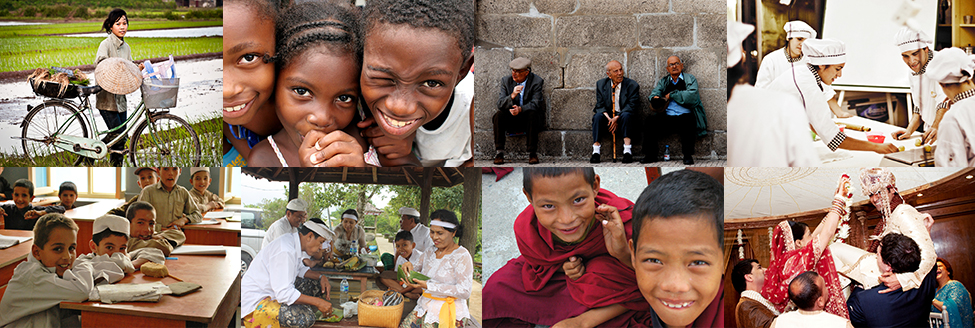
OpenStax, Rice University; Psychology 2e. (credit “top-left”: modification of work by Staffan Scherz; credit “top-left-middle”: modification of work by Alejandra Quintero Sinisterra; credit “top-right-middle”: modification of work by Pedro Ribeiro Simões; credit “top-right”: modification of work by Agustin Ruiz; credit “bottom-left”: modification of work by Czech Provincial Reconstruction Team; credit “bottom-left-middle”: modification of work by Arian Zwegers; credit “bottom-right-middle”: modification of work by “Wonderlane”/Flickr; credit “bottom-right”: modification of work by Shiraz Chanawala) · CC BY 4.0 · Source出典

Figure 16.20図 16.20
How do your cultural and religious beliefs affect your attitude toward mental health treatment? (credit “top-left”: modification of work by Staffan Scherz; credit “top-left-middle”: modification of work by Alejandra Quintero Sinisterra; credit “top-right-middle”: modification of work by Pedro Ribeiro Simões; credit “top-right”: modification of work by Agustin Ruiz; credit “bottom-left”: modification of work by Czech Provincial Reconstruction Team; credit “bottom-left-middle”: modification of work by Arian Zwegers; credit “bottom-right-middle”: modification of work by “Wonderlane”/Flickr; credit “bottom-right”: modification of work by Shiraz Chanawala)
あなたの文化的・宗教的な信念は、メンタルヘルスの治療に対するあなたの態度にどのような影響を与えているだろうか。(出典「上段左」:Staffan Scherzの作品を改変、出典「上段中央左」:Alejandra Quintero Sinisterraの作品を改変、出典「上段中央右」:Pedro Ribeiro Simõesの作品を改変、出典「上段右」:Agustin Ruizの作品を改変、出典「下段左」:Czech Provincial Reconstruction Teamの作品を改変、出典「下段中央左」:Arian Zwegersの作品を改変、出典「下段中央右」:“Wonderlane”/Flickrの作品を改変、出典「下段右」:Shiraz Chanawalaの作品を改変)
Barriers to Treatment治療を妨げる障壁
Statistically, ethnic minorities tend to utilize mental health services less frequently than White, middle-class Americans (Alegría et al., 2008; Richman, Kohn-Wood, & Williams, 2007). Why is this so? Perhaps the reason has to do with access and availability of mental health services. Ethnic minorities and individuals of low socioeconomic status (SES) report that barriers to services include lack of insurance, transportation, and time (Thomas & Snowden, 2002). However, researchers have found that even when income levels and insurance variables are taken into account, ethnic minorities are far less likely to seek out and utilize mental health services. And when access to mental health services is comparable across ethnic and racial groups, differences in service utilization remain (Richman et al., 2007).
英語のヒント
統計的には、民族的マイノリティは、白人の中流階級のアメリカ人よりも精神保健サービスを利用する頻度が低い傾向がある(Alegría et al., 2008; Richman, Kohn-Wood, & Williams, 2007)。なぜそうなるのだろうか。その理由は、精神保健サービスへのアクセスや、サービスが利用できる状態にあるかどうかと関係しているのかもしれない。民族的マイノリティや社会経済的地位(SES)の低い人々は、サービスを受けるうえでの障壁には、保険、交通手段、時間の不足があると報告している(Thomas & Snowden, 2002)。しかし研究者たちは、所得水準と保険にかかわる変数を考慮に入れても、民族的マイノリティが精神保健サービスを求めて利用する可能性ははるかに低いことを見いだしている。そして、精神保健サービスへのアクセスが民族・人種集団のあいだで同程度である場合にも、サービス利用の差は残る(Richman et al., 2007)。
In a study involving thousands of women, it was found that the prevalence rate of anorexia was similar across different races, but that bulimia nervosa was more prevalent among Hispanic and African American women when compared with non-Hispanic White people (Marques et al., 2011). Although they have similar or higher rates of eating disorders, Hispanic and African American women with these disorders tend to seek and engage in treatment far less than White women. These findings suggest ethnic disparities in access to care, as well as clinical and referral practices that may prevent Hispanic and African American women from receiving care, which could include lack of bilingual treatment, stigma, fear of not being understood, family privacy, and lack of education about eating disorders.
英語のヒント
数千人の女性を対象にしたある研究では、神経性無食欲症の有病率は人種が違っても同程度だったが、神経性過食症は、ヒスパニック系でない白人と比べて、ヒスパニック系とアフリカ系アメリカ人の女性でより多く見られることが分かった(Marques et al., 2011)。摂食障害の率が白人女性と同程度か、それより高いにもかかわらず、摂食障害を抱えるヒスパニック系とアフリカ系アメリカ人の女性が治療を求め、治療に参加する程度は、白人女性よりはるかに低い傾向がある。これらの知見は、ケアへのアクセスに民族間の格差があること、そして、ヒスパニック系とアフリカ系アメリカ人の女性がケアを受けるのを妨げているかもしれない臨床や紹介の慣行があることを示唆している。そうした妨げには、二言語で受けられる治療の不足、スティグマ、理解してもらえないことへの恐れ、家族のプライバシー、摂食障害についての教育の不足が含まれうる。
Perceptions and attitudes toward mental health services may also contribute to this imbalance. A recent study at King’s College, London, found many complex reasons why people do not seek treatment: self-sufficiency and not seeing the need for help, not seeing therapy as effective, concerns about confidentiality, and the many effects of stigma and shame (Clement et al., 2014). And in another study, African Americans exhibiting depression were less willing to seek treatment due to fear of possible psychiatric hospitalization as well as fear of the treatment itself (Sussman, Robins, & Earls, 1987). Instead of mental health treatment, many African Americans prefer to be self-reliant or use spiritual practices (Snowden, 2001; Belgrave & Allison, 2010). For example, it has been found that the Black church plays a significant role as an alternative to mental health services by providing prevention and treatment-type programs designed to enhance the psychological and physical well-being of its members (Blank, Mahmood, Fox, & Guterbock, 2002).
英語のヒント
精神保健サービスに対する認識や態度も、この不均衡の一因となっているかもしれない。ロンドンのキングス・カレッジで行われた最近の研究は、人が治療を求めない複雑な理由を数多く見いだした。自力で何とかできるという意識や助けが必要だと思わないこと、療法が効果的だと思わないこと、守秘義務についての懸念、そしてスティグマと恥がもたらすさまざまな影響である(Clement et al., 2014)。また別の研究では、抑うつを示すアフリカ系アメリカ人は、精神科に入院させられるかもしれないという恐れや、治療そのものへの恐れから、治療を求める意欲が低かった(Sussman, Robins, & Earls, 1987)。多くのアフリカ系アメリカ人は、メンタルヘルスの治療の代わりに、自分の力で乗り切ることや、信仰に根ざした実践を用いることを好む(Snowden, 2001; Belgrave & Allison, 2010)。たとえば、黒人教会は、信徒の心理的・身体的な幸福を高めるよう工夫された予防型や治療型のプログラムを提供することで、精神保健サービスに代わるものとして重要な役割を果たしていることが分かっている(Blank, Mahmood, Fox, & Guterbock, 2002)。
Additionally, people belonging to ethnic groups that already report concerns about prejudice and discrimination are less likely to seek services for a mental illness because they view it as an additional stigma (Gary, 2005; Townes, Cunningham, & Chavez-Korell, 2009; Scott, McCoy, Munson, Snowden, & McMillen, 2011). For example, in one recent study of 462 older Korean Americans (over the age of 60) many participants reported suffering from depressive symptoms. However, 71% indicated they thought depression was a sign of personal weakness, and 14% reported that having a mentally ill family member would bring shame to the family (Jang, Chiriboga, & Okazaki, 2009).
英語のヒント
さらに、すでに偏見や差別への懸念を訴えている民族集団に属する人々は、精神疾患をさらなるスティグマとみなすため、精神疾患についてサービスを求める可能性が低い(Gary, 2005; Townes, Cunningham, & Chavez-Korell, 2009; Scott, McCoy, Munson, Snowden, & McMillen, 2011)。たとえば、462人の高齢の韓国系アメリカ人(60歳以上)を対象にした最近のある研究では、多くの参加者が抑うつ症状に苦しんでいると報告した。しかし、71%は、うつ病は個人の弱さの表れだと思うと答え、14%は、精神疾患のある家族がいることは家族に恥をもたらすだろうと答えた(Jang, Chiriboga, & Okazaki, 2009)。
Language differences are a further barrier to treatment. In the previous study on Korean Americans’ attitudes toward mental health services, it was found that there were no Korean-speaking mental health professionals where the study was conducted (Orlando and Tampa, Florida) (Jang et al., 2009). Because of the growing number of people from ethnically diverse backgrounds, there is a need for therapists and psychologists to develop knowledge and skills to become culturally competent (Ahmed, Wilson, Henriksen, & Jones, 2011). Those providing therapy must approach the process from the context of the unique culture of each client (Sue & Sue, 2007).
英語のヒント
言語の違いも、治療を妨げるもう一つの障壁である。精神保健サービスに対する韓国系アメリカ人の態度についての先の研究では、研究が行われた場所(フロリダ州のオーランドとタンパ)に、韓国語を話す精神保健の専門家が一人もいなかったことが分かった(Jang et al., 2009)。民族的に多様な背景を持つ人々が増えているため、セラピストや心理学者は、文化的コンピテンスを備えるために知識と技能を身につける必要がある(Ahmed, Wilson, Henriksen, & Jones, 2011)。療法を提供する者は、一人ひとりのクライエントに固有の文化という文脈に立って、療法の過程に臨まなければならない(Sue & Sue, 2007)。