第16章療法と治療
16.2 Types of Treatment16.2 治療の種類
Learning Objectives学習目標
By the end of this section, you will be able to:
この節を学び終えると、次のことができるようになる。
- Distinguish between psychotherapy and biomedical therapy心理療法と生物医学的療法を区別する
- Recognize various orientations to psychotherapy心理療法のさまざまな立場を見分ける
- Discuss psychotropic medications and recognize which medications are used to treat specific psychological disorders向精神薬について論じ、特定の心理的障害の治療にどの薬が用いられるかを見分ける
One of the goals of therapy is to help a person stop repeating and reenacting destructive patterns and to start looking for better solutions to difficult situations. This goal is reflected in the following poem:
英語のヒント
療法の目標の一つは、人が破壊的なパターンを繰り返したり再演したりするのをやめ、困難な状況に対するより良い解決策を探しはじめるのを助けることである。この目標は、次の詩に表れている。
Autobiography in Five Short Chapters by Portia Nelson (1993)英語のヒント
「五つの短い章から成る自伝」ポーシャ・ネルソン(1993)
Chapter One
I walk down the street.
There is a deep hole in the sidewalk.
I fall in.
I am lost. . . . I am helpless.
It isn't my fault.
It takes forever to find a way out.英語のヒント
第1章通りを歩いていく。歩道に深い穴がある。落ちる。途方に暮れる……なすすべもない。私のせいじゃない。抜け出す道を見つけるまで、果てしなく時間がかかる。
Chapter Two
I walk down the same street.
There is a deep hole in the sidewalk.
I pretend I don't see it.
I fall in again.
I can't believe I am in this same place.
But, it isn't my fault.
It still takes a long time to get out.英語のヒント
第2章同じ通りを歩いていく。歩道に深い穴がある。見えないふりをする。また落ちる。また同じ場所にいるなんて信じられない。でも、私のせいじゃない。抜け出すのに、やはり長い時間がかかる。
Chapter Three
I walk down the same street.
There is a deep hole in the sidewalk.
I see it is there.
I still fall in . . . it's a habit . . . but,
my eyes are open.
I know where I am.
It is my fault.
I get out immediately.英語のヒント
第3章同じ通りを歩いていく。歩道に深い穴がある。そこに穴があるのが見える。それでも落ちる……癖なのだ……でも、目は開いている。自分がどこにいるか分かっている。私のせいだ。すぐに抜け出す。
Chapter Four
I walk down the same street.
There is a deep hole in the sidewalk.
I walk around it.第4章同じ通りを歩いていく。歩道に深い穴がある。よけて通る。
Chapter Five
I walk down another street.英語のヒント
第5章別の通りを歩いていく。
Two types of therapy are psychotherapy and biomedical therapy. Both types of treatment help people with mental health issues, such as depression, anxiety, and schizophrenia. Psychotherapy is a psychological treatment that employs various methods to help someone overcome personal problems, or to attain personal growth. In modern practice, it has evolved into what is known as psychodynamic therapy, which will be discussed later. Biomedical therapy involves medication and/or medical procedures to treat psychological disorders. First, we will explore the various psychotherapeutic orientations outlined in Table 16.1 (many of these orientations were discussed in the Introduction chapter).
英語のヒント
療法には、心理療法と生物医学的療法の二つの種類がある。どちらの治療も、うつ病、不安、統合失調症などのメンタルヘルスの問題を抱える人々を助ける。心理療法とは、さまざまな方法を用いて、人が個人的な問題を克服したり、個人的な成長を遂げたりするのを助ける心理的な治療である。現代の実践では、心理療法は精神力動的療法として知られるものへと発展しており、これについてはのちに論じる。生物医学的療法は、心理的障害を治療するために、薬物や医学的処置、あるいはその両方を用いる。まず、表16.1にまとめた心理療法のさまざまな立場を見ていこう(これらの立場の多くは「心理学入門」の章で論じた)。
Various Psychotherapy Techniques さまざまな心理療法の技法 |
||
|---|---|---|
Type 種類 |
Description 説明 |
Example 例 |
Psychodynamic psychotherapy 精神力動的心理療法 |
Talk therapy based on belief that the unconscious and childhood conflicts impact behavior 無意識と子ども時代の葛藤が行動に影響を与えるという考えに基づく対話療法 |
Patient talks about their past 患者が自分の過去について話す |
Play therapy 遊戯療法 |
Psychoanalytical therapy wherein interaction with toys is used instead of talk; used in child therapy 会話の代わりにおもちゃとのやりとりを用いる精神分析的療法。子どもの療法で用いられる |
Patient (child) acts out family scenes with dolls 患者(子ども)が人形を使って家族の場面を演じる |
Behavior therapy 行動療法 |
Principles of learning applied to change undesirable behaviors 望ましくない行動を変えるために学習の原理を適用する |
Patient learns to overcome fear of elevators through several stages of relaxation techniques 患者が、いくつかの段階を踏むリラクセーション技法を通して、エレベーターへの恐怖を克服できるようになる |
Cognitive therapy 認知療法 |
Awareness of cognitive process helps patients eliminate thought patterns that lead to distress 認知過程に気づくことが、苦痛につながる思考パターンを患者が取り除く助けになる |
Patient learns not to overgeneralize failure based on single failure 患者が、一度の失敗をもとに失敗を過剰一般化しないようになる |
Cognitive-behavioral therapy 認知行動療法 |
Work to change cognitive distortions and self-defeating behaviors 認知の歪みと自滅的な行動を変えるように取り組む |
Patient learns to identify self-defeating behaviors to overcome an eating disorder 患者が、摂食障害を克服するために、自滅的な行動を見きわめられるようになる |
Humanistic therapy 人間性療法 |
Increase self-awareness and acceptance through focus on conscious thoughts 意識的な思考に焦点を当てることを通して、自己への気づきと受容を高める |
Patient learns to articulate thoughts that keep them from achieving their goals 患者が、目標の達成を妨げている考えを言葉にできるようになる |
Psychotherapy Techniques: Psychoanalysis心理療法の技法:精神分析
Psychoanalysis was developed by Sigmund Freud and was the first form of psychotherapy. It was the dominant therapeutic technique in the early 20th century, but it has since waned significantly in popularity. Freud believed most of our psychological problems are the result of repressed impulses and trauma experienced in childhood, and he believed psychoanalysis would help uncover long-buried feelings. In a psychoanalyst’s office, you might see a patient lying on a couch speaking of dreams or childhood memories, and the therapist using various Freudian methods such as free association and dream analysis (Figure 16.9). In free association, the patient relaxes and then says whatever comes to mind at the moment. However, Freud felt that the ego would at times try to block, or repress, unacceptable urges or painful conflicts during free association. Consequently, a patient would demonstrate resistance to recalling these thoughts or situations. In dream analysis, a therapist interprets the underlying meaning of dreams.
英語のヒント
精神分析はジークムント・フロイトによって開発された、心理療法の最初の形である。20世紀初頭には支配的な治療技法だったが、その後、人気は大きく衰えた。フロイトは、私たちの心理的な問題のほとんどは、抑圧された衝動や、子ども時代に経験したトラウマの結果であると考え、精神分析は長く埋もれていた感情を明らかにする助けになると考えた。精神分析家の面接室では、患者がカウチに横たわって夢や子ども時代の記憶について話し、セラピストが自由連想や夢分析といったフロイト流のさまざまな方法を用いている光景を目にするかもしれない(図16.9)。自由連想では、患者はリラックスしたうえで、その瞬間に頭に浮かんだことを何でも話す。しかしフロイトは、自由連想のあいだ、自我がときに、受け入れがたい衝動や苦痛な葛藤を妨げよう、すなわち抑圧しようとすると考えた。その結果、患者はこうした考えや状況を思い出すことに抵抗を示すことになる。夢分析では、セラピストが夢の根底にある意味を解釈する。
Psychoanalysis is a therapy approach that typically takes years. Over the course of time, the patient reveals a great deal about himself to the therapist. Freud suggested that during this patient-therapist relationship, the patient comes to develop strong feelings for the therapist—maybe positive feelings, maybe negative feelings. Freud called this transference: the patient transfers all the positive or negative emotions associated with the patient’s other relationships to the psychoanalyst. For example, Crystal is seeing a psychoanalyst. During the years of therapy, she comes to see her therapist as a father figure. She transfers her feelings about her father onto her therapist, perhaps in an effort to gain the love and attention she did not receive from her own father.
英語のヒント
精神分析は、ふつう何年もかかる療法のアプローチである。その長い期間のうちに、患者は自分自身について多くのことをセラピストに明かす。フロイトは、この患者とセラピストの関係のなかで、患者がセラピストに対して強い感情を抱くようになると述べた。それは肯定的な感情かもしれないし、否定的な感情かもしれない。フロイトはこれを転移と呼んだ。転移とは、患者が、自分のほかの人間関係に結びついた肯定的あるいは否定的な感情のすべてを、精神分析家に移し替えることである。たとえば、クリスタルは精神分析家のもとに通っている。何年にもわたる療法のあいだに、彼女はセラピストを父親のような存在とみなすようになる。彼女は自分の父親に対する感情をセラピストに移し替える。それはおそらく、実の父親から得られなかった愛情と関心を得ようとしてのことである。
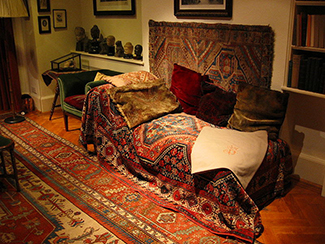

Figure 16.9図 16.9
This is the famous couch in Freud’s consulting room. Patients were instructed to lie comfortably on the couch and to face away from Freud in order to feel less inhibited and to help them focus. Today, psychotherapy patients are not likely to lie on a couch; instead they are more likely to sit facing the therapist (Prochaska & Norcross, 2010). (credit: Robert Huffstutter)
これはフロイトの診察室にある有名なカウチである。患者は、ためらいを感じにくくし、集中しやすくするために、カウチに楽な姿勢で横になり、フロイトに顔を向けないよう指示された。今日では、心理療法の患者がカウチに横たわる可能性は低く、むしろセラピストと向かい合って座る可能性が高い(Prochaska & Norcross, 2010)。(出典:Robert Huffstutter)
Today, Freud’s psychoanalytical perspective has been expanded upon by the developments of subsequent theories and methodologies: the psychodynamic perspective. This approach to therapy remains centered on the role of people’s internal drives and forces, but treatment is less intensive than Freud’s original model.
英語のヒント
今日、フロイトの精神分析の観点は、その後に生まれた理論と方法論の発展によって拡張されている。それが精神力動的観点である。この療法のアプローチは、今も人の内的な欲動や力の役割を中心に据えているが、治療はフロイトの本来のモデルほど集中的ではない。