第16章療法と治療
Psychotherapy: Cognitive Therapy心理療法:認知療法
Cognitive therapy is a form of psychotherapy that focuses on how a person’s thoughts lead to feelings of distress. The idea behind cognitive therapy is that how you think determines how you feel and act. Cognitive therapists help their clients change dysfunctional thoughts in order to relieve distress. They help a client see how they misinterpret a situation (cognitive distortion). For example, a client may overgeneralize. Because a person failed one test in Psychology 101, they feel stupid and worthless. These thoughts then cause their mood to worsen. Therapists also help clients recognize when they blow things out of proportion. Because Ray failed his Psychology 101 test, he has concluded that he’s going to fail the entire course and probably flunk out of college altogether. These errors in thinking have contributed to Ray’s feelings of distress. His therapist will help him challenge these irrational beliefs, focus on their illogical basis, and correct them with more logical and rational thoughts and beliefs.
英語のヒント
認知療法とは、人の思考がどのように苦痛の感情につながるかに焦点を当てる心理療法の一形態である。認知療法の背後にある考え方は、どのように考えるかが、どのように感じ、どのように行動するかを決める、というものである。認知療法のセラピストは、苦痛を和らげるために、クライエントが機能不全の思考を変えるのを助ける。クライエントが状況をどのように誤って解釈しているか(認知の歪み)に気づけるよう手助けするのである。たとえば、クライエントは過剰一般化をするかもしれない。心理学入門の試験に一度落ちたために、自分は愚かで価値がないと感じてしまう。するとこうした考えが気分を悪化させる。セラピストはまた、クライエントが物事を大げさにとらえているときに、それに気づけるよう助ける。レイは心理学入門の試験に落ちたため、自分はこの科目全体の単位を落とし、おそらくは大学そのものを退学することになるだろうと結論づけた。こうした思考の誤りが、レイの苦痛の感情の一因となってきた。セラピストは、レイがこうした不合理な信念に異議を唱え、その非論理的な根拠に目を向け、より論理的で合理的な思考や信念によってそれを修正するのを助けるだろう。
Cognitive therapy was developed by psychiatrist Aaron Beck in the 1960s. His initial focus was on depression and how a client’s self-defeating attitude served to maintain a depression despite positive factors in her life (Beck, Rush, Shaw, & Emery, 1979) (Figure 16.13). Through questioning, a cognitive therapist can help a client recognize dysfunctional ideas, challenge catastrophizing thoughts about themselves and their situations, and find a more positive way to view things (Beck, 2011).
英語のヒント
認知療法は、1960年代に精神科医のアーロン・ベックによって開発された。ベックが当初焦点を当てたのはうつ病であり、クライエントの自滅的な態度が、その人の生活に肯定的な要因があるにもかかわらず、どのようにうつ病を持続させるのかということだった(Beck, Rush, Shaw, & Emery, 1979)(図16.13)。問いかけを通して、認知療法のセラピストは、クライエントが機能不全の考えに気づき、自分自身や自分の状況についての破局的な思考に異議を唱え、物事をより肯定的に見る方法を見つけるのを助けることができる(Beck, 2011)。
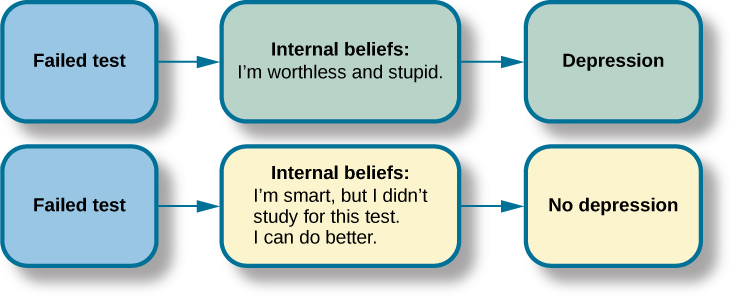

Figure 16.13図 16.13
Your emotional reactions are the result of your thoughts about the situation rather than the situation itself. For instance, if you consistently interpret events and emotions around the themes of loss and defeat, then you are likely to be depressed. Through therapy, you can learn more logical ways to interpret situations.
感情的な反応は、状況そのものではなく、その状況についての自分の考えから生じる。たとえば、出来事や感情を一貫して喪失と敗北というテーマに沿って解釈していると、抑うつ状態になる可能性が高い。療法を通して、状況をより論理的に解釈する方法を学ぶことができる。
Psychotherapy: Cognitive-Behavioral Therapy心理療法:認知行動療法
Cognitive-behavioral therapists focus much more on present issues than on a patient’s childhood or past, as in other forms of psychotherapy. One of the first forms of cognitive-behavioral therapy was rational emotive therapy (RET), which was founded by Albert Ellis and grew out of his dislike of Freudian psychoanalysis (Daniel, n.d.). Behaviorists such as Joseph Wolpe also influenced Ellis’s therapeutic approach (National Association of Cognitive-Behavioral Therapists, 2009).
英語のヒント
認知行動療法のセラピストは、ほかの形の心理療法のように患者の子ども時代や過去に焦点を当てるのではなく、それよりもはるかに現在の問題に焦点を当てる。認知行動療法の最初期の形の一つが論理情動療法(RET)である。論理情動療法はアルバート・エリスが創始したもので、フロイト流の精神分析に対する彼の嫌悪から生まれた(Daniel, n.d.)。ジョセフ・ウォルピのような行動主義者も、エリスの治療的アプローチに影響を与えた(National Association of Cognitive-Behavioral Therapists, 2009)。
Cognitive-behavioral therapy (CBT) helps clients examine how their thoughts affect their behavior. It aims to change cognitive distortions and self-defeating behaviors. In essence, this approach is designed to change the way people think as well as how they act. It is similar to cognitive therapy in that CBT attempts to make individuals aware of their irrational and negative thoughts and helps people replace them with new, more positive ways of thinking. It is also similar to behavior therapies in that CBT teaches people how to practice and engage in more positive and healthy approaches to daily situations. In total, hundreds of studies have shown the effectiveness of cognitive-behavioral therapy in the treatment of numerous psychological disorders such as depression, PTSD, anxiety disorders, eating disorders, bipolar disorder, and substance abuse (Beck Institute for Cognitive Behavior Therapy, n.d.). For example, CBT has been found to be effective in decreasing levels of hopelessness and suicidal thoughts in previously suicidal teenagers (Alavi, Sharifi, Ghanizadeh, & Dehbozorgi, 2013). Cognitive-behavioral therapy has also been effective in reducing PTSD in specific populations, such as transit workers (Lowinger & Rombom, 2012).
英語のヒント
認知行動療法(CBT)は、自分の思考が行動にどのように影響するかをクライエントが検討するのを助ける。CBTは、認知の歪みと自滅的な行動を変えることを目指す。要するに、このアプローチは、人の行動のしかただけでなく、考え方も変えるように設計されている。CBTは、人に自分の不合理で否定的な思考に気づかせ、それを新しい、より肯定的な考え方に置き換えるのを助けようとする点で、認知療法に似ている。また、日々の状況に対して、より肯定的で健康的な取り組み方を練習し実行する方法を教えるという点では、行動療法にも似ている。全体として、何百もの研究が、うつ病、PTSD、不安障害、摂食障害、双極性障害、物質乱用など、数多くの心理的障害の治療における認知行動療法の有効性を示してきた(Beck Institute for Cognitive Behavior Therapy, n.d.)。たとえば、CBTは、以前に自殺の危険があった10代の若者の絶望感と自殺念慮の水準を下げるのに効果的であることが分かっている(Alavi, Sharifi, Ghanizadeh, & Dehbozorgi, 2013)。認知行動療法はまた、交通機関の職員など特定の集団におけるPTSDの軽減にも効果を上げている(Lowinger & Rombom, 2012)。
Cognitive-behavioral therapy aims to change cognitive distortions and self-defeating behaviors using techniques like the ABC model. With this model, there is an Action (sometimes called an activating event), the Belief about the event, and the Consequences of this belief. Let’s say Jon and Joe both go to a party. Jon and Joe each have met an interesting person at the party and spend a few hours chatting with them. At the end of the party, Jon and Joe ask to exchange phone numbers with the person they've been talking to, and the request is refused. Both Jon and Joe are surprised, as they thought things were going well. What can Jon and Joe tell themselves about why the person was not interested? Let’s say Jon tells himself he is a loser, or is ugly, or “has no game.” Jon then gets depressed and decides not to go to another party, which starts a cycle that keeps him depressed. Joe tells himself that he had bad breath, goes out and buys a new toothbrush, goes to another party, and meets someone new.
英語のヒント
認知行動療法は、ABCモデルのような技法を用いて、認知の歪みと自滅的な行動を変えることを目指す。このモデルには、A=Action(出来事。activating event〔きっかけとなる出来事〕と呼ばれることもある)、B=Belief(その出来事についての信念)、C=Consequences(その信念がもたらす結果)がある。ジョンとジョーの二人がパーティーに行くとしよう。ジョンとジョーはそれぞれ、パーティーで興味を引かれる人に出会い、その人と何時間かおしゃべりをして過ごす。パーティーの終わりに、ジョンとジョーは話していた相手に電話番号の交換を申し出るが、その頼みは断られる。うまくいっていると思っていたので、ジョンもジョーも驚く。相手が興味を持たなかった理由について、ジョンとジョーは自分自身に何と言い聞かせることができるだろうか。ジョンは、自分は負け犬だ、醜い、あるいは「モテる才能がない」と自分に言い聞かせるとしよう。するとジョンは抑うつ状態になり、もうパーティーには行かないと決める。そのことが、彼を抑うつ状態にとどめる悪循環の始まりになる。ジョーは、口臭がしていたのだと自分に言い聞かせ、出かけて新しい歯ブラシを買い、別のパーティーに行き、新しい誰かと出会う。
Jon’s belief about what happened results in a consequence of further depression, whereas Joe’s belief does not. Jon is internalizing the attribution or reason for the rebuffs, which triggers his depression. On the other hand, Joe is externalizing the cause, so his thinking does not contribute to feelings of depression. Cognitive-behavioral therapy examines specific maladaptive and automatic thoughts and cognitive distortions. Some examples of cognitive distortions are all-or-nothing thinking, overgeneralization, and jumping to conclusions. In overgeneralization, someone takes a small situation and makes it huge—for example, instead of saying, “This particular person was not interested in me,” the man says, “I am ugly, a loser, and no one is ever going to be interested in me.”
英語のヒント
起きたことについてのジョンの信念は、さらなる抑うつという結果をもたらすが、ジョーの信念はそうならない。ジョンは、拒絶の帰属、つまり拒絶された理由を内在化しており、それが彼の抑うつの引き金になる。一方、ジョーは原因を外在化しているので、彼の考え方は抑うつの感情を生む一因にはならない。認知行動療法は、特定の不適応的で自動的な思考と、認知の歪みを検討する。認知の歪みの例としては、全か無か思考、過剰一般化、結論への飛躍がある。過剰一般化では、人は小さな状況を取り上げてそれを大きく膨らませる。たとえば、「この特定の人は私に興味がなかった」と言う代わりに、その男性は「私は醜くて、負け犬で、これから先、誰も私に興味を持つことはないだろう」と言う。
All or nothing thinking, which is a common type of cognitive distortion for people suffering from depression, reflects extremes. In other words, everything is black or white. After being turned down for a date, Jon begins to think, “No one will ever go out with me. I’m going to be alone forever.” He begins to feel anxious and sad as he contemplates his future.
英語のヒント
全か無か思考は、うつ病に苦しむ人によく見られる種類の認知の歪みで、両極端を反映する。言い換えれば、すべてが白か黒かなのである。デートの誘いを断られたあと、ジョンは「誰も僕とデートしてくれることはないだろう。僕はずっと一人ぼっちなんだ」と考えはじめる。自分の将来に思いをめぐらすにつれて、彼は不安で悲しい気持ちになりはじめる。
The third kind of distortion involves jumping to conclusions—assuming that people are thinking negatively about you or reacting negatively to you, even though there is no evidence. Consider the example of Savannah and Hillaire, who recently met at a party. They have a lot in common, and Savannah thinks they could become friends. She calls Hillaire to invite her for coffee. Since Hillaire doesn’t answer, Savannah leaves her a message. Several days go by and Savannah never hears back from her potential new friend. Maybe Hillaire never received the message because she lost her phone or she is too busy to return the phone call. But if Savannah believes that Hillaire didn’t like Savannah or didn’t want to be her friend, she is demonstrating the cognitive distortion of jumping to conclusions.
英語のヒント
3番目の種類の歪みは、結論への飛躍である。これは、何の証拠もないのに、人が自分について否定的に考えている、あるいは自分に否定的に反応していると思い込むことである。最近パーティーで知り合ったサバンナとヒレアの例を考えてみよう。二人には共通点が多く、サバンナは二人が友達になれるかもしれないと思っている。サバンナはヒレアをコーヒーに誘おうと電話をかける。ヒレアが出ないので、サバンナはメッセージを残す。何日かたっても、サバンナは、新しい友達になれそうな相手から何の返事も受け取らない。もしかすると、ヒレアは電話をなくしたためにメッセージを受け取っていないのかもしれないし、忙しすぎて折り返し電話ができないのかもしれない。しかし、もしサバンナが、ヒレアは自分のことを好きではなかった、あるいは自分と友達になりたくなかったのだと思うなら、サバンナは結論への飛躍という認知の歪みを示していることになる。
How effective is CBT? One client said this about his cognitive-behavioral therapy:
英語のヒント
CBTはどれほど効果があるのだろうか。あるクライエントは、自分が受けた認知行動療法について次のように語った。
I have had many painful episodes of depression in my life, and this has had a negative effect on my career and has put considerable strain on my friends and family. The treatments I have received, such as taking antidepressants and psychodynamic counseling, have helped [me] to cope with the symptoms and to get some insights into the roots of my problems. CBT has been by far the most useful approach I have found in tackling these mood problems. It has raised my awareness of how my thoughts impact on my moods. How the way I think about myself, about others and about the world can lead me into depression. It is a practical approach, which does not dwell so much on childhood experiences, whilst acknowledging that it was then that these patterns were learned. It looks at what is happening now, and gives tools to manage these moods on a daily basis. (Martin, 2007, n.p.)英語のヒント
私はこれまでの人生で、うつ病のつらいエピソードを何度も経験してきた。それは私の仕事に悪影響を及ぼし、友人や家族にもかなりの負担をかけてきた。抗うつ薬の服用や精神力動的カウンセリングなど、これまで受けてきた治療は、[私が]症状に対処し、自分の問題の根源についていくらかの洞察を得る助けになった。CBTは、こうした気分の問題に取り組むうえで、私がこれまで見つけた中で群を抜いて最も役に立つアプローチだった。CBTのおかげで、自分の思考が気分にどのように影響するかに気づくようになった。自分自身について、他人について、世界についての考え方が、どのように自分をうつ状態へと導きうるのか、ということに。CBTは実践的なアプローチで、子ども時代の経験にそれほどこだわらない。ただし、こうしたパターンが学習されたのはまさにその時期だということは認めている。CBTは今起きていることに目を向け、こうした気分に日々対処するための道具を与えてくれる。(Martin, 2007, n.p.)