第16章療法と治療
16.1 Mental Health Treatment: Past and Present16.1 メンタルヘルスの治療:過去と現在
Learning Objectives学習目標
By the end of this section, you will be able to:
この節を学び終えると、次のことができるようになる。
- Explain how people with psychological disorders have been treated throughout the ages心理的障害のある人々が、時代を通じてどのように扱われてきたかを説明する
- Discuss deinstitutionalization脱施設化について論じる
- Discuss the ways in which mental health services are delivered today今日、メンタルヘルス・サービスがどのような形で提供されているかを論じる
- Distinguish between voluntary and involuntary treatment自発的治療と非自発的治療を区別する
Before we explore the various approaches to therapy used today, let’s begin our study of therapy by looking at how many people experience mental illness and how many receive treatment. According to the U.S. Department of Health and Human Services (2017), 18.9% of U.S. adults experienced mental illness in 2017. For teens (ages 13–18), the rate is similar to that of adults, and for children ages 8–15, current estimates suggest that approximately 13% experience mental illness in a given year (National Institute of Mental Health [NIMH], 2017).
英語のヒント
今日用いられている療法のさまざまなアプローチを探る前に、どれだけの人が精神疾患を経験し、どれだけの人が治療を受けているのかを見ることから、療法の学習を始めよう。アメリカ保健福祉省(2017)によれば、2017年にはアメリカの成人の18.9%が精神疾患を経験した。10代(13〜18歳)でもその割合は成人と同程度である。また8〜15歳の子どもについては、ある1年間に約13%が精神疾患を経験することが、現在の推計から示唆されている(National Institute of Mental Health [NIMH], 2017)。
With many different treatment options available, approximately how many people receive mental health treatment per year? According to the Substance Abuse and Mental Health Services Administration (SAMHSA), in 2017, 14.8% of adults received treatment for a mental health issue (NIMH, 2017). These percentages, shown in Figure 16.2, reflect the number of adults who received care in inpatient and outpatient settings and/or used prescription medication for psychological disorders.
英語のヒント
さまざまな治療の選択肢が数多くある中で、1年間におよそどれだけの人がメンタルヘルスの治療を受けているのだろうか。薬物乱用・精神保健サービス局(SAMHSA)によれば、2017年には成人の14.8%がメンタルヘルスの問題で治療を受けた(NIMH, 2017)。図16.2に示したこれらの割合は、心理的障害のために、入院や外来の場でケアを受けた成人、処方薬を使用した成人、あるいはその両方に当たる成人の数を反映している。
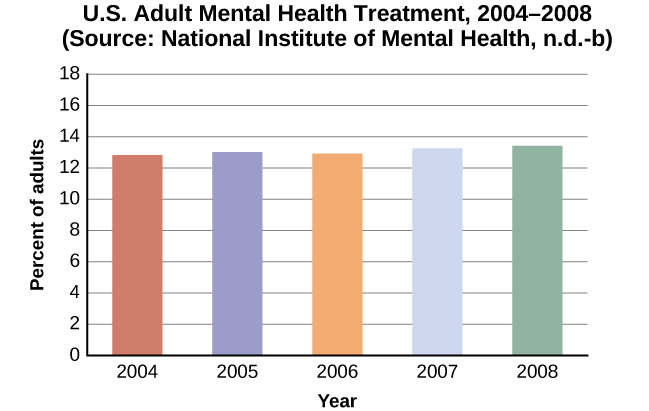
Figure 16.2図 16.2
The percentage of adults who received mental health treatment in 2004–2008 is shown. Adults seeking treatment increased slightly from 2004 to 2008.
2004〜2008年にメンタルヘルスの治療を受けた成人の割合を示す。治療を求める成人は、2004年から2008年にかけてわずかに増えた。
Children and adolescents also receive mental health services. The Centers for Disease Control and Prevention's National Health and Nutrition Examination Survey (NHANES) found that approximately half (50.6%) of children with mental disorders had received treatment for their disorder within the past year (NIMH, n.d.). However, there were some differences between treatment rates by category of disorder (Figure 16.3). For example, children with anxiety disorders were least likely to have received treatment in the past year, while children with ADHD or a conduct disorder were more likely to receive treatment. Can you think of some possible reasons for these differences in receiving treatment?
英語のヒント
子どもや青年もメンタルヘルス・サービスを受けている。アメリカ疾病予防管理センターの全国健康栄養調査(NHANES)では、精神障害のある子どものおよそ半数(50.6%)が、過去1年以内にその障害の治療を受けていたことが分かった(NIMH, n.d.)。ただし、治療を受けた割合には、障害の種類によっていくらかの違いがあった(図16.3)。たとえば、不安障害のある子どもは過去1年に治療を受けていた可能性が最も低く、一方でADHDや素行障害のある子どもは治療を受ける可能性がより高かった。治療を受けるかどうかにこうした違いが出る理由として、どのようなことが考えられるだろうか。
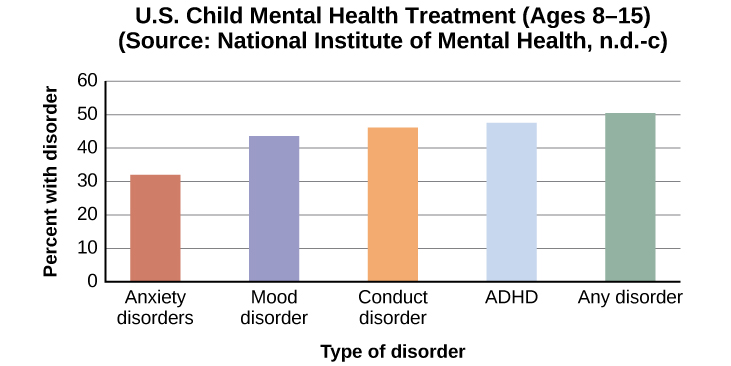
Figure 16.3図 16.3
About one-third to one-half of U.S. adolescents (ages 8–15) with mental disorders receive treatment, with behavior-related disorders more likely to be treated.
精神障害のあるアメリカの青年(8〜15歳)のうち、治療を受けているのはおよそ3分の1から2分の1であり、行動に関連する障害は治療される可能性がより高い。
Considering the many forms of treatment for mental health disorders available today, how did these forms of treatment emerge? Let’s take a look at the history of mental health treatment from the past (with some questionable approaches in light of modern understanding of mental illness) to where we are today.
英語のヒント
今日、メンタルヘルスの障害に対して多くの形態の治療が利用できることを考えると、こうした治療の形態はどのようにして生まれてきたのだろうか。過去(精神疾患についての現代の理解に照らせば、疑問の残るアプローチもあった)から現在に至るまでの、メンタルヘルスの治療の歴史を見てみよう。
Treatment in the Past過去の治療
For much of history, people with mental illness have been treated very poorly. It was believed that mental illness was caused by demonic possession, witchcraft, or an angry god (Szasz, 1960). For example, in medieval times, abnormal behaviors were viewed as a sign that a person was possessed by demons. If someone was considered to be possessed, there were several forms of treatment to release spirits from the individual. The most common treatment was exorcism, often conducted by priests or other religious figures: Incantations and prayers were said over the person’s body, and they may have been given some medicinal drinks. Another form of treatment for extreme cases of mental illness was trephining: A small hole was made in the afflicted individual’s skull to release spirits from the body. Most people treated in this manner died. In addition to exorcism and trephining, other practices involved execution or imprisonment of people with psychological disorders. Still others were left to be homeless beggars. Generally speaking, most people who exhibited strange behaviors were greatly misunderstood and treated cruelly. The prevailing theory of psychopathology in earlier history was the idea that mental illness was the result of demonic possession by either an evil spirit or an evil god because early beliefs incorrectly attributed all unexplainable phenomena to deities deemed either good or evil.
英語のヒント
歴史の大半を通じて、精神疾患のある人々はきわめてひどい扱いを受けてきた。精神疾患は、悪魔憑き、魔術、あるいは神の怒りによって引き起こされると信じられていた(Szasz, 1960)。たとえば中世には、異常な行動は、その人が悪魔に取り憑かれている徴候とみなされた。取り憑かれていると考えられた人に対しては、その人から霊を追い出すための治療法がいくつかあった。最も一般的な治療は悪魔祓いで、多くの場合、司祭やそのほかの宗教的な人物によって行われた。その人の体に向かって呪文や祈りが唱えられ、薬効のある飲み物が与えられることもあったかもしれない。極端な精神疾患の場合に行われたもう一つの治療は、穿頭術だった。霊を体から出すために、苦しんでいる人の頭蓋骨に小さな穴を開けるのである。このやり方で治療された人のほとんどは死亡した。悪魔祓いや穿頭術のほかにも、心理的障害のある人々を処刑したり投獄したりする慣行があった。さらに、家のない物乞いとなるにまかされた人々もいた。概して、奇妙な行動を示した人の大半はひどく誤解され、残酷に扱われた。初期の歴史において支配的だった精神病理学の理論は、精神疾患は悪霊か邪悪な神のどちらかに取り憑かれた結果だという考えだった。初期の信仰は、説明のつかない現象をすべて、善か悪のどちらかとみなされた神々のせいだと誤ってとらえていたからである。
From the late 1400s to the late 1600s, a common belief perpetuated by some religious organizations was that some people made pacts with the devil and committed horrible acts, such as eating babies (Blumberg, 2007). These people were considered to be witches and were tried and condemned by courts—they were often burned at the stake. Worldwide, it is estimated that tens of thousands of mentally ill people were killed after being accused of being witches or under the influence of witchcraft (Hemphill, 1966)
英語のヒント
1400年代後半から1600年代後半にかけては、ある人々は悪魔と契約を結び、赤ん坊を食べるといった恐ろしい行為をしている、という考えが広く信じられ、一部の宗教組織がその考えを広め続けていた(Blumberg, 2007)。こうした人々は魔女とみなされ、法廷で裁かれて有罪を宣告された。多くの場合、彼らは火あぶりにされた。世界全体では、魔女である、あるいは魔術の影響下にあると告発された後に殺された精神疾患のある人々は、数万人にのぼると推定されている(Hemphill, 1966)
By the 18th century, people who were considered odd and unusual were placed in asylums (Figure 16.4). Asylums were the first institutions created for the specific purpose of housing people with psychological disorders, but the focus was ostracizing them from society rather than treating their disorders. Often these people were kept in windowless dungeons, beaten, chained to their beds, and had little to no contact with caregivers.
英語のヒント
18世紀までには、奇妙で普通ではないとみなされた人々は精神病院に収容されるようになっていた(図16.4)。精神病院は、心理的障害のある人々を収容するという特定の目的のためにつくられた最初の施設だったが、その重点は、障害を治療することよりも、彼らを社会から排除することに置かれていた。こうした人々は、窓のない地下牢に閉じ込められ、殴られ、ベッドに鎖でつながれ、世話をする人との接触もほとんど、あるいはまったくないことが多かった。
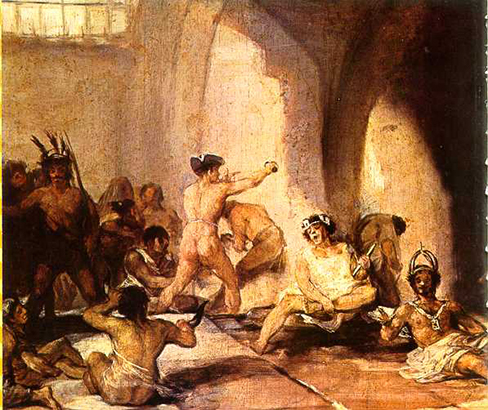
Figure 16.4図 16.4
This painting by Francisco Goya, called The Madhouse, depicts a mental asylum and its inhabitants in the early 1800s. It portrays those with psychological disorders as victims.
フランシスコ・ゴヤによる『精神病院』と呼ばれるこの絵画は、1800年代初めの精神病院とそこにいる人々を描いている。この絵は、心理的障害のある人々を犠牲者として描いている。
In the late 1700s, a French physician, Philippe Pinel, argued for more humane treatment of people with mental illness. He suggested that they be unchained and talked to, and that’s just what he did for patients at La Salpêtrière in Paris in 1795 (Figure 16.5). Patients benefited from this more humane treatment, and many were able to leave the hospital.
英語のヒント
1700年代後半、フランスの医師フィリップ・ピネルは、精神疾患のある人々をもっと人道的に扱うべきだと主張した。ピネルは、彼らを鎖から解き放ち、彼らに話しかけるべきだと提案した。そして1795年、パリのサルペトリエール病院の患者に対して、まさにそのとおりのことを行った(図16.5)。患者たちはこのより人道的な扱いから恩恵を受け、多くが退院できた。
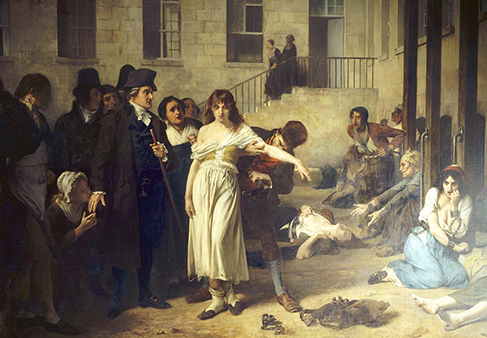
Figure 16.5図 16.5
This painting by Tony Robert-Fleury depicts Dr. Philippe Pinel ordering the removal of chains from patients at the Salpêtrière asylum in Paris.
トニー・ロベール=フルーリーによるこの絵画は、パリのサルペトリエール精神病院で、フィリップ・ピネル医師が患者たちの鎖を外すよう命じているところを描いている。
In the 19th century, Dorothea Dix led reform efforts for mental health care in the United States (Figure 16.6). She investigated how those who are mentally ill and poor were cared for, and she discovered an underfunded and unregulated system that perpetuated abuse of this population (Tiffany, 1891). Horrified by her findings, Dix began lobbying various state legislatures and the U.S. Congress for change (Tiffany, 1891). Her efforts led to the creation of the first mental asylums in the United States.
英語のヒント
19世紀には、ドロシア・ディックスがアメリカでメンタルヘルス・ケアの改革運動を率いた(図16.6)。ディックスは、精神疾患を抱え、しかも貧しい人々がどのように世話をされているのかを調査し、資金が不足し規制もされていない制度が、この人々への虐待を存続させていることを発見した(Tiffany, 1891)。自分の調査結果にぞっとしたディックスは、変革を求めて、さまざまな州議会やアメリカ連邦議会に働きかけはじめた(Tiffany, 1891)。彼女の努力は、アメリカで最初の精神病院の創設につながった。
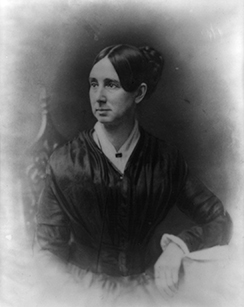


Figure 16.6図 16.6
Dorothea Dix was a social reformer who became an advocate for the indigent insane and was instrumental in creating the first American mental asylum. She did this by relentlessly lobbying state legislatures and Congress to set up and fund such institutions.
ドロシア・ディックスは社会改革者で、貧困状態にある精神病者の擁護者となり、アメリカ最初の精神病院の創設に重要な役割を果たした。彼女はこれを、そうした施設を設立し資金を出すよう、州議会と連邦議会に粘り強く働きかけることによって成し遂げた。
Despite reformers’ efforts, however, a typical asylum was filthy, offered very little treatment, and often kept people for decades. At Willard Psychiatric Center in upstate New York, for example, one treatment was to submerge patients in cold baths for long periods of time. Electroshock treatment was also used, and the way the treatment was administered often broke patients’ backs; in 1943, doctors at Willard administered 1,443 shock treatments (Willard Psychiatric Center, 2009). (Electroshock is now called electroconvulsive treatment, and the therapy is still used, but with safeguards and under anesthesia. A brief application of electric stimulus is used to produce a generalized seizure. Controversy continues over its effectiveness versus the side effects.) Many of the wards and rooms were so cold that a glass of water would be frozen by morning (Willard Psychiatric Center, 2009). Willard’s doors were not closed until 1995. Conditions like these remained commonplace until well into the 20th century.
英語のヒント
しかし、改革者たちの努力にもかかわらず、典型的な精神病院は不潔で、治療はほとんど提供されず、人々を何十年も収容し続けることが多かった。たとえばニューヨーク州北部のウィラード精神医療センターでは、患者を冷たい風呂に長時間沈めるという治療が行われていた。電気ショック療法も用いられ、その施し方のせいで患者の背骨が折れることもしばしばあった。1943年には、ウィラードの医師たちが1,443回の電気ショック療法を行った(Willard Psychiatric Center, 2009)。(電気ショックは現在では電気けいれん療法と呼ばれ、この療法は今も用いられているが、安全策を講じたうえで麻酔下で行われる。短時間の電気刺激を与えて、全般発作を引き起こすのである。その有効性と副作用をどう比べて評価するかについては、今も論争が続いている。)病棟や部屋の多くはとても寒く、コップの水が朝までに凍ってしまうほどだった(Willard Psychiatric Center, 2009)。ウィラードが閉鎖されたのは、ようやく1995年のことである。このような状況は、20世紀に入ってかなりたつまで、ありふれたものであり続けた。
Starting in 1954 and gaining popularity in the 1960s, antipsychotic medications were introduced. These proved a tremendous help in controlling the symptoms of certain psychological disorders, such as psychosis. Psychosis was a common diagnosis of individuals in mental hospitals, and it was often evidenced by symptoms like hallucinations and delusions, indicating a loss of contact with reality. Then in 1963, Congress passed and John F. Kennedy signed the Mental Retardation Facilities and Community Mental Health Centers Construction Act, which provided federal support and funding for community mental health centers (National Institutes of Health, 2013). This legislation changed how mental health services were delivered in the United States. It started the process of deinstitutionalization, the closing of large asylums, by providing for people to stay in their communities and be treated locally. In 1955, there were 558,239 severely mentally ill patients institutionalized at public hospitals (Torrey, 1997). By 1994, by percentage of the population, there were 92% fewer hospitalized individuals (Torrey, 1997).
英語のヒント
抗精神病薬は1954年に導入が始まり、1960年代に広く用いられるようになった。これらの薬は、精神病など、特定の心理的障害の症状を抑えるうえで非常に大きな助けとなることが分かった。精神病は精神科病院の患者によく下される診断で、多くの場合、幻覚や妄想といった、現実との接触が失われていることを示す症状によって明らかになった。その後1963年に、連邦議会は精神遅滞施設・地域精神保健センター建設法を可決し、ジョン・F・ケネディがこれに署名した。この法律は、地域精神保健センターに対する連邦政府の支援と資金を定めたものである(National Institutes of Health, 2013)。この立法は、アメリカにおけるメンタルヘルス・サービスの提供のあり方を変えた。この法律は、人々が自分の地域にとどまり、地元で治療を受けられるよう定めることで、脱施設化、すなわち大規模な精神病院の閉鎖の過程を始動させた。1955年には、重い精神疾患のある558,239人の患者が公立病院に収容されていた(Torrey, 1997)。1994年までに、人口に占める割合でみると、入院している人は92%減っていた(Torrey, 1997)。