第16章療法と治療
16.4 Substance-Related and Addictive Disorders: A Special Case16.4 物質関連障害および嗜癖性障害群:特別な事例
Learning Objectives学習目標
By the end of this section, you will be able to:
この節を学び終えると、次のことができるようになる。
- Recognize the goal of substance-related and addictive disorders treatment物質関連障害および嗜癖性障害の治療の目標を認識する
- Discuss what makes for effective treatment何が治療を効果的にするのかを論じる
- Describe how comorbid disorders are treated併存障害がどのように治療されるかを説明する
Addiction is often viewed as a chronic disease (Figure 16.18). The choice to use a substance is initially voluntary; however, because chronic substance use can permanently alter the neural structure in the prefrontal cortex, an area of the brain associated with decision-making and judgment, a person becomes driven to use drugs and/or alcohol (Muñoz-Cuevas, Athilingam, Piscopo, & Wilbrecht, 2013). This helps explain why relapse rates tend to be high. About 40%–60% of individuals relapse, which means they return to abusing drugs and/or alcohol after a period of improvement (National Institute on Drug Abuse [NIDA], 2008).
英語のヒント
依存症は、慢性疾患とみなされることが多い(図16.18)。物質を使うという選択は、最初は自らの意思によるものである。しかし、慢性的な物質使用は、意思決定や判断と関連する脳の領域である前頭前野の神経構造を永続的に変えてしまいうる。そのため、人は薬物やアルコール(あるいはその両方)の使用へと駆り立てられるようになる(Muñoz-Cuevas, Athilingam, Piscopo, & Wilbrecht, 2013)。このことは、再発率が高くなりがちな理由を説明する助けになる。約40〜60%の人が再発する。再発とは、一定期間改善したあとで、再び薬物やアルコールを乱用するようになることを意味する(National Institute on Drug Abuse [NIDA], 2008)。
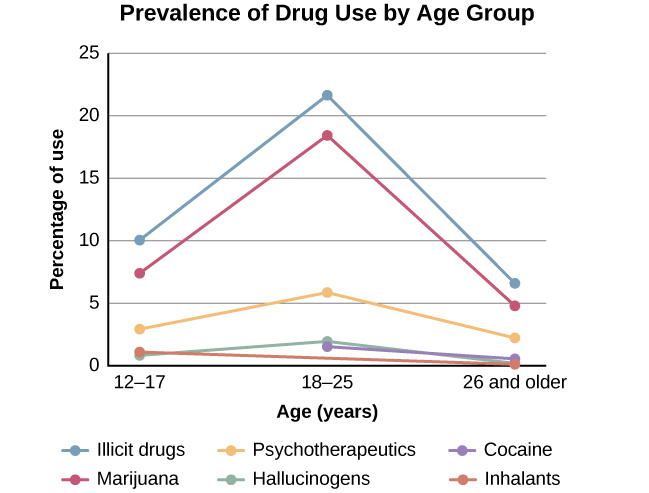

Figure 16.18図 16.18
The National Survey on Drug Use and Health shows trends in prevalence of various drugs for ages 12–17, 18–25, and 26 or older.
全米薬物使用・健康調査は、12〜17歳、18〜25歳、26歳以上の各年齢層について、さまざまな薬物の使用率の傾向を示している。
The goal of substance-related treatment is to help a person with an addiction stop compulsive drug-seeking behaviors (NIDA, 2012). This means a person with addiction will need long-term treatment, similar to a person battling a chronic physical disease such as hypertension or diabetes. Treatment usually includes behavioral therapy and/or medication, depending on the individual (NIDA, 2012). Specialized therapies have also been developed for specific types of substance-related disorders, including alcohol, cocaine, and opioids (McGovern & Carroll, 2003). Substance-related treatment is considered much more cost-effective than incarceration or not treating those with addictions (NIDA, 2012) (Figure 16.19).
英語のヒント
物質関連障害の治療の目標は、依存症のある人が強迫的な薬物探索行動をやめられるよう手助けすることである(NIDA, 2012)。つまり、依存症のある人には、高血圧や糖尿病のような慢性の身体疾患と闘っている人と同じように、長期の治療が必要になる。治療には通常、その人に応じて、行動療法と薬物療法の一方または両方が含まれる(NIDA, 2012)。アルコール、コカイン、オピオイドにかかわるものをはじめ、特定の種類の物質関連障害に向けた専門的な療法も開発されている(McGovern & Carroll, 2003)。物質関連障害の治療は、依存症のある人を収監したり治療せずにおいたりするよりも、費用対効果がはるかに高いと考えられている(NIDA, 2012)(図16.19)。
OpenStax, Rice University; Psychology 2e. (credit: "jellymc - urbansnaps"/Flickr) · CC BY 4.0 · Source出典

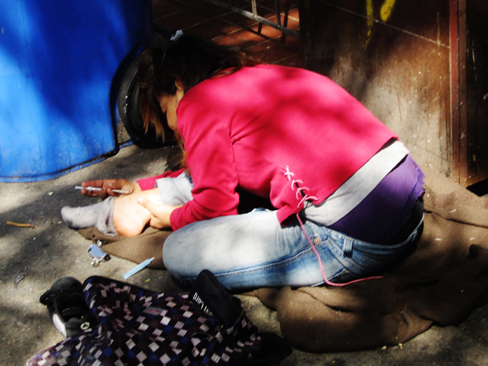
Figure 16.19図 16.19
Substance use and abuse costs the United States over $600 billion a year (NIDA, 2012). This person with addiction is using heroin. (credit: "jellymc - urbansnaps"/Flickr)
物質の使用と乱用によって、アメリカは年間6000億ドルを超える費用を負っている(NIDA, 2012)。写真の依存症のある人は、ヘロインを使用している。(出典:"jellymc - urbansnaps"/Flickr)
What Makes Treatment Effective?治療を効果的にするものは何か
Specific factors make substance-related treatment much more effective. One factor is duration of treatment. Generally, a person with addiction needs to be in treatment for at least three months to achieve a positive outcome (Simpson, 1981; Simpson, Joe, & Bracy, 1982; NIDA, 2012). This is due to the psychological, physiological, behavioral, and social aspects of abuse (Simpson, 1981; Simpson et al., 1982; NIDA, 2012). While in treatment, a person with addiction might receive behavior therapy, which can help motivate the person with addiction to participate in the treatment program and teach strategies for dealing with cravings and how to prevent relapse. Also, treatment needs to be holistic and address multiple needs, not just the drug addiction. This means that treatment will address factors such as communication, stress management, relationship issues, parenting, vocational concerns, and legal concerns (McGovern & Carroll, 2003; NIDA, 2012).
英語のヒント
物質関連障害の治療をはるかに効果的にする、特定の要因がある。その一つは治療の期間である。一般に、依存症のある人が良い結果を得るには、少なくとも3か月間は治療を受けている必要がある(Simpson, 1981; Simpson, Joe, & Bracy, 1982; NIDA, 2012)。これは、乱用には心理的、生理的、行動的、社会的な側面があるためである(Simpson, 1981; Simpson et al., 1982; NIDA, 2012)。治療中、依存症のある人は行動療法を受けるかもしれない。行動療法は、依存症のある人が治療プログラムに参加するよう動機づけたり、渇望に対処するための方略や再発を防ぐ方法を教えたりするのに役立ちうる。また、治療は全人的なものでなければならず、薬物依存症だけでなく、複数のニーズに対処する必要がある。つまり治療では、コミュニケーション、ストレス管理、人間関係の問題、子育て、職業上の悩み、法律上の問題といった要因に取り組むことになる(McGovern & Carroll, 2003; NIDA, 2012)。
While individual therapy is used in the treatment of substance-related disorders, group therapy is the most widespread treatment modality (Weiss, Jaffee, de Menil, & Cogley, 2004). The rationale behind using group therapy for addiction treatment is that people with addiction are much more likely to maintain sobriety in a group format. It has been suggested that this is due to the rewarding and therapeutic benefits of the group, such as support, affiliation, identification, and even confrontation (Center for Substance Abuse Treatment, 2005). For teenagers, the whole family often needs to participate in treatment to address issues such as family dynamics, communication, and relapse prevention. Family involvement in teen drug addiction is vital. Research suggests that greater parental involvement is correlated with a greater reduction in use by teen substance abusers. Also, mothers who participated in treatment displayed better mental health and greater warmth toward their children (Bertrand et al., 2013). However, neither individual nor group therapy has been found to be more effective (Weiss et al., 2004). Regardless of the type of treatment service, the primary focus is on abstinence or at the very least a significant reduction in use (McGovern & Carroll, 2003).
英語のヒント
物質関連障害の治療には個人療法も用いられるが、最も広く行われている治療形態は集団療法である(Weiss, Jaffee, de Menil, & Cogley, 2004)。依存症の治療に集団療法を用いる根拠は、依存症のある人は、集団の形式のほうが断酒・断薬を維持できる可能性がはるかに高いという点にある。これは、支え、所属、同一化、さらには直面化といった、集団がもたらす、満足感を与える治療的な恩恵によるものだと示唆されてきた(Center for Substance Abuse Treatment, 2005)。10代の若者の場合、家族力動、コミュニケーション、再発予防といった問題に取り組むために、家族全体が治療に参加する必要があることが多い。10代の薬物依存症では、家族の関与がきわめて重要である。研究からは、親の関与が大きいことが、10代の物質乱用者の使用がより大きく減ることと相関していると示唆されている。また、治療に参加した母親は、メンタルヘルスがより良好であり、子どもに対してもより温かく接していた(Bertrand et al., 2013)。しかし、個人療法と集団療法のどちらかがより効果的だという結果は得られていない(Weiss et al., 2004)。治療サービスの種類にかかわらず、主な焦点は、使用を完全に断つこと、あるいは少なくとも使用を大幅に減らすことに置かれる(McGovern & Carroll, 2003)。
Treatment also usually involves medications to detox a person with addiction safely after an overdose, to prevent seizures and agitation that often occur in detox, to prevent reuse of the drug, and to manage withdrawal symptoms. Getting off drugs often involves the use of drugs—some of which can be just as addictive. Detox can be difficult and dangerous.
英語のヒント
治療にはまた、通常、薬も用いられる。その目的は、過剰摂取のあとで依存症のある人を安全に解毒すること、解毒の過程でよく起こるけいれん発作や焦燥を防ぐこと、薬物の再使用を防ぐこと、そして離脱症状を管理することである。薬物をやめることには、多くの場合、薬物の使用が伴う。そうした薬物の中には、同じくらい依存性の高いものもありうる。解毒は困難で、危険を伴うことがある。