第16章療法と治療
16.3 Treatment Modalities16.3 治療の形態
Learning Objectives学習目標
By the end of this section, you will be able to:
この節を学び終えると、次のことができるようになる。
- Distinguish between the various modalities of treatmentさまざまな治療の形態を区別する
- Discuss benefits of group therapy集団療法の利点を論じる
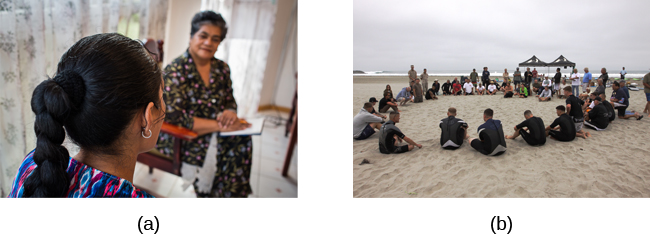
Once a person seeks treatment, whether voluntarily or involuntarily, they have an intake done to assess their clinical needs. An intake is the therapist’s first meeting with the client. The therapist gathers specific information to address the client’s immediate needs, such as the presenting problem, the client’s support system, and insurance status. The therapist informs the client about confidentiality, fees, and what to expect in treatment. Confidentiality means the therapist cannot disclose confidential communications to any third party unless mandated or permitted by law to do so. During the intake, the therapist and client will work together to discuss treatment goals. Then a treatment plan will be formulated, usually with specific measurable objectives. Also, the therapist and client will discuss how treatment success will be measured and the estimated length of treatment. There are several different modalities of treatment (Figure 16.14): Individual therapy, family therapy, couples therapy, and group therapy are the most common.
英語のヒント
人が治療を求めると、それが自発的であれ非自発的であれ、臨床的なニーズを評価するためにインテーク面接を受ける。インテーク面接とは、セラピストがクライエントと初めて会う面接である。セラピストは、主訴、クライエントの支援体制、保険の加入状況など、クライエントの差し迫ったニーズに対応するための具体的な情報を集める。また、守秘義務、料金、治療でどのようなことが起こるかについてクライエントに説明する。守秘義務とは、法律によって義務づけられているか許されている場合を除き、セラピストは内密に伝えられた内容をいかなる第三者にも開示できない、ということである。インテーク面接のあいだに、セラピストとクライエントは協力して治療の目標を話し合う。そのうえで、通常は測定可能な具体的目標を含む治療計画が立てられる。また、セラピストとクライエントは、治療の成功をどのように測るか、治療にどのくらいの期間がかかる見込みかについても話し合う。治療にはいくつかの異なる形態があり(図16.14)、最も一般的なのは個人療法、家族療法、カップル療法、集団療法である。
OpenStax, Rice University; Psychology 2e. (credit a: modification of work by Connor Ashleigh, AusAID/Department of Foreign Affairs and Trade) · CC BY 4.0 · Source出典
Figure 16.14図 16.14
Therapy may occur (a) one-on-one between a therapist and client, or (b) in a group setting. (credit a: modification of work by Connor Ashleigh, AusAID/Department of Foreign Affairs and Trade)
療法は、(a)セラピストとクライエントの一対一で行われることもあれば、(b)集団の場で行われることもある。(出典a:Connor Ashleigh, AusAID/Department of Foreign Affairs and Tradeの作品を改変)
Individual Therapy個人療法
In individual therapy, also known as individual psychotherapy or individual counseling, the client and clinician meet one-on-one (usually from 45 minutes to 1 hour). These meetings typically occur weekly or every other week, and sessions are conducted in a confidential and caring environment (Figure 16.15). The clinician will work with clients to help them explore their feelings, work through life challenges, identify aspects of themselves and their lives that they wish to change, and set goals to help them work towards these changes. A client might see a clinician for only a few sessions, or the client may attend individual therapy sessions for a year or longer. The amount of time spent in therapy depends on the needs of the client as well as her personal goals.
英語のヒント
個人療法(個人心理療法や個人カウンセリングとも呼ばれる)では、クライエントと臨床家が一対一で会う(通常は45分から1時間)。こうした面接はふつう毎週または隔週で行われ、セッションは秘密が守られた、思いやりのある環境で進められる(図16.15)。臨床家はクライエントとともに取り組み、クライエントが自分の感情を探り、人生の課題を乗り越え、自分自身や自分の生活の中で変えたいと思う側面を見きわめ、そうした変化に向かって進むのに役立つ目標を立てられるよう手助けする。クライエントが臨床家に会うのはほんの数回のセッションだけのこともあれば、1年以上にわたって個人療法のセッションに通うこともある。療法に費やす時間は、クライエントのニーズと、その人の個人的な目標によって決まる。

OpenStax, Rice University; Psychology 2e. (credit: Alan Cleaver) Embedded rights notice: Alan Cleaver · CC BY 4.0 · Source出典
Figure 16.15図 16.15
In an individual therapy session, a client works one-on-one with a trained therapist. (credit: Alan Cleaver)
個人療法のセッションでは、クライエントが訓練を受けたセラピストと一対一で取り組む。(出典:Alan Cleaver)
Group Therapy集団療法
In group therapy, a clinician meets together with several clients with similar problems (Figure 16.16). When children are placed in group therapy, it is particularly important to match clients for age and problems. One benefit of group therapy is that it can help decrease a client’s shame and isolation about a problem while offering needed support, both from the therapist and other members of the group (American Psychological Association, 2014). A nine-year-old sexual abuse victim, for example, may feel very embarrassed and ashamed. If he is placed in a group with other sexually abused boys, he will realize that he is not alone. A child struggling with poor social skills would likely benefit from a group with a specific curriculum to foster social skills. A woman suffering from post-partum depression could feel less guilty and more supported by being in a group with similar women.
英語のヒント
集団療法では、臨床家が、似た問題を抱える複数のクライエントと一緒に会う(図16.16)。子どもを集団療法に加える場合には、年齢と問題の点でクライエントどうしをそろえることがとくに重要である。集団療法の利点の一つは、セラピストとグループのほかのメンバーの両方からの必要な支えを提供しながら、問題にまつわるクライエントの恥の感情や孤立感を減らす助けになりうることである(American Psychological Association, 2014)。たとえば、性的虐待を受けた9歳の被害者は、ひどく恥ずかしく思い、自分を恥じているかもしれない。性的虐待を受けたほかの男の子たちと同じグループに入れば、その子は自分が一人ではないことに気づくだろう。社会的スキルが乏しくて苦労している子どもは、社会的スキルを育てるための特定のカリキュラムを持つグループから、おそらく恩恵を受けるだろう。産後うつ病に苦しむ女性は、同じような境遇の女性たちのグループに加わることで、罪悪感が和らぎ、より支えられていると感じられるかもしれない。
Group therapy also has some specific limitations. Members of the group may be afraid to speak in front of other people because sharing secrets and problems with complete strangers can be stressful and overwhelming. There may be personality clashes and arguments among group members. There could also be concerns about confidentiality: Someone from the group might share what another participant said to people outside of the group.
英語のヒント
集団療法には、特有の限界もいくつかある。グループのメンバーは、ほかの人々の前で話すのを怖がるかもしれない。まったく知らない人たちに秘密や問題を打ち明けるのは、ストレスが大きく、圧倒されるような経験になりうるからである。グループのメンバーのあいだで、性格の衝突や言い争いが起こることもあるだろう。守秘義務についての懸念が生じることもありうる。グループの誰かが、ほかの参加者が話した内容を、グループの外の人々に漏らすかもしれないのである。
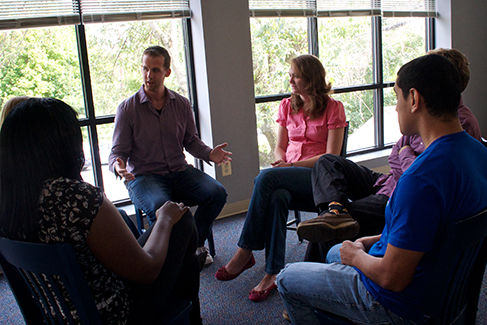


Figure 16.16図 16.16
In group therapy, usually 5–10 people meet with a trained therapist to discuss a common issue such as divorce, grief, an eating disorder, substance abuse, or anger management. (credit: Cory Zanker)
集団療法では、通常5〜10人が訓練を受けたセラピストと会い、離婚、悲嘆、摂食障害、物質乱用、怒りのコントロールといった共通の問題について話し合う。(出典:Cory Zanker)
Another benefit of group therapy is that members can confront each other about their patterns. For those with some types of problems, such as sexual abusers, group therapy is the recommended treatment. Group treatment for this population is considered to have several benefits:
英語のヒント
集団療法のもう一つの利点は、メンバーどうしが、互いが繰り返しているパターンについて正面から指摘し合えることである。性的虐待の加害者のように、ある種の問題を抱える人々にとっては、集団療法が推奨される治療である。こうした人々に対する集団治療には、次のようないくつかの利点があると考えられている。
Group treatment is more economical than individual, couples, or family therapy. Sexual abusers often feel more comfortable admitting and discussing their offenses in a treatment group where others are modeling openness. Clients often accept feedback about their behavior more willingly from other group members than from therapists. Finally, clients can practice social skills in group treatment settings. (McGrath, Cumming, Burchard, Zeoli, & Ellerby, 2009)英語のヒント
集団治療は、個人療法、カップル療法、家族療法よりも経済的である。性的虐待の加害者は、ほかの人が率直さの手本を示している治療グループの中でのほうが、より抵抗なく自分の犯した罪を認め、話し合えると感じることが多い。クライエントは多くの場合、自分の行動についてのフィードバックを、セラピストからよりもグループのほかのメンバーからのほうが素直に受け入れる。最後に、クライエントは集団治療の場で社会的スキルを練習できる。(McGrath, Cumming, Burchard, Zeoli, & Ellerby, 2009)
Groups that have a strong educational component are called psycho-educational groups. For example, a group for children whose parents have cancer might discuss in depth what cancer is, types of treatment for cancer, and the side effects of treatments, such as hair loss. Often, group therapy sessions with children take place in school. They are led by a school counselor, a school psychologist, or a school social worker. Groups might focus on test anxiety, social isolation, self-esteem, bullying, or school failure (Shechtman, 2002). Whether the group is held in school or in a clinician’s office, group therapy has been found to be effective with children facing numerous kinds of challenges (Shechtman, 2002).
英語のヒント
教育的な要素の強いグループは、心理教育グループと呼ばれる。たとえば、親ががんを患っている子どものためのグループでは、がんとは何か、がんの治療の種類、脱毛などの治療の副作用について、詳しく話し合うかもしれない。子どもを対象とした集団療法のセッションは、学校で行われることが多い。セッションを率いるのは、スクールカウンセラー、学校心理士、またはスクールソーシャルワーカーである。グループは、テスト不安、社会的孤立、自尊心、いじめ、学業不振などに焦点を当てることがある(Shechtman, 2002)。グループが学校で開かれるにせよ臨床家の相談室で開かれるにせよ、集団療法は、多くの種類の困難に直面している子どもたちに効果があることが分かっている(Shechtman, 2002)。
During a group session, the entire group could reflect on an individual’s problem or difficulties, and others might disclose what they have done in that situation. When a clinician is facilitating a group, the focus is always on making sure that everyone benefits and participates in the group and that no one person is the focus of the entire session. Groups can be organized in various ways: some have an overarching theme or purpose, some are time-limited, some have open membership that allows people to come and go, and some are closed. Some groups are structured with planned activities and goals, while others are unstructured: There is no specific plan, and group members themselves decide how the group will spend its time and on what goals it will focus. This can become a complex and emotionally charged process, but it is also an opportunity for personal growth (Page & Berkow, 1994).
英語のヒント
グループのセッションでは、グループ全体で、ある一人の問題や困難について考えることがあり、ほかのメンバーは、そうした状況で自分がどうしたかを打ち明けることもある。臨床家がグループの進行役を務めるときに常に重視するのは、全員がグループから恩恵を受け、グループに参加するようにすること、そして特定の一人がセッション全体の焦点にならないようにすることである。グループはさまざまな形に編成できる。全体を貫くテーマや目的を持つグループもあれば、期間を限ったグループもあり、人が自由に出入りできる開かれたメンバー構成のグループもあれば、閉じたグループもある。計画された活動と目標によって構造化されたグループがある一方で、構造化されていないグループもある。そこには具体的な計画がなく、グループがどう時間を使い、どの目標に焦点を当てるかを、メンバー自身が決める。これは複雑で、感情が張りつめた過程になりうるが、個人の成長の機会でもある(Page & Berkow, 1994)。