第17章電気化学
17.5 Batteries and Fuel Cells17.5 電池と燃料電池
Learning Objectives学習目標
By the end of this section, you will be able to:
この節を学び終えると、次のことができるようになる。
- Describe the electrochemistry associated with several common batteriesいくつかの一般的な電池に関連する電気化学を説明する。
- Distinguish the operation of a fuel cell from that of a battery燃料電池の動作と電池の動作を区別する。
There are many technological products associated with the past two centuries of electrochemistry research, none more immediately obvious than the battery. A battery is a galvanic cell that has been specially designed and constructed in a way that best suits its intended use a source of electrical power for specific applications. Among the first successful batteries was the Daniell cell, which relied on the spontaneous oxidation of zinc by copper(II) ions (Figure 17.8):
英語のヒント
過去2世紀の電気化学研究に関連する技術製品は多いが、電池ほどすぐに思い浮かぶものはない。電池とは、特定の用途に電力を供給するという意図した使用法に最も適するよう、特別に設計・製作されたガルバニ電池である。初期の成功した電池の一つにダニエル電池があり、銅(II)イオンによる亜鉛の自発的な酸化を利用した(図17.8)。
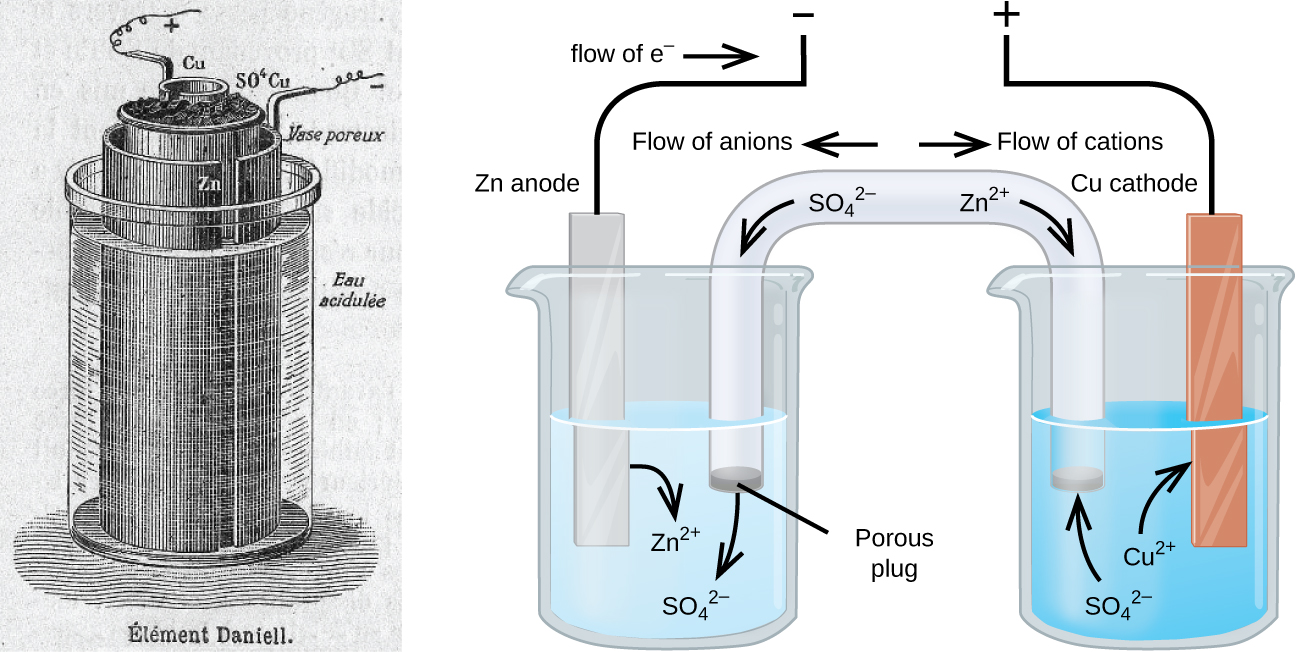
Figure 17.8図 17.8
Illustration of a Daniell cell taken from a 1904 journal publication (left) along with a simplified illustration depicting the electrochemistry of the cell (right). The 1904 design used a porous clay pot to both contain one of the half-cell’s content and to serve as a salt bridge to the other half-cell.
1904年の雑誌掲載物から採ったダニエル電池の図(左)と、その電気化学を示す簡略図(右)。1904年の設計では、多孔質の陶器の容器を使い、一方の半電池の内容物を収めると同時に、他方の半電池への塩橋としても機能させた。
Modern batteries exist in a multitude of forms to accommodate various applications, from tiny button batteries that provide the modest power needs of a wristwatch to the very large batteries used to supply backup energy to municipal power grids. Some batteries are designed for single-use applications and cannot be recharged (primary cells), while others are based on conveniently reversible cell reactions that allow recharging by an external power source (secondary cells). This section will provide a summary of the basic electrochemical aspects of several batteries familiar to most consumers, and will introduce a related electrochemical device called a fuel cell that can offer improved performance in certain applications.
英語のヒント
現代の電池には、腕時計のわずかな電力需要を満たす小さなボタン電池から、都市の電力網に予備のエネルギーを供給する非常に大きな電池まで、さまざまな用途に対応する多数の形態がある。一部の電池は使い切り用に設計され、充電できない(一次電池)。他方、容易に逆向きにできる電池反応を利用し、外部電源から充電できるものもある(二次電池)。この節では、ほとんどの消費者になじみのある数種類の電池の基本的な電気化学的側面をまとめ、特定の用途で性能の向上が見込める、燃料電池という関連した電気化学装置を紹介する。
Single-Use Batteries使い切りの電池
A common primary battery is the dry cell, which uses a zinc can as both container and anode (“–” terminal) and a graphite rod as the cathode (“+” terminal). The Zn can is filled with an electrolyte paste containing manganese(IV) oxide, zinc(II) chloride, ammonium chloride, and water. A graphite rod is immersed in the electrolyte paste to complete the cell. The spontaneous cell reaction involves the oxidation of zinc:
英語のヒント
一般的な一次電池に乾電池がある。これは亜鉛の缶を容器とアノード(「−」端子)の両方として使い、黒鉛棒をカソード(「+」端子)として使う。Znの缶には、酸化マンガン(IV)、塩化亜鉛(II)、塩化アンモニウム、水を含む電解質ペーストが詰められている。この電解質ペーストに黒鉛棒を浸すと、電池が完成する。自発的な電池反応は、亜鉛の酸化を含む。
and the reduction of manganese(IV)
およびマンガン(IV)の還元を含む。
which together yield the cell reaction:
両者を合わせると、電池反応が得られる。
The voltage (cell potential) of a dry cell is approximately 1.5 V. Dry cells are available in various sizes (e.g., D, C, AA, AAA). All sizes of dry cells comprise the same components, and so they exhibit the same voltage, but larger cells contain greater amounts of the redox reactants and therefore are capable of transferring correspondingly greater amounts of charge. Like other galvanic cells, dry cells may be connected in series to yield batteries with greater voltage outputs, if needed.
英語のヒント
乾電池の電圧(電池電位)は約1.5 Vである。乾電池には、D、C、AA、AAAなど、さまざまなサイズがある。どのサイズの乾電池も同じ構成成分から成るので同じ電圧を示すが、大きい電池には酸化還元反応物がより多く含まれ、その分だけ多くの電荷を移動させることができる。他のガルバニ電池と同様に、必要なら乾電池を直列につないで、より高い出力電圧の電池を作ることができる。
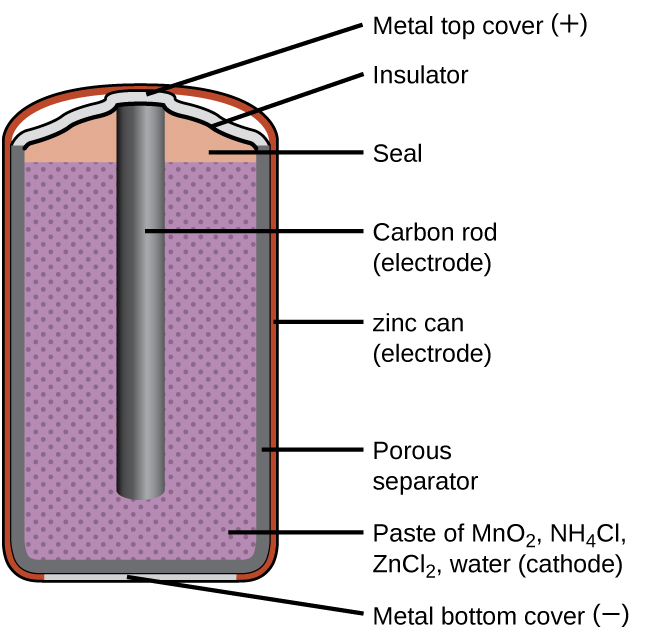
Figure 17.9図 17.9
A schematic diagram shows a typical dry cell.
典型的な乾電池を示す模式図。
Alkaline batteries (Figure 17.10) were developed in the 1950s to improve on the performance of the dry cell, and they were designed around the same redox couples. As their name suggests, these types of batteries use alkaline electrolytes, often potassium hydroxide. The reactions are
英語のヒント
アルカリ電池(図17.10)は、乾電池の性能を向上させるため1950年代に開発され、同じ酸化還元対を中心に設計された。名前が示すように、この種の電池ではアルカリ性の電解質を使い、水酸化カリウムがよく用いられる。反応は次のとおりである。
An alkaline battery can deliver about three to five times the energy of a zinc-carbon dry cell of similar size. Alkaline batteries are prone to leaking potassium hydroxide, so they should be removed from devices for long-term storage. While some alkaline batteries are rechargeable, most are not. Attempts to recharge an alkaline battery that is not rechargeable often leads to rupture of the battery and leakage of the potassium hydroxide electrolyte.
英語のヒント
アルカリ電池は、同じくらいの大きさの亜鉛・炭素乾電池の約3~5倍のエネルギーを供給できる。アルカリ電池は水酸化カリウムが漏れやすいので、長期間保管するときは機器から取り外すべきである。充電できるアルカリ電池もあるが、大部分は充電できない。充電できないアルカリ電池を充電しようとすると、電池の破裂や、水酸化カリウム電解質の漏出を引き起こすことが多い。
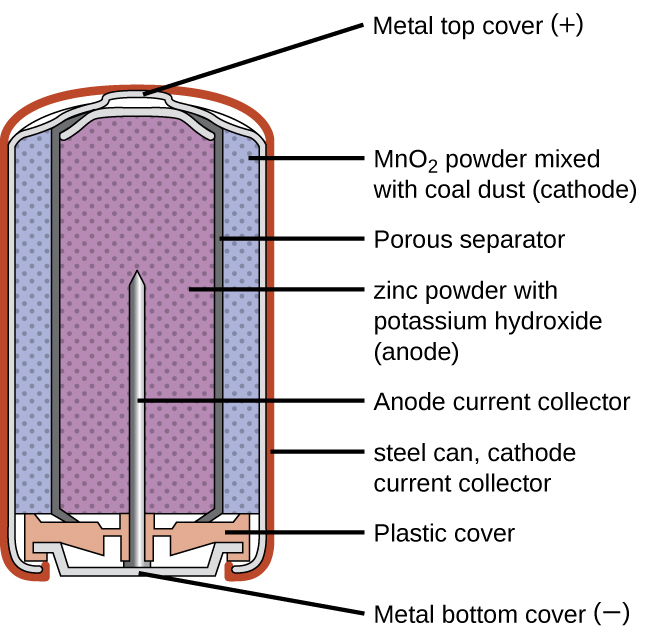
Figure 17.10図 17.10
Alkaline batteries were designed as improved replacements for zinc-carbon (dry cell) batteries.
アルカリ電池は、亜鉛・炭素電池(乾電池)の改良された代替品として設計された。
Rechargeable (Secondary) Batteries充電式(二次)電池
Nickel-cadmium, or NiCd, batteries (Figure 17.11) consist of a nickel-plated cathode, cadmium-plated anode, and a potassium hydroxide electrode. The positive and negative plates, which are prevented from shorting by the separator, are rolled together and put into the case. This is a “jelly-roll” design and allows the NiCd cell to deliver much more current than a similar-sized alkaline battery. The reactions are
英語のヒント
ニッケル・カドミウム電池、すなわちNiCd電池(図17.11)は、ニッケルめっきされたカソード、カドミウムめっきされたアノード、および水酸化カリウム電極から成る。正極板と負極板は、セパレーターによって短絡を防ぎながら一緒に巻かれ、ケースに収められる。これは「ロールケーキ状」の設計であり、NiCd電池が、同じくらいの大きさのアルカリ電池よりはるかに多くの電流を供給できるようにする。反応は次のとおりである。
When properly treated, a NiCd battery can be recharged about 1000 times. Cadmium is a toxic heavy metal so NiCd batteries should never be ruptured or incinerated, and they should be disposed of in accordance with relevant toxic waste guidelines.
英語のヒント
適切に扱えば、NiCd電池は約1000回充電できる。カドミウムは有毒な重金属なので、NiCd電池を破裂させたり焼却したりしてはならず、関連する有害廃棄物の指針に従って処分すべきである。
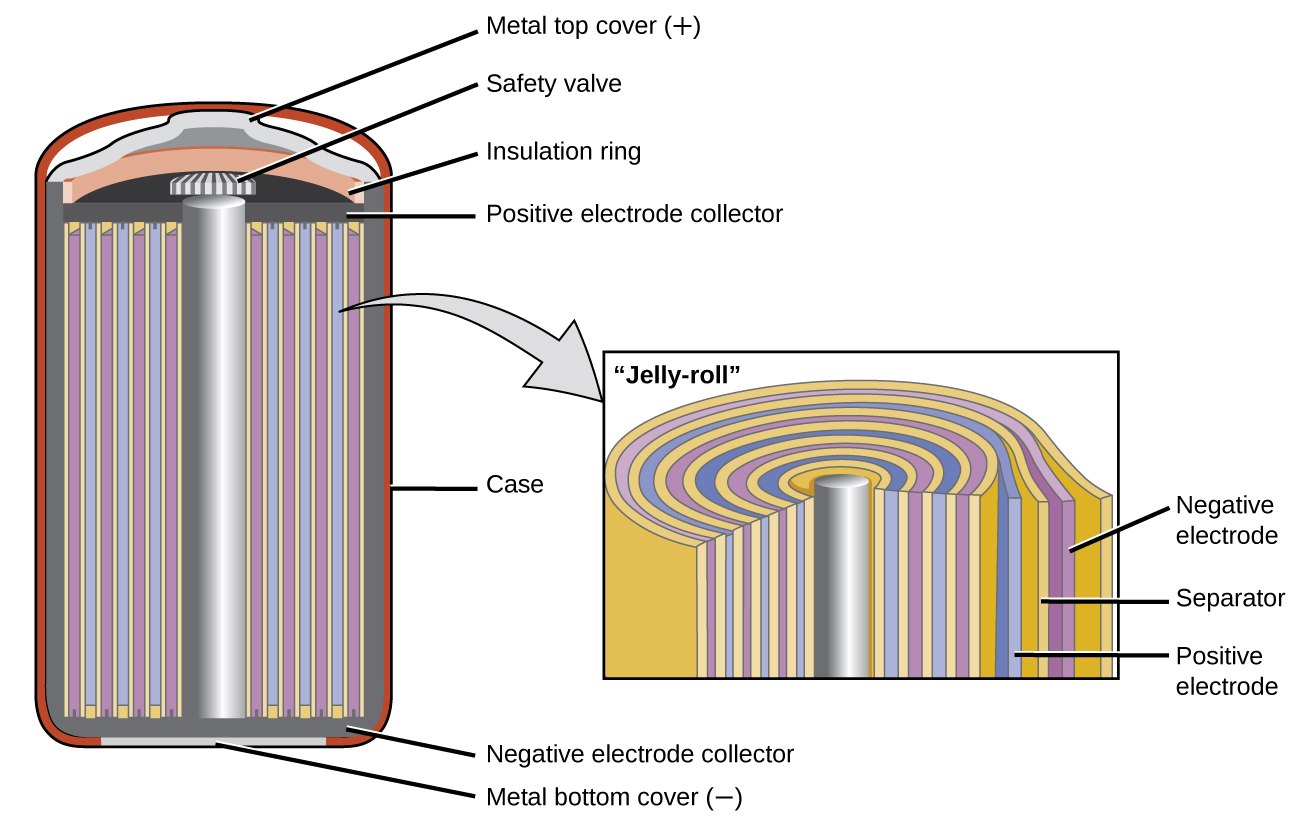
Figure 17.11図 17.11
NiCd batteries use a “jelly-roll” design that significantly increases the amount of current the battery can deliver as compared to a similar-sized alkaline battery.
NiCd電池は「ロールケーキ状」の設計を使い、同じくらいの大きさのアルカリ電池と比べて、供給できる電流の量を大幅に増やしている。
Lithium ion batteries (Figure 17.12) are among the most popular rechargeable batteries and are used in many portable electronic devices. The reactions are
英語のヒント
リチウムイオン電池(図17.12)は、最も広く使われる充電池の一つで、多くの携帯型電子機器に使われている。反応は次のとおりである。
The variable stoichiometry of the cell reaction leads to variation in cell voltages, but for typical conditions, x is usually no more than 0.5 and the cell voltage is approximately 3.7 V. Lithium batteries are popular because they can provide a large amount current, are lighter than comparable batteries of other types, produce a nearly constant voltage as they discharge, and only slowly lose their charge when stored.
英語のヒント
電池反応の化学量論が可変であるため、電池の電圧も変化する。ただし、典型的な条件ではxは通常0.5以下で、電池の電圧は約3.7 Vである。リチウム電池が普及しているのは、大きな電流を供給でき、同等の他の種類の電池より軽く、放電中にほぼ一定の電圧を生じ、保管中にはゆっくりとしか電荷を失わないからである。
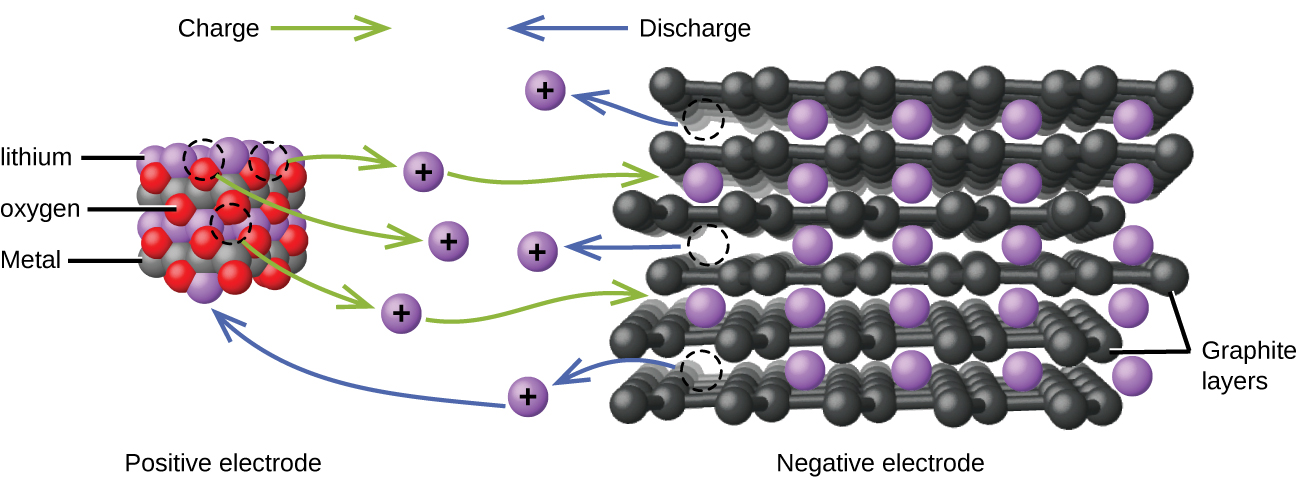
Figure 17.12図 17.12
In a lithium ion battery, charge flows as the lithium ions are transferred between the anode and cathode.
リチウムイオン電池では、リチウムイオンがアノードとカソードの間を移動するにつれて、電荷が流れる。
The lead acid battery (Figure 17.13) is the type of secondary battery commonly used in automobiles. It is inexpensive and capable of producing the high current required by automobile starter motors. The reactions for a lead acid battery are
英語のヒント
鉛蓄電池(図17.13)は、自動車によく使われる種類の二次電池である。安価で、自動車のスターターモーターが必要とする大電流を生じることができる。鉛蓄電池の反応は次のとおりである。
Each cell produces 2 V, so six cells are connected in series to produce a 12-V car battery. Lead acid batteries are heavy and contain a caustic liquid electrolyte, H2SO4(aq), but are often still the battery of choice because of their high current density. Since these batteries contain a significant amount of lead, they must always be disposed of properly.
英語のヒント
各セルは2 Vを生じるので、六つのセルを直列につないで12 Vの自動車用電池を作る。鉛蓄電池は重く、腐食性の液体電解質H2SO4(aq)を含むが、電流密度が高いため、今でも優先して選ばれる電池であることが多い。これらの電池はかなりの量の鉛を含むので、必ず適切に処分しなければならない。
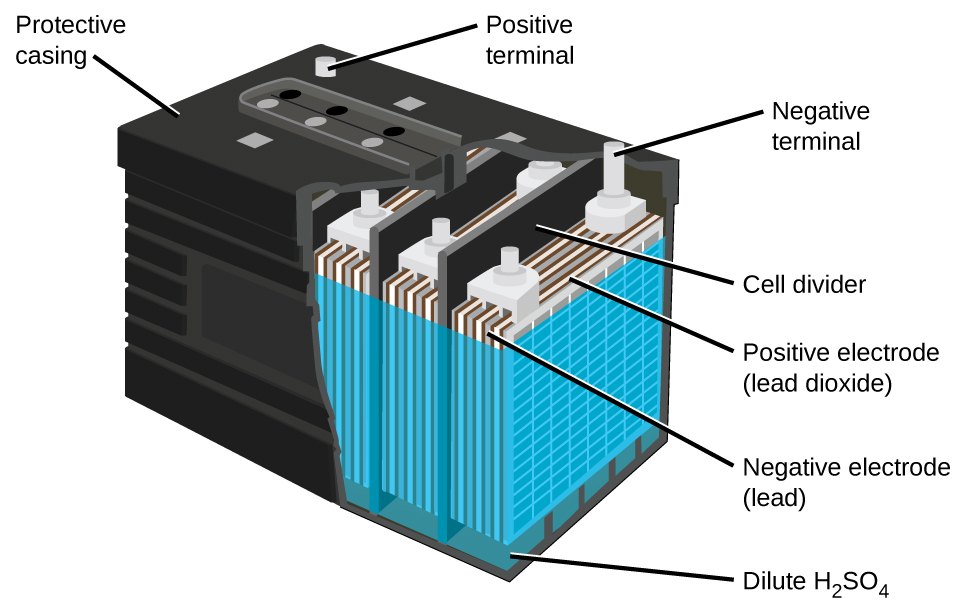


Figure 17.13図 17.13
The lead acid battery in your automobile consists of six cells connected in series to give 12 V.
自動車の鉛蓄電池は、六つのセルを直列につないで12 Vを得る構造である。