第3章物質と溶液の組成
Key Concepts and Summary重要な概念とまとめ
The formula mass of a substance is the sum of the average atomic masses of each atom represented in the chemical formula and is expressed in atomic mass units. The formula mass of a covalent compound is also called the molecular mass. A convenient amount unit for expressing very large numbers of atoms or molecules is the mole. Experimental measurements have determined the number of entities composing 1 mole of substance to be 6.022 1023, a quantity called Avogadro’s number. The mass in grams of 1 mole of substance is its molar mass. Due to the use of the same reference substance in defining the atomic mass unit and the mole, the formula mass (amu) and molar mass (g/mol) for any substance are numerically equivalent (for example, one H2O molecule weighs approximately18 amu and 1 mole of H2O molecules weighs approximately 18 g).
物質の式量は、化学式に表された各原子の平均原子質量の合計であり、原子質量単位で表す。共有結合化合物の式量は分子質量とも呼ばれる。非常に多数の原子や分子を表すのに便利な量の単位がモルである。実験的測定により、物質1モルを構成する粒子数は6.022 1023個と求められ、この量をアボガドロ数と呼ぶ。物質1モルの質量をグラムで表したものがモル質量である。原子質量単位とモルの定義には同じ基準物質を使うため、どの物質でも式量(amu)とモル質量(g/mol)の数値は等しくなる。たとえば、H2O分子1個の質量は約18 amuであり、H2O分子1モルの質量は約18 gである。
Chemistry End of Chapter Exercises化学・章末問題
Exercises 1–31練習問題 1–31
Exercise 1問題 1
What is the total mass (amu) of carbon in each of the following molecules?
次の各分子に含まれる炭素の質量の合計(amu)はいくらか。
(a) CH4
(a) CH4
(b) CHCl3
(b) CHCl3
(c) C12H10O6
(c) C12H10O6
(d) CH3CH2CH2CH2CH3
(d) CH3CH2CH2CH2CH3
Solution解き方
(a) 12.01 amu; (b) 12.01 amu; (c) 144.12 amu; (d) 60.05 amu
(a) 12.01 amu; (b) 12.01 amu; (c) 144.12 amu; (d) 60.05 amu
Exercise 2問題 2
What is the total mass of hydrogen in each of the molecules?
各分子に含まれる水素の質量の合計はいくらか。
(a) CH4
(a) CH4
(b) CHCl3
(b) CHCl3
(c) C12H10O6
(c) C12H10O6
(d) CH3CH2CH2CH2CH3
(d) CH3CH2CH2CH2CH3
Exercise 3問題 3
Calculate the molecular or formula mass of each of the following:
次のそれぞれの分子質量または式量を計算しなさい。
(a) P4
(a) P4
(b) H2O
(b) H2O
(c) Ca(NO3)2
(c) Ca(NO3)2
(d) CH3CO2H (acetic acid)
(d) CH3CO2H(酢酸)
(e) C12H22O11 (sucrose, cane sugar)
(e) C12H22O11(スクロース、ショ糖)
Solution解き方
(a) 123.896 amu; (b) 18.015 amu; (c) 164.086 amu; (d) 60.052 amu; (e) 342.297 amu
(a) 123.896 amu; (b) 18.015 amu; (c) 164.086 amu; (d) 60.052 amu; (e) 342.297 amu
Exercise 4問題 4
Determine the molecular mass of the following compounds:
次の化合物の分子質量を求めなさい。
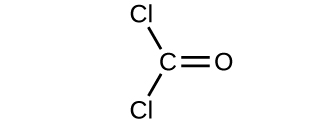

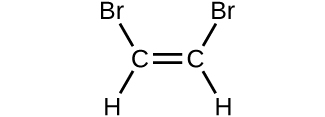
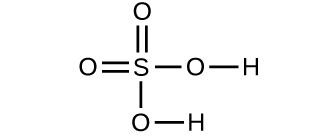
Exercise 5問題 5
Determine the molecular mass of the following compounds:
次の化合物の分子質量を求めなさい。
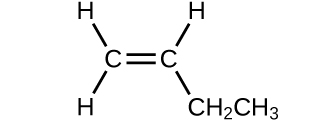
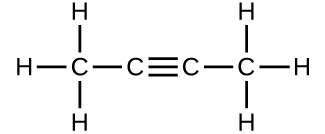
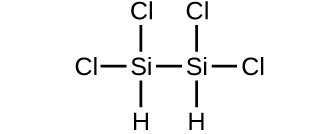
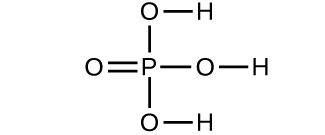
Solution解き方
(a) 56.107 amu; (b) 54.091 amu; (c) 199.9976 amu; (d) 97.9950 amu
(a) 56.107 amu; (b) 54.091 amu; (c) 199.9976 amu; (d) 97.9950 amu
Exercise 6問題 6

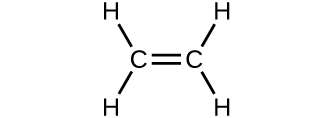
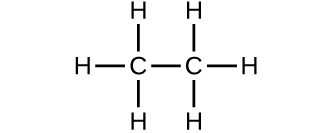


Exercise 7問題 7
Write a sentence that describes how to determine the number of moles of a compound in a known mass of the compound using its molecular formula.
質量がわかっている化合物について、分子式を使ってモル数を求める方法を文章で説明しなさい。
Solution解き方
Use the molecular formula to find the molar mass; to obtain the number of moles, divide the mass of compound by the molar mass of the compound expressed in grams.
分子式を使ってモル質量を求める。モル数を得るには、化合物の質量を、グラムで表したその化合物の1モルの質量で割る。
Exercise 8問題 8
Compare 1 mole of H2, 1 mole of O2, and 1 mole of F2.
H2を1モル、O2を1モル、F2を1モル、それぞれ比較しなさい。
(a) Which has the largest number of molecules? Explain why.
(a) 分子数が最も多いのはどれか。理由を説明しなさい。
(b) Which has the greatest mass? Explain why.
(b) 質量が最も大きいのはどれか。理由を説明しなさい。
Exercise 9問題 9
Which contains the greatest mass of oxygen: 0.75 mol of ethanol (C2H5OH), 0.60 mol of formic acid (HCO2H), or 1.0 mol of water (H2O)? Explain why.
エタノール(C2H5OH)0.75 mol、ギ酸(HCO2H)0.60 mol、水(H2O)1.0 molのうち、含まれる酸素の質量が最も大きいのはどれか。理由を説明しなさい。
Solution解き方
Formic acid. Its formula has twice as many oxygen atoms as the other two compounds (one each). Therefore, 0.60 mol of formic acid would be equivalent to 1.20 mol of a compound containing a single oxygen atom.
ギ酸である。化学式に含まれる酸素原子の数が、ほかの二つの化合物(各1個)の2倍だからである。したがって、ギ酸0.60 molは、酸素原子を1個だけ含む化合物1.20 molに相当する。
Exercise 10問題 10
Which contains the greatest number of moles of oxygen atoms: 1 mol of ethanol (C2H5OH), 1 mol of formic acid (HCO2H), or 1 mol of water (H2O)? Explain why.
エタノール(C2H5OH)1 mol、ギ酸(HCO2H)1 mol、水(H2O)1 molのうち、含まれる酸素原子のモル数が最も大きいのはどれか。理由を説明しなさい。
Exercise 11問題 11
How are the molecular mass and the molar mass of a compound similar and how are they different?
化合物の分子質量とモル質量には、どのような共通点と相違点があるか。
Solution解き方
The two masses have the same numerical value, but the units are different: The molecular mass is the mass of 1 molecule while the molar mass is the mass of 6.022 1023 molecules.
二つは数値が同じであるが、単位が異なる。分子質量は1分子の質量であるのに対し、モル質量は6.022 1023個の分子の質量である。
Exercise 12問題 12
Calculate the molar mass of each of the following compounds:
次の各化合物のモル質量を計算しなさい。
(a) hydrogen fluoride, HF
(a) フッ化水素、HF
(b) ammonia, NH3
(b) アンモニア、NH3
(c) nitric acid, HNO3
(c) 硝酸、HNO3
(d) silver sulfate, Ag2SO4
(d) 硫酸銀、Ag2SO4
(e) boric acid, B(OH)3
(e) ホウ酸、B(OH)3
Exercise 13問題 13
Calculate the molar mass of each of the following:
次のそれぞれのモル質量を計算しなさい。
(a) S8
(a) S8
(b) C5H12
(b) C5H12
(c) Sc2(SO4)3
(c) Sc2(SO4)3
(d) CH3COCH3 (acetone)
(d) CH3COCH3(アセトン)
(e) C6H12O6 (glucose)
(e) C6H12O6(グルコース)
Solution解き方
(a) 256.48 g/mol; (b) 72.150 g mol−1; (c) 378.103 g mol−1; (d) 58.080 g mol−1; (e) 180.158 g mol−1
(a) 256.48 g/mol; (b) 72.150 g mol−1; (c) 378.103 g mol−1; (d) 58.080 g mol−1; (e) 180.158 g mol−1
Exercise 14問題 14
Calculate the empirical or molecular formula mass and the molar mass of each of the following minerals:
次の各鉱物について、組成式または分子式に対応する質量と、モル質量を計算しなさい。
(a) limestone, CaCO3
(a) 石灰石、CaCO3
(b) halite, NaCl
(b) 岩塩、NaCl
(c) beryl, Be3Al2Si6O18
(c) 緑柱石、Be3Al2Si6O18
(d) malachite, Cu2(OH)2CO3
(d) 孔雀石、Cu2(OH)2CO3
(e) turquoise, CuAl6(PO4)4(OH)8(H2O)4
(e) トルコ石、CuAl6(PO4)4(OH)8(H2O)4
Exercise 15問題 15
Calculate the molar mass of each of the following:
次のそれぞれのモル質量を計算しなさい。
(a) the anesthetic halothane, C2HBrClF3
(a) 麻酔薬ハロタン、C2HBrClF3
(b) the herbicide paraquat, C12H14N2Cl2
(b) 除草剤パラコート、C12H14N2Cl2
(c) caffeine, C8H10N4O2
(c) カフェイン、C8H10N4O2
(d) urea, CO(NH2)2
(d) 尿素、CO(NH2)2
(e) a typical soap, C17H35CO2Na
(e) 代表的な石けん、C17H35CO2Na
Solution解き方
(a) 197.382 g mol−1; (b) 257.163 g mol−1; (c) 194.193 g mol−1; (d) 60.056 g mol−1; (e) 306.464 g mol−1
(a) 197.382 g mol−1; (b) 257.163 g mol−1; (c) 194.193 g mol−1; (d) 60.056 g mol−1; (e) 306.464 g mol−1
Exercise 16問題 16
Determine the number of moles of compound and the number of moles of each type of atom in each of the following:
次のそれぞれについて、化合物のモル数と、各種類の原子のモル数を求めなさい。
(a) 25.0 g of propylene, C3H6
(a) プロピレンC3H6、25.0 g
(b) 3.06 10−3 g of the amino acid glycine, C2H5NO2
(b) アミノ酸のグリシンC2H5NO2、3.06 10−3 g
(c) 25 lb of the herbicide Treflan, C13H16N2O4F (1 lb = 454 g)
(c) 除草剤トレフランC13H16N2O4F、25 lb(1 lb = 454 g)
(d) 0.125 kg of the insecticide Paris Green, Cu4(AsO3)2(CH3CO2)2
(d) 殺虫剤パリグリーンCu4(AsO3)2(CH3CO2)2、0.125 kg
(e) 325 mg of aspirin, C6H4(CO2H)(CO2CH3)
(e) アスピリンC6H4(CO2H)(CO2CH3)、325 mg
Exercise 17問題 17
Determine the mass of each of the following:
次のそれぞれの質量を求めなさい。
(a) 0.0146 mol KOH
(a) 0.0146 mol KOH
(b) 10.2 mol ethane, C2H6
(b) エタンC2H6、10.2 mol
(c) 1.6 10−3 mol Na2 SO4
(c) 1.6 10−3 mol Na2 SO4
(d) 6.854 103 mol glucose, C6 H12 O6
(d) グルコースC6H12O6、6.854 103 mol
(e) 2.86 mol Co(NH3)6Cl3
(e) 2.86 mol Co(NH3)6Cl3
Solution解き方
(a) 0.819 g; (b) 307 g; (c) 0.23 g; (d) 1.235 106 g (1235 kg); (e) 765 g
(a) 0.819 g; (b) 307 g; (c) 0.23 g; (d) 1.235 106 g (1235 kg); (e) 765 g
Exercise 18問題 18
Determine the number of moles of the compound and determine the number of moles of each type of atom in each of the following:
次のそれぞれについて、化合物のモル数と、各種類の原子のモル数を求めなさい。
(a) 2.12 g of potassium bromide, KBr
(a) 臭化カリウムKBr、2.12 g
(b) 0.1488 g of phosphoric acid, H3PO4
(b) リン酸H3PO4、0.1488 g
(c) 23 kg of calcium carbonate, CaCO3
(c) 炭酸カルシウムCaCO3、23 kg
(d) 78.452 g of aluminum sulfate, Al2(SO4)3
(d) 硫酸アルミニウムAl2(SO4)3、78.452 g
(e) 0.1250 mg of caffeine, C8H10N4O2
(e) カフェインC8H10N4O2、0.1250 mg
Exercise 19問題 19
Determine the mass of each of the following:
次のそれぞれの質量を求めなさい。
(a) 2.345 mol LiCl
(a) 2.345 mol LiCl
(b) 0.0872 mol acetylene, C2H2
(b) アセチレンC2H2、0.0872 mol
(c) 3.3 10−2 mol Na2CO3
(c) 3.3 10−2 mol Na2CO3
(d) 1.23 103 mol fructose, C6H12O6
(d) フルクトースC6H12O6、1.23 103 mol
(e) 0.5758 mol FeSO4(H2O)7
(e) 0.5758 mol FeSO4(H2O)7
Solution解き方
(a) 99.41 g; (b) 2.27 g; (c) 3.5 g; (d) 222 kg; (e) 160.1 g
(a) 99.41 g; (b) 2.27 g; (c) 3.5 g; (d) 222 kg; (e) 160.1 g
Exercise 20問題 20
The approximate minimum daily dietary requirement of the amino acid leucine, C6H13NO2, is 1.1 g. What is this requirement in moles?
アミノ酸のロイシンC6H13NO2について、1日に食事から摂取する必要最小量は約1.1 gである。これをモルで表すといくらか。
Exercise 21問題 21
Determine the mass in grams of each of the following:
次のそれぞれの質量をグラムで求めなさい。
(a) 0.600 mol of oxygen atoms
(a) 酸素原子0.600 mol
(b) 0.600 mol of oxygen molecules, O2
(b) 酸素分子O2、0.600 mol
(c) 0.600 mol of ozone molecules, O3
(c) オゾン分子O3、0.600 mol
Solution解き方
(a) 9.60 g; (b) 19.2 g; (c) 28.8 g
(a) 9.60 g; (b) 19.2 g; (c) 28.8 g
Exercise 22問題 22
A 55-kg woman has 7.5 10−3 mol of hemoglobin (molar mass = 64,456 g/mol) in her blood. How many hemoglobin molecules is this? What is this quantity in grams?
体重55 kgの女性の血液には、ヘモグロビン(モル質量64,456 g/mol)が7.5 10−3 mol含まれている。これはヘモグロビン分子何個に相当するか。また、質量は何グラムか。
Exercise 23問題 23
Determine the number of atoms and the mass of zirconium, silicon, and oxygen found in 0.3384 mol of zircon, ZrSiO4, a semiprecious stone.
半貴石であるジルコンZrSiO4の0.3384 molに含まれる、ジルコニウム、ケイ素、酸素それぞれの原子数と質量を求めなさい。
Solution解き方
zirconium: 2.038 1023 atoms; 30.87 g; silicon: 2.038 1023 atoms; 9.504 g; oxygen: 8.151 1023 atoms; 21.66 g
ジルコニウム:2.038 1023個、30.87 g;ケイ素:2.038 1023個、9.504 g;酸素:8.151 1023個、21.66 g
Exercise 24問題 24
Determine which of the following contains the greatest mass of hydrogen: 1 mol of CH4, 0.6 mol of C6H6, or 0.4 mol of C3H8.
CH4を1 mol、C6H6を0.6 mol、C3H8を0.4 mol用意したとき、含まれる水素の質量が最も大きいものを求めなさい。
Exercise 25問題 25
Determine which of the following contains the greatest mass of aluminum: 122 g of AlPO4, 266 g of Al2Cl6, or 225 g of Al2S3.
AlPO4を122 g、Al2Cl6を266 g、Al2S3を225 g用意したとき、含まれるアルミニウムの質量が最も大きいものを求めなさい。
Solution解き方
AlPO4: 1.000 mol, or 26.98 g Al; Al2Cl6: 1.994 mol, or 53.74 g Al; Al2S3: 3.00 mol, or 80.94 g Al; The Al2S3 sample thus contains the greatest mass of Al.
AlPO4:Alが1.000 mol、すなわち26.98 g;Al2Cl6:Alが1.994 mol、すなわち53.74 g;Al2S3:Alが3.00 mol、すなわち80.94 g。したがって、Alの質量が最も大きいのはAl2S3の試料である。
Exercise 26問題 26
Diamond is one form of elemental carbon. An engagement ring contains a diamond weighing 1.25 carats (1 carat = 200 mg). How many atoms are present in the diamond?
ダイヤモンドは炭素単体の一形態である。ある婚約指輪には1.25カラット(1カラット = 200 mg)のダイヤモンドが付いている。このダイヤモンドには原子が何個あるか。
Exercise 27問題 27
The Cullinan diamond was the largest natural diamond ever found (January 25, 1905). It weighed 3104 carats (1 carat = 200 mg). How many carbon atoms were present in the stone?
カリナン・ダイヤモンドは、それまでに発見された最大の天然ダイヤモンドであった(1905年1月25日)。質量は3104カラット(1カラット = 200 mg)であった。この石には炭素原子が何個含まれていたか。
Solution解き方
3.113 1025 C atoms
C原子3.113 1025個
Exercise 28問題 28
One 55-gram serving of a particular cereal supplies 270 mg of sodium, 11% of the recommended daily allowance. How many moles and atoms of sodium are in the recommended daily allowance?
あるシリアルは1食分55 gでナトリウム270 mgを供給し、これは1日の推奨摂取量の11%に当たる。1日の推奨摂取量に含まれるナトリウムのモル数と原子数はいくらか。
Exercise 29問題 29
A certain nut crunch cereal contains 11.0 grams of sugar (sucrose, C12H22O11) per serving size of 60.0 grams. How many servings of this cereal must be eaten to consume 0.0278 moles of sugar?
あるナッツ入りのクランチシリアルは、1食分60.0 g当たり11.0 gの砂糖(スクロース、C12H22O11)を含む。砂糖を0.0278 mol摂取するには、このシリアルを何食分食べる必要があるか。
Solution解き方
0.865 servings, or about 1 serving.
0.865食分、すなわち約1食分。
Exercise 30問題 30
A tube of toothpaste contains 0.76 g of sodium monofluorophosphate (Na2PO3F) in 100 mL.
ある歯磨き粉は、100 mL当たりモノフルオロリン酸ナトリウム(Na2PO3F)を0.76 g含む。
(a) What mass of fluorine atoms in mg was present?
(a) 含まれるフッ素原子の質量は何mgか。
(b) How many fluorine atoms were present?
(b) フッ素原子は何個含まれているか。
Exercise 31問題 31
Which of the following represents the least number of molecules?
次のうち、分子数が最も少ないのはどれか。
(a) 20.0 g of H2O (18.02 g/mol)
(a) H2O(18.02 g/mol)、20.0 g
(b) 77.0 g of CH4 (16.06 g/mol)
(b) CH4(16.06 g/mol)、77.0 g
(c) 68.0 g of C3H6 (42.08 g/mol)
(c) C3H6(42.08 g/mol)、68.0 g
(d) 100.0 g of N2O (44.02 g/mol)
(d) N2O(44.02 g/mol)、100.0 g
(e) 84.0 g of HF (20.01 g/mol)
(e) HF(20.01 g/mol)、84.0 g
Solution解き方
20.0 g H2O represents the least number of molecules since it has the least number of moles.
H2Oの20.0 gはモル数が最小なので、分子数も最小である。
Avogadro’s number (NA)
アボガドロ数(NA)
experimentally determined value of the number of entities comprising 1 mole of substance, equal to 6.022 1023 mol−1
物質1モルを構成する粒子の数として実験的に求められた値。6.022 1023 mol−1に等しい
formula mass
式量
sum of the average masses for all atoms represented in a chemical formula; for covalent compounds, this is also the molecular mass
化学式に示されたすべての原子の平均質量の合計。共有結合化合物では分子質量でもある
molar mass
モル質量
mass in grams of 1 mole of a substance
物質1モルの質量をグラムで表したもの
mole
モル
amount of substance containing the same number of atoms, molecules, ions, or other entities as the number of atoms in exactly 12 grams of 12C
正確に12グラムの12Cに含まれる原子数と同数の原子、分子、イオン、その他の粒子を含む物質の量